
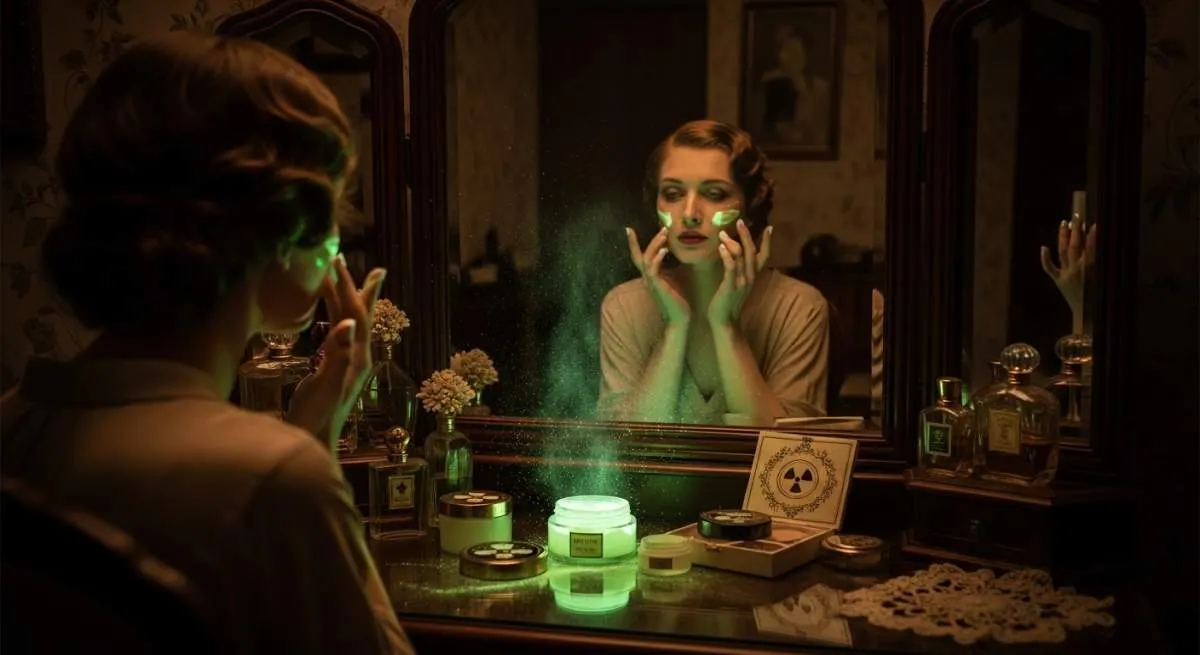
Radioactive Radiance and Lethal Lids
It's hard to believe there was a time when people paid good money to slather radium cream on their faces or dust themselves with lead powder. Radium cosmetics first appeared in the early 1900s, promising an 'energizing' glow and a youthful radiance that felt almost magical. Meanwhile, lead powders delivered that coveted, ghostly pale complexion, a stark contrast to today's sun-kissed looks.
People wanted to erase imperfections and achieve a porcelain doll look. The grim reality was that they were slowly poisoning themselves.
Even as reports of disfigurement and death began to surface, many consumers kept reaching for the very products that were slowly killing them. Stories of corroding skin and neurological damage emerged, but the allure of looking flawless was a powerful drug.
It took a long, painful education, and countless ruined lives, for the dangers to truly sink in. The ultimate betrayal of both radium cream and lead powder cosmetics was tragically similar.
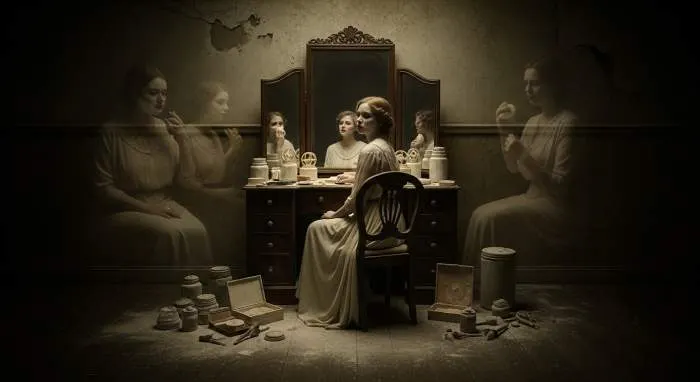
How Lead Became a Beauty Standard
Lead powder wasn't a new invention in the early 1900s. The practice of whitening the face with lead-based cosmetics stretched back centuries, especially among European aristocracy and wealthy women who wanted to signal that they didn't work outdoors. A pale, powdered face meant leisure and status. By the Victorian era and into the early twentieth century, lead remained the ingredient of choice for achieving that fashionable alabaster finish.
Manufacturers mixed lead oxide, lead carbonate, and other lead compounds into face powders, rouges, and foundations. Women applied these products daily, sometimes multiple times a day. The lead accumulated in the skin, bones, and organs over months and years. Symptoms appeared gradually: tremors, digestive problems, anemia, and eventually severe neurological damage. Some women experienced hair loss, tooth decay, and a distinctive dark line along the gum where lead settled in the body.
The cosmetics industry knew about lead's toxicity long before it became common knowledge. Doctors had documented lead poisoning for centuries, yet manufacturers continued selling these products because they worked. They were cheap to produce, and consumers demanded them. Regulation was virtually nonexistent, and profit margins were too attractive to abandon.
Radium: The Miracle Element That Wasn't
When Marie Curie discovered radium in 1898, the scientific world was electrified. Here was an element that glowed in the dark, released energy constantly, and seemed to defy the laws of nature. Within a few years, radium became the ingredient of the moment for everything from health tonics to cosmetics. If a tiny amount of radium could power such extraordinary properties, surely it could transform skin.
Beauty companies marketed radium creams as rejuvenating treatments. The creams promised to stimulate cell renewal, tighten sagging skin, and deliver that coveted luminous glow. Advertisements featured testimonials from satisfied customers and doctors who claimed radium was the future of skincare. Some products contained only trace amounts of radium; others were genuinely radioactive enough to cause harm. Women paid premium prices for these jars of slow-acting poison, believing they were investing in youth and beauty.
The radioactive decay of radium produces alpha, beta, and gamma radiation. When applied to skin, radium creams exposed women to continuous low-level radiation. The element accumulated in bones and organs, where it continued to emit radiation internally. Cancers, particularly bone cancer and sarcoma, appeared years after regular use. Some women developed severe burns and lesions on their faces where they had applied the cream most heavily.
Why Consumers Trusted These Products
In an era before the FDA had real enforcement power, before independent testing was standard, and before the internet could spread warnings instantly, consumers relied on advertising, word of mouth, and the authority of manufacturers. A beauty company's claims were rarely challenged. If a jar said it contained radium or promised miraculous results, most people believed it. Doctors themselves sometimes endorsed these products, either because they genuinely didn't understand the dangers or because they had financial ties to the manufacturers.
The beauty industry also exploited deep insecurities. Women were told that their natural appearance was insufficient, that aging was a disease to be cured, and that a flawless complexion was essential to social success and romantic prospects. Against that psychological pressure, the risk of using an untested product seemed worth it. The damage happened slowly and invisibly; the promise of beauty was immediate and visible.
The Slow Reckoning: How Regulations Finally Stopped Deadly Cosmetics
By the 1920s and 1930s, cases of radium poisoning began appearing in medical literature. Women who had used radium cosmetics developed cancers and severe radiation sickness. Some manufacturers quietly removed radium from their formulas, but others continued selling the products for years. Lead powders persisted even longer, partly because lead poisoning was a slower, less obviously catastrophic process than radium exposure.
The turning point came gradually. Scientific evidence accumulated. Regulatory agencies, particularly the FDA after its founding in 1906 and its strengthening in subsequent decades, began cracking down on false health claims. Consumer awareness grew. By the 1940s and 1950s, most mainstream cosmetics companies had removed both radium and lead from their products, though some small manufacturers and international brands continued using lead well into the late twentieth century.
The shift wasn't purely about safety; it was also about economics. As regulations tightened and liability became a concern, manufacturers found it cheaper and safer to use alternative ingredients. Modern cosmetics still contain heavy metals in trace amounts, a reality that occasionally makes headlines, but the deliberate, marketed use of known poisons has ended.
What Deadly Beauty Secrets Reveal About Beauty Culture
The radioactive creams and lead powders era reveals something uncomfortable about how beauty standards work. They're not based on what's actually healthy or attractive in any objective sense; they're based on what signals status, wealth, and conformity at a particular moment. The pale, powdered face of the Victorian era signaled that a woman didn't labor outdoors. When that standard changed and tanned skin became fashionable, the demand for lead powder evaporated, not because people suddenly understood the poison, but because the aesthetic ideal shifted.
The willingness to use dangerous products also shows how powerful the pressure to conform can be. Women weren't stupid or vain for using these cosmetics; they were responding to real social consequences for not meeting beauty standards. A woman's appearance affected her marriage prospects, her social standing, and sometimes her employment. Against those stakes, the abstract risk of long-term poisoning felt like a reasonable trade-off.
Today, as you walk through the beauty aisle, you might wonder what future generations will cringe at in our current 'miracle' ingredients. We've certainly come a long way from radioactive creams and lead foundations, thankfully. But that fundamental human desire to alter, enhance, and chase an elusive ideal of beauty hasn't changed. This history isn't just a grim curiosity, it's a stark reminder of how susceptible we are to promises of quick fixes, and how willing we are to trust a shiny new bottle. What are we putting on our faces right now that we'll regret later?
What did victorian women use for makeup
Before lead powders became mainstream, Victorian women often relied on homemade concoctions like chalk, zinc oxide, and even crushed pearls to achieve a pale complexion. But the most dangerous secret was the use of belladonna drops, which dilated pupils to create a doe-eyed look, despite causing blurred vision and eventual blindness.