You’ve scrolled, you’ve double-tapped, you’ve probably even tried it yourself. The "soap brow" trend has taken over TikTok, Instagram, and every beauty influencer’s feed, promising perfectly feathered, lifted arches that defy gravity and define the face with enviable precision.

It’s hailed as a modern marvel, a budget-friendly hack, a genius stroke of cosmetic ingenuity for the digital age. But what if I told you that this so-called twenty-first-century innovation is, in fact, a glorious echo from an era of unparalleled glamour, a whispered technique born not in a trendy studio, but beneath the dazzling lights of Hollywood’s Golden Age?

Before viral challenges and selfie filters, before the advent of elaborate brow gels and pomades, before even the internet itself, there was a quiet, unassuming hero lurking in the makeup kits of Tinseltown's most celebrated artists: a simple bar of soap. Yes, the very same substance you use to wash your hands was once the secret weapon, the unsung architect behind some of history’s most iconic on-screen gazes. Imagine the bustling sets, the frantic touch-ups, the relentless pursuit of perfection that defined cinematic artistry.

Makeup artists, tasked with creating looks that would translate flawlessly onto the demanding silver screen, faced challenges that modern beauty enthusiasts can barely fathom. Limited product ranges and the need for extreme longevity under scorching lights forced them into a realm of innovation, where resourcefulness was not just a skill, but an absolute necessity.

They weren't just applying makeup; they were sculpting narratives onto faces, ensuring every expression, every glance, every eyebrow arch contributed to the magic unfolding before the cameras.

1940s Hollywood Makeup Craft Cinematic Beauty

This wasn't about a fleeting trend; it was about crafting enduring images, imbuing characters with an otherworldly allure that would captivate audiences for decades. The desire for strong, expressive brows, capable of conveying everything from smoldering intensity to delicate vulnerability, was paramount. Forget delicate powders or subtle pencils – they needed hold, structure, and an almost architectural precision that only a surprising household staple could provide.

Prepare to journey beyond the velvet ropes, past the carefully curated public images, and into the sacred inner sanctum where true artistry blossomed. We’re not just talking about a makeup trick; we’re talking about an essential piece of cinematic history, a testament to the enduring power of ingenuity.

Get ready to peel back the layers of time and discover how the likes of legendary makeup artists, striving to perfect the visages of stars, unknowingly laid the groundwork for today’s most viral brow phenomenon. This isn't just a revelation; it's an excavation of true Hollywood beauty secrets, proving that sometimes, the most groundbreaking innovations are simply rediscoveries, waiting for their moment in the modern spotlight. The "soap brow" isn't new – it's a legacy, polished and re-presented for a new generation.

From Klieg Lights to TikTok: The Resurgence of the Soap Brow's Silver Screen Genesis

The "soap brow" trend, a modern darling of beauty influencers across social media platforms, appears to be a fresh, innovative technique for achieving that coveted brushed-up, laminated brow look.

Yet, like many "new" beauty phenomena, its true origins lie not in the digital age, but in the analog glamour of Old Hollywood, a practical secret wielded by makeup artists and actors long before the internet even dreamed of going viral. This ingenious method, which harnessed the humble bar of soap, was a backstage staple for crafting the impeccably sculpted, resilient brows demanded by the unforgiving close-ups and intense lighting of the silver screen.

The Silver Screen's Sculpted Frames: Mid-Century Hollywood

In the Golden Age of Hollywood, roughly spanning the 1930s to the 1950s, an actor's face was their fortune, and every feature had to convey emotion, power, or delicate vulnerability with absolute clarity. Eyebrows, in particular, played a critical role in framing the eyes and defining character.

1930s Hollywood Screen Test Natural Glamour

Actresses such as Marlene Dietrich, with her famously thin, arched brows, or the more natural yet perfectly groomed arcs of Grace Kelly, exemplified the era's meticulous approach to facial aesthetics. These brows weren't just decorative; they were essential tools in the actor's expressive arsenal, needing to remain flawless through demanding shooting schedules.

Just as Jackson Pollock was revolutionizing the art world in the late 1940s and early 1950s with his radical drip paintings, challenging traditional canvases with dynamic, expressive gestures, Hollywood's makeup artists were similarly engaged in their own meticulous craft.

They weren't just applying paint; they were engineering faces for the camera, requiring techniques that were both artful and intensely practical. The studio system, known for its rigorous control over star images, ensured that every detail, down to a single brow hair, was perfectly in place.

Precision Under Pressure: The "Why" for Soap Brows

The environment of a film set was, and still is, notoriously challenging for makeup longevity. Blazing hot klieg lights could melt traditional makeup, and long shooting days meant touch-ups had to be efficient and effective. Wax-based pomades and brow gels of the time, while available, often lacked the industrial-strength hold needed to keep recalcitrant brow hairs perfectly aligned for hours on end. Furthermore, they could appear greasy or flake under the scrutiny of Technicolor cameras, which magnified every detail.

Actors performing under duress, emoting powerfully, or even just enduring the sheer heat and stress of filming, needed their brows to stay put. The expressive movements of the face could easily dislodge less robust products, leading to inconsistent looks between takes. This called for a solution that was not only incredibly durable but also invisible, allowing the natural texture of the brow to shine through while providing an ironclad grip. The answer, often passed down through generations of professional makeup artists, was surprisingly simple: a bar of soap.

The Humble Tool: How Bar Soap Provided Hold

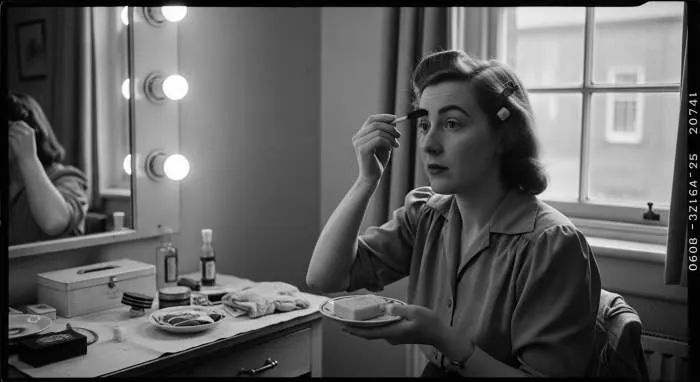
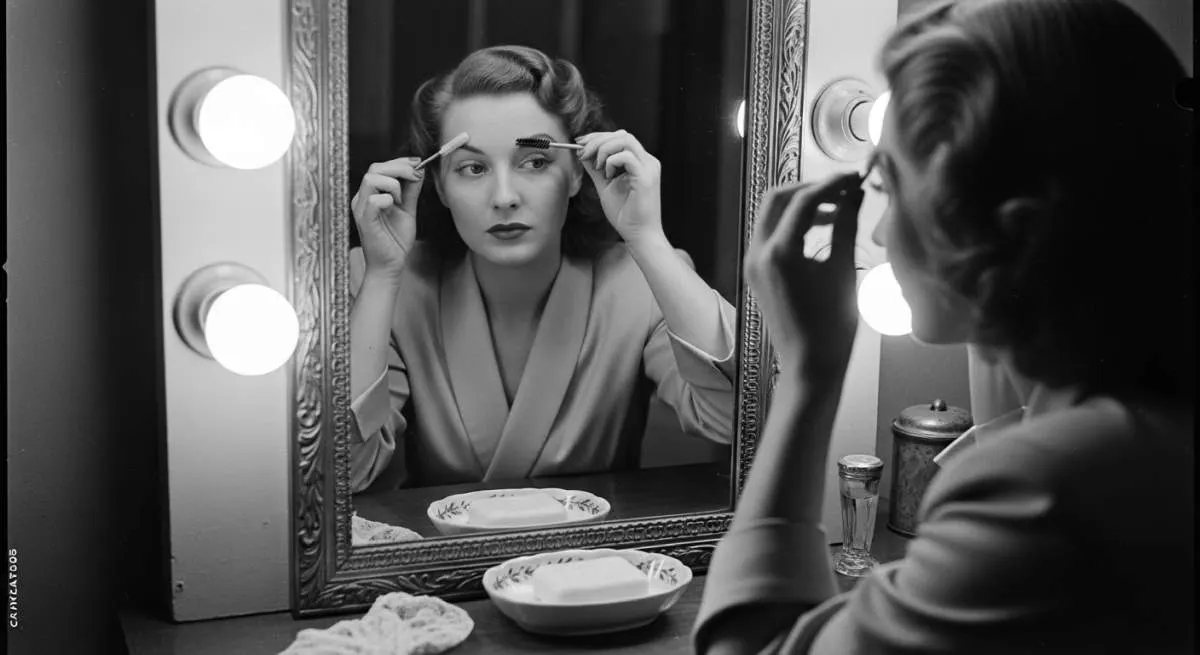
The technique itself was elegantly straightforward. A makeup artist would take a clean spoolie brush – or, in earlier days, a stiff, clean toothbrush – and lightly dampen it. Then, they would gently rub the damp brush against a bar of unscented, glycerin-based soap, picking up a fine, almost invisible film of product.

This soap-laden brush was then meticulously combed through the actor's brow hairs, typically brushing them upwards and outwards. The glycerin in the soap acted as a natural fixative, drying clear and stiff, essentially laminating the hairs into place.

1940s Hollywood Soap Brow Technique Vintage

The magic of soap lay in its ability to create a strong, flexible hold without adding visible bulk or a shiny finish. Once dry, the soap created a firm, matte finish that held each hair precisely where it was placed, resisting sweat, heat, and movement.

It allowed makeup artists to sculpt, define, and even slightly extend the brow shape with unparalleled precision, ensuring that from wide shots to extreme close-ups, the actor's brows contributed flawlessly to their on-screen persona.

Historical Insight: We highly recommend exploring VICTORY ROLL HAIRSTYLE: WWII ORIGINS & ENDURING GLAMOUR for a complete picture of the era.

From Set to Social: A Resurfacing Legacy

For decades, this "soap brow" method remained largely a professional secret, a backstage trick of the trade known primarily to Hollywood's elite makeup artists. It wasn't extensively marketed by cosmetic brands, who instead focused on selling brow pencils, powders, and creams to the general public.

The knowledge was often passed down through apprenticeships or discovered through practical experimentation in the demanding environment of film production.

Today, thanks to the democratizing power of the internet and social media, these once-guarded techniques have resurfaced. Beauty enthusiasts and professional makeup artists alike have rediscovered the efficacy of bar soap, sharing tutorials and tips on platforms like TikTok and Instagram. 

It's a testament to the enduring power of practical solutions, now accessible globally, much like how a carefully curated playlist on Spotify can introduce a new generation to the timeless classics that defined an era. This humble technique, born from the necessity of on-screen perfection, continues to sculpt, define, and elevate brows, bridging the gap between vintage glamour and contemporary aesthetics.

Transcending Eras: The Soap Brow's Unfolding Tapestry in Beauty and Beyond

The journey of the "soap brow" technique, from its humble beginnings as a utilitarian hack backstage in old Hollywood to its present-day status as a viral sensation, offers a compelling narrative on beauty's cyclical nature and the profound cultural impact of seemingly simple innovations.

1940s Hollywood Soap Brow Beauty History

Long before the era of digital tutorials and instantaneous trends, this ingenious method was quietly shaping the faces of cinematic legends, underscoring a fundamental human desire for expressive self-presentation that transcends the ages.

From Silver Screen Secret to Ubiquitous Trend

What began as a discreet, practical solution for actors on set — needing to define and hold brows in place under hot studio lights and during demanding performances — gradually seeped into the broader consciousness. 

This wasn't merely about aesthetics; it was about performance, about character. The defined, held brow could convey intensity, innocence, or glamour, contributing significantly to the visual storytelling. Think of the structured faces of classic film stars, their expressions amplified by meticulously groomed brows, a testament to the uncredited magic of a simple bar of soap.

Democratization of Artistry

  • The accessibility of bar soap, a household staple, meant that this sophisticated brow-sculpting technique was inherently democratic. Unlike specialized, often expensive, brow gels and waxes that would proliferate decades later, the "soap brow" required no grand investment, only ingenuity.

  • This affordability played a crucial role in its eventual mass appeal, especially during its contemporary resurgence. It allowed a wider audience to achieve a polished, high-fashion look without breaking the bank, a powerful statement in an industry often associated with exclusivity.

The Rhythmic Pulse of Fashion and Beauty

The cultural impact of the soap brow isn't linear; it's a fluctuating echo within the broader symphony of fashion history. It lay dormant, a forgotten trick, during eras dominated by ultra-thin brows of the 1990s, a period of minimalist rebellion against the power brows of the 1980s.

1990s Minimalist Beauty Thin Brows Fashion History

However, as the 2010s brought a renewed appreciation for natural, fuller, and more expressive brows — inspired by supermodels and a broader shift towards authentic beauty — the soap brow technique found its moment to re-emerge, perfectly aligning with the "laminated brow" aesthetic.

Its renaissance on platforms like TikTok and Instagram was nothing short of explosive. Suddenly, an old Hollywood secret was being shared and replicated by millions globally, transforming it from a niche technique into a mainstream phenomenon. This digital dissemination highlighted how modern media can excavate and popularize historical beauty practices, often rebranding them with catchy new terminology, such as "soap brows."

Influence on Modern Beauty Standards

  • The soap brow has cemented the full, feathered brow as a dominant beauty ideal. It offers an illusion of thickness and volume, even for those with sparse brows, thereby influencing how individuals perceive and style their own facial features.

    Historical Insight: We highly recommend exploring ROTARY PHONE DIALING: UNRAVELING THE 10-SECOND MYSTERY for a complete picture of the era.

    Historical Insight: Retro Archive: The history of THE DARKEST LIPS: HOW FLAPPERS SHOCKED THE 1920S offers even more context to this story.

  • It has also spurred innovation within the beauty industry. While the original hack utilized common household soap, its popularity led cosmetic brands to develop specific brow waxes, balms, and gels designed to achieve a similar long-lasting, lifted effect, often with added conditioning benefits.

  • The paradox of using a basic cleansing agent for such a transformative styling effect is particularly intriguing. It's a testament to ingenuity that a product considered fundamental to iconic skincare routines – simple bar soap – could be repurposed so effectively for styling, blurring the lines between hygiene and high fashion.

The enduring cultural impact of the soap brow lies in its ability to transcend its humble origins. It's a powerful reminder that true beauty innovation often springs from necessity and resourcefulness, weaving itself into the fabric of our aesthetic history and continuing to shape how we present ourselves to the world, one perfectly sculpted brow at a time. This legacy, spanning generations and technologies, reaffirms the timeless artistry inherent in personal style.

Sculpting Your Story: The Modern Art of the Soap Brow

The enduring allure of the soap brow, a technique born from the ingenious necessity of early Hollywood, has transcended its utilitarian origins to become a cornerstone of contemporary beauty. No longer a whispered backstage secret, it's celebrated for its ability to create a feathery, lifted, and perfectly groomed brow that frames the face with effortless sophistication.

Early 2000s Soap Brow Modern Beauty Technique

While the fundamental principle remains the same – leveraging the adhesive power of soap – today's application refines the process, making it accessible and adaptable for every aesthetic, from natural everyday elegance to high-fashion drama.

Your Modern Soap Brow Toolkit:

  • The Right Soap: Opt for a clear, glycerin-based soap. Avoid opaque, heavily fragranced, or moisturizing bars, as they can leave residue or cause flaking. Dedicated brow soaps are available, but a simple clear bar works wonders.

  • The Essential Spoolie: A clean, firm spoolie brush is non-negotiable. Its bristles are key to evenly distributing the product and shaping the hairs.

  • Activating Agent: A small amount of water or, for enhanced longevity, a facial mist or setting spray. Less is more here to prevent excessive lather.

    Historical Insight: If you love this vibe, you'll also find 1950S RIVIERA STYLE: WHY OLD MONEY AESTHETIC IS BACK to be a fascinating read.

  • Optional Fillers: A fine-tipped brow pencil, powder, or pomade for filling in sparse areas after the soap has set.

Embracing the soap brow today is an homage to timeless beauty and a practical skill for achieving that coveted brushed-up look without the stiffness of some gels or the fuss of lamination.

Begin with clean, dry brows, ensuring no existing oils or makeup hinder the soap's grip. Lightly dampen your spoolie with water or setting spray – a spritz or two is usually sufficient. Drag the damp spoolie across the soap bar a few times, picking up a thin, even coat of product. The goal isn't a thick lather but a slight, tacky film. Now, with purpose and precision, brush your brow hairs upwards and outwards in short, sweeping motions.

Focus on lifting the hairs from the root, directing them towards your temple. For a truly laminated effect, once the hairs are positioned, use the clean, flat side of your spoolie handle or even a clean fingertip to gently press the hairs flat against your skin. This crucial step locks them into place, enhancing the illusion of thickness and definition.

Allow the soap to dry completely – this usually takes a minute or two – before proceeding with any additional makeup. Should you have any sparse areas, now is the time to delicately fill them in with a fine-tipped brow pencil or powder, using hair-like strokes to maintain the natural, fluffy texture created by the soap.

The beauty of this technique lies in its versatility; it can create a dramatically bold brow for a runway-inspired look, or a subtly enhanced, groomed finish for everyday wear. It taps into a resourcefulness reminiscent of a certain wartime style, where practicality and ingenuity dictated beauty choices, proving that effective solutions don't always require an arsenal of expensive products.

1940s Wartime Beauty Resourceful Soap Brow

The modern soap brow celebrates this heritage of smart beauty, offering a powerful, yet elegant, frame for the face that feels both current and classically chic. It’s a testament to how foundational techniques, once necessities, evolve into sophisticated styling choices, elevating simple elements to art.

The Unfurling Tapestry of Technique

The saga of the soap brow is more than a fleeting TikTok trend; it's a profound echo across decades, a testament to the enduring ingenuity born within the crucible of performance. From the golden age of Hollywood, where actors like Marlene Dietrich and directors demanded sculpted precision, to today's digital creators mastering flawless frames, the fundamental principle remains constant: the art of brow manipulation is paramount.

This simple bar of soap, once a clandestine backstage secret, forged from necessity on bustling soundstages of the 1930s and 1940s, has transcended its humble origins.

It speaks volumes about the cyclical nature of beauty and the resourceful spirit of artistry. These historical insights aren't just fascinating anecdotes; they are invaluable vintage fashion tips, revealing that timeless style often springs from clever adaptation.

The modern revival isn't merely copying; it’s an homage, a reinterpretation that celebrates the original spirit of innovation. Beauty, like all great art, is in constant dialogue with its past, absorbing, refining, and re-presenting.

The Enduring Arc of Artistry

What the studios perfected for the silver screen, the runways and streets later embraced, culminating in a democratized technique accessible to all. The soap brow’s journey underscores a powerful truth: true elegance and impactful style are rarely about expensive products alone.

They are often about understanding form, playing with texture, and possessing the creative vision to transform the mundane into the magnificent. This enduring arc, from studio necessity to digital sensation, reaffirms that some expressions of beauty are so fundamentally striking, they are destined to return, captivating each new generation with their powerful, sculpted grace.