
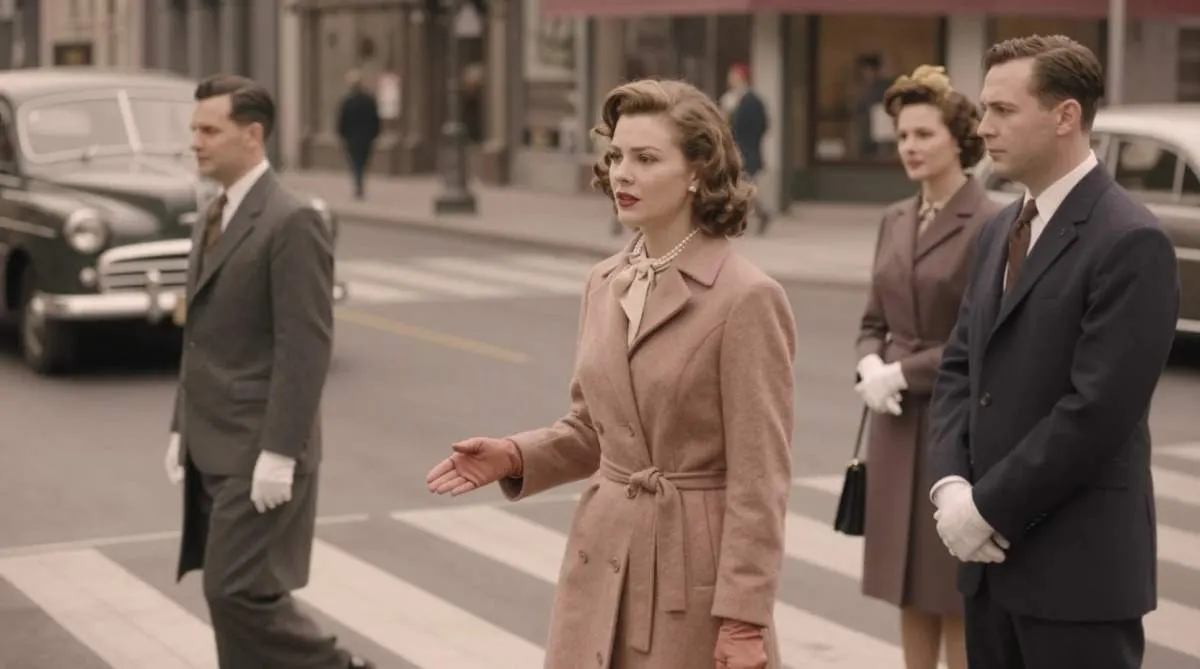

The short answer is no. There was never any law that forced women to wear gloves in the 1950s, and no woman ever got a fine for showing up bare-handed. The idea that someone could be ticketed for not wearing gloves is a stubborn myth, one that mixes up social pressure with actual law. What really existed was a powerful, unwritten code of etiquette that could feel just as strict as any official rule.
This myth has taken on a life of its own online, often shared as a shocking fact about how restrictive the 1950s were. But the truth is more interesting and more layered. Women back then navigated a world where appearances carried heavy social weight, and gloves were a big part of that visual language. Understanding the real story helps us see the decade more clearly, without the sensationalism.
Where Did the Glove Fine Myth Come From?
The myth probably grew from a mix of real social rules and a misunderstanding of how they were enforced. In the 1950s, women's magazines, etiquette books, and even some workplace dress codes strongly encouraged gloves for certain occasions. A woman who showed up to a formal luncheon, a church service, or a job interview without gloves might get disapproving looks or whispered criticism.
But disapproval is not a fine. No police officer or government official ever issued a ticket for bare hands. The confusion may have started when people exaggerated the consequences of breaking these social rules, turning a social penalty into a legal one. Over time, the story got repeated until it sounded like established fact.
Why the Glove Fine Myth Spreads So Easily
Exaggerated myths often stick around because they offer a simpler story. It's easier to point to a supposed fine than to unpack the intricate, often oppressive, social expectations that really bound women back then.
The 1950s gloves debate was fierce, but it wasn't policed by fashion cops with ticket books. Instead, women navigated complex expectations where appearances spoke volumes. A bare hand could signal anything from rebelliousness to simply not knowing proper conduct. This enduring bare-hand fine idea ultimately says more about how we simplify the 50s than about the decade itself. We often distill complex history into sensational soundbites.
What Was the Real Purpose of White Gloves in the 1950s?
White gloves in the 1950s were a symbol of respectability and social standing, not a legal requirement. They signaled that a woman was well-bred and followed proper etiquette, especially in public settings like church or luncheons. The pressure to wear them was huge, but it came from society, not the law.
Gloves served several practical and symbolic purposes. They protected a woman's hands, which were seen as a sign of refinement and leisure. A woman who didn't have to work with her hands could keep them soft and pale, and gloves helped maintain that look. They also completed an outfit, adding a polished, finished appearance that was expected for many social occasions.
Who Was Expected to Wear Gloves in the 1950s?
The expectation to wear gloves was strongest among middle-class and upper-class white women, especially in urban and suburban areas. For these women, gloves were part of a larger dress code that included hats, stockings, and proper handbags. A woman who skipped gloves might be judged as careless or low-class.
Working-class women and women of color often had different experiences. Many couldn't afford multiple pairs of gloves or didn't have jobs that required such formal attire. In factories, farms, or domestic work, gloves were more likely to be practical work gloves than fashion accessories. The glove rule was thus a marker of class and race as much as gender.
How Did the Glove Rule Change Over the Decade?
Early in the 1950s, gloves were nearly mandatory for any public appearance outside the home. Women wore short white gloves for daytime events and long evening gloves for formal occasions. The style was heavily promoted by fashion magazines, Hollywood films, and department store displays.
By the late 1950s, the rules began to loosen. Younger women started to rebel against the strict dress codes of their mothers. The rise of casual wear, influenced by teenagers and rock and roll culture, made gloves feel old-fashioned to some. Still, many women continued to wear them well into the 1960s, especially for church, weddings, and job interviews.
What Happened When Women Stopped Wearing Gloves?
When women stopped wearing gloves, it wasn't a sudden rebellion but a gradual shift. The change reflected broader social movements, including the women's liberation movement and the casualization of American dress. By the 1970s, gloves were mostly reserved for formal occasions or cold weather.
The end of the glove era wasn't met with fines or arrests. Instead, older generations sometimes expressed disappointment or confusion. Grandmothers might ask why a young woman wasn't wearing gloves to church, but that was the extent of the enforcement. The social pressure faded as the culture changed.
Is There a Modern Equivalent to the White Glove Rule?
Today, there's no single dress code that carries the same weight as the white glove rule. However, certain expectations still exist in professional and social settings, some written into workplace rules, others carried by social judgment.
The modern equivalent might be the expectation to dress professionally for a job interview or to follow a dress code at a fancy restaurant. Some clothing rules still carry real weight: in 2021, a woman fined for wearing a burqa in Switzerland made global headlines, and a women's team fined for wearing shorts instead of the sport's required uniform sparked the same kind of debate. Even before a court appearance, women are told what not to wear, with judges free to send someone home to change. These rules rarely end in fines, but the white glove rule's spirit never fully disappeared.
Why the Glove Myth Still Resonates Today
The glove myth persists because it captures a truth about the 1950s that feels relevant today. Women then faced intense pressure to conform to narrow standards of appearance, and that pressure could feel like a law. The myth makes that feeling concrete and easy to understand.
It also serves as a cautionary tale about how we remember the past. We tend to simplify history into stories with clear villains and victims. The glove fine myth is a perfect example of this tendency, turning a complex social system into a simple, shocking fact. Recognizing the myth helps us think more critically about other historical claims we come across.
What Does the Glove Revival Tell Us?
In recent years, gloves have made a comeback in fashion, especially among younger women who embrace vintage styles. This revival isn't about social pressure but about personal choice and aesthetic appreciation.
The revival shows how fashion can be reclaimed and reinterpreted. What was once a symbol of restriction can become a symbol of creativity and individuality. The glove, freed from its old social rules, now represents a connection to the past without its weight.
How to Wear Gloves Today Without the Pressure
If you want to try the glove look today, the rules are simple: wear them when you want, where you want. There's no etiquette book telling you what length or color to choose. You can pair short white gloves with a sundress or long black gloves with an evening gown, whatever feels right.
The key is to have fun with it. Gloves can add a touch of elegance or a playful vintage vibe to any outfit, so try them at a coffee date before committing to a formal event. They're an accessory, not a requirement, and the old pressure is gone, so the only rule left is to wear what makes you feel good.
What did white gloves symbolize in the 1950s
In the 1950s, white gloves were a subtle class marker, signaling that a woman didn't perform manual labor. They also served a practical purpose: protecting delicate fabrics from hand oils and lotions, which could stain silk or wool. This dual role made them a staple of the well-dressed woman's wardrobe.