
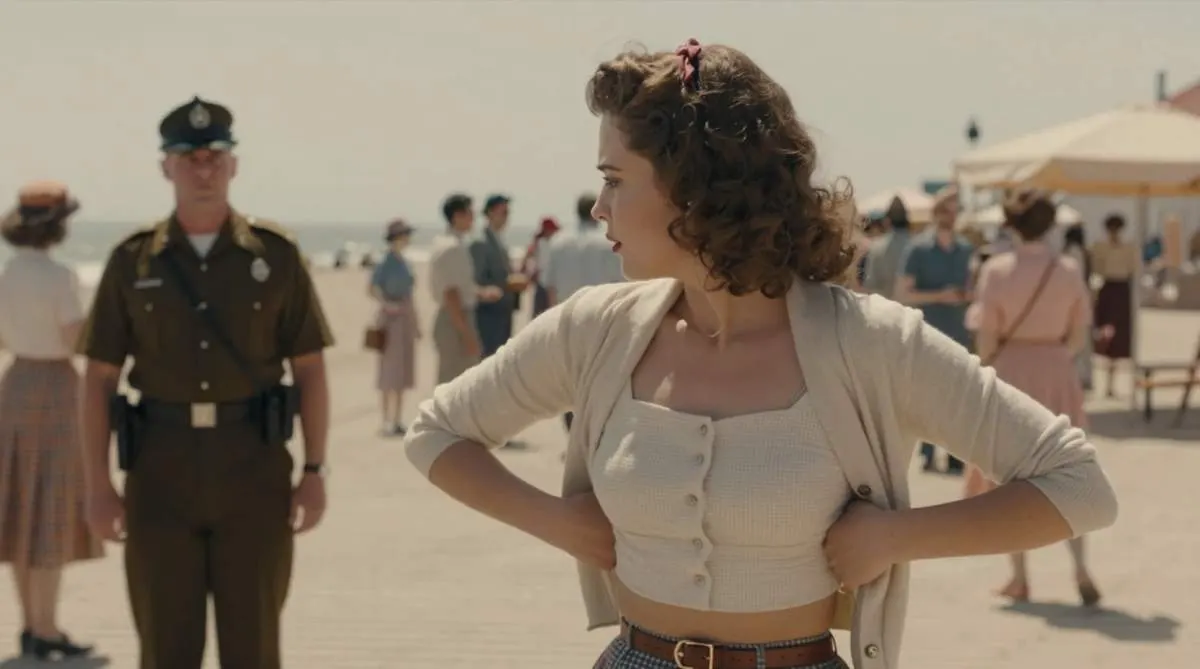
Were Crop Tops Banned in 1940s America?
The short answer is no, but the truth is a lot messier. There was never a federal law making crop tops illegal, but a powerful mix of social pressure, local dress codes, and wartime rationing made them practically off-limits for most women. This so-called "midriff panic" meant that showing your stomach could get you kicked out of a public pool, shamed at the beach, or sent home from school, all without a single law on the books.
The real battle was never really about fabric or hemlines. It was about who got to control women's bodies during a time of massive social change, when women were entering the workforce in record numbers and challenging traditional roles.
Wartime Rationing Changed Fashion
World War II had a huge impact on fashion, and not just because of fabric shortages. The U.S. government imposed strict rationing on materials like cotton, wool, and silk, which meant clothing manufacturers had to use less fabric per garment. This practical need for shorter hemlines and less fabric accidentally created styles that looked a lot like modern crop tops.
Women's magazines and pattern companies started showing two-piece swimsuits and tops that ended above the waist, but these were always framed as practical, not fashionable. The idea was that showing skin was a sacrifice for the war effort, not a personal style choice.
Dress Codes and the Midriff Panic
By the mid-1940s, local governments and school boards began cracking down on bare midriffs. Beach towns passed ordinances requiring women to wear full one-piece swimsuits, and some stores refused to sell two-piece bathing suits. The panic was especially strong in conservative areas, where showing skin was seen as a sign of moral decay.
This wasn't just about fashion; it was about controlling women's bodies during a time when women were gaining more independence. The crop top became a symbol of rebellion, even if most women never actually wore one in public.
The style challenged the idea that women's bodies should be hidden and controlled. In the 1940s, showing your stomach was seen as provocative and inappropriate, a time when even bare shoulders could get you in trouble.
The backlash was also tied to fears about women's changing roles. As women took on jobs traditionally held by men, some people worried that traditional gender roles were collapsing. The crop top became a lightning rod for these anxieties.
In practice, very few women wore crop tops in the 1940s. The style was mostly seen in fashion magazines and on Hollywood starlets, not on the street. If a woman did wear one, she risked being labeled as 'loose' or 'immoral,' which could damage her reputation and even her job prospects.
For most women, the crop top was a fantasy, something they saw in movies but never dared to wear themselves. The social cost was simply too high.
How Did the Crop Top Survive the 1940s?
Even though crop tops were banned in many public spaces, they continued to appear in films and magazines. Actresses like Rita Hayworth and Betty Grable wore two-piece outfits in movies, and these images were widely circulated. This kept the style alive in the public imagination, even if it wasn't acceptable in everyday life. The disconnect between what was shown in media and what was allowed in real life created a tension that would eventually explode in the 1960s and 1970s, when crop tops made a real comeback.
By the 1960s, the social rules that had kept crop tops hidden were starting to break down. The women's liberation movement, the sexual revolution, and the rise of youth culture all contributed to a more relaxed attitude toward clothing. Crop tops became a staple of 1970s fashion, especially in disco and bohemian styles.
This time, there was no moral panic. The crop top was simply a fun, fashionable choice, not a political statement. The 1940s panic had faded into history.
What Can We Learn From the 1940s Crop Top Panic?
The story of the 1940s crop top shows that fashion is never just about clothes. It's about power, control, and who gets to decide what's appropriate. The panic over bare midriffs was really a panic about women's independence, and the crop top became a symbol of that struggle.
Today, crop tops are everywhere, and no one thinks twice about them. But the history of how they were once banned reminds us that fashion freedom is something we should never take for granted.
The 1940s midriff panic didn't kill the crop top; it made it stronger. By trying to ban it, the moral guardians of the 1940s turned a simple piece of clothing into a symbol of defiance. Every time someone wears a crop top today, they are participating in a tradition of rebellion that goes back decades.
So the next time you put on a crop top, remember that you're wearing a piece of history. It's a reminder that personal style can be political, and that sometimes the most powerful statement is simply showing a little skin.
- High Waisted Everything: Pairing a crop top with high waisted jeans, skirts, or tailored trousers creates a balanced silhouette, showing just enough skin for a chic look that also elongates the legs.
- Layer It Up: Layering with a blazer, an open button down shirt, a chunky cardigan, or a denim jacket adds dimension and transitions a look from casual to smart casual.
- Play With Proportions: A fitted crop top pairs well with wide leg pants or a flowy maxi skirt, while a looser crop top balances slimmer bottoms like cigarette pants or a pencil skirt, creating visual harmony.
- Fabric and Occasion: Knit crop tops offer a cozy, casual feel. Silk or satin crops elevate an evening look. For a structured vibe, linen or cotton poplin crop tops are ideal for summer office wear, if appropriate.
- Go Beyond the Basic Tee: Explore cropped blouses with puffed sleeves, corset style crops, or sweater vests that hit just above the navel, showcasing the diversity of crop top designs beyond the 1940s women's fashion debate.
- Accessorize Smart: Belts are excellent for defining the waist with high waisted bottoms. Necklaces that complement the neckline and a great bag complete the outfit.
The crop top has truly shed its scandalous 1940s fashion past. It is no longer about moral outrage over a bit of skin, but about celebrating personal style, comfort, and fashion's incredible evolution. Wear your perfect crop top combo with confidence.
Conclusion: The Enduring Legacy of the Crop Top as a Symbol of Rebellion
The moral outrage that 1940s women's fashion caused by bare skin merely paused the trend.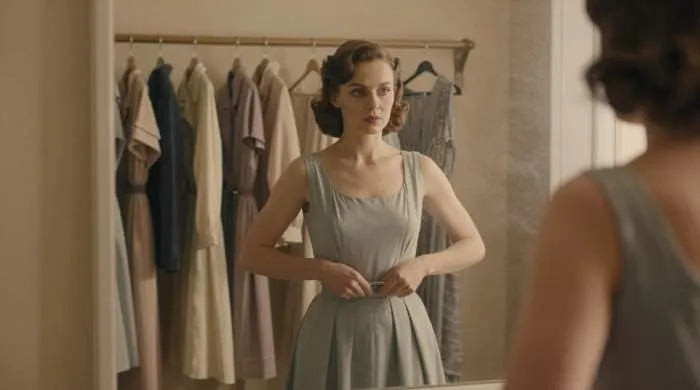 Decades later, crop tops returned with a vengeance. While styles evolved, the core idea, that rebellious peek of skin, endured. The history of crop tops in 1940s fashion is an early chapter in this tale of sartorial defiance. The 1940s midriff panic solidified crop tops as a powerful symbol, a reminder that personal style can be political, a quiet rebellion against expectations. This historical moment illustrates how debates over 'appropriate' attire recur, with the pushback in the 40s cementing the crop top's place as a defiant fashion statement.