
What Made the Bullet Bra So Radical
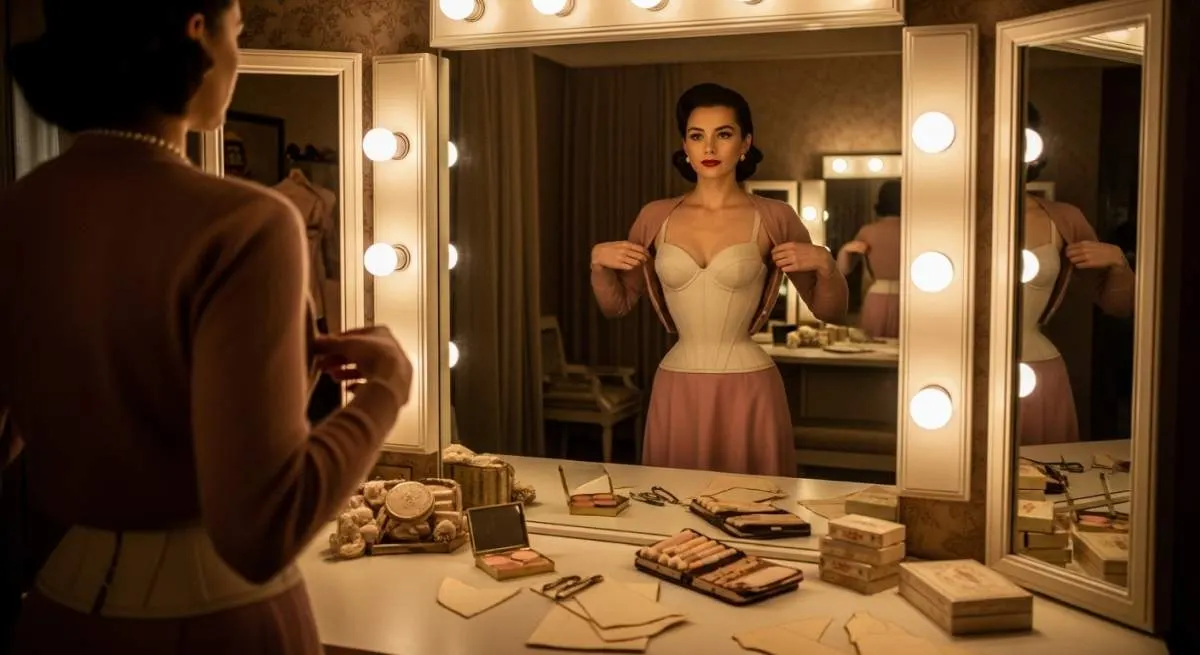
The bullet bra was engineered femininity, a garment that didn't just support the bust but sculpted it into a sharp, cone-shaped silhouette that stood out dramatically under tight sweaters. Emerging in the late 1940s and reaching peak popularity throughout the 1950s, it represented something far more complex than simple fashion. It was a deliberate architectural choice that projected confidence, control, and a kind of defiant sensuality in a post-war world still figuring out what women's bodies should mean [1].
The design was uncompromising: rigid cups, often reinforced with wire or heavy stitching, that lifted and shaped the breast into an almost weaponized point. This wasn't accidental, it was the whole idea. Unlike the softer, more naturalistic bras that had come before, the bullet bra made no attempt to mimic the body's natural contours. Instead, it announced itself, demanding attention and refusing to apologize for taking up space [2].
How the Look Became an Icon
The term 'Sweater Girl' emerged in the 1940s to describe young women who wore tight, form-fitting sweaters, usually paired with a bullet bra underneath. The combination created an unmistakable silhouette: a sharp, pointed bustline that seemed to defy gravity and good taste in equal measure. Actresses like Jane Russell and Jayne Mansfield became synonymous with the look, and Hollywood made sure audiences understood that this was a powerful, desirable image [3].
But the Sweater Girl wasn't just a Hollywood invention. She represented a specific moment in American culture. After World War II, women had worked in factories and offices while men were overseas. When the soldiers came home, there was enormous cultural pressure to push women back into domestic roles. The bullet bra, paradoxically, became both a tool of that pressure and a form of resistance. Yes, it emphasized traditional femininity and sexuality, but it did so on women's own terms, with an exaggerated confidence that bordered on parody.
The Engineering Behind the Silhouette
The bullet bra's construction was surprisingly sophisticated for its era. Manufacturers used multiple layers of fabric, often cotton or silk blends, combined with wire supports and sometimes even plastic or metal stays. The cups were typically cut and sewn to create that distinctive cone shape, and the engineering required real skill. Major manufacturers like Maidenform and Perma-Lift invested in research and advertising to make their versions the standard, competing fiercely on both construction quality and the sharpness of the point they could achieve.
The bra was expensive by 1950s standards, often costing several dollars when the average working woman earned around $30 a week. This meant that wearing a bullet bra was also a statement about access and class. It wasn't a garment every woman could afford, which only added to its cultural cachet. Those who wore one were making a visible choice about how they wanted to present themselves to the world.
Conical Command: Fashion's Boldest Move
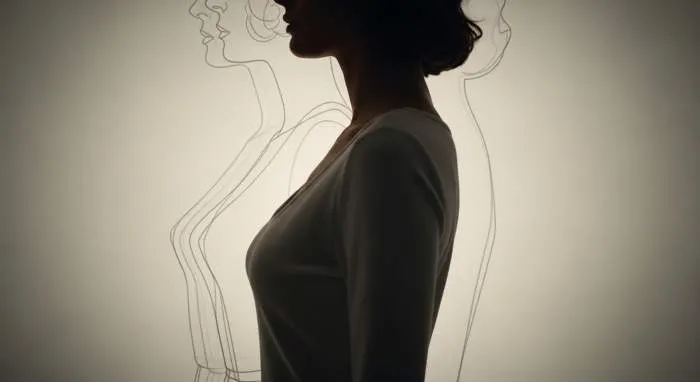 The bullet bra's influence extended far beyond the bedroom or the closet. It shaped how women moved, sat, and carried themselves in public. The garment demanded a certain posture, chest forward, shoulders back, that communicated authority and presence. In an era when women had limited legal rights, limited access to credit, and limited control over their own bodies, the bullet bra allowed them to literally reshape their physical presence in the world.
This wasn't subtle. The point of the bullet bra was to be noticed, to provoke, to make a statement that couldn't be ignored. In that sense, it was genuinely radical, even if the culture around it tried to frame it as simply feminine or decorative. The Sweater Girls who wore them understood the power of the silhouette, and so did everyone else.
The Fade and the Philosophy Behind It
By the late 1960s and 1970s, softer, more natural breast shapes started taking over. That original urge to emphasize and exaggerate a distinct, powerful kind of femininity slowly gave way to a desire for freedom and less restrictive clothing. The second-wave feminist movement explicitly rejected the bullet bra as a tool of patriarchal control, and the cultural conversation shifted dramatically. Ironically, this led to a brief moment when bras themselves were tossed aside in favor of a more natural look.
But the bullet bra's legacy isn't just about its fade-out, it's about the blueprint it left behind. The idea of sculpting the bust, of making a deliberate statement with what you wear underneath, became permanently etched into fashion history. Modern bras, even though they focus on comfort and all kinds of different styles, definitely owe something to those shaping garments of the past, whether it's push-ups, minimizers, or yes, the bullet bra itself. The main difference between a bullet bra and modern bras is that stiff, cone-shaped structure. Today's bras usually aim for a smooth, rounded look, enhancing without forcing everything into a sharp point.
Madonna and the Gaultier Moment
Even though it seemed outdated, the bullet bra has made some undeniable comebacks. Its sharp influence popped up in a big way when Jean Paul Gaultier brought the look back for Madonna's famous Blonde Ambition tour in 1990, proving that silhouette still had plenty of shock value and power. Gaultier's version was deliberately provocative, a corset-style bullet bra in satin and cone-shaped cups that made clear reference to the 1950s original while claiming it for a new era of female sexuality and control.
That 1990 moment was crucial because it showed that the bullet bra could be reclaimed and reinterpreted. For Madonna, wearing the Gaultier cone bra wasn't about conforming to 1950s ideals of femininity, it was about taking that aggressive silhouette and making it her own statement of power and provocation. The original 1950s Sweater Girls might find it funny that their shape-defining undergarments got revived as high fashion or punk rock statements, so far from the strict social rules that made them popular in the first place.
Contemporary Revival and Reinterpretation
Since the 1990s, the bullet bra has continued to resurface in fashion, often as a reference to both 1950s glamour and punk rebellion. Designers have used it to signal everything from retro nostalgia to deliberate irony to genuine feminist reclamation. The garment's meaning has become unstable, it can signify submission or defiance, depending on who's wearing it and why. That flexibility is part of what keeps it alive in the cultural imagination.
Those weaponized silhouettes, once symbols of domestic charm and controlled sensuality, now stand as a powerful, defiant nod to a past that was anything but subtle. It's a sharp echo that still cuts through the noise of today's fashion world.
What did the bullet bra symbolize in the 1950s
The bullet bra's cone shape was actually inspired by the streamlined, aerodynamic forms of 1940s industrial design, like the tail fins on cars and the nose cones of fighter planes. It was a way to bring that same sense of speed, precision, and forward momentum into women's fashion, turning the body into a kind of living sculpture.