IN THIS ISSUE:
Yves Saint Laurent's Mondrian Dress: The Art World's Runway Debut
When Art Wore Fashion: The Mondrian Revolution
Ever stared at a dress and felt like you were looking at a museum piece? Not just inspired by art, but like a masterpiece had actually decided to walk off the canvas and hit the catwalk? Yeah, we're talking about that dress. The one that blew minds, bent rules, and practically screamed "fashion is art, get over it!"
Forget subtle nods or fleeting influences. In 1965, the fashion world got a seismic shock. It wasn't some quiet revolution; it was a bold, unapologetic declaration. Suddenly, a painting wasn't just hanging on a wall; it was being worn, making a statement louder than any runway music could. This wasn't just a dress; it was a moment. A turning point. A piece of wearable art that redefined what fashion could be.
So, what is the Yves Saint Laurent Mondrian dress, anyway? Imagine Piet Mondrian's iconic geometric paintings – those stark black lines, those pure blocks of red, yellow, and blue – but instead of on a canvas, it's on a shift dress. No darts, no embellishments, just pure, flat, graphic power. It’s the visual equivalent of a mic drop in fashion history. It’s striking. It’s simple. It’s absolutely unforgettable.
When did YSL release the Mondrian collection? It was in the autumn/winter of 1965. A time when fashion was shifting, but still often constrained by tradition. This collection, particularly the Mondrian dresses, wasn't just a trend; it was a radical break. It was minimalist, modern, and utterly avant-garde. It made waves because it dared to flatten the female form, prioritising the artistic statement over traditional silhouette. You can see one of its lasting impacts here.
How did the Mondrian dress revolutionize fashion? It didn't just reference art; it became it. It challenged the very idea of haute couture, pushing fashion beyond mere clothing into the realm of conceptual design. It proved that intellect and high art could be worn, not just admired from afar. It opened doors for future designers to blur the lines between galleries and wardrobes. Before this, art and fashion certainly mingled, but this was a full-on embrace.
Was the Mondrian dress the first art-inspired fashion? Probably not the absolute first design to ever borrow from a brushstroke, but it was undoubtedly the most impactful and instantly recognizable. Its immediate success and lasting legacy cemented its place as the pivotal example of art-meets-fashion.

While others might have played with artistic themes, the Mondrian dress wasn't just playing; it was laying down a blueprint. It wasn't subtle; it was a direct translation that simply worked. This wasn't just another pretty dress; it was a visual manifesto. It shifted the conversation. And we’re still talking about it.
When Art Wore Fashion: The Mondrian Dress's Radical Debut
Picture this: it's 1965. While The Beatles were pushing boundaries with albums like Rubber Soul, transforming pop music with sophisticated sounds and introspective lyrics, a different kind of revolution was brewing in Parisian haute couture. The world was shifting, modern art was everywhere, and fashion was ready for a shake-up.
Enter Yves Saint Laurent, a designer already known for his audacious vision, about to drop a collection that would forever blur the lines between canvas and catwalk. He wasn't just making clothes; he was making wearable art, and the centerpiece was the now-iconic Mondrian dress.
The Geometric Muse: Understanding Mondrian
To grasp the genius of Saint Laurent's collection, you first need to understand his muse: Piet Mondrian. This Dutch artist, a pioneer of abstract art, developed a style called "Neo-Plasticism" or De Stijl in the early 20th century. Forget swirling landscapes or dramatic portraits; Mondrian's work was all about order, clarity, and fundamental elements. Think clean, black lines creating grids, filled sparingly with primary colors – red, yellow, blue – and non-colors like white, black, and grey. It was radical in its simplicity, aiming for universal beauty through geometric abstraction. His compositions felt stark, intellectual, and utterly modern, even decades after their creation.
Yves Saint Laurent's Vision: From Canvas to Couture
So, how did a fashion designer look at these flat, two-dimensional paintings and envision a dress? It wasn't about simply printing a painting onto fabric. Saint Laurent's brilliance, and what truly set the "Mondrian collection" apart, was his deep understanding of Mondrian's principles. Many designers had dabbed in art-inspired fashion before — Elsa Schiaparelli famously collaborated with Salvador Dalí in the 1930s on surrealist pieces like the Lobster Dress. But Saint Laurent didn't just borrow an image; he translated an entire aesthetic, making it tactile and wearable.
The collection debuted as part of his Autumn/Winter 1965 haute couture line. This wasn't merely a single dress but a series of six wool jersey shift dresses, each a direct homage to Mondrian's work.

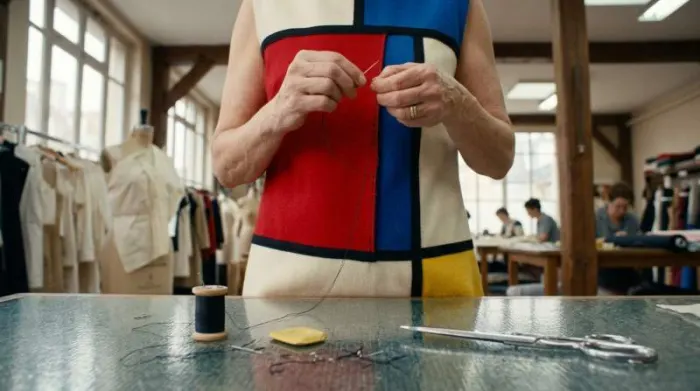
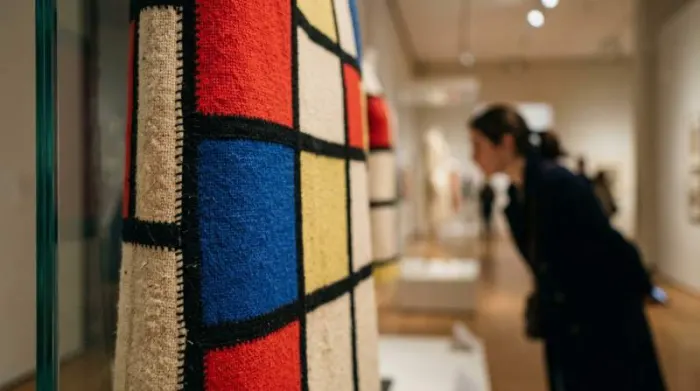
What made them so revolutionary? It was the execution. Saint Laurent's team painstakingly constructed these dresses using a technique known as intarsia, where different colored fabrics were inlaid and stitched together with visible black seams, precisely mimicking Mondrian's grid lines. This was crucial; the lines weren't printed but built into the garment's structure.
Engineering Elegance: The Construction of the Mondrian Dress
The engineering behind the Mondrian dress was as pivotal as its visual impact. These dresses were cut with a deliberate, straight-line shift silhouette. There were no darts or complex draping to distort the geometric planes. This simple form allowed the Mondrian-esque patterns to lie flat, preserving the two-dimensional quality of the paintings.
It wasn't just about what you saw; it was about how it was made. The intricate seaming was key, turning a functional element into a defining aesthetic feature. It’s no wonder people still ask, "What is the Yves Saint Laurent Mondrian dress?" It’s a masterclass in structure and visual artistry.
The release of the Mondrian collection was a sensation. It brought high art directly into fashion in a way that felt fresh, immediate, and incredibly chic. It wasn't just another art-inspired design; it was a profound conversation between two creative disciplines. The dresses quickly became a symbol of modern elegance, demonstrating how bold abstraction could be refined and utterly fashionable.
The fashion press went wild, and reproductions, though rarely matching the original's meticulous construction, flooded the market, solidifying the design's place in pop culture history. It truly redefined what a dress could be and how deeply art could influence our wardrobes.
Beyond the Brushstroke: How the Mondrian Dress Reshaped Our Wardrobes and Our Minds
When Yves Saint Laurent unveiled his Autumn-Winter 1965 collection, few could predict the seismic shift it would cause. At its heart was a series of six wool jersey dresses that didn't just borrow from art; they were art. The Yves Saint Laurent Mondrian dress, a key piece from this collection (you can dive deeper into its iconic design here: Source), with its stark blocks of primary colors separated by bold black lines, wasn't merely a garment; it was a manifesto. It perfectly translated Piet Mondrian's abstract grid paintings into a wearable form, kicking open the door to a new era where fashion explicitly conversed with fine art, not just whispered to it.
So, how did the Mondrian dress revolutionize fashion? Simply put, it blurred boundaries that most designers hadn't dared to touch so directly. Before 1965, art-inspired fashion often leaned into whimsy or surrealism. Think Elsa Schiaparelli's famed collaborations with Salvador Dalí, like the lobster dress. Those were iconic, sure, but they were often about applying artistic motifs onto garments, or creating fantastical, narrative pieces.

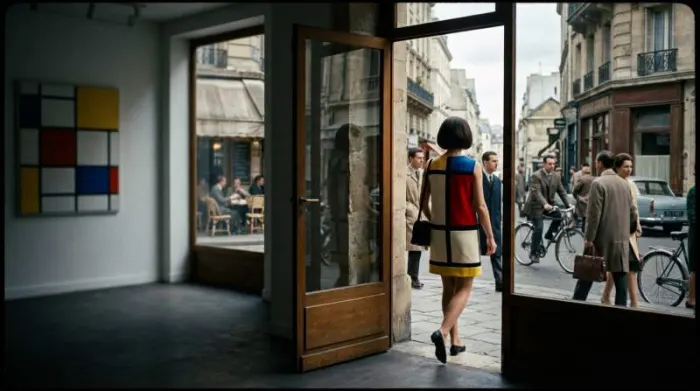
The Mondrian dress, however, became the painting. It wasn't an accessory or an appliqué; it was the entire canvas, a flat, geometric surface brought to life by the body beneath. This direct, almost architectural approach was groundbreaking, making the garment a piece of modern art in itself, challenging perceptions of what fashion could be.
Some might ask, was the Mondrian dress the first art-inspired fashion? Absolutely not. Artists and designers have always danced around each other. But the Mondrian dress redefined the relationship. Unlike earlier designs, it eschewed embellishment and three-dimensionality for pure, two-dimensional abstraction. It spoke the language of modernism and pop art, resonating with a generation eager for clean lines, intellectual statements, and a break from traditional frippery. While other art fashion designs might have felt like costume or theatrical pieces, the Mondrian felt like the future – stark, bold, and incredibly chic. It wasn't about narrating a dream; it was about embodying a concept.
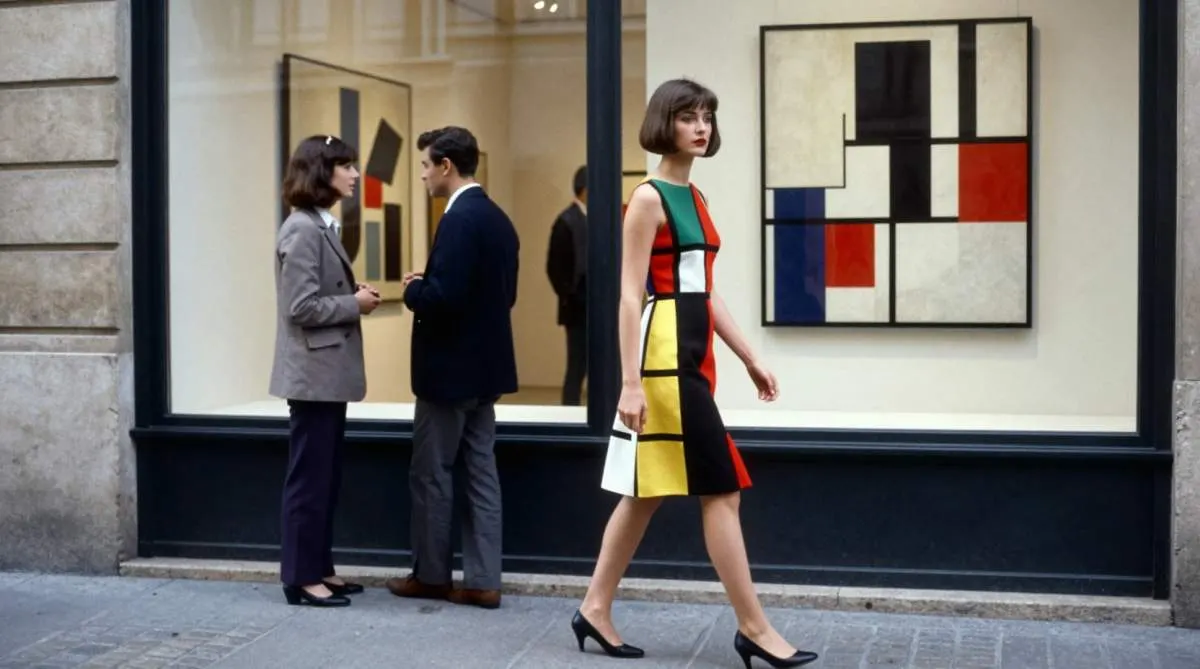
Its cultural impact stretched far beyond the haute couture salons. The dress quickly became a symbol of mid-60s modernity, its clean lines and bold colors perfectly capturing the zeitgeist. It inspired countless imitations and knock-offs at every price point, democratizing the idea of art-as-fashion.
This meant that complex artistic concepts could be distilled into popular, desirable clothing for a broader audience. It wasn't just for the highbrow elite; it was for anyone who appreciated its bold simplicity and statement-making power, showcasing that fashion could be intellectual, challenging, and wearable all at once. It even feels incredibly relevant today; you could easily pair it with a pair of sleek trainers and still look effortlessly contemporary – a true dress and trainers outfit for the ages.
The immediate success of the Mondrian collection cemented Yves Saint Laurent’s reputation as a true visionary, unafraid to push boundaries and fuse high art with contemporary style. Its legacy is clear: it wasn't just a fleeting trend. It paved the way for countless future art-fashion collaborations, establishing a valid and respected dialogue between the two disciplines. From Stephen Sprouse's graffiti prints for Louis Vuitton to Takashi Murakami's playful monogram reinventions, the seed planted by YSL's Mondrian dress continues to blossom, reminding us that sometimes, the most revolutionary statements are found in the cleanest, most conceptually daring lines.
Gridlocked Glamour: Styling the Mondrian Today
The Yves Saint Laurent Mondrian dress wasn't just a garment; it was a fashion seismic event. When YSL released the Mondrian collection in 1965, it wasn't simply an ode to Piet Mondrian's De Stijl paintings; it was a bold statement, a wearable piece of art that smashed conventional boundaries. This iconic design didn't just revolutionize fashion by blending high art with haute couture; it also proved that simplicity, when done right, could be profoundly impactful. But how do you take a piece so rooted in mid-century innovation and make it sing in today's world? It's all about smart juxtaposition and letting the dress do its job: being a showstopper.
Styling the Mondrian-inspired look now means honoring its clean lines and graphic power while ensuring it feels current, not costume-y.
- Keep Accessories Minimal: The dress itself is the art. Opt for subtle pieces like delicate gold or silver stud earrings, a sleek ring, or a simple, thin bracelet. Avoid necklaces that compete with the geometric neckline.
- Footwear is Key: Classic black pumps or sleek ankle boots work perfectly, providing a solid foundation without distracting. For a more modern edge, consider clean, pointed-toe flats or even minimalist white sneakers for a casual, high-fashion street style.
- Sleek Hair and Makeup: A clean, sharp haircut – think a blunt bob or a sleek ponytail – complements the dress's graphic nature. Makeup should be equally understated yet defined: a strong red lip, a precise eyeliner flick, or perfectly groomed brows.
- Layering with Intention: If you need outerwear, choose pieces that don't add bulk or compete. A sharply tailored black blazer, a minimalist trench coat, or a structured, collarless jacket in a solid neutral color maintains the clean aesthetic.
- Occasion Appropriate: This dress still commands attention. It's perfect for an art gallery opening, a chic cocktail party, a sophisticated lunch, or any event where you want to make a memorable, art-informed statement.
- Modern Interpretation: If a vintage YSL piece isn't in your closet, embrace the spirit. Look for contemporary dresses or separates that feature bold, primary color-blocking with clear, defined lines.
The Mondrian dress wasn't the first art-inspired fashion, but its boldness and commercial success certainly set a new benchmark, making it a pivotal moment when YSL released the Mondrian collection. Source. What Yves Saint Laurent achieved back in 1965 was more than just a dress; it was a design philosophy that fused art and wearability. To style it today means understanding that powerful simplicity.

You're not just wearing a dress; you're wearing an idea, a piece of fashion history that continues to influence modern aesthetics. It's about respecting the graphic integrity of the original while grounding it in contemporary reality. That means clean lines, a monochromatic palette for accompanying pieces, and letting the iconic blocks of color do all the talking. It’s an instant statement, as relevant and revolutionary now as it was when it first hit the scene.
...It’s an instant statement, as relevant and revolutionary now as it was when it first hit the scene.
"Whenever I see a Mondrian-inspired print today, I can’t help but think of the audacity it took in 1965 to tell the world that a woman could literally be a walking canvas. To me, this dress isn't just about primary colors; it’s about the moment fashion earned its seat at the table of fine arts. If you could own one museum-worthy piece, would this be it?"
— Retro Editor
The Canvas That Kept Giving
The Yves Saint Laurent Mondrian dress didn't just hang in a few boutiques in 1965. It detonated a quiet revolution. We’re still seeing the ripples. It wasn't the first time art and fashion tangoed, no. Designers before YSL, like Elsa Schiaparelli with her Salvador Dalí collaborations, certainly merged the two. But the Mondrian collection was different. It wasn't a surrealist whim or a subtle nod; it was a direct, unapologetic translation of fine art onto fabric.
This dress – or rather, the collection it fronted – made a powerful statement. It screamed that fashion could be intellectual, minimalist, and accessible all at once. It took Piet Mondrian’s abstract grid, usually confined to gallery walls, and put it on women walking down the street. That move fundamentally reshaped how designers viewed the potential of ready-to-wear. It broke down a wall between high art and everyday attire, making art an active part of contemporary style.
Its legacy isn't just about its immediate splash. The Mondrian dress kicked open a door for a whole new era of art-inspired fashion. Think about the countless graphic prints, the architectural lines, and the bold color blocking that followed. Many designers today still draw from that well, whether they realize it or not. It proved that a dress could be more than just clothing; it could be a cultural artifact, a wearable philosophy. It became an icon, cementing its place in fashion history and pop culture, frequently referenced and still celebrated today. That kind of staying power is rare. Source.
Ultimately, the Mondrian dress revolutionized fashion by demanding it be seen as a serious medium, capable of profound artistic expression. It wasn't just a pretty frock; it was a bold, geometric manifesto. And fashion hasn't looked back since.