
The Ghost in the Dishwasher
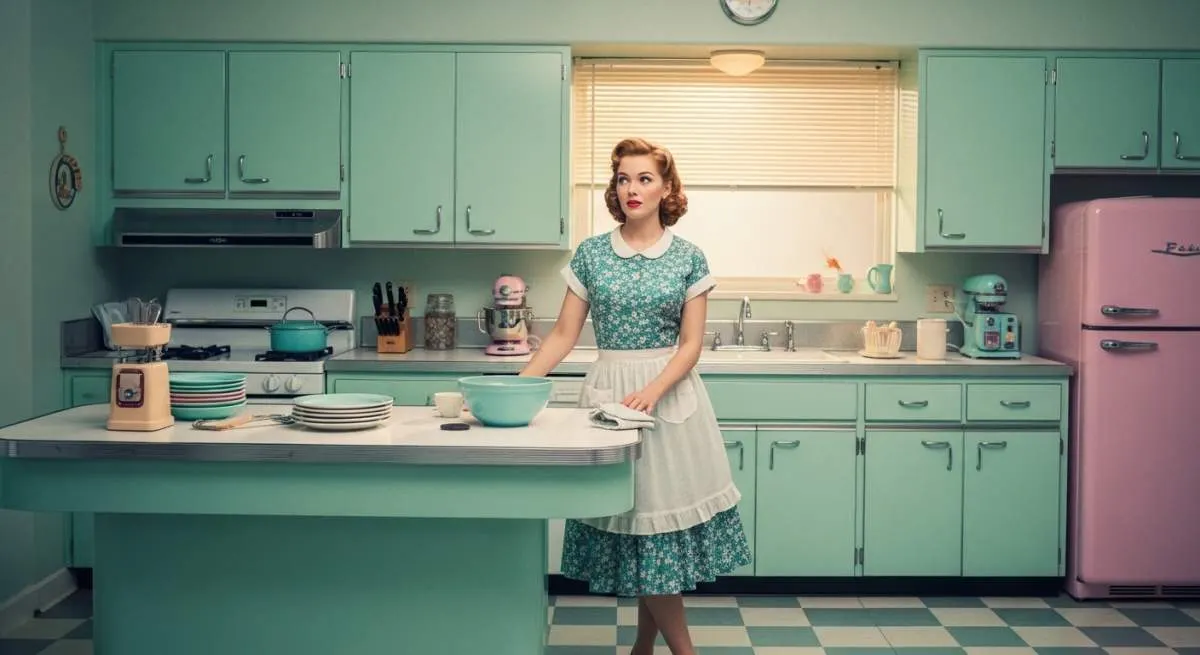
You’ve probably seen the image: a woman in a crisp apron, smiling in a mint green kitchen, surrounded by shiny new appliances. That picture of domestic bliss, awash in pastel colors, was everywhere in magazines and TV shows. But the real story was far more complicated, a simmering mix of pride and quiet unhappiness beneath that spotless surface.
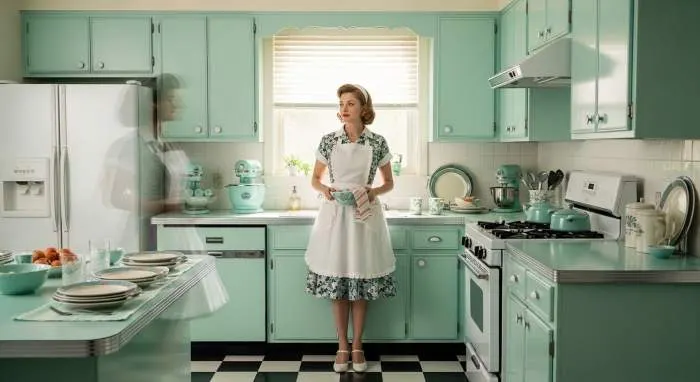
This “idyllic” dream didn’t just happen by accident. It was carefully built, fueled by the post-war economic boom and Cold War jitters that pushed women back home, making the household a kind of fortress against outside threats. For many women, especially those who’d worked in factories or offices during World War II, those expectations clashed hard with reality. They’d been educated, they’d contributed, and suddenly they were told their place was in the kitchen.
The message was clear: happiness meant a spotless house, perfect meals, and a smile, while the world rushed past their picket fences. This wasn’t just boredom. It was a deep, unspoken anxiety, fed by nuclear fears and a relentless pressure to conform.
Not every woman was miserable, and plenty found real joy in homemaking. But the pressure cooker of expectation, mixed with the era’s paranoia, left many feeling isolated and unfulfilled. The seeds of second-wave feminism were planted right there in those kitchens, in the quiet frustrations of women who wanted more than endless laundry and Tupperware parties. The discontent was real, even if it stayed hidden behind cheerful curtains and perfectly set tables.
The Ideal: A Smile in a Spotless Kitchen
The ideal was a full-time homemaker who kept a spotless house, raised well-behaved kids, and had a hot dinner ready when her husband walked in. She wore dresses with nipped waists and full skirts, often accessorized with pearls and an apron, even for everyday chores. Her hair was perfectly curled, her makeup was on, and she smiled through it all, as if housework were effortless and joyful.
This image was pushed hard in women’s magazines like Good Housekeeping and Ladies’ Home Journal, and on TV shows like “Leave It to Beaver” and “Father Knows Best.” Advertisers sold everything from ovens to floor wax by promising these products would make a woman a better wife and mother. The message was unmistakable: a woman’s worth was measured by how clean her home was and how happy her family seemed.
How the Post-War Economy Shaped the Housewife Role
The post-war economic boom made the suburban dream possible for millions of white middle-class families. New housing developments like Levittown offered affordable homes with modern kitchens, and the GI Bill helped veterans buy them. Appliances like refrigerators, washing machines, and vacuum cleaners were marketed as labor-saving, but they also raised the bar for cleanliness and efficiency.
At the same time, the Cold War created a climate of fear and conformity. The home was seen as a refuge from communist threats, and women were expected to keep that safe haven intact. Popular culture often painted any deviation from the domestic ideal as unpatriotic or even mentally off, leaving little room for women who wanted careers or independence.
The Daily Grind: What Housewives Actually Did
So, what did housewives do in the 1950s? The daily routine was demanding and repetitive, with little adult company or intellectual stimulation. A typical day started early, making breakfast, packing lunches, then moved into cleaning, laundry, grocery shopping, and meal prep. Many women didn’t have a car during the day, so they were stuck at home or limited to walking to nearby shops.
Social life often revolved around other housewives in the neighborhood: coffee klatches and Tupperware parties. These gatherings offered connection, but they also reinforced the same domestic values. For women in isolated suburbs with no close neighbors, loneliness was a constant companion. Mental health struggles were often dismissed as “female troubles” or treated with tranquilizers like Miltown.
Education, Work, and the Pressure to Marry in the 1950s
During World War II, millions of women worked in factories, offices, and other jobs, proving they could handle responsibilities outside the home. After the war, many were pushed out to make room for returning soldiers. Women who’d earned college degrees found themselves expected to use that education only for homemaking and child-rearing.
Some women worked part-time or held jobs before having children, but society frowned on mothers who worked. By the mid-1950s, the marriage rate was high, and the average age of first marriage dropped to about 20. Women who chose careers over marriage were often seen as odd or selfish, and single women faced social stigma.
A Different Reality Across Communities
The experience of a 1950s housewife varied a lot by race, class, and geography. For white middle-class women in the suburbs, the pressure to conform was intense, but they also had access to new homes, appliances, and consumer goods. For Black women, especially in the South, the domestic ideal was often out of reach. Many worked as domestic servants in white homes to support their own families.
Working-class women, regardless of race, often had to balance paid work with homemaking, without the modern appliances that were advertised as essential. Rural women faced isolation and hard physical labor, gardening, canning, that suburban women could avoid. The image of the happy housewife was a narrow one, and it excluded millions of women whose lives looked very different.
The Hidden Cost of Domestic Perfection
The pressure to keep a perfect home took a toll on women’s mental and physical health. Rates of depression, anxiety, and alcoholism among housewives were high, though rarely discussed openly. Doctors frequently prescribed tranquilizers, and the phrase “the problem that has no name” was coined by Betty Friedan in 1963 to describe the widespread unhappiness of educated women trapped at home.
Many women coped by throwing themselves into volunteer work, church activities, or hobbies like sewing and gardening. Others found solace in reading, though novels that challenged domestic life were often seen as dangerous. The quiet desperation of these women eventually fueled the women’s liberation movement of the 1960s and 1970s.
Why the 1950s Housewife Still Fascinates Us
The 1950s housewife remains a powerful cultural symbol, standing for both a nostalgic ideal and a cautionary tale. For some, the era evokes a simpler time of family dinners and stable communities. For others, it represents the oppression of women and the dangers of rigid gender roles.
Today, the image is often revived in fashion, film, and television, from the costumes of “Mad Men” to the aesthetic of modern retro style. But the real story is more complicated than either nostalgia or critique suggests. The 1950s housewife was a real person, with real dreams and frustrations, and her legacy is a reminder that the pursuit of perfection can come at a high cost.
What did 1950s housewives do for fun
Beyond coffee klatches and Tupperware parties, many housewives found escape in community theater, bowling leagues, and bridge clubs. These social outlets offered rare moments of adult conversation and creative expression, but they were often squeezed between endless chores and family duties. The era's rigid gender roles meant even leisure time was expected to serve the family's reputation.