
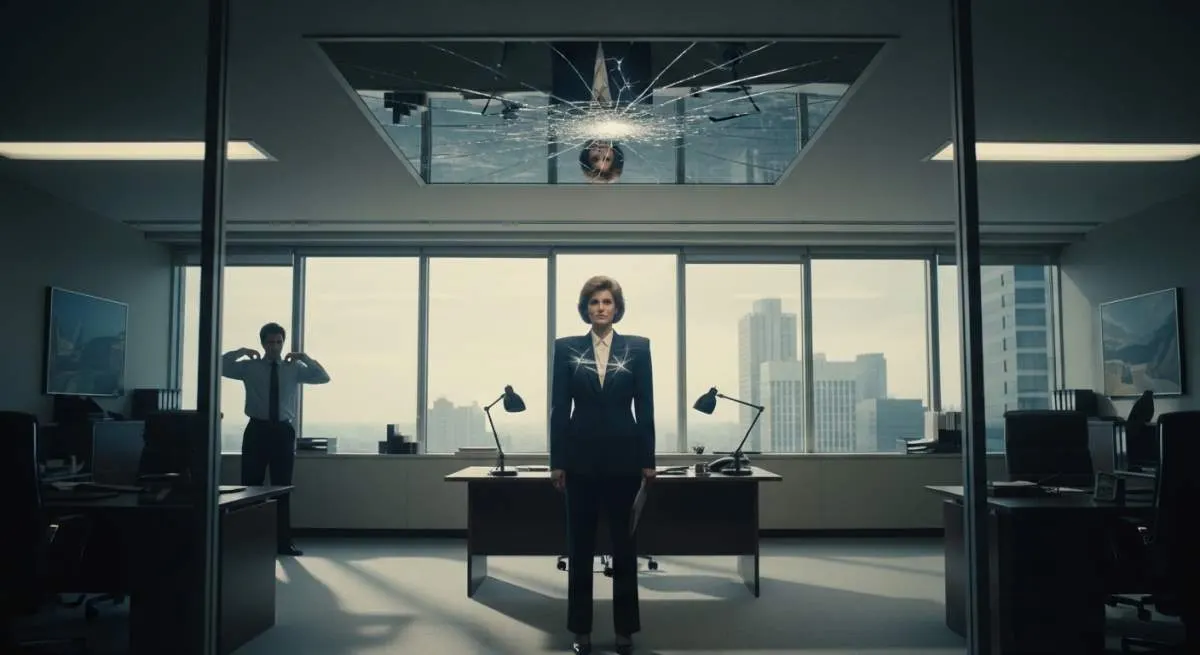
The Padded Armor of Ambition
Fashion is armour.
Marc Jacobs really nailed it with that quote. Whether it's a strong shoulder, a sharp suit, or a dress that fits just right, clothes can be a powerful way to express ourselves and build confidence. They help us face the day, no matter what comes our way.
The idea behind 80s shoulder pads-claiming space and authority-still rings true today. We've just gotten a little more subtle about it.
Walking into an office in the 1980s as a woman meant entering rooms that were still largely run by men. The padded jacket became a way of arriving already armored. It was borrowed authority, sewn into the seams, until the confidence it signaled started to feel real. The padding broadened the frame and straightened the posture, a silent announcement that the person wearing it had no intention of shrinking.
The Enduring Legacy of the Stiff Silhouette
Those big, bold shoulders weren't just a passing trend. They were armor, a deliberate choice by women who wanted to be seen and heard, and to take up space in rooms where they were often outnumbered. It's hard to say whether shoulder pads on their own actually broke the glass ceiling, but they definitely commanded attention. They created a visual kind of equality, an undeniable presence that said, “I'm here, and I'm not about to shrink.” That shift in how people saw women helped make the idea of a woman in a corner office feel a little more normal.
Of course, the glass ceiling didn't shatter just because of a few inches of foam. Many women still remember the pads slipping mid-meeting or the awkwardness of hugging a coworker without poking them in the eye. It was a reminder that the real battles were fought in courtrooms and corner offices, not just in dressing rooms. Yes, it cracked, but real change came from relentless advocacy, legal fights, and women grinding away every single day. The power dressing of the 80s was a powerful symbol, a fashionable declaration of war, but it wasn't the only weapon. It opened doors by shifting perceptions, hinting at what could be, rather than single-handedly knocking down walls.
The clothes and the cause moved together. As women pushed into management and the professions, their wardrobes followed, and the new silhouette in turn made their presence easier to read. A woman with padded shoulders walked into a meeting looking as though she expected to be heard, and that expectation shaped how she was treated. It did not erase the barriers, but it changed the visual conversation long before the legal battles were settled.
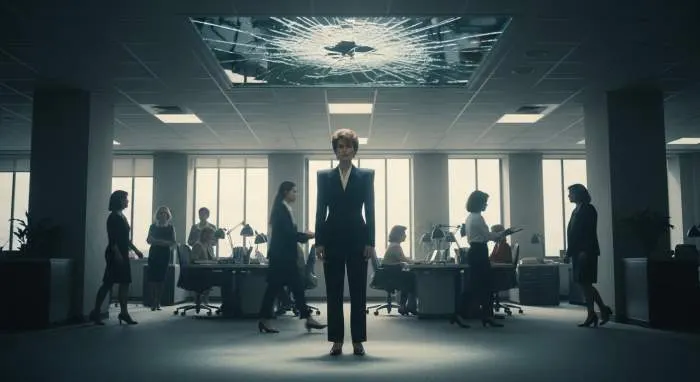
The Quiet Echoes of Power Dressing
What's surprising is that the over-the-top 80s look actually laid some important groundwork. It challenged the idea that women's professional clothes had to be soft or overtly feminine. You can still see its echoes today in the structured blazers and tailored suits that are boardroom staples, just in a more subtle, toned-down way. The evolution of 80s fashion alongside women's rising professional roles really shows that connection: as women gained power, their clothing reflected it, giving them a physical sense of gravitas in a male-dominated world. Some even joked about needing 'linebacker shoulders' to hold their ground, a nod to the athletic, assertive silhouette that became a symbol of female ambition.
That groundwork is easy to miss now that the pads have been removed, but the permission it created stayed. Every woman who walks into a modern boardroom in a sharp, well-structured suit is walking on the shoulders of that 80s experiment, whether she knows it or not. The clothes grew quieter over the decades, but the claim they made did not.
I still remember my aunt, a brilliant architect, walking into family parties wearing those amazing jackets. She wasn't just putting on clothes, she was wearing her ambition. There was a boldness about her, a refusal to apologize for taking up space. It wasn't about looking sexy; it was about authority, and it was something to behold. She seemed to carry the weight of every woman before her, and the hope of every woman after, right there on those padded shoulders.
My aunt would have laughed at the idea that her jackets were political statements. To her, they were simply what you wore when you had plans and expected to be taken seriously. That is exactly why the era mattered: the armor became so woven into everyday life that it stopped being a costume and turned into a uniform of ambition.
At its heart, the message of 80s shoulder pads was equality through imitation. It was a necessary phase, maybe, but one that highlighted just how far women had to go to be taken seriously in the corporate world. Today, professional women have a much wider, more flexible, and more authentic range of clothing choices. But we're still fighting for equal pay and equal seats at the table. The pads may be gone, but the fight goes on. The history of 80s power dressing reminds us that fashion is more than just fabric, it's a marker of social struggle, evolving with every victory and every setback. The real legacy isn't in the foam itself, but in the question it keeps asking: what do we have to wear to be seen as equals?
The fight for equality never depended on a silhouette, and women have proven they can lead in anything they choose to wear. But symbols still matter. The shoulder pad asked a question every generation must answer in its own way: how do you signal strength in a room that expects you to shrink? The 80s answered with foam and tailoring, and the decades since answered with a wider, freer range of choices. Either way, the goal never changed.
Why did women wear shoulder pads in the 1980s
The trend actually traces back to the 1930s, when Hollywood costume designer Adrian popularized broad shoulders for actresses like Joan Crawford. But it was the 1940s wartime utility suits that first gave women a practical, authoritative silhouette. By the 80s, designers like Donna Karan and Giorgio Armani revived the look, but now it carried a new message: professional ambition.