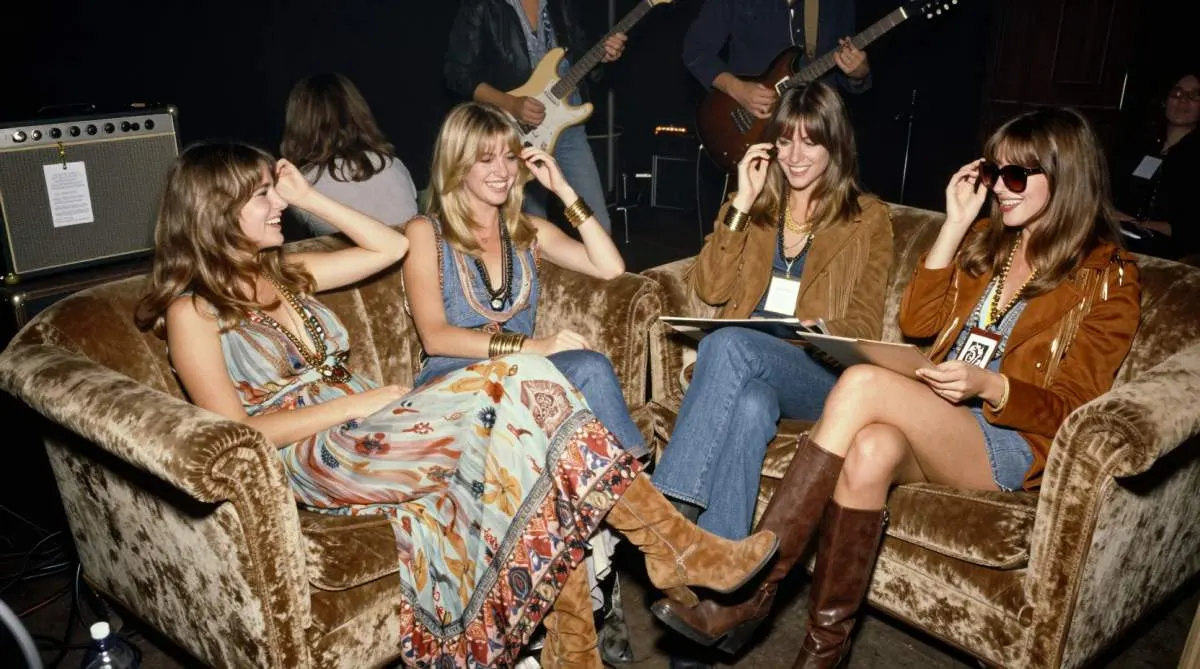
To nail that 70s groupie look like Daisy Jones, mix suede, denim flares, fringe, platform boots, silk scarves, soft knits, and a confident boho-rock attitude, without making it feel like a costume [1].
From Stage to Street: Reliving the Iconic 70s Groupie Look
Remember that feeling when a guitar riff hits you just right, vibrating through your bones? That's the crackle, the hum, the undeniable pull of the 1970s. And suddenly, that spirit is back, strutting down runways and filling our style feeds.
What Defines 70s Groupie Style?
While it shares some DNA with free-spirited hippie fashion, groupie style takes on a more refined, often sexier edge, perfectly tailored for the side of the stage. It's intentional, confident, and always in pursuit of the moment.
To get the Daisy Jones look, channel that effortless, lived-in luxury. Picture rich textures like corduroy, satin, and soft knits paired with robust denim. Imagine platforms that elevate not just your height, but your entire attitude.
How to Get the Daisy Jones Look Without Time Traveling
You know that feeling when a guitar riff from the early '70s kicks in, and suddenly you're there? The world is just now completely falling for the aesthetic of Daisy Jones & The Six, and it's no wonder. It's more than just flared jeans and fringe; it's a whole vibe, a memory we collectively share.
Mood Match
Four Songs for the Way Home
Here is the music that fits the hour, whether you are rushing out or drifting back.
Getting ready for a show with friends
Gold Dust Woman by Fleetwood Mac
That slow, smoky build is exactly the energy you need while you are pulling on your boots and arguing over whose turn it is to drive.
Driving home after a long night
Rhiannon by Fleetwood Mac
It drifts just enough to keep you awake without demanding anything, which is precisely what a tired driver needs at two in the morning.
Dancing around your living room
Love to Love You Baby by Donna Summer
Nobody is watching, so you may as well let that long, unhurried groove take over the carpet for a while.
Packing for a weekend road trip
Take It Easy by Eagles
It is the sound of not being in a hurry, which is the only sensible frame of mind for folding clothes into a bag.
Play them in order, and you will find the evening takes care of itself.
Songs checked against en.wikipedia.org.
The Echoes of Electric Youth: Unpacking 70s Groupie Style's Roots
The term 'groupie' itself started as a whispered label in the late 60s, but it truly found its visual language in the 70s. These weren't just fans. They were often women who traveled with bands, lived on the fringes of fame, and often shaped the culture as much as they reflected it. Their style was less about the communal, earth-toned look of the hippie movement and more about individual expression, a certain knowing glamour.
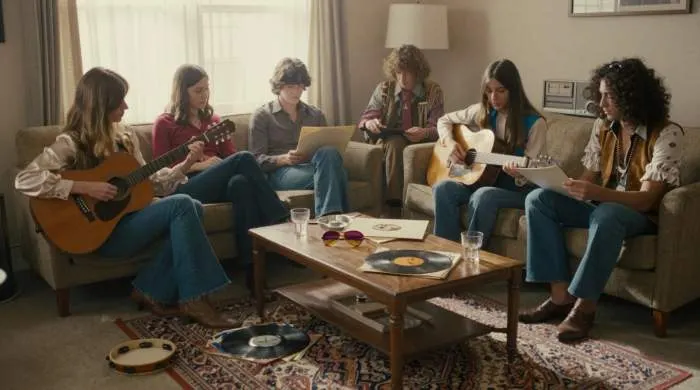
It wasn't quite 'anti-fashion,' but it certainly pushed boundaries. Instead of homespun garments, you saw silk scarves, suede, crochet knits that hugged the body, and denim tailored to perfection. It was an evolution from the carefree boho spirit, adding a layer of deliberate allure.
When the Groupie Took Center Stage
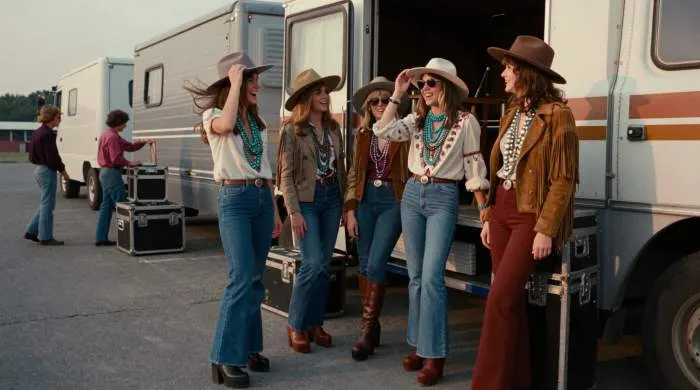
Bell-bottoms were a given, of course, but often in more structured fabrics or with elaborate patchwork. The style often borrowed heavily from vintage inspirations: Victorian blouses, flapper-era silks, and cowboy boots found new life. It was a conscious rejection of mainstream conformity, but not in the purely ideological way of the hippies.
It's a critical point when we ask 'Is 70s groupie fashion problematic?' The aesthetic itself, in its current resurgence, often cherry-picks the visual appeal without diving into the deeper, sometimes darker, social complexities. It's important to separate the sartorial inspiration from the historical context that sometimes involved vulnerable young women navigating a male-dominated, hedonistic industry.
Fashion as Art
- People think 70s groupies just threw on whatever was lying around to chase rock stars.
- Actually, their style was a highly intentional and creative form of self-expression, with many considering fashion their primary art form, as [grunge.com](https://www.grunge.com/1391411/what-being-groupie-1970s-really-like/) notes that one groupie called it 'ambient art' and they spent hours crafting unique looks from thrift stores.
Source: grunge.com
The smell of patchouli oil and stale cigarette smoke, the hum of a Marshall stack, the shimmer of sequins under stage lights: the 70s rock scene was a whole world, a fever dream of freedom and rebellion. Now, thanks to shows like Daisy Jones & The Six, that distinctive 70s fashion is back in full force.
Part of the obsession is pure escapism. We're drawn to the perceived spontaneity and raw energy of that era. The look itself is so iconic: the suede fringe jackets, the flared denim, crochet tops, platform boots that added inches of defiant cool. It's a blend of bohemian ease and rock and roll swagger, a deliberate statement that said, "I'm with the band," even if you weren't.
The Art of the Scavenged and Styled
So, when we embrace these flared jeans and embroidered jackets today, are we simply replicating a problematic past? Not necessarily. Our modern obsession with this style often comes with a conscious reinterpretation. We're picking up the sartorial cues, the confidence, the self-expression, but ideally, we're leaving behind the less savory elements of the historical context. Today's wearer might channel Daisy Jones's effortless style, but they do so from a place of greater self-awareness and empowerment.
Is 70s Groupie Fashion Problematic?
This isn't your grandma's flower child look; it's got a sharper, more knowing edge, a little more glam. How to get the Daisy Jones look without time traveling? It's about mixing textures, playing with proportion, and injecting personal flair. Think less about replicating an outfit and more about channeling a feeling.
This isn't about problematic historical tropes, but about reclaiming an aesthetic defined by self-assuredness and a touch of wild abandon. What defines 70s groupie aesthetic, when stripped of its historical context, is an undeniable sense of theatricality and confidence. It's more glamorous than purely hippie fashion, with a distinct rock and roll sensibility that leans into sensuality and an opulent earthiness.
The Enduring Allure of 70s Rock Style
The term 'groupie' itself carries a heavy resonance, a whisper of complicated power dynamics and youthful vulnerability. We can't ignore that history. But what sticks, what echoes across the decades and finds new life on our mood boards, is the sheer, audacious style.
How to get the Daisy Jones look? It's about attitude as much as clothing. Think vintage-inspired pieces, mix and match textures, and a deliberate sense of 'I just threw this on and look amazing.' This isn't about replicating a problematic past, but about reclaiming the confidence, the vibrant spirit, and the unshakeable individuality that truly defined the best of that era's fashion. It's the sound of a familiar guitar riff, reborn, ringing true for a new audience.
Unlike the more earthy, communal vibe of pure hippie fashion, this groupie aesthetic had an edgy, curated glamour. It was about standing out, getting noticed, catching the eye of a rock god: or at least looking like you might.
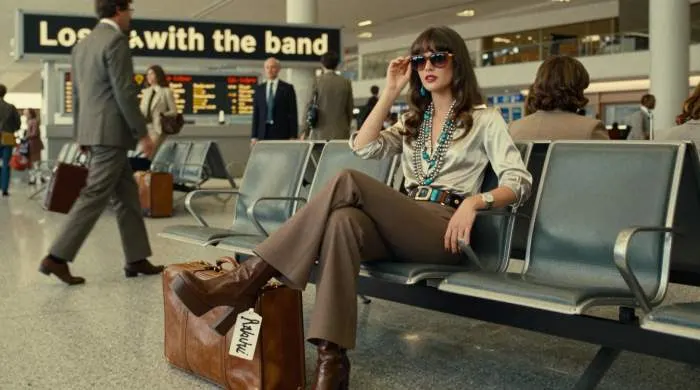
Today's wearer might channel Daisy Jones's effortless style, but they do so from a place of greater self-awareness and empowerment, reclaiming the fashion as their own rather than as a means to an end within a hierarchical rock ecosystem. It's about embodying that spirit of freedom and creative expression, but on our own terms, with our own voices.
How to Style 70s Groupie Fashion for a Modern Wardrobe
It's funny how these vintage looks feel so fresh today. The key is to build your look around these core elements.
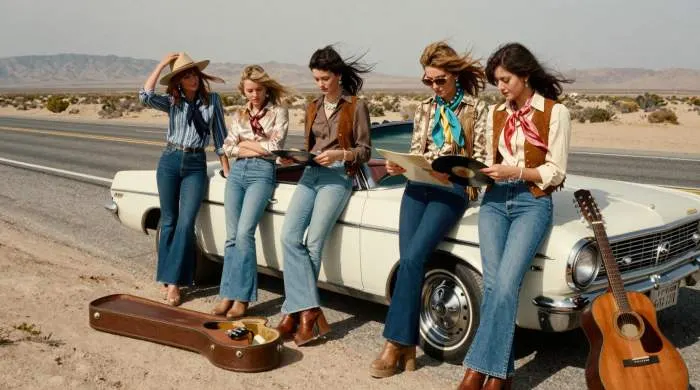
- Velvet Dreams and Suede Whispers: These are your bedrock. A crushed velvet blazer thrown over a simple tee, or a suede mini skirt paired with tall boots. It's rich, it's tactile, and it instantly says "70s."
- Flares That Flatter: Ditch the skinny jeans, just for a bit. High-waisted denim flares or bell-bottom trousers are key. They elongate the leg and create that perfect, swaying silhouette when you walk.
- The Essential Shirt: Think slightly unbuttoned, flowy blouses in silk or rayon, often with a subtle print: maybe a paisley, a tiny floral, or just a deep, earthy solid. Knot it, tuck it, let it hang loose.
- Platform Power: Whether it's chunky boots, heeled sandals, or even platform sneakers, a little lift gives you that extra swagger. It's a statement, and it brings the drama.
- Accessories Are Everything: Oversized sunglasses, wide-brimmed floppy hats, layered delicate gold necklaces, and a great fringed or embellished bag. Don't forget a cool belt with an interesting buckle.
- Hair with Volume and Vibe: Effortless, lived-in waves, perhaps a subtle fringe, or a deep side part. It's got body and movement, like you just stepped off the tour bus: in the best possible way.
This style is trendy now because it offers a break from the ordinary, an invitation to embody a bit more daring in our everyday lives.
The Threads They Left Behind
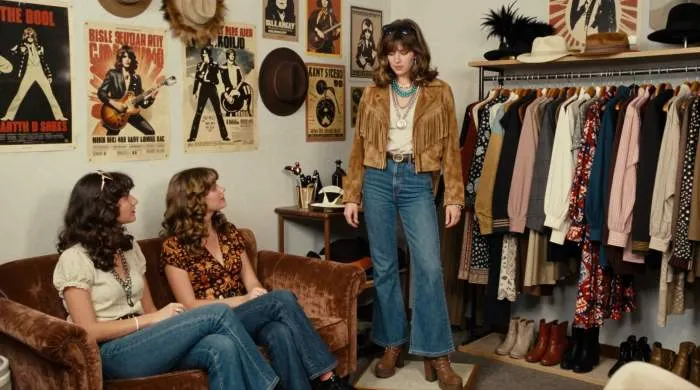
How to get the Daisy Jones look? It's about attitude as much as clothing. It's not just clothes; it's a vibe.
Sources
- [1] 'Daisy Jones & The Six' Outfits: Where to Shop Daisy Jones-Inspired Style
Bracketed numbers in the text (e.g. [1]) refer to the sources listed here.