
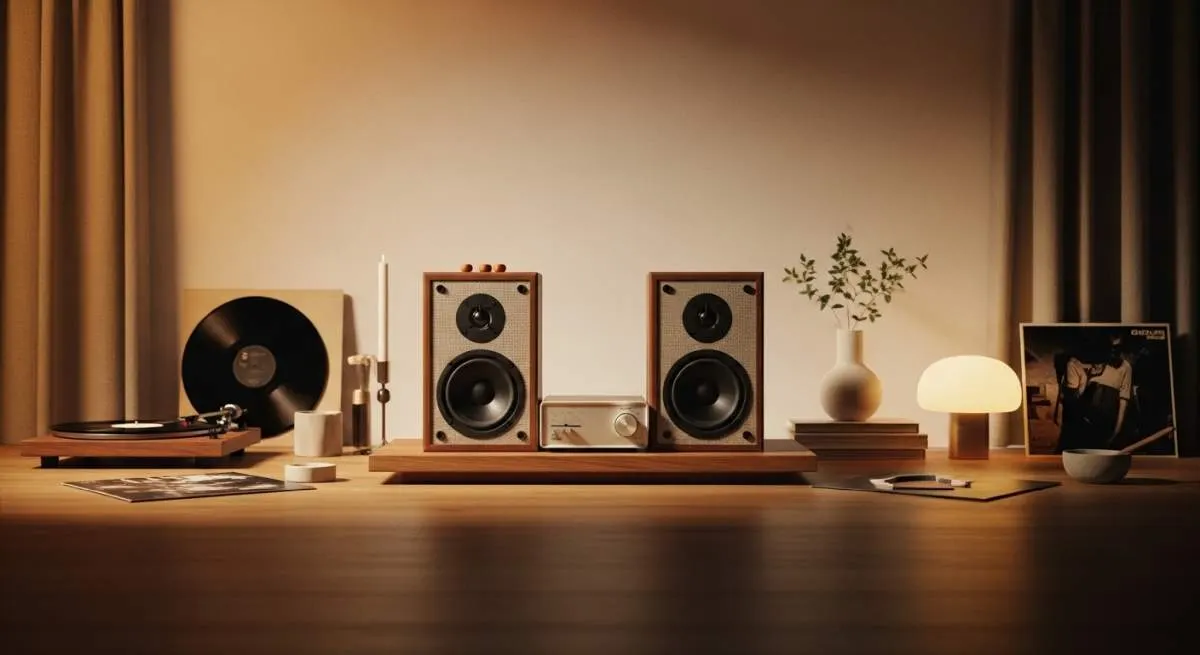
Why Retro Speakers Deserve a Spot in Your Home
These retro speakers do more than just look good; they bring a warm, inviting presence to any room. You can stream your playlists wirelessly while enjoying the classic cassette deck vibe. It’s about the whole experience, the look, the feel, and the sound.
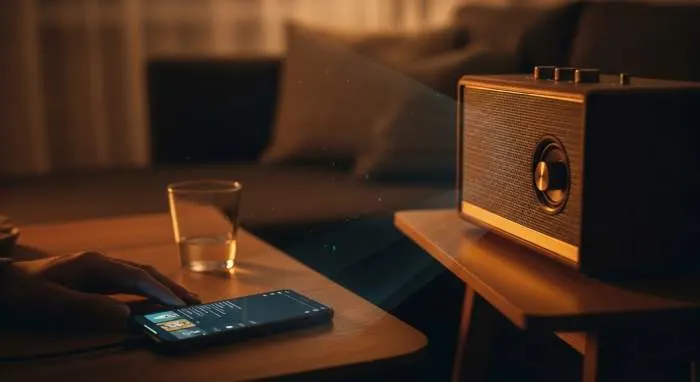
How to Style Your Retro Speakers
Styling them is simple. Think of them as statement pieces that can anchor a corner. They can sit on a coffee table, on floating shelves for a sleek look, or surrounded by old vinyl records to play up the nostalgia. Don’t hide their chunky charm, let them be the star.
What Exactly Are Retro Speakers?
Retro speakers are modern audio gadgets that mimic the look of classic models from the 1960s, 1970s, and 1980s. They blend vintage aesthetics, like wood veneers, fabric grilles, and curved cabinets, with today’s tech, like Bluetooth and digital processing. So you get that nostalgic style without giving up great sound quality. The appeal is straightforward: they look like something your parents or grandparents might have owned, but they work with your phone, streaming service, or laptop.
Where Retro Speaker Design Came From
The golden age of home audio design happened between the 1950s and early 1980s, when speakers were treated as furniture. Manufacturers like Bose, JBL, and Klipsch designed cabinets that looked as good in a living room as they sounded. Wood-grain finishes, fabric covers in earthy tones, and compact bookshelf designs became the standard. These weren’t hidden away, they were part of the room’s aesthetic.
That era ended when flat-screen TVs and compact digital devices took over. Speakers shrank, went wireless, and often disappeared into walls or soundbars. But starting in the 2010s, designers noticed something: people missed the tactile, visual presence of those older speakers. They wanted objects that felt substantial and looked intentional, not just functional black boxes. That nostalgia sparked the retro speaker revival.
Sound Showdown: Vintage vs. Modern Retro-Style
There’s an important distinction here. Genuine vintage speakers from the 1960s through 1980s do have a particular warmth, partly because of their analog circuitry, partly because of the materials used in their drivers and cabinets. But they come with real drawbacks: they need repair, they lack Bluetooth or Wi-Fi, and they’re often fragile.
Modern retro-style speakers solve those problems. They’re engineered to capture that warm, full sound through digital processing and quality drivers, while adding wireless connectivity, better durability, and easier maintenance. You’re not sacrificing sound for convenience, you’re getting both. The trade-off is that a brand-new retro speaker won’t have the exact sonic character of a 50-year-old original, but most listeners won’t notice the difference, and you won’t have to hunt for replacement parts.
Why Retro Speakers Sound Warmer
The warmth people associate with vintage audio comes from a few real factors. Older speaker cabinets were often larger and made from solid wood, which naturally resonates and adds body to the sound. The drivers, the actual cones that move air, were designed differently, often with less aggressive treble and more emphasis on midrange frequencies where human voices and instruments live.
Modern flat-panel speakers and soundbars prioritize clarity and efficiency over that full, enveloping sound. They’re designed to disappear into a room or fit under a TV. Retro-style speakers, by contrast, are built to project sound into a space and be heard as a presence. That’s partly engineering and partly psychology: when you can see and feel a speaker working, you perceive it as sounding richer.
Choosing the Right Retro Speaker for Your Space
Size matters. A small retro Bluetooth speaker works great on a shelf or desk, but won’t fill a large living room. If you want to replace a stereo system, look for larger bookshelf-style retro speakers or a pair of them. Check the wattage and frequency range, anything between 40 and 100 watts with a range down to 50 Hz will handle most music and podcasts well.
Connectivity is worth considering. Do you want Bluetooth only, or would you prefer Wi-Fi for multi-room audio? Some retro speakers have a headphone jack or auxiliary input for older devices. If you’re pairing them with a turntable, make sure the speaker has a phono input or that you have a separate preamp.
Materials and finish affect both look and longevity. Real wood veneer ages beautifully and feels substantial. Fabric grilles in cream, tan, or gray are more forgiving than black plastic. Check reviews for durability, some retro speakers are built to last, while others are more style than substance.
Where Retro Speakers Fit in Today's Home
Retro speakers work best in rooms where you actually listen to music: a bedroom, home office, kitchen, or living room. They’re ideal for people who still buy vinyl or who want their streaming experience to feel intentional rather than ambient. They pair well with vintage furniture, mid-century modern decor, or eclectic bohemian spaces. They also work in minimalist rooms as a deliberate contrast, a warm, analog-looking object in a clean, digital space.
They’re less practical in spaces where you need invisible audio or multi-room synchronized sound. If you’re building a whole-home audio system, retro speakers might be one piece of it rather than the whole solution.
The Enduring Appeal of Retro Speakers Today
In a world of invisible technology and streaming-everything, retro speakers represent something tangible. They’re a reminder that sound is physical, that music deserves a real object in the room, and that good design doesn’t have an expiration date. They also signal that you care about how you listen, not just what you listen to. That matters to people who’ve grown tired of optimizing everything and want their homes to feel lived-in and intentional.
Whether you’re reviving a genuine vintage find or buying a new retro-style model, these speakers do more than play music. They anchor a room, start conversations, and make the act of listening feel like an experience again. For anyone wondering what makes good vintage speakers special, it’s this blend of character and craftsmanship that modern designs aim to recapture.