
Quick Facts
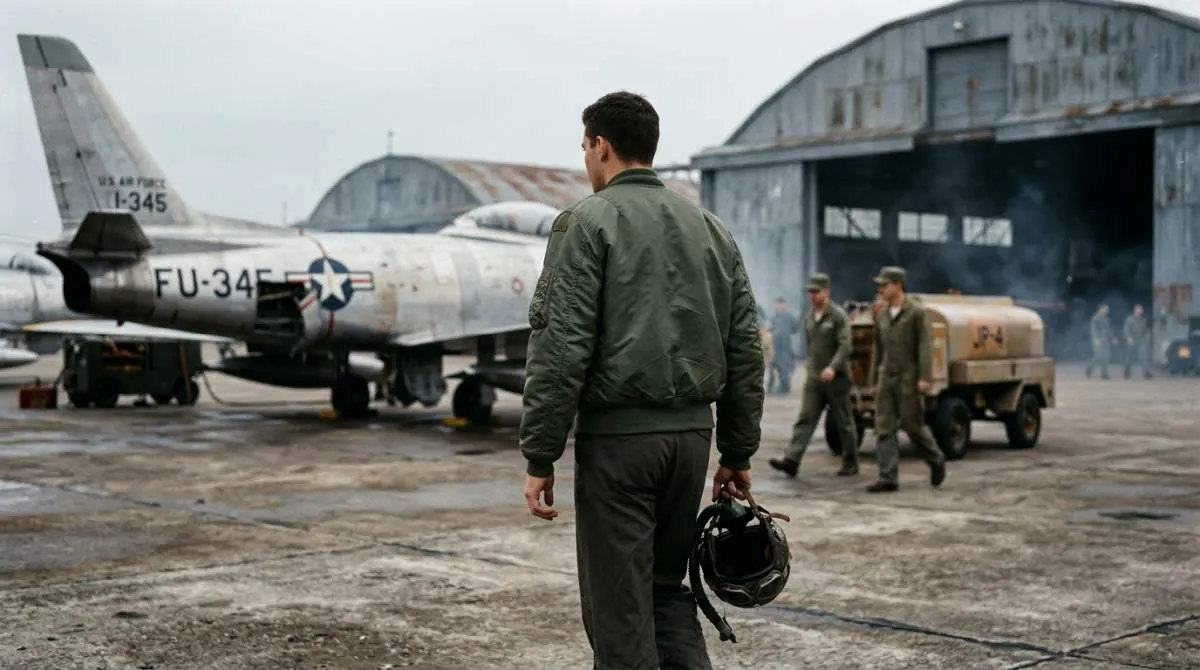
- The Era:MA-1 introduced in 1955 for U.S. Air Force
- The Hook:Orange lining signaled rescue planes for downed pilots
- The Reality:Knit waistband and cuffs trapped heat in wind tunnels
- Modern Echo:Nylon shell adopted by punks, skaters, and graffiti writers
How a Nylon Shell Became a Silent Signal
The nylon grain felt stiff and smooth. That fabric meant business, not just a layer for warmth.
The U.S. Air Force chose that stiff nylon deliberately. High altitudes and sudden temperature drops demanded a jacket that could survive both.
The MA-1, introduced in 1955, replaced the wool-lined B-15. It was lighter, water-resistant, and reversible. The orange lining was not a fashion whim. It was a rescue tool.
If a pilot went down, flipping the jacket inside out signaled search planes. That silent orange flash meant life or death.
Wearing one in the late 1980s carried coded meaning. It signaled survival and attitude. A worn G-1 found in a Brooklyn flea market smelled like old leather and cheap coffee. It felt like wearing a secret.
In the late 1980s, the bomber jacket was more than warmth. Punk kids in London stitched patches over the nylon. Skinheads wore them with rolled jeans. In New York, graffiti writers used the oversized pockets for spray cans. The jacket did not speak. It whispered.
The shape was pure function. A short waist kept movement fluid. A knit collar stopped the wind.
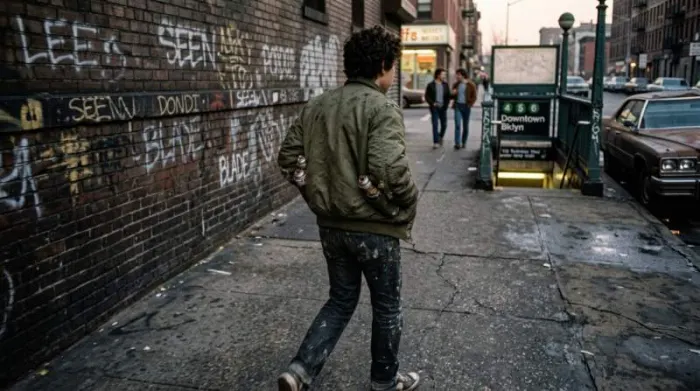
Designers later called it "varsity," but it started with pilots. That crossover is the real vibe. It is tough, utilitarian, and personal. The jacket does not ask for attention. It commands it.
The Hidden Zipper That Changed Everything
The real secret of the bomber jacket lies in the waistband and cuffs. Those tight knit ribs trap heat. Pilots in early cockpits froze at altitude.
Bulky coats made movement clumsy. The knit was a blend of wool and nylon, designed to retain elasticity even after years of use. It did not sag, and that was no accident. Wind tunnel testing proved it.
Someone realized a snug, cropped shell could hold warmth without weighing a crew down. That simple engineering trick let pilots move fast and stay sharp. The jacket became a tool, not a fashion statement.
The reversible design was a mechanical marvel. The orange lining was sewn into the shell with a separate zipper track. Flip it inside out and the jacket became a high-visibility survival garment. The nylon that felt stiff in the cold became a reflective surface under searchlights. That dual function is why the MA-1 is still produced today.
Why the Cropped Cut Survived
That short cut solved a practical problem. It kept the body warm but left the arms free. A pilot could reach controls without fabric bunching up.
The cropped cut also prevented the jacket from riding up when a pilot sat in an ejection seat. A longer coat would create pressure points. The short hem sat at the waist, leaving the lower back exposed to the seat harness. That was intentional.
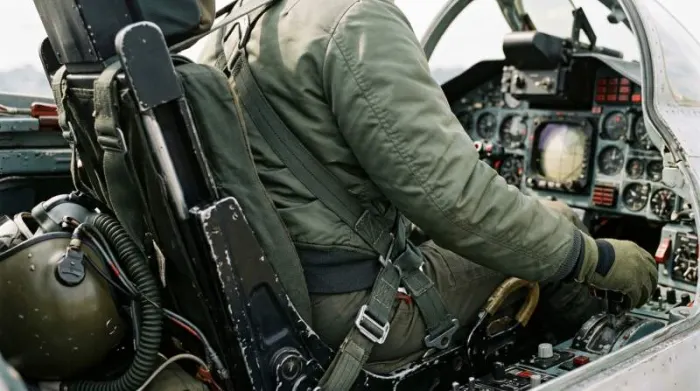
Later, varsity jackets borrowed the silhouette but swapped nylon for wool and leather. The logic remained: a shell that moves with you, not against you.
The Jacket That Outlived Every Trend
Pop culture did not discover the bomber jacket. It hijacked it. By the late 1970s, the military shell had shed its canvas for nylon.
Street kids saw armor, not flight gear. The leather version became the uniform for outsiders. By 1979, Walter Hill's "The Warriors" featured antagonists in matching brown bombers, turning the jacket into a symbol of tribe loyalty.
In the UK, punks slashed and safety-pinned their nylon shells. Sid Vicious of the Sex Pistols rarely left home without one.
How the Bomber Jacket Crossed from Military to Mainstream
Magazines blurred the lines. They ran spreads pairing a satin bomber with a Chanel tweed jacket on the same page. The contradiction was the point.
The 1980s brought a different kind of reverence. Tom Cruise's Maverick in "Top Gun" wore a G-1 leather flight jacket. Sales of leather bombers skyrocketed.
But the nylon MA-1 stayed underground, favored by skaters and breakdancers in New York. It was cheaper, lighter, and easier to move in.
The Street-Level Survival Kit
The real legacy is how the jacket drifted. It never died. It just changed hands.
- Skatepark vinyl replaced flight deck. Skaters liked the short cut. It did not get caught on board edges. The nylon shell could take a scrape without tearing.
- Women's high-waisted denim looks absorbed it. In the 1990s, women's fashion magazines styled the bomber with slip dresses and combat boots. Hard shell met soft interior, the contrast intentional.
- Punk safety pins and hip-hop logos marked it. Grandmaster Flash and the Furious Five wore satin bombers with embroidered crests. The jacket became a canvas for identity.
- A single TV frame doubled sales. When Kurt Cobain wore a green MA-1 in the "Smells Like Teen Spirit" video, thrift stores could not keep them in stock.
- It ended up on album covers as cultural shorthand. The cover of The Clash's "London Calling" features Paul Simonon smashing a guitar while wearing a brown bomber. That image alone cemented the jacket as a punk relic.
No designer pushed this. It moved through hands. Each generation left a dent in the lining.
What Denim Left Behind
Then it got stranger. The bomber absorbed denim. A trucker jacket with a snap front borrowed the silhouette.
In the 1990s, designers like Helmut Lang reworked the bomber in raw denim. The silhouette remained, but the material changed the story. It became a piece of Americana, not just a military tool.

That is how legacy works. It takes the shape and drops the origin. What remains is that quiet, secondhand authority. It lasted longer than any runway trend ever did.
The Bomber Jacket's Second Life: Streetwear Without the Hype
The jacket survived the 1990s thanks to skaters and ravers. They wore it oversized, patches peeling. The polyester shell felt like structure.
In the early 2000s, the bomber faded from mainstream view, only to re-emerge in the hands of streetwear pioneers. Brands like Stüssy and Supreme reissued the MA-1 with oversized fits and bold logos. The orange lining became a status marker. If you knew, you knew.
Streetwear giants noticed. They copied the shape, the orange lining, the zip pocket. The Scorpion Jacket became a collector's item.
The modern revival is not about nostalgia. It is about stubborn utility. It works with anything except a tie. Wear it over a hoodie, under a trench coat, or as a standalone piece. The cropped shape flatters both men and women. The nylon shell is easy to clean and resists wind.
That is why the jacket remains in rotation, decade after decade. Today, vintage MA-1s from the 1980s fetch high prices on resale sites. The faded nylon and cracked orange lining are prized. Collectors search for original tags and military contracts. It is a piece of history that still functions. That quiet, secondhand authority lasts longer than any runway trend.
Why do bomber jackets have orange lining?
The orange lining traces back to the Korean War era, when the Air Force standardized high-visibility safety colors across survival gear. Search crews were trained to spot that exact shade of international orange, which stands out against snow, desert sand, and ocean water. Pilots also used the lining to signal friendly forces during rescue operations, a practice that continued well into the Vietnam War.