
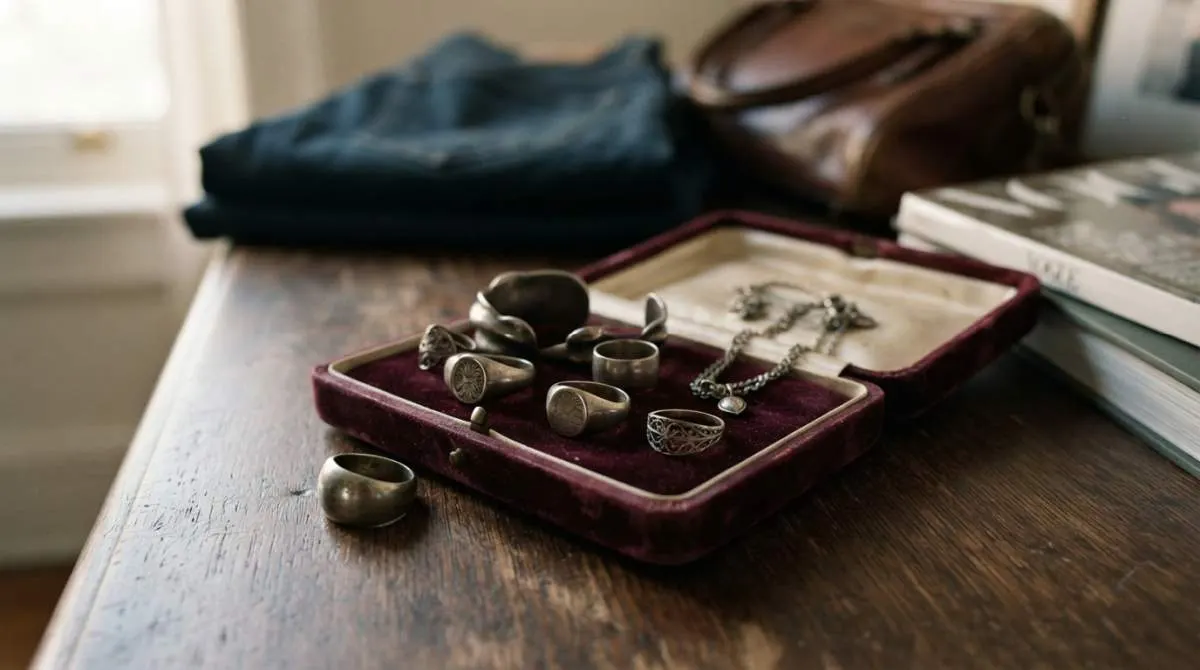
Your fingers brush against a velvet-lined compartment in a wooden box tucked at the back of a thrift store shelf. Inside, nestled against faded satin, lies a heavy silver cuff, its surface etched with a geometric pattern worn smooth in places by decades of wear. It feels cool, substantial, and strangely alive. This isn't just a forgotten accessory; it's a piece of dormant history, waiting for a new wrist.
That weight in your hand carries centuries of story. Sterling silver's journey as a regulated precious metal began in the 12th century with English hallmarks, one of the world's earliest forms of consumer protection. For generations, it signified a certain kind of quiet, formal wealth.
In the United States, pieces were stamped with '925' or the word 'sterling' to denote that 92.5% purity. By the 1980s, it had become a staple of middle-class aspiration: sterling silver flatware and serving pieces were common household items for hosting, often stored in those very velvet-lined boxes, more a symbol of readiness than an object of daily use.
From Sideboard to Statement Piece
So, is sterling silver jewelry coming back? The answer is a resounding yes, but not as we once knew it. The delicate floral brooches and dainty chains of yore have been sidelined for something far more assertive.
Searches for vintage sterling silver jewelry skyrocketed, up a staggering 500 percent in one year alone. This isn't a gentle resurgence; it's a full-scale reclamation.
The economic catalyst is impossible to ignore. As the price of gold hit a breathtaking all-time peak, sterling silver emerged as a profoundly more affordable precious metal alternative.
Suddenly, the cool, substantial feel of silver offered a luxurious heft without the prohibitive cost.
But the shift runs deeper than economics. It's cultural. Gen Z and millennials are expected to drive the vast majority of all secondhand market growth for years to come, and their hunting grounds: thrift stores, online auctions, estate sales: are where these forgotten treasures were rediscovered.
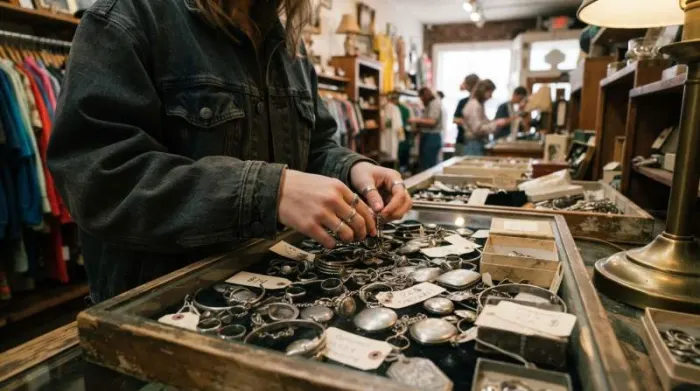
They weren't looking for their grandmother's formal tea service. They were looking for character, for history, for pieces with a story. And they found it in bold cuffs, chunky signet rings, and oversized pendants. The aesthetic moved from precious to powerful.
The New Alchemy: Mixing Metals and Eras
Styling this revived silver is all about confidence and contrast. The old rules of matching metals are out. The new mantra is intentional clash.
Mood Match
Silver and the Songs That Know It
Put your moment next to the track that matches it, and let the two of them get on with it.
Layering silver chains before a first date
I Wanna Dance with Somebody by Whitney Houston
Because you are standing at the mirror doing up one more clasp, and that opening drum roll is exactly how the evening feels.
Digging through an estate sale jewelry box
Sweet Child o' Mine by Guns N' Roses
Somebody else's silver always comes with a story, and that guitar line has the same ache of something loved and left behind.
Wearing a chunky silver ring to a casual brunch
Faith by George Michael
A big ring on an ordinary morning is a small act of nerve, and this one struts just enough to carry it off.
Photographing a silver haul for social media
Like a Prayer by Madonna
Laying out your finds for the camera is a bit of theatre, and nothing gives a table of silver more ceremony than that choir.
Play them in this order and the afternoon will arrange itself.
Songs checked against en.wikipedia.org.
Designers began deliberately combining sterling silver with gold, creating accessible yet luxurious pieces that feel dynamic and modern. This mix-metal approach became a signature for brands like Wyld Box, and even major retailers like Zales expanded their offerings to include gold-plated silver.
This alchemy extends to the eras being pulled into the present. The best vintage finds aren't from one single decade; they're a curated collage of design history. For a true connoisseur's hunt, a few key names and movements stand out:
- Elsa Peretti for Tiffany & Co.: Her organic, sculptural forms from the 1970s and 80s remain the holy grail for their timeless, wearable art. Peretti, a former fashion model, revolutionized jewelry design by focusing on sensual, fluid shapes inspired by nature, making fine jewelry feel modern and personal.
- Taxco Silver: Handcrafted in Mexico, often by mid-century artisans, these pieces boast unique, often chunky designs prized for their artistry. The town of Taxco became a world-renowned silver crafting center in the 20th century, largely due to American entrepreneur William Spratling, who revived and modernized local techniques in the 1930s, blending pre-Columbian motifs with modernist design.
- Art Deco Pieces: French makers from the 1920s and 30s offered geometric, Machine Age glamour, frequently in silver plate for a more accessible entry point. This style reflected the era's fascination with speed, technology, and ancient civilizations like Egypt, following the 1922 discovery of Tutankhamun's tomb.
- Diné (Navajo) Squash Blossoms and Victorian Antique Silver represent two poles of collectibility: serious cultural artifacts and intricate historical craft. Squash blossom necklaces, incorporating the naja symbol introduced by Spanish settlers, are significant cultural items with deep meaning, while Victorian silver often featured symbolic motifs like snakes (eternity), hearts, and hands, and was frequently used in mourning jewelry.
This eclectic mixing speaks to a broader trend in how we engage with the past. It’s less about strict period recreation and more about pulling resonant fragments into a personal, contemporary collage.
You might pair a hefty Art Deco cuff with the minimalist lines of a 1990s silver ring, creating a dialogue across decades. The cool tone of the metal itself acts as a unifying thread, offering what jeweler Elizabeth Hooper O’Mahony called a 'beautiful subtlety' that differs from gold's warmth. This approach mirrors a postmodern sensibility in fashion, where authenticity is derived from personal curation rather than adherence to a single era or style.
Redefined for a Modern Wardrobe
The final, crucial shift is in context. Sterling silver has been liberated from the velvet box and the formal occasion. Its 'casual and wearable, yet chic and elevated' nature makes it perfect for everyday bold statements.
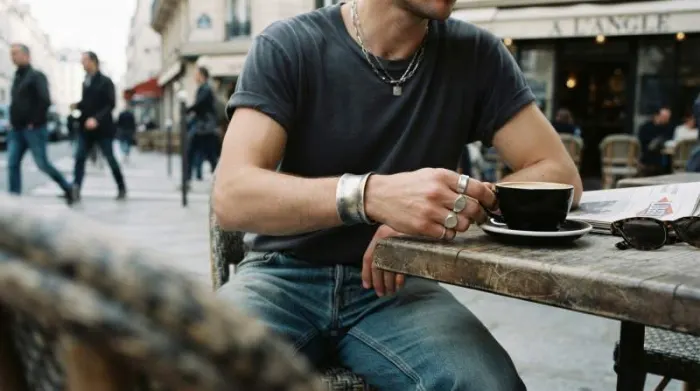
Fashion labels like Ralph Lauren and Jean Paul Gaultier sent oversized, silver-toned jewelry down the runways, signaling its dominance as a statement-maker, not a subtle accent.
This new approach to vintage accessories is key. It’s worn with crisp white t-shirts, oversized blazers, and sleek minimalist dresses.
The cool gleam of silver pairs perfectly with trending cool-toned colors like icy blues and deep emeralds. The goal is a deliberate, almost architectural contrast: the softness of a knit against the hard shine of a chunky chain, the fluidity of silk against the rigid geometry of a signet ring. This styling democratizes luxury, positioning inherited or thrifted silver not as a family heirloom to be preserved, but as a dynamic component of a contemporary uniform.
Designers themselves returned to the metal with fresh eyes. Nina Runsdorf launched an 'Archive' collection, reexploring the sculptural silver shapes from her early career.
In a full-circle moment, UK-based brand Annoushka reintroduced sterling silver to its Knuckle collection, marking founder Annoushka Ducas's return to the metal after a twenty-year hiatus. They, like the new generation of wearers, saw its potential anew: not as a lesser alternative to gold, but as a metal with its own unique voice: cooler, sharper, and unafraid to make a scene. This re-evaluation aligns with a broader cultural move towards authenticity and material honesty, where the patina of age and the evidence of craft are valued over flawless, mass-produced perfection.
Today, that weight in your hand feels different. The sterling silver cuff isn't a relic awaiting a special occasion. It's a deliberate choice, a piece of fashion history repurposed for the now.
It carries the whispers of 12th-century guilds, the confident lines of Art Deco modernism, and the quiet pride of a 1980s sideboard. But on your wrist, polished or left with its honest patina, it speaks only of the present: bold, mixed, and unapologetically alive.
What song inspired the 1970s silver revival?
The 1970s silver revival was sparked by the hit song 'Silver Lady' by David Soul, which celebrated the beauty of sterling jewelry. Its lyrics and melody captured a longing for timeless elegance, leading to a surge in demand for silver pieces.