When the Lights Hit the Fringe
The room went dark. Then a single amber beam cut through the smoke.
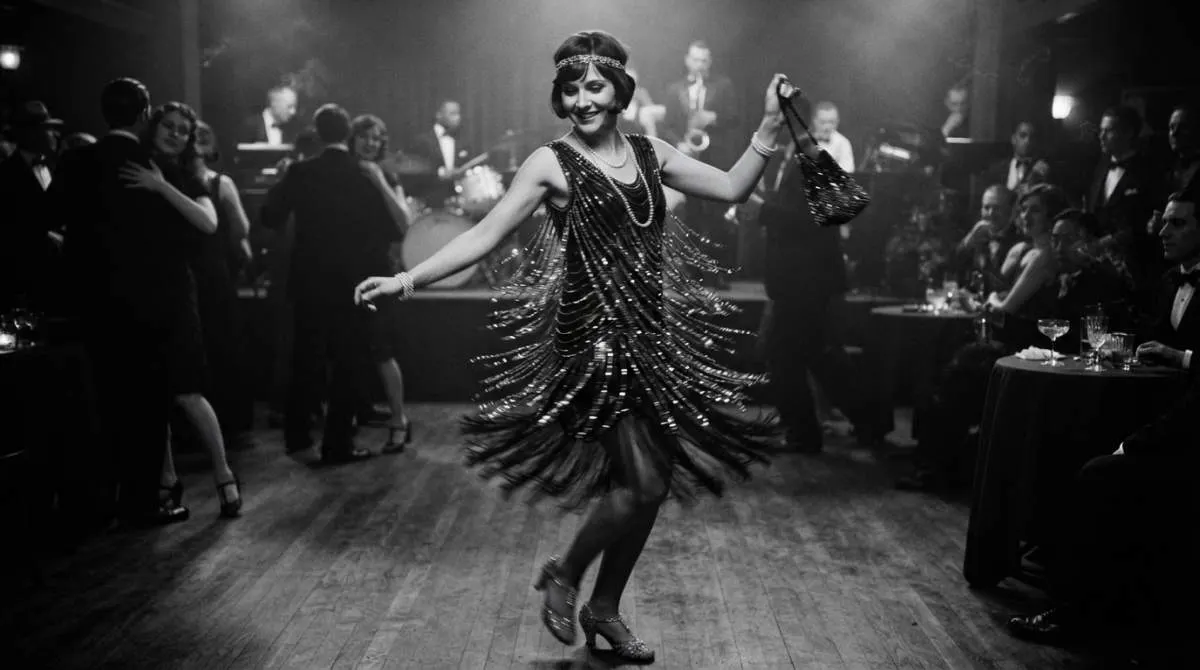
It caught the hem of a dress first. The beaded fringe lit up like a signal fire [1].
Women moved, and the light scattered. Each bead was a tiny mirror, angled to catch the jazz-club glow. The effect was electric, almost alive [2].
The Science of Shimmer: How Beads Catch and Reflect Light
Those glass beads and sequins did real work. They caught the dim, flickering light and threw it back in sharp bursts. Movement made it happen-a sway, a shimmy, a Charleston kick [3].
The fringe didn't just sparkle. It moved. It swung, clicked, and whispered against the fabric.
You heard the dress before you saw it.
The whole room felt the rhythm. The dress became part of the band.
The Fringe Effect: How Flapper Style Refused to Fade
That sparkle did not stay locked in jazz clubs. It slipped into Hollywood's film vaults. Costume designers knew beaded fringe meant motion, risk, and pure dazzle.
Film noir borrowed the look for its femmes fatales. The beads caught light in dark rooms full of secrets. Fringe became armor and invitation all at once.
Magazines of the era called them "dancing dresses." The message was sharp and clear. Movement meant modernity, and fringe proved you moved.
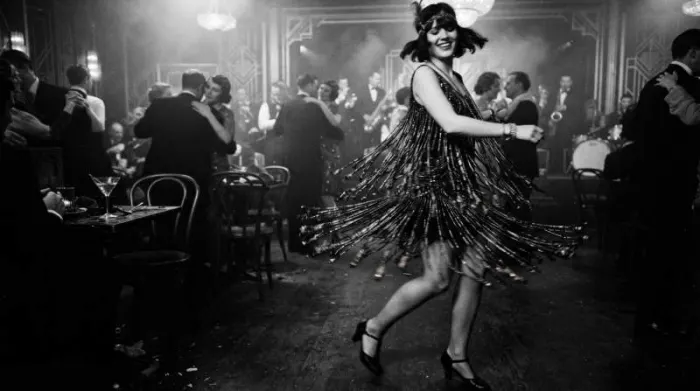
The sound of beads joined the legacy too. Fringe clattered with every dance step. That noise meant a woman was alive and moving through the night.
I once held a 1920s dress at a vintage shop. The beads were dusty but still glinted. "My aunt wore this to a secret club," the owner said, and that whisper of rebellion stayed with me.
- 1930s screwball comedies: fringe caught every camera movement
- 1950s cocktail parties: beaded dresses signaled evening glamour
- 1970s boho dresses: loose fringe with that same kinetic shine
- 1990s red carpets: Old Hollywood revival with fresh textures
- Today's fast fashion: cheaper beads, but the same trick of light
Each generation rediscovers the formula. Beads on fringe catch light in dim rooms. Movement creates the flash.
It is simple physics, but it still feels like rebellion.
Even today, a beaded fringe dress reads as special. It is not everyday wear. It is a costume for transformation, for becoming someone else.
The sparkle crossed class lines over time. Department stores sold versions at every price. The texture of beads became accessible to all.
Mood Match
Four Records for a Night Out
Here is a little set of songs to carry you through an evening, from the first powdering of the nose to the last taxi home.
Getting ready for a night out
Ain't Misbehavin' by Louis Armstrong and His Orchestra.
That lazy, grinning trumpet tells you the evening is already going your way, even if you are only halfway into your stockings.
Dancing in a dim club
Black bottom by Johnny Hamp's Kentucky Serenaders.
It bounces along at exactly the speed of a dance floor that has gone pleasantly dark and a little too warm.
Closing down the party at 2am
Charleston by Arthur Gibbs and His Gang.
Nothing clears a room quite so cheerfully, and nothing makes the last few dancers feel quite so daring.
Slipping out to a speakeasy
Rhapsody in Blue by George Gershwin.
That opening clarinet slide is the sound of a door you should not be walking through, which is precisely the point.
Play them in order, keep the lights low, and do not let the neighbours hear the last one.
Songs checked against en.wikipedia.org.
Wedding fashion borrowed the trick too. A fringe of beads on a bridal gown signals joy. It is a dress built for dancing, not standing still.
Pop stars and film costumers still reach for this effect. Fringe makes the eye follow the body. The beads create a trail of light with every step.
The legacy extends to costume design textbooks. They study how fringe creates texture on film. It is a masterclass in using light and motion.
That is the real legacy. A design so smart it never fades. Give it dim light, a moving body, and beads on a string.
The magic repeats itself.
The Science and Legacy of Beaded Fringe Sparkle
The Prism Effect: How Glass Beads Captured Light
The trick was not the fabric. It was the cut of the glass beads. Dim club light was essential for the flash.
These tiny prisms caught low light and bounced it back. The result was a sudden, private explosion of sparkle. Movement amplified everything.
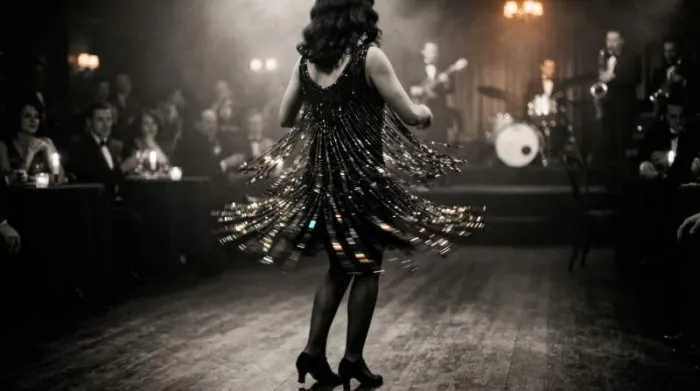
Beaded fringe sparkled best in dim lights. It moved with the jazz dance. This was the science of texture meeting kinetic energy.
I once read a dancer’s diary from the era. She felt the room go quiet when her fringe caught the bulb. It was power, and she knew it.
The Audible Glow: The Soundtrack of Movement
Sound completed the effect. The beads clicked and rustled with every step. It was a sonic sparkle, a soundtrack of movement.
You heard her before you saw her. Then you could not look away. This was jazz age culture made physical.
The contrast made the magic. Smooth glass against dark velvet air. Rough fringe motion broke the stillness of the room.
Your eyes had no choice but to follow the light. That was the secret. A woman became a moving constellation, wrapped in armor for the dark.
Sources
- [1]Jazz: Dance and Fashion · Fashion and Music · Fashion2Fiber
- [2]Jazz Age, Fashion & Photographs, TextielMuseum
- [3]Dress, evening dress | London Museum
Bracketed numbers in the text (e.g. [1]) refer to the sources listed here.
Why did flappers wear beaded fringe dresses?
Flappers wore beaded fringe to rebel against the corseted, restrictive styles of their mothers' generation. The fringe's movement and sound were a bold statement of freedom, and the beads themselves were often made from recycled glass, a nod to the era's resourcefulness. This fashion choice was a visual and audible break from the past, celebrating a new, modern womanhood.