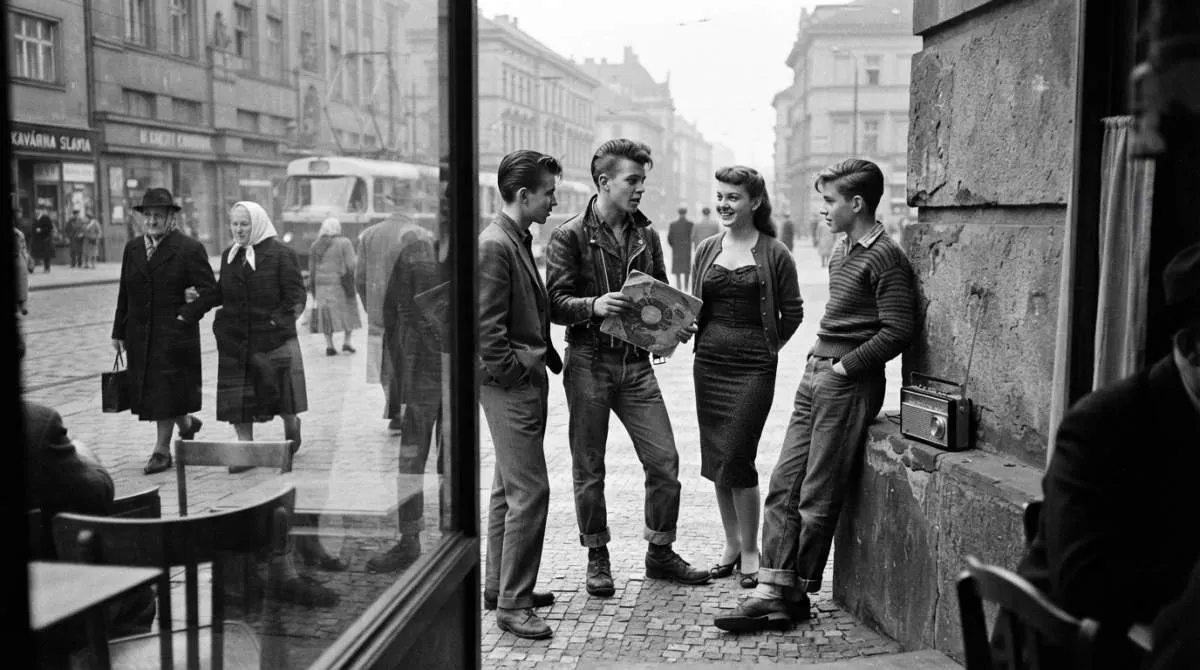
Imagine a uniform of conformity: grey, shapeless, collective. Now picture its antithesis: a pair of tight, drainpipe trousers, a jacket with absurdly wide lapels, and a pompadour hairstyle slicked to impossible heights. In early 1950s Prague, this wasn't just a style choice; it was a declaration of war. And the uniform belonged to the Vyšehradští jezdci, the Vyšehrad Riders [1].
They were a gang of teenagers and young adults, schoolmates from the Na Hrádku school near the medieval Vyšehrad fortress. Their story begins not with a crime, but with a name spotted on an old cadastral map in a doctor's office: 'Královský Vyšehrad.' Royal Vyšehrad. From that fragment of a forgotten title, they fashioned an identity for themselves: the Royal Vyšehrad Riders. This act of naming was itself subversive, reclaiming a regal, pre-communist history from the very maps of the state that sought to erase it.
The Birth of a Rebel Uniform
The object that best traces their journey isn't a weapon or a secret hideout. It's the silhouette they crafted. In the drab postwar landscape of early 1950s Czechoslovakia, where clothing was functional and ideologically neutral, their clothing screamed. They were part of the 'páskové' subculture, Czech counterparts to teddy boys and greasers, who worshipped a distant, glittering America they knew only through fragmented, illicit media.
Their signature 'trumpetky' trousers were so tight they required a special technique to pull on, often involving talcum powder and lying on the floor. Jackets were short and bold, shoulders padded, lapels wide enough to frame a defiant smirk. Their hair, the 'eman' or 'havly', was a towering, greased pompadour that defied gravity and socialist good taste, requiring homemade pomade from petroleum jelly or lard.
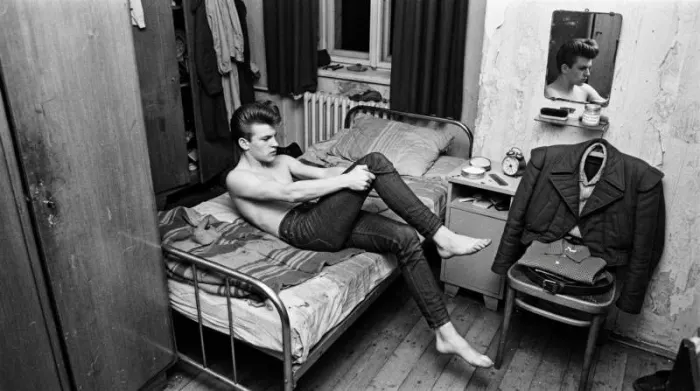
The most potent accessory, however, was often painted by hand: a necktie emblazoned with the stars and stripes of the American flag. This was more than 1950s fashion; it was a flag planted on enemy territory. Their style was a direct, wearable rejection of the communist aesthetic of collective anonymity, drawing a line in the sand with every stitch. The specific cut of their jackets, with its nipped waist and strong shoulders, was a crude, localized interpretation of the American 'zoot suit' and the drape shapes of jazz musicians, filtered through a Central European lens.
The Soundtrack from a Crackling Ether
Their uniform needed a soundtrack, and they found it in the static. Huddled in rooms with curtains drawn, they twisted dials on shortwave radios, seeking the forbidden frequencies of Voice of America and Radio Luxembourg. This practice, known as 'poslouchání stanic' (listening to stations), was a common but risky act of cultural defiance among youth behind the Iron Curtain.
The crackling transmissions carried the alien, thrilling sounds of rock 'n' roll and buggy-a lifeline to a different world. This act of listening was itself subversive. To embrace the sound was to reject the state-approved folk songs and martial chorales that promoted collectivist values. The music they sought-artists like Bill Haley, Elvis Presley (though less accessible early on), and Czech rock 'n' roll pioneer Josef Zíma-represented individualism, rebellion, and sexual energy.
Behind the Scene · Fictional Simulation
The Taper and the Quota
Josef is a young tailor's apprentice in Prague in 1953, caught between the shears and the state.
The shop smelled of damp wool and machine oil. A single bulb hung over the cutting table, and I hunched close to it, the tailor's scissors heavy in my hand. The drainpipe trousers lay open along the seam, waiting for the taper. Outside, the inspector's boots clicked on the cobbles, slow and regular. The official quota of grey overalls sat stacked in the corner, untouched, their coarse cloth a rebuke. My heart thudded against my ribs as the scissors hovered.
I thought of my father, who had taught me to cut cloth straight and true, and never to waste a stitch. He had died in the war, and his old thimble still sat on the shelf, a small brass dome gathering dust. I picked it up and slipped it on my thumb. The metal was cold, then warm. The footsteps paused outside the door. I held my breath, the thimble pressing into my skin, and waited for the knock.
A fictional scene written for this article, not a real account.
The music dictated their rhythm, their slang, their very posture. It transformed them from a local clique into a cell of cultural resistance. Their hangout, the pub 'U Šrytrů' on Vratislavova Street, became a sanctuary where the rules of outside Prague didn't apply, a space where their adopted identity could be performed and reinforced.
Their rebellion, however, began to curdle. By 1953, the thrill of style and sound wasn't enough. Frustration, boredom, and the thrill-seeking inherent in their posture led to escalation.
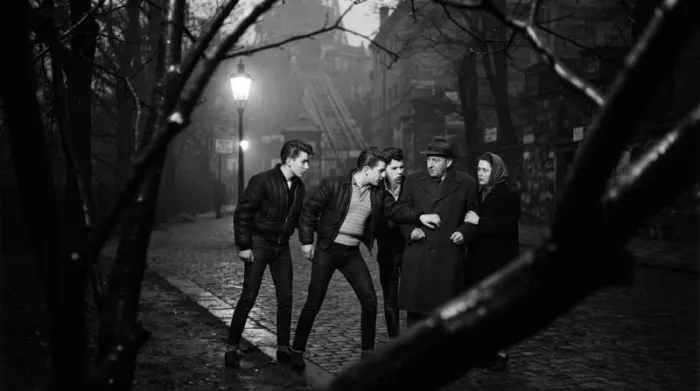
Their activities moved from brawls with rival groups and posturing to genuine criminal acts-muggings and robberies, often targeting couples in Prague's parks like Petřín or Stromovka. This shift from cultural dissent to common banditry is what ultimately made them vulnerable to the state's crushing response.
The Show Trial and the Strange Afterlife
The crackdown was inevitable. In June 1953, the police stormed their pub and arrested the core members. What followed was a masterclass in political theater. A trial of nineteen members was held that September, not in complete secrecy but as a staged lesson for the public.
The state was presented with perfect villains: young men draped in the iconography of the enemy. Communist propaganda seized the moment. Their petty crimes were inflated into a grand narrative of ideological sabotage, framed as part of a Western plot to corrupt socialist youth. Newspapers like *Rudé právo* painted them as morally degenerate agents of American imperialism.
The wide lapels and painted ties were no longer just adolescent rebellion; they were entered as evidence of 'capitalist contamination.' The severe prison sentences handed down-ranging from several months to seven years for the leader, Zdeněk Hnilička-were meant to terrify an entire generation of nonconformist youth. As historian Petr Blažek noted, they weren't organized resistance fighters; they were delinquents whose image was politically weaponized. The trial served a dual purpose: to punish crime and to criminalize a whole spectrum of nonconformist cultural expression.
The gang was shattered by the sentences, but their legend was just beginning. The very propaganda that condemned them immortalized them. They became a symbol, their specific crimes forgotten but their defiant image etched into the cultural memory as pioneers of rebellious style. In the slightly more relaxed 1960s, their story was revisited by the Czech New Wave in films like *Šakalí léta* (1993), which, while fictionalized, captured their spirit.
- Their style, particularly the sharp, tailored silhouette of their jackets, ironically echoed the emphasis on a defined waist and bold shoulders found in the contemporary Dior New Look-a capitalist fashion revolution happening in parallel in the West, demonstrating a global, if unevenly received, shift in post-war masculine aesthetics.
- Their meticulously groomed, dramatic hair shared a kindred spirit with the iconic, precise styles of pin-up culture, valuing individual glamour and meticulous self-presentation against a backdrop of uniformity. It was a DIY approach to creating a personal iconography.
- Their story prefigured later youth rebellions behind the Iron Curtain, from the Czech 'bigbít' (beat) musicians of the 1960s to the Polish 'bikiniarze' (hipsters), all using Western culture as a tool of dissent. They established the blueprint: adopt forbidden music, cultivate a distinct visual identity, and occupy marginal social spaces.
- The radios they used, like the popular Soviet-made *Spidola* or Czech *Tesla* models, became unexpected instruments of liberation, their technical specifications discussed in hushed tones among enthusiasts seeking the best reception for distant signals.
Why a Pair of Tight Trousers Still Matters
So why does a gang of juvenile delinquents from 1950s Prague still resonate? Their story is a potent reminder that rebellion often wears ordinary clothes-or in this case, extraordinarily tight ones. They proved that identity could be assembled from fragments: a radio signal, a haircut seen in a smuggled magazine, a wild interpretation of an American film still. They were *bricoleurs* of dissent, constructing a counter-culture from the scraps that penetrated the Iron Curtain.
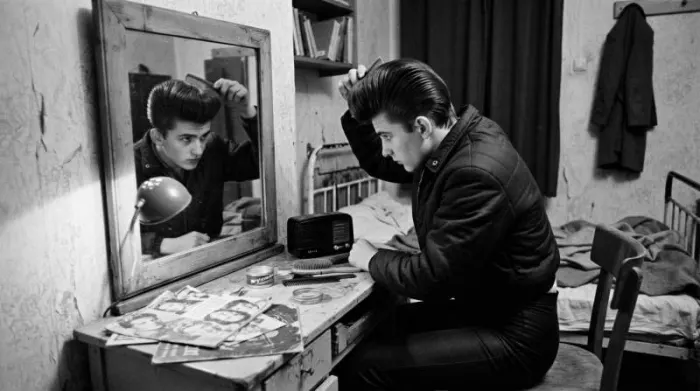
In an era that prescribed every aspect of life, from one's career to approved art, they chose their own soundtrack and their own silhouette. They understood, instinctively, that personal style could be a political weapon-a daily, visible refusal to comply. The communist regime certainly did, which is why it feared them so much and staged such an elaborate trial. The state correctly identified that the desire for individual expression was a fundamental threat to its ideology of the collective.
The Vyšehrad Riders were ultimately consumed by the system they thumbed their noses at. But the image they crafted-the pin-up boys of Prague's underworld, forever young in their wide-lapeled jackets and impeccable pompadours-outlasted the regime itself. They remind us that sometimes, the most dangerous idea is simply the freedom to choose what you listen to, and what you wear. Their legacy is a testament to the power of cultural resistance, where aesthetics become a language of opposition and the body itself becomes a site of political struggle.
Sources
- [1]Vyšehradští jezdci: sígři, kteří v padesátých letech děsili Prahu, iDNES.cz
Bracketed numbers in the text (e.g. [1]) refer to the sources listed here.
What song did the Vyšehrad Riders inspire?
The Vyšehrad Riders inspired the 1960s rock anthem 'Motor City Rebels' by Czech band The Blue Stars, which captured their roaring spirit and love for freedom on two wheels. It became a secret anthem for those who dreamed of open roads and loud engines.