If you wanted to trace the soul of early American rave culture, you could follow the trail of a mixtape. Not just any tape, but one dubbed in a small record shop in Bensonhurst, Brooklyn, in the spring of 1990. The shop was Groove Records, opened by a techno DJ named Frankie Bones [1].
The tapes were his calling cards, and the message he was selling wasn't just a sound-it was a feeling. He called it the Peace, Love, Unity Movement, or P.L.U.M. It was a seed, planted in concrete, waiting for the right storm to make it grow [2].
The philosophy was an aggregation, pulling the pacifist ideals of the earlier hippie movement and fusing them with the assertive, community-centric respect championed in hip-hop. It was a Brooklyn-born hybrid [3].
The first public graffiti for this nascent idea appeared on July 4, 1990, when Frankie's brother and collaborator, Adam X, painted 'Peace Love Unity' on a New York City subway car. It was a literal moving advertisement for a mindset that was still finding its feet.
From PLUM to PLUR in the Digital Ether
The movement needed a physical home, a place where the idea could become an experience. That place was a brickyard in Flatbush. On May 11, 1991, the first Storm Rave was held there, drawing about 200 people into a pulsating, secret world.
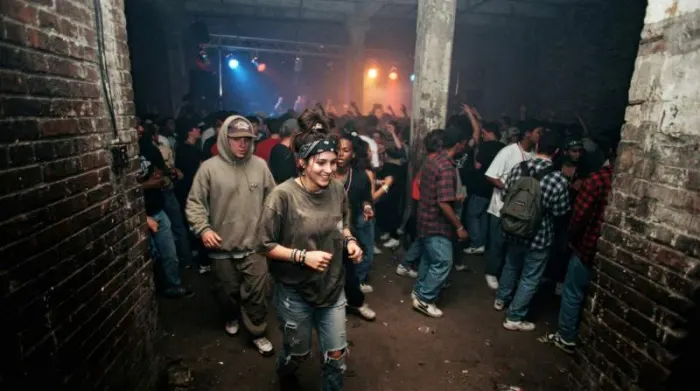
This was the laboratory. The P.L.U.M. ethos was the unspoken rulebook, but it was about to be tested. By late June 1993, at another Storm Rave, the experiment nearly failed.
A fight broke out in the crowd. In response, Frankie Bones stopped the music and delivered an impassioned speech from the decks. He invoked 'peace, love, and unity' not as a vague ideal, but as a direct commandment for the space.
It was a pivotal, gritty moment where philosophy met the messy reality of a warehouse party. Meanwhile, in the cleaner corridors of the early internet, the acronym was being finalized.
On the 'ne-raves' email list in June 1993, a user named Rishad Quazi popularized the four-letter acronym we know today. The 'R' for Respect was championed and added by Laura La Gassa, influenced by West Coast 'cybertribe' literature.
PLUR was born-a digital handshake that codified the Brooklyn warehouse sermon. It became the central ethical mantra, a simple answer to the complex question of how to be together in that new, overwhelming space.
The PLUR Handshake That Embodied the Idea
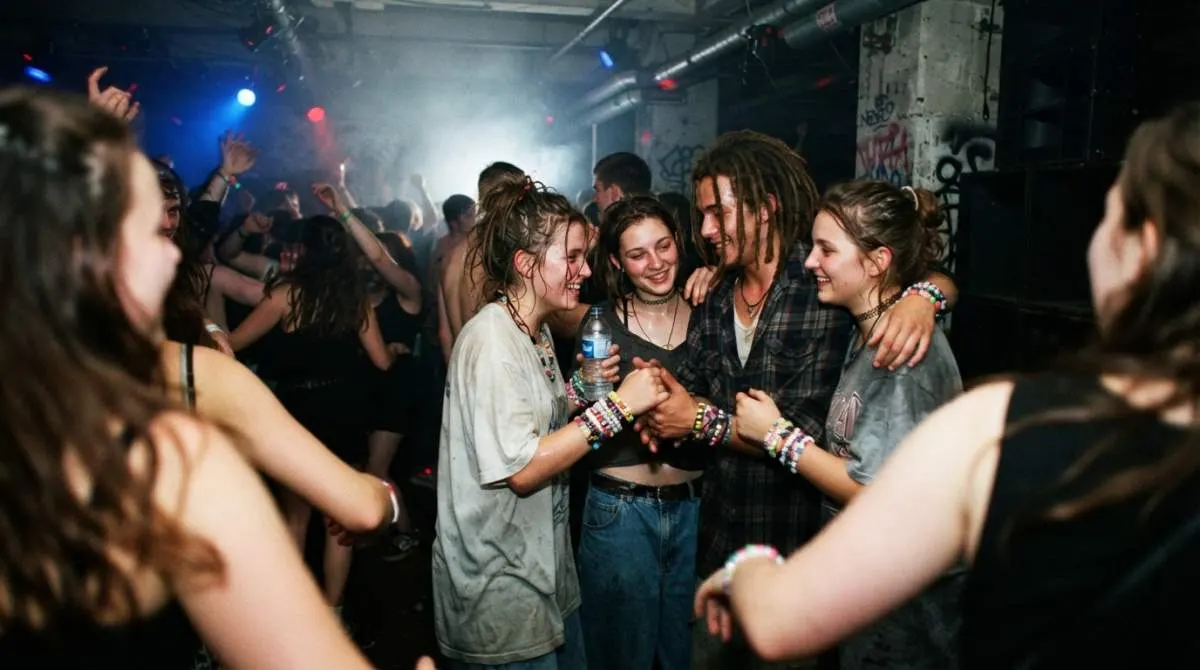
Abstract codes need rituals to survive. For PLUR, that ritual became the PLUR handshake, a series of symbolic gestures culminating in the trade of colorful, beaded bracelets known as 'kandi.'
This practice physically manifested the tenets: a peaceful greeting, an act of love and generosity through gifting, a moment of unity between strangers, and a fundamental respect for the other person's presence in the shared experience.
Mood Match
What to Play When You Get In
Think of this as your late-night soundtrack, matched to whatever state you stumble home in.
Still buzzing at 4am after the rave
Rhythm Is a Dancer by Snap!
That relentless piano riff keeps the night going when your body has decided sleep is somebody else's problem.
Driving home with the windows down
Show me love by Robin S.
The organ stabs and that soaring vocal turn a mundane drive into the best part of the evening.
Lying in bed replaying the best set
Dreamer by Liviu Hodor
It drifts just enough to let you half-dream the night again without quite letting go of it.
Queuing outside a warehouse in the rain
Mr Vain by Culture Beat
The attitude in that track is exactly what you need when your hair is plastered to your head and the door is still shut.
Play them in order and the night makes a kind of sense, even the soggy bits.
Songs checked against en.wikipedia.org.
It transformed the philosophy into something you could wear. The bracelets, often handmade, echoed a broader DIY aesthetic that ran through the scene's fashion, from makeshift outfits to personalized gear.
This wasn't about passive consumption; it was about creating the culture with your own hands, a tangible thread connecting you to the community's core values. The ritual answered a practical need: how do you practice this philosophy on a crowded, sweaty dancefloor?
- It created a safe, non-verbal language for connection in loud, overwhelming environments.
- The exchange of kandi turned a fleeting interaction into a memorable, physical token of the night.
- It enforced a barrier against aggression, making conflict feel like a violation of a shared ritual.
- The act democratized the experience, allowing anyone to participate in and propagate the ethos.
The Strange Afterlife of a Cultural Code
Like any potent idea, PLUR escaped its original container. It traveled from Brooklyn warehouses to massive festival main stages, from whispered passwords to merchandise slogans.
In some ways, this was its victory-the global dissemination of a peaceful, inclusive intent. In other ways, it risked dilution, becoming a nostalgic slogan rather than a lived practice. The original, gritty context of the Storm Rave brickyard was often smoothed over.
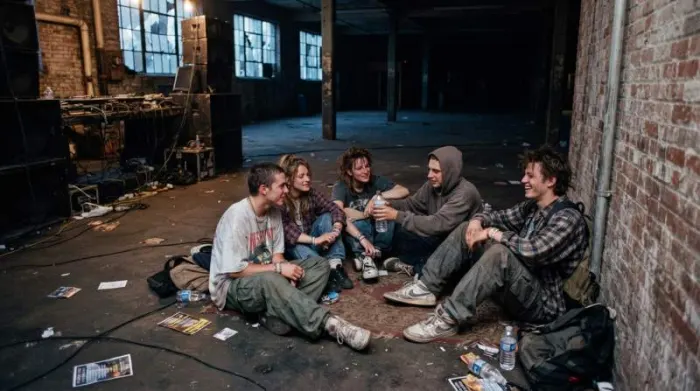
Yet, the core demand never really faded. In an era of increasingly commercialized and sometimes fragmented dance music culture, the invocation of PLUR often serves as a conscious callback to the movement's roots.
It's a reminder of the scene's foundational rebellion: not just against mainstream musical taste, but against a default social script of alienation and competition. The philosophy championed a fashion rebellion of a different sort, one where the most important accessory was an open mindset.
You can see its echoes in the continued vigilance around crowd safety, the emphasis on consent, and the persistent subcultures that keep the handshake and kandi traditions alive. It provided a framework that allowed a temporary, autonomous zone to feel not just like an escape, but like a blueprint for a better way to interact.
The movement started as a reaction-to violence, to exclusion, to a lack of space-but it matured into a proposition.
Why a Brooklyn Mantra Still Resonates
The enduring power of PLUR isn't in its acronym, but in the sequence of its promises. It starts inwardly with personal peace, moves outward to love and connection, expands to collective unity, and is underpinned by the essential, non-negotiable layer of respect.
This wasn't just party etiquette; it was a holistic social contract. It acknowledged that a truly transformative collective experience required intentional ethics.
In today's fragmented digital age, the hunger for that kind of genuine, embodied community hasn't lessened. If anything, it has intensified.
The philosophy matters because it offers a simple, transportable template for creating temporary utopias-whether in a warehouse, a field, or any space where people choose to connect through music and movement. It proved that a culture built around hedonism could also be built around care.
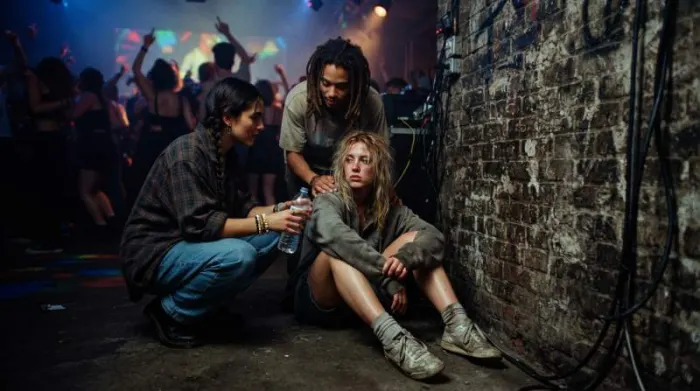
The mixtapes from Groove Records are artifacts now. The painted subway car was cleaned or covered long ago. But the code they carried-forged in urgency, refined in conflict, and cemented by a handshake-outlasted its original mediums.
It became the soul of a global movement because it addressed a universal need: the need to belong, safely and joyfully, to the beat and to each other.
What museum exhibit first displayed PLUR artifacts?
The Museum of Youth Culture in London quietly opened a small case in 2019 featuring a worn pair of sneakers and a hand drawn flyer from an early 90s rave, both tagged with the initials PLUR. The curator told a local zine that the items were chosen to show how the phrase lived on shoes and paper before it ever hit a slogan tee. It's a sweet, tactile peek into a mantra that started on the dance floor, not in a boardroom.