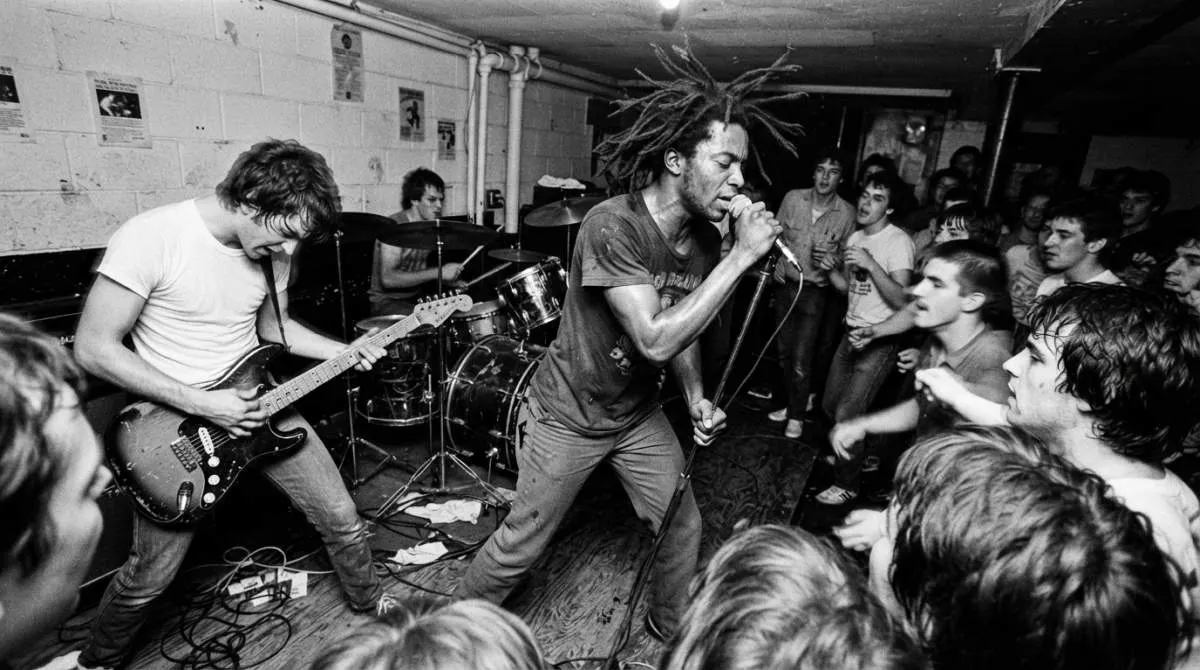
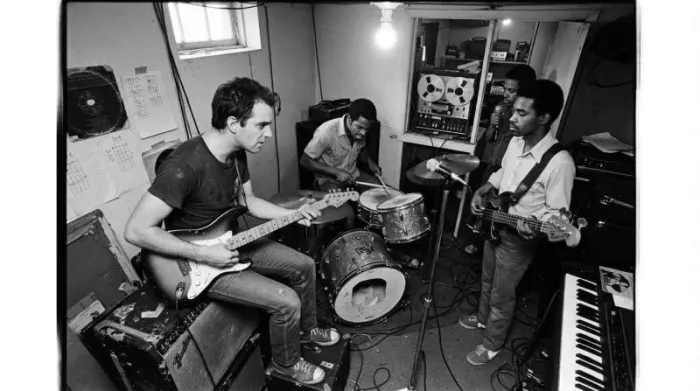
Imagine a sound so urgent it could barely be contained by the technology meant to capture it. That was the reality inside Don Zientara's basement in Arlington, Virginia, one afternoon in March 1979. A band called Bad Brains, having already driven to the wrong address, finally arrived at the fledgling Inner Ear Studios with exactly one hour left on their booking. The studio itself was a nascent hub in what would become the iconic DC punk and hardcore circuit [1].
They plugged into a simple 4-track tape deck. What followed was the explosive birth of hardcore punk, captured in its raw, first breath. For nearly half a century, the six songs from that hour existed as a ghost-a legend traded on fragile cassettes among a select few. Now, that ghost has a body [2].
The Birth of a Blur on Four Tracks
The object of our story is a specific reel of tape. It began its life rolling in that basement studio, a physical witness to a creative detonation. This was the band's first time in any kind of proper studio, and the clock was their only producer. The 4-track recorder, likely a Teac or similar model, forced bands to commit to a mix live with minimal overdub capability-a constraint that perfectly suited punk's immediacy [3].
The pressure forged something terrifyingly pure. The session yielded the first studio recording of 'Pay To Cum,' a song that would officially debut on a 7-inch over a year later. Here, it was even more feral, a blast of musical adrenaline documented just seconds after its invention. The track's breakneck tempo, often cited as one of the fastest in rock history, was a physical and philosophical rejection of the bloated rock and disco dominating late-70s airwaves.
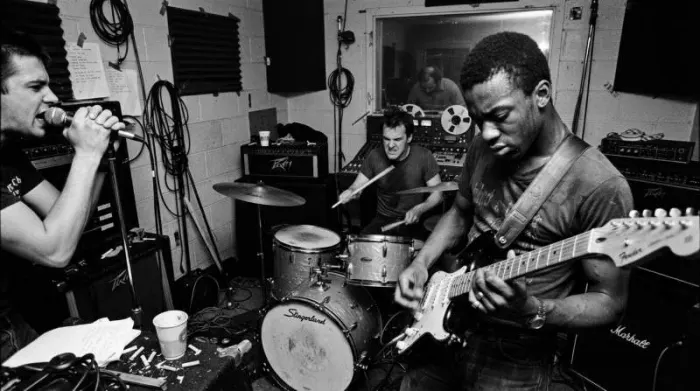
You can almost hear the room's dimensions in the recording, the sound of energy hitting concrete walls. When the hour was up, the band left with a reference cassette. The master reel stayed behind, a hardcore holy grail waiting in the dark. This separation initiated the tape's dual existence: one as a physical archive, the other as a circulating, mutating idea.
The Strange Afterlife of a Hand-to-Hand Ghost
This is where the tape's biography takes a left turn into the analog underground. While the band's later 1979 session would eventually see official light as the 'Black Dots' album in 1996, this earlier March tape remained officially buried. The 'Black Dots' sessions, recorded just months later, were themselves lost for years before their recovery.
It didn't disappear, though. It multiplied. Copies of that original reference cassette were dubbed, and those copies were dubbed again. The session circulated unofficially for decades among tape-trading punks, a currency of credibility within the scene.
Mood Match
Four Songs for the Four Corners of a Day
Here is a small jukebox for the ordinary hours, so put the needle down and let the music do the work.
Racing to finish before a deadline
Pay to Cum by Bad Brains
It is a two-minute sprint of pure panic and joy, which is exactly what a looming deadline feels like at full volume.
Stuck in traffic and fuming
London Calling by The Clash
That opening bass line is a siren for the end of the world, and somehow it makes the M25 feel almost noble.
Cleaning the house on a Saturday
One Way or Another by Blondie
Debbie Harry sounds like she is coming to get you, which is precisely the energy you need for the skirting boards.
Walking home alone after midnight
Message in a bottle by The Police
Sting sends out an SOS and the lonely streets answer back, which is a comfort when your own footsteps are the only company.
Play them in order, and the day will start to make a strange kind of sense.
Songs checked against en.wikipedia.org.
This cassette culture was a global, analog peer-to-peer network, essential for spreading music that commercial outlets ignored. Each generation of tape added its own layer of noise and distortion, further obscuring and mystifying the source.
To own a copy was to possess a secret history. In an era we now look back on as a definitive pre-smartphone life, knowledge spread through physical networks. Fanzines like Maximumrocknroll and Flipside often served as classified sections for this trade, with fans mailing blank tapes and postage to strangers to receive curated samplings of unseen scenes.
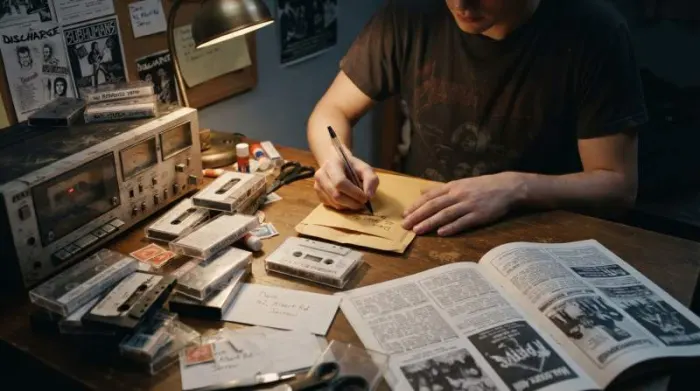
The tape's contents became punk rock lore. Its very scarcity amplified its power, transforming it from a simple demo into a foundational myth. For collectors, the hiss and dropouts weren't flaws but badges of authenticity, proof of the tape's journey through countless hands and tape decks.
- The Frantic Hour: Recorded in a single one-hour booking after the band went to the wrong address.
- The Sonic Blueprint: Contains the first studio take of 'Pay To Cum,' defining hardcore's breakneck speed.
- The Bootleg Network: Survived for nearly 50 years via hand-dubbed cassettes traded in the punk underground.
- The Archival Mix: Officially remixed for release by Ian MacKaye, bridging generations of DC punk.
- The Final Form: Released as 'Are You Ready: The First Studio Recording (Inner Ear, March 1979)' on vinyl, cassette, and digital formats.
From Basement Tape to Official Artifact
The tape's journey from underground artifact to official release is a story of preservation meeting respect. The master, long safeguarded, was entrusted to Ian MacKaye for a new mix. His role was perfect-not to polish, but to clarify. MacKaye's entire career, from Teen Idles to Fugazi, has been built on the DIY ethos and archival preservation intrinsic to the Dischord Records model.
MacKaye, co-founder of Minor Threat and Fugazi, approached the tapes as an archaeologist brushing dust from a vital fossil. His task was to let the original panic and power speak through the decades of tape hiss. This philosophical approach to remixing focuses on stabilization and clarity rather than modern enhancement.
The official release, issued in cooperation with the band, marks the end of the tape's long, strange journey. It's a paradox: by making it available to everyone, it forever changes its status as a secret handshake. The release acts as a formal coronation, moving the work from the realm of folklore into the historical record.
What's striking is how the release format nods to its history. It's coming out on vinyl, but also on cassette-the very medium that carried its legend for so long. The cassette release is a conscious tribute to the format's role in punk history, while the vinyl caters to the modern collector's market.
Why a Frantic Hour Still Matters
So why does this one hour of tape, recorded so hastily, still resonate? This session captures a precise moment of ignition, the split-second before a genre crystalized. It's the sound of a boundary being broken in real time. Historically, it documents the transition of Bad Brains from their earlier jazz-funk fusion roots into the ferocious hardcore sound that would define them.
In a cultural landscape often focused on polished product, this tape is pure, uncut process. The economic paradox of punk was doing the most with the least, and here that ethos is captured at its source. No budget, no time, only necessity. This stands in direct contrast to the major-label rock recording processes of the same era.
Listening now, it dismantles any romanticized notion of a planned revolution. This was chaos harnessed, just barely. The tape's long survival as a bootleg speaks to a different way culture moved-slowly, personally, through trusted networks. It underscores that cultural impact isn't always measured in initial sales, but in sustained, underground influence.
It reminds us that history isn't always made in famous studios. Sometimes, it's made in a basement on a deadline, survives on a dub of a dub, and becomes legendary precisely because it was almost lost. The tape's biography, from birth to bootleg to official release, is the biography of hardcore itself: urgent, resilient, and ultimately undeniable.
What did the original Bad Brains demo tape sell for at auction?
In 2019, a rare copy of the band's 1979 demo tape fetched over $3,000 at an online auction, a jaw-dropping sum for a cassette that helped ignite the hardcore punk movement. It's a testament to how fans treasure those raw, early sounds that shaped a genre.