
Quick Facts
- The Era:The 1960s Jet Age turned the stewardess uniform into a glamour symbol.
- The Illusion:The uniform looked effortless but was built for mechanical control.
- The Reality:Hidden structural engineering and rigid grooming ensured perfect consistency.
- Modern Echo:Pop culture from Mad Men to Vogue still copies the silhouette.
The Cocktail of Precision and Danger That Defined the Jet Age
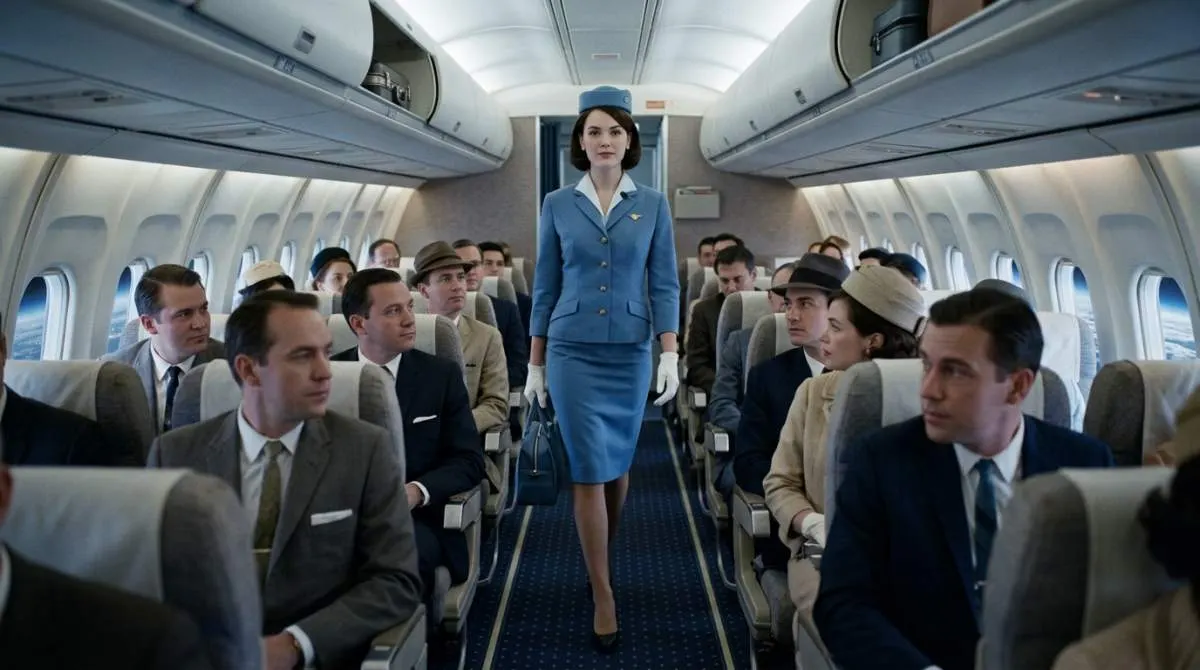
The Pan Am stewardess uniform was never just fabric. It was a carefully engineered signal of trust, control, and a very particular kind of sex appeal. To understand why it became the ultimate 60s symbol, start with the vibration of a Boeing 707 at full throttle.
That noise, a deep rumble that shook the bone, was the soundtrack of the Jet Age. Inside the cabin, the woman in the navy suit was the human counterpoint to all that raw power. She was calm, polished, and utterly in charge.
The uniform told the passenger that this flight, this moment, was an event. The 1960s stewardess beauty ideal was a cocktail of WASP refinement and space-age daring, a look that felt both safe and thrillingly modern. People dressed to fly because flying was still a ceremony, and she was the high priestess of it.
The uniform itself was a weapon of precision, signaling control, not just service. The navy blue wool was chosen specifically because it didn't show wrinkles or stains, a practical choice that also projected authority and reliability.
A woman in that wool suit was trusted with your life, and she also had the keys to the cocktail cart, a specific kind of power. This was the peak of the Jet Age, and the uniform was its most perfect expression.
The Cabin as a Pressurized Bubble of Perfect Order
The world below changed fast with civil rights, Vietnam, and the Pill. Up in the cabin, travelers got a pressurized bubble of perfect order. She maintained it with a smile and a quick hand.
Men admired her while women envied her, and everyone wanted a sip of that life.
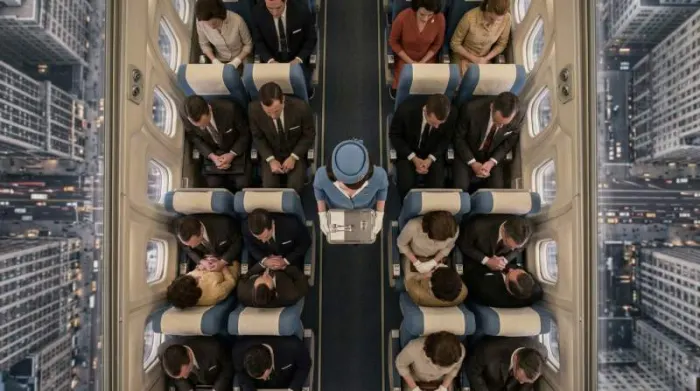
It was a fantasy sold by airlines, but the uniform made it feel real. That specific silhouette-the fitted jacket, the A-line skirt, and the little pillbox hat-defined an era and screamed that one had arrived. The emotional effect was simple: it said the flight mattered.
The Uniform's Architecture Hid a Mechanical Grip on Reality
The secret wasn't the fabric; it was the hidden structural engineering and the strict grooming standards that ensured every detail was flawless. Pan Am's designer, Evan-Picone, knew a stewardess had to pour coffee rather than pose. So they built the uniform like a piece of architecture.
The skirt had a hidden gusset and a kick pleat, letting a woman bend over a seat row without flashing anyone. The jacket had a hidden inner belt to stop it from riding up. These were not decoration but pure function.
Then there was the hat. The famous little pillbox sat on a hairpiece glued to a metal clip that bit into the hair. It never flew off in turbulence.
The real magic was that it looked effortless but was a mechanical grip. The grooming guide was a blueprint for mechanical consistency. A vintage Pan Am grooming guide specified the exact lipstick shade (Revlon's 'Love That Red'), the precise nail length (one-quarter inch past the fingertip), and the mandatory girdle. It even dictated the correct bra, a Playtex 'Living' model with an underwire that provided a uniform silhouette under the uniform.
The goal was to make every woman look identical, so the individual woman disappeared and the airline brand became the star. The sexy image came from absolute control. Every seam was reinforced, and every hair was pinned.
The uniform worked because it removed all human error, making it a machine for looking perfect under pressure.
The Uniform as a System, Not a Dress
Even the accessories were weapons in this system. The white gloves were not for show; they prevented fingerprints on the silver serving trays. The stockings were seamed because a straight seam down the calf was a visual cue of discipline.
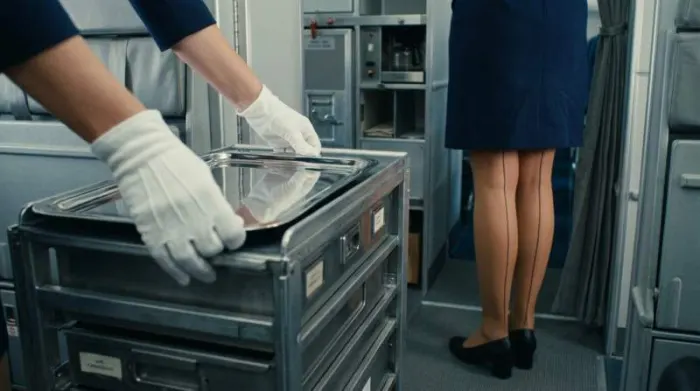
A crooked seam meant a sloppy mind, or so the grooming guide implied. This level of detail was not about the woman wearing the uniform. It was about the brand.
The airline was selling safety, and the uniform was the most visible proof that everything was under control.
The Pan Am Girl Still Flies in Cultural Memory at a Cost
The uniform escaped the terminal and landed in 60s James Bond style. Think of the early Bond women wearing sharp, tailored suits with a snap-brim hat. That was pure Pan Am.
Ursula Andress in a white trench coat was an airline girl on leave. Television grabbed it next. The show Mad Men made the stewardess a tragic hero, and Joan Holloway's curves nodded to the cabin while her ambition charted the real 1960s flight path.
Pop culture copied the silhouette, not the job. Music kept the memory warm. The B-52's song "Love Shack" video featured blue Pan Am-style pillbox hats, getting both the joke and the glamour.
A 1998 issue of Vogue showed a model in a navy coat with gold buttons, captioned "The New Jet Age," proving the image sold tickets. Street culture copied the silhouette too. High-waisted trousers and a simple blazer became a uniform for women who wanted to look ready for anything.
That was the secret power of the Pan Am girl: she looked ready.
The Hidden Scandal Behind the Glamour
But the legacy is not all glamour. The uniform was a tool of control, and the women inside it were often treated as disposable. The grooming guides were also weight charts.
A stewardess could be fired for gaining five pounds. The mandatory girdle was not just about silhouette; it was a constant physical reminder that her body was not her own. The 'sex kitten' image that the uniform projected was a marketing strategy that came with real costs.
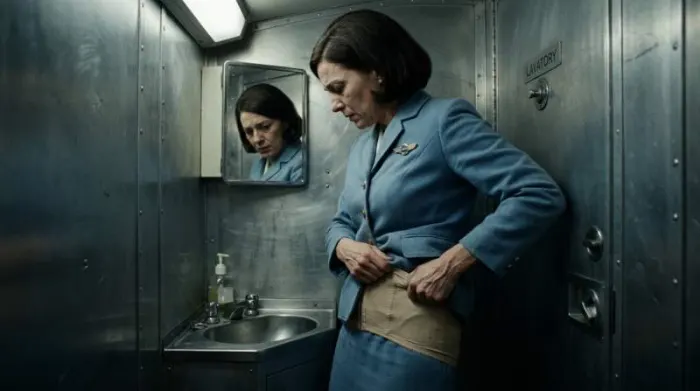
The airline's strict rules, such as mandatory retirement at age 32 or upon marriage, lasted until the early 1970s. The feminist movements of that decade rightly hated the image, seeing it as a cage. Yet the suit survived in cultural memory because it was aspirational.
Each copy in pop culture stripped away the actual labor, keeping the hat while losing the history. Still, the silhouette means speed, money, and a little bit of danger.
Modern Revivalists Reclaim the Terminal as a Stage for Surgical Precision
A key debate persists: is it retro costuming or a genuine style signal? Most revivalists chase the crisp, futuristic Pan Am look from 1968 rather than the polyester of the 1970s. This is the direct opposite of a boho aesthetic.
It is tailored, structured, and sharp. It rejects slouch for surgical precision. Social media feeds this micro-trend.
A handful of influencers search estate sales for original hats and wing pins, wearing them to airport lounges not for a flight but for the ritual of arrival. The emotional effect remains simple: it says one is going somewhere important. That confidence is the thing one buys when borrowing the uniform, yet the price of the actual job goes unpaid.
The modern revival is a selective memory: it takes the power of the silhouette without the pain of the girdle. It is a costume of control, and in a world of slouch and athleisure, that control feels radical. The Pan Am girl still flies, not in the sky, but in the way people dress to signal that they have arrived.
The Uniform as a Symbol of Aspiration
Today, designers like Miuccia Prada and Nicolas Ghesquière have referenced the Jet Age silhouette in their collections, using the high-waisted trousers and cropped jackets to evoke a sense of forward motion. The uniform has become a shorthand for a future that never quite arrived, a future of supersonic travel and perfect service. That is why it still resonates.
It represents a promise of order and glamour in a chaotic world. The Pan Am stewardess uniform is not just a piece of clothing; it is a time capsule of a moment when people believed that the future would be clean, fast, and beautiful.
Why Pan Am Stewardesses Had to Wear Girdles
The mandatory girdle wasn't just about a smooth silhouette, it was a tool of corporate control. Pan Am's grooming manual, a tiny booklet filled with diagrams, insisted the girdle prevented 'visible panty lines' and kept the skirt's A-line crisp. But the forgotten detail is this: girdles were also a status marker. In the 1960s, wearing one signaled a woman was a 'proper' working woman, not a bohemian or a housewife. It was a subtle way the airline co-opted societal expectations into their brand of polished aspiration.