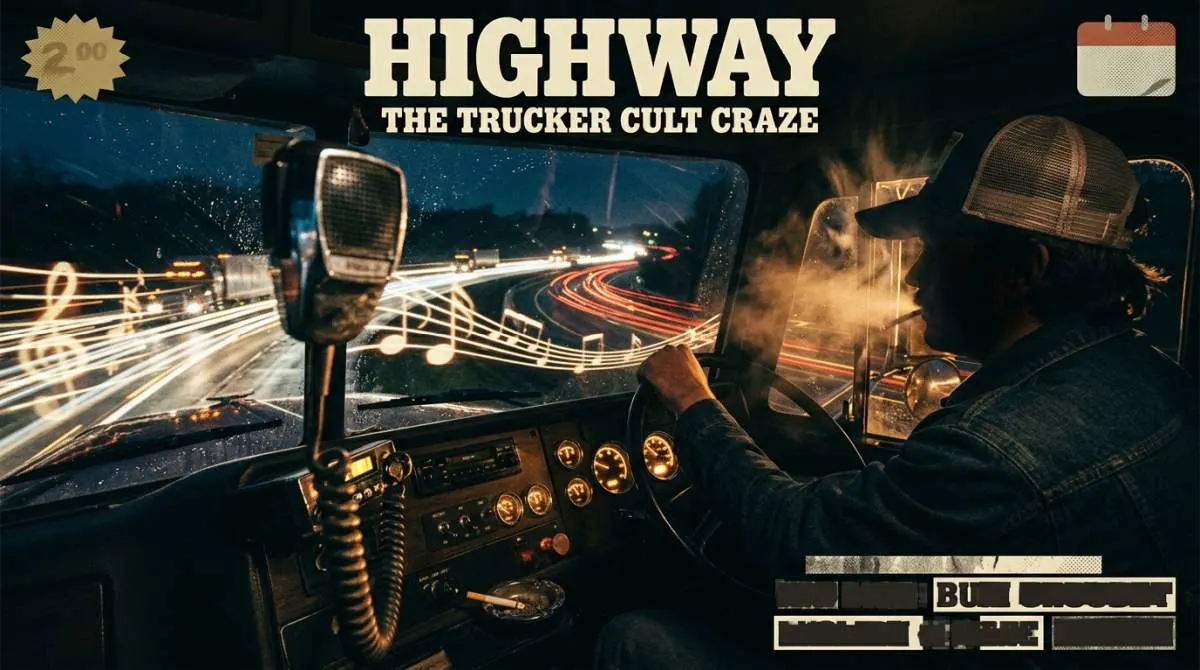
The dashboard crackles to life. "Breaker one-nine, this here's the Rubber Duck. You got a copy on me, Pig Pen? C'mon." In living rooms and car radios across America in early 1976, that gravelly voice wasn't just a song.
It was a transmission from another world, a world of long-haul rebels, Smokey bears, and rolling protests on the interstate. It was the sound of a cultural convoy forming, and everyone wanted to join.
The CB radio craze was, at its heart, a practical response to a crisis. The 1973 OPEC oil embargo, gas shortages, and the new national 55 mph speed limit turned the open road into a tense, monitored space.
For truckers, the citizens band radio became an essential tool-a way to warn each other of speed traps, share intel on fuel, and organize. But it was a novelty hit that threw this subculture into the mainstream spotlight, turning a tool into a totem.
From Bread Commercials to Billboard Glory
The story behind 'Convoy' is almost too perfect for the era. C.W. McCall wasn't a grizzled road warrior. He was a character cooked up in an Omaha advertising agency.
Bill Fries, the ad executive who voiced him, and musician Chip Davis created McCall for a series of commercials for Old Home Bread. They captured a certain rustic, storytelling vibe that resonated.
Fries got the idea for the song by listening to real truckers on their CB channels after the FCC made licenses easy to get. He soaked up the jargon-'swindle sheets' for logbooks, 'bears' for police-and spun it into a cinematic narrative.
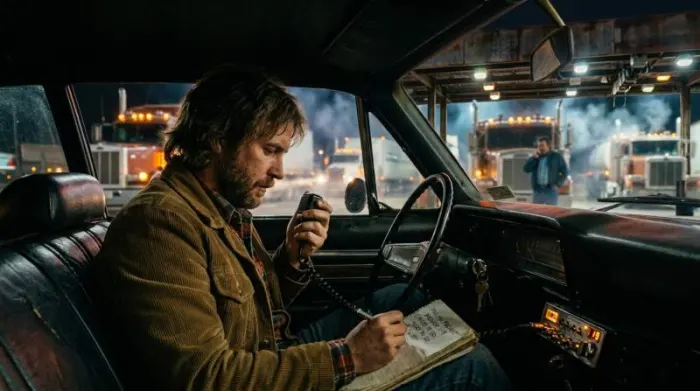
He released 'Convoy' in late 1975 under the C.W. McCall name, with his own CB handle, 'The Rubber Duck,' leading the charge. By January 1976, it sat at number one on both the Billboard pop and country charts.
It sold over two million copies. Suddenly, phrases like '10-4,' 'good buddy,' and 'What's your twenty?' weren't just trucker talk. They were playground chants, office banter, the lexicon of a nation briefly obsessed with the romance of the open road and its renegade captains.
Hollywood Hits the Gas
The song's success was a flare signal to Hollywood. The 1970s trucker culture in movies became its own genre, a wave of films where the big rig replaced the horse. 'Convoy,' the 1978 film, was the most direct and bizarre adaptation.
Directed by Sam Peckinpah and starring Kris Kristofferson, it was a loose, chaotic interpretation of the song's narrative and became Peckinpah's biggest box-office hit.
It was part of a convoy of its own. 'Smokey and the Bandit' (1977) perfected the CB-enabled, authority-dodging romp. Films like 'White Line Fever' (1975) and 'Breaker! Breaker!' (1977) filled the drive-ins.
For a brief moment, as one critic noted, truckers replaced cowboys as the folk heroes in the popular imagination. They were the last American rebels, fighting the man from the high seat of a Peterbilt.
Plot Twist
- Everyone assumed C.W. McCall was the real deal, a veteran country singer who'd lived the trucker life.
- Truth was, he was a fictional character invented for bread ads by ad man Bill Fries, who just had a great voice for the part.
The song itself pulsed with a specific, late-70s discontent. It wasn't just a catchy tune; it was a protest song set to a country-funk beat.
It channeled real trucker anger over the gas crisis, soaring prices, and that hated 55 mph limit. The convoy in the song was a rolling blockade, a middle finger to the system. This gave the fad an edge, a feeling of participating in a small rebellion just by knowing the lingo.
The Handle Is the Man
Central to this was the concept of the CB radio handle. In a world before internet usernames, your handle was your nomadic identity. It was a nickname that granted both community and anonymity on the airwaves.
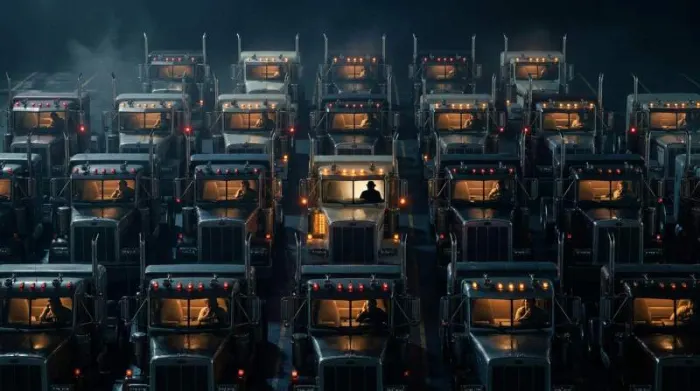
You weren't Bob from Akron; you were 'Sodbuster' or 'Pig Pen' or, if you were lucky, 'The Rubber Duck.'
The use of these colorful aliases was a key part of the culture the song celebrated. It created a world of characters, a drama playing out on Channel 19. This tapped into a deep-seated American love for archetypes and aliases, a throwback to a frontier spirit where you could reinvent yourself mile by mile.
- The song topped the charts in January 1976, selling over 2 million copies.
- It inspired a 1978 Sam Peckinpah film starring Kris Kristofferson.
- CB radio sales skyrocketed, with celebrities and civilians alike adopting handles.
- Phrases like "10-4" and "Smokey" entered everyday vocabulary.
- The fad cast truckers as new anti-authoritarian folk heroes.
Like all crazes, the CB radio fever eventually ran out of road. The novelty wore off, the airwaves got crowded with non-truckers, and cultural attention shifted. But it left permanent skid marks on the language.
You still hear 'What's your twenty?' or '10-4' in movies, TV, and casual conversation, often from people who have no idea of their origin.
The Echo on the Channel
You can still feel the rumble of that convoy today, if you know where to listen. The myth of the lone, rebellious trucker persists in film and music. More concretely, the entire experience serves as a fascinating case study in pre-smartphone life.
The CB radio was a social network, a navigation app, and a community bulletin board, all powered by voice and static. It was a moment of pure, analog connection in a vast country.
The next time you get a nostalgic twinge for a simpler, more communal tech experience, remember the crackle of a CB set and the sound of a voice saying, "Breaker, breaker." It was all there, long before the first ping of a notification, a whole world rolling down the highway, one good buddy at a time.
What does 10-4 mean in CB radio
In CB radio lingo, '10-4' means 'message received' or 'affirmative.' It comes from the APCO Ten Signals, a set of standardized codes developed in the 1930s for police radio communication. Truckers adopted it in the 1970s, turning a dry procedural code into a friendly, iconic catchphrase that still echoes in pop culture today.