
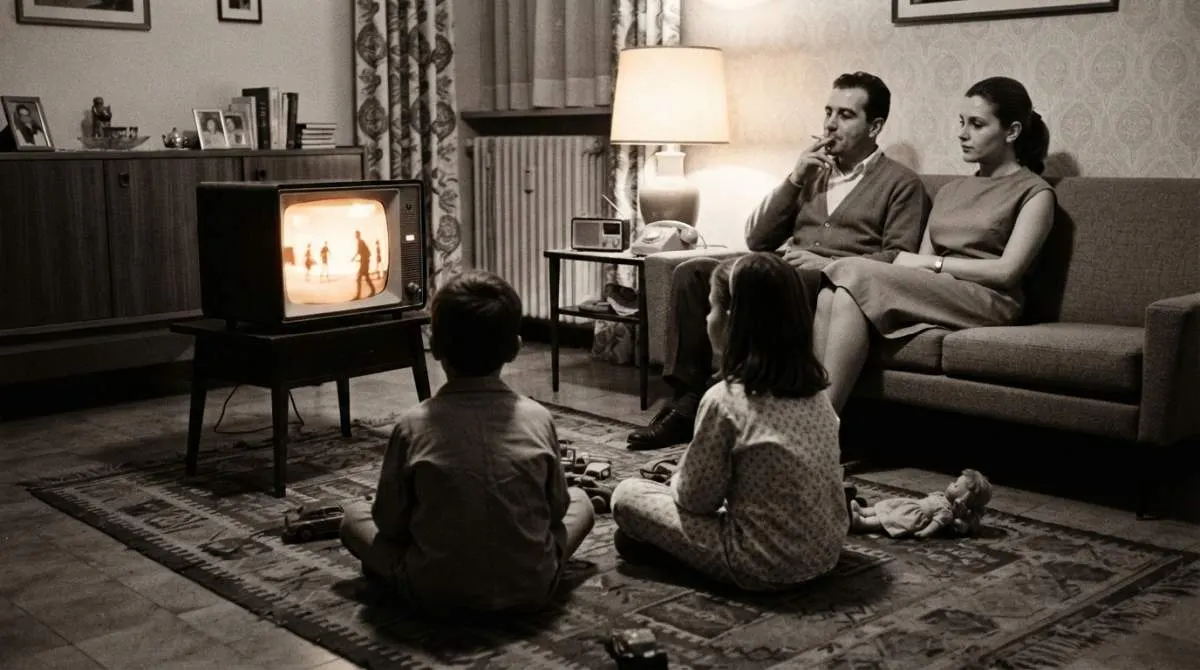
Imagine a television commercial break so anticipated it became a national bedtime signal. For two decades, that was the reality in Italy with a program called Carosello. It wasn't merely an interruption for selling soap or coffee.
It was a nightly appointment with clever, miniature entertainment, a unique fusion of art and commerce that left a permanent stamp on the country's culture. The program's name, meaning 'carousel' in Italian, perfectly captured its rotating sequence of delightful vignettes.
So, what was Carosello? It was a pioneering Italian television advertising show that aired nightly from 1957 to 1977. It wasn't just a series of ads; each segment was a meticulously produced short film where the product being advertised could only be mentioned in the final 30 seconds.
This strict separation of entertainment and sales pitch, along with its high production values, made it a beloved family ritual. The show was broadcast on RAI, Italy's state-owned public service broadcaster, which at the time operated only two channels, making its reach virtually universal.
The Birth of a Format: Circumventing the Ban
Carosello debuted on February 3, 1957, on the state broadcaster's single channel. Its creation was a masterstroke of regulatory navigation. Italian TV, funded by license fees, technically banned advertising during evening entertainment.
The show's conceiver, Luciano Emmer, found a brilliant loophole. Emmer, a noted film director and documentarian, was hired by the advertising agency Italia to develop a solution, drawing inspiration from the French program 'La Séquence du Spectateur.'
He packaged ads as a standalone program. Each spot followed a rigid formula: a roughly ninety-second entertainment clip-a sketch, an animation, a musical interlude-was strictly separated from a thirty-second product pitch called the 'codino', or 'little tail'. The rules forbade any explicit reference to the product in the main story.
Only in the codino could the brand name be spoken and the item shown. This framework was enforced by a rigorous internal review committee at RAI, which scrutinized every submission for compliance.
This structure gave birth to a new art form. Advertisers had to be creative, wrapping their message in narrative. The show emerged during Italy's post-war economic boom, a period of rising consumerism and national unity.
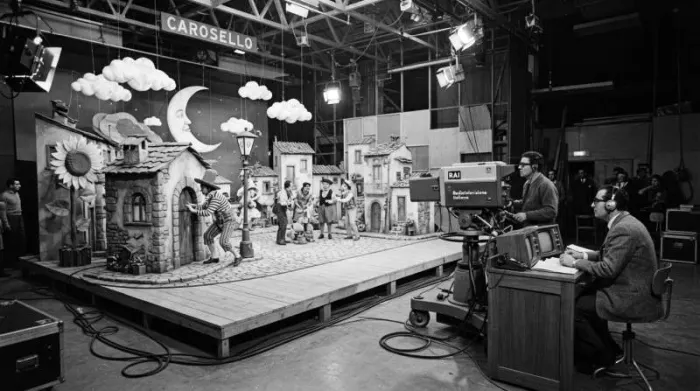
Carosello became a powerful tool for moving regional products onto the national stage, teaching a newly affluent public what to buy. It played a crucial role in standardizing Italian consumer habits, introducing southern Italians to northern brands like Alemagna panettone and familiarizing the entire nation with products like Algida ice cream and Lavazza coffee, thus helping to forge a shared national market.
The Golden Age: Mini-Movies and Moral Codes
By the 1960s, Carosello was a cultural juggernaut. Airing around 8:50 PM, it became the definitive family TV ritual. Parents and children gathered to watch together, treating it as shared entertainment rather than a commercial intrusion [1].
Its conclusion famously triggered the parental command, 'A nanna dopo Carosello'-to bed after Carosello. This phrase entered the national lexicon as a gentle, non-negotiable decree.
Mood Match
Four Moments Worth a Song
Put the kettle on, settle in, and let each of these old tunes land exactly where it belongs in your evening.
Waiting for the bedtime signal
Azzurro by Adriano Celentano.
That lazy, sun-drunk chorus is just the thing when the clock crawls and you are not quite ready to surrender the day.
Dancing around the living room
Una lacrima sul viso by Bobby Solo.
It is sweet enough to hum and sturdy enough to shuffle to, even if the only partner you have is the carpet.
Feeling nostalgic for black-and-white TV.
Il cielo in una stanza by Mina.
Mina's voice has a grainy, late-night quality that belongs to a flickering screen and a room lit by one lamp.
Sipping coffee after dinner
Tu vuo fa l'americano by Renato Carosone.
The sly little swing keeps the conversation going and makes even a plain cup of coffee feel faintly continental.
Play them in order, or skip about. Nobody is marking you.
Songs checked against en.wikipedia.org.
At its peak, the show commanded an audience of about 20 million viewers. Its quality soared because the format attracted serious talent. Major directors like Federico Fellini, Sergio Leone, and Ermanno Olmi directed segments. Fellini's 1968 segment for Campari Soda, 'Il Bidone', was a surreal, wordless masterpiece featuring a mysterious trunk.
Other cinematic luminaries included Franco Zeffirelli and the Taviani brothers. Top comedy writers crafted the sketches. The content rules themselves were a fascinating cultural document, prohibiting references to sex, adultery, excessive luxury, or class hatred. These rules reflected the conservative social mores of the state broadcaster and aimed to maintain a wholesome, family-friendly atmosphere.
The commercials became artistic, narrative-driven mini-productions, a world apart from typical vintage European commercials. They relied on memorable characters and witty scenarios, with the product reveal saved for the very end. This 'moral' approach created a distinctive, high-quality aesthetic.
The production values were remarkably high, with some segments costing as much as feature films of the era when adjusted for scale. The musical scores were often composed by renowned artists like Ennio Morricone and Piero Umiliani [2].
- The iconic puppet Calimero, a little black chick who felt unfairly treated, sold detergent for AVIS. Created by the animation studio Gamma Film, his catchphrase 'It's an injustice!' resonated deeply with the Italian public.
- The animated adventures of the cowboy-astronaut Captain Harlock peddled a brand of cookies. This character, unrelated to the later Japanese manga hero, became a symbol of space-age adventure.
- Live-action sketches featured famous comedians in absurd situations, all leading to a coffee or a digestivo. Duos like Franco Franchi and Ciccio Ingrassia, and actors like Alberto Sordi and Ugo Tognazzi, became regular fixtures, their comedic personas becoming intimately familiar to viewers.
- Other enduring characters included the elegant, mustachioed Caballero and Carmencita for Paulista coffee, and the mischievous mole Topo Gigio, who later gained international fame.
The legacy of this era isn't just in sales figures. It's in the collective memory of a nation that learned its consumer culture through bedtime stories. The format's influence even echoes in later, more global iconic movie styles, where a strong visual narrative precedes a brand reveal, though Carosello did it with far stricter rules. It also served as an informal film school, training a generation of Italian technicians, animators, and directors in concise storytelling.
The Decline and End of an Era
The very regulations that fostered Carosello's creativity also contained the seeds of its demise. The strict separation between story and product became a straitjacket for advertisers wanting more direct, flexible messaging. As the Italian economy matured, marketing strategies evolved towards quicker, harder-selling spots. Advertisers grew frustrated by the high cost and complex production of Carosello segments when they could deliver a simpler message elsewhere.
The final blow came from a changing media landscape. The 1970s saw the rise of private, commercial television channels in Italy. These new broadcasters had no obligation to follow RAI's public service rules.
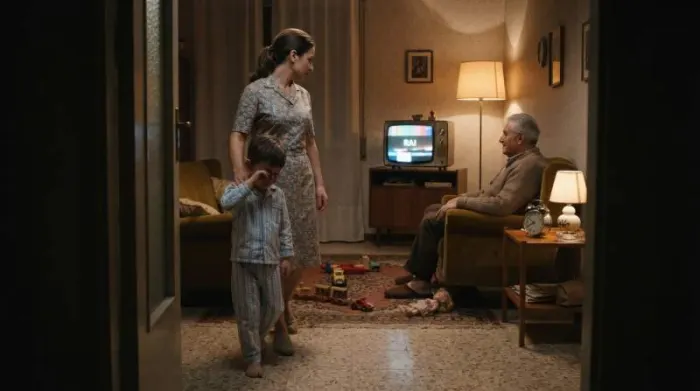
The 1976 Constitutional Court ruling that broke RAI's broadcasting monopoly opened the floodgates for competitors like Silvio Berlusconi's networks, which adopted the American model of frequent ad breaks.
Faced with this new, aggressive competition, the Carosello format seemed increasingly quaint and inefficient. After an incredible run of 7,261 episodes, the final Carosello aired on January 1, 1977. The nightly ritual that had structured family evenings for a generation simply vanished from the schedule. Its end marked the close of a monopolistic, paternalistic era in Italian media and the dawn of a more commercial, fragmented television age.
A Nostalgic Revival and Lasting Legacy
Carosello didn't fade into obscurity. Instead, it ascended into myth. In the decades following its cancellation, it became a potent symbol of a perceived golden age of Italian television and advertising [3].
The phrase 'come un Carosello' (like a Carosello) entered the language to describe something charming, well-made, and deceptively simple. Its segments are regularly rebroadcast in nostalgia-themed programming and are extensively archived on platforms like YouTube, where they garner millions of views from nostalgic adults and curious younger generations.
Its legacy is multifaceted. For historians, it represents the foundational chapter of Italian TV advertising, a unique experiment in blending state broadcasting with commercial needs within a strict ethical framework. For marketers, it's a case study in brand storytelling, where entertainment value built immense goodwill and long-term brand loyalty that far outlasted the campaign's runtime.
Culturally, its characters and catchphrases remain reference points for Italians of a certain age, a shared cultural vocabulary that transcends regional differences. Academics study it as a lens into post-war Italian society, consumer aspirations, and family dynamics.
Today, in an era of skippable digital ads and fragmented attention, the Carosello model feels both archaic and curiously prescient. Its insistence on earning viewers' attention through quality entertainment is a lesson modern advertisers often preach but rarely practice with such formal discipline. The program proved that commerce could be cultured, and that a sales pitch could be a gift-a small, nightly piece of art before the lights went out. In a world saturated with advertising noise, Carosello stands as a reminder that the most effective message is sometimes the one that doesn't feel like a message at all, but a cherished memory.
Sources
- [1]Carosello, Wikipedia
- [2]Targeting the parents through the children in the golden age of Italian television advertising: The case of Carosello
- [3]CAROSELLO: SPECCHIO E STRUMENTO SOCIALE, CULTURALE E LINGUISTICO DELL'ITALIANITÀ
Bracketed numbers in the text (e.g. [1]) refer to the sources listed here.
What was the original price of a Carosello ad slot?
In the early days, a single Carosello spot cost around 50 million lire, a staggering sum that made it one of the most expensive advertising slots in Italian history. This high price tag meant only the biggest brands could afford to participate, turning each mini-story into a lavish production.