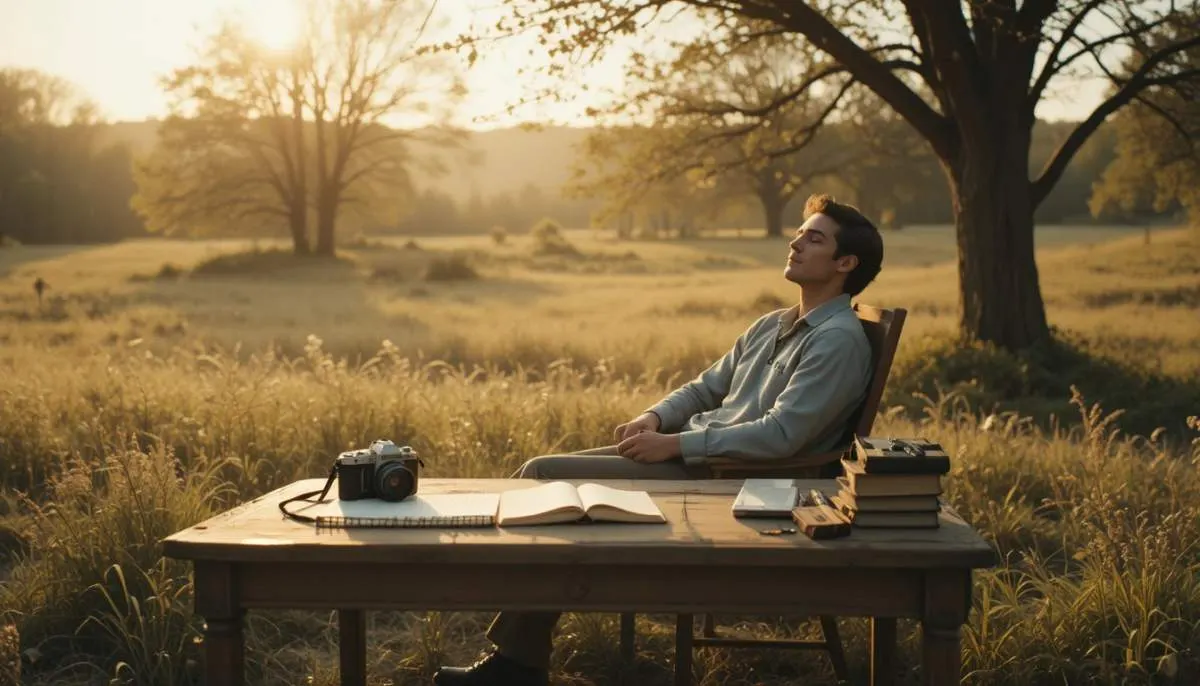
People are finally hitting their breaking point. The signs of digital burnout are everywhere: constant notifications, mental fog, and endless scrolling stealing hours we barely notice. That's why in 2026, many are choosing a vintage lifestyle. It's not just nostalgia; it's a craving for genuine presence, a way to live without constant tracking, targeting, or algorithmic temptation, and to rediscover hobbies that exist entirely off-screen.
I saw a kid the other day, maybe sixteen, hunched over a battered typewriter in a coffee shop. Not tapping on a laptop, but clacking away. He looked entirely absorbed, completely oblivious to the soft hum of the barista machine or the low chatter around him. He typed with a focused intensity, then paused, pulling the page out to read it, a faint ink smudge on his finger. It was a small moment, but it felt… profound. A young person, willingly disconnected, finding his flow in the mechanical rhythm of keys and ink.
What Analog Living Means Right Now
The benefits are undeniable: the tactile feel of a book, the satisfying weight of a film camera, the deliberate act of writing a letter. It's about regaining control through a deliberate digital detox, stripping away noise to find clarity. These slow, intentional acts offer quiet satisfaction, creating memories that aren't instantly uploaded or vetted online, and fostering real, unfiltered human interaction.
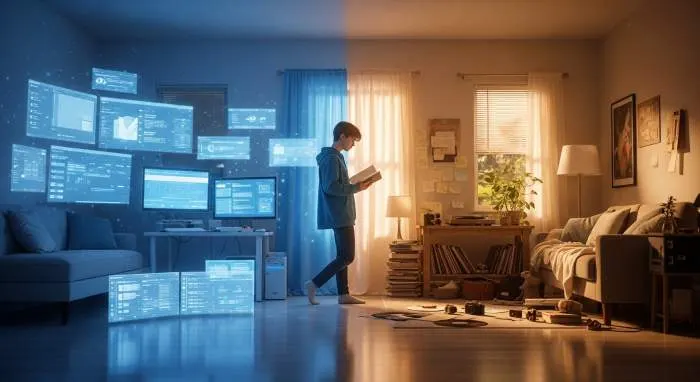
Analog living in 2026 isn't about rejecting technology entirely. It's about choosing when and how to use it. You might check email twice a day instead of constantly, use a paper planner instead of a phone calendar, or spend an evening with a physical book rather than scrolling. The shift is deliberate and personal; everyone draws their own line.
The Ritual of Vinyl and Tactile Media
Vinyl sales have climbed steadily since the early 2010s, and by 2026, record collecting has become a genuine hobby for millions. The appeal isn't purely sonic, though analog warmth is real, it's the ritual. You choose an album, drop the needle, and sit with it for forty minutes. No algorithm suggests the next track. No notification interrupts. The format demands your attention and rewards it with presence.
Handwritten journals, letters, and notebooks have similarly resurged. Journaling apps exist, but they lack the permanence and privacy of ink on paper. A handwritten page can't be hacked, synced to the cloud, or data-mined. It's yours alone. This matters to people exhausted by the feeling of being watched, tracked, and sorted by invisible systems.
How Film Photography Changes the Way We See
Film cameras force intentionality. You load film, frame carefully, and pay for each shot. There's no instant preview, no burst mode, no endless digital storage. This constraint, once seen as a limitation, now feels like freedom. Photographers report that shooting film makes them slower, more thoughtful, and more present. The wait for development also breaks the cycle of instant gratification; you live with anticipation instead.
Screen Burnout and Why It Peaked
The mental health toll of constant connectivity became impossible to ignore by the mid-2020s. Studies documented rising rates of anxiety, sleep disruption, and attention fragmentation linked to screen time and social media use. Younger generations, who grew up entirely online, began reporting the deepest fatigue. The irony was sharp: the tools designed to connect us had made many feel more isolated and exhausted.
This wasn't a sudden crisis but a slow accumulation. Notifications trained our brains to expect interruption. Algorithmic feeds created artificial urgency and comparison. The always-on work culture blurred boundaries between job and home. By 2026, the breaking point had become undeniable, and people started asking: what if I just… stopped? This is the core question behind the digital detox why so many are now seeking.
Journaling, Baking, and Hobbies Without Metrics
Slow hobbies, activities that can't be quantified, shared instantly, or optimized for engagement, became deeply appealing. Sourdough baking, gardening, knitting, and reading returned not as Instagram trends but as genuine refuges. These hobbies have no metrics. You don't get likes for a loaf of bread or followers for a scarf. The satisfaction is internal and immediate.
Journaling, in particular, became a mental health tool. Unlike social media, where you curate for an audience, journaling is unfiltered. It's a space to think without performing. Therapists noted that the act of writing by hand engages different neural pathways than typing, often leading to deeper reflection and emotional processing.
Why These Hobbies Feel Revolutionary Now
The revolutionary part isn't the hobbies themselves, people have always baked and written, it's the deliberate choice to do them offline, without documentation or external validation. In a world where every experience is expected to become content, choosing to keep something private and unshared feels radical. A meal cooked and eaten without a photo. A walk taken without tracking steps. A thought written down and never posted.
How to Start Without Abandoning Tech Entirely
We've traded instant gratification for enduring satisfaction, frantic multitasking for focused attention. This escape isn't a retreat from progress; it's a bold step forward into a future where technology serves us rather than controls us. The question isn't whether this lasts, but what happens when the digital world eventually tries to catch up.
Starting a digital detox doesn't require throwing your phone away. Small shifts work: designate phone-free hours, replace one streaming session with a book, buy a used record player, keep a handwritten calendar. The goal is to notice what you're missing when screens are off, boredom, creativity, deeper conversation, real rest. Once you feel that difference, the choice to protect it becomes easier.
Many people find that analog tools and digital life can coexist. You might use email for work but write letters for connection. You might stream music but also collect vinyl. You might take digital photos but also shoot film. The detox isn't about purity; it's about intention. Every tool choice becomes conscious rather than automatic.
Why This Matters Beyond Nostalgia
Analog living in 2026 isn't a retreat into the past. It's a response to a specific present: a world where attention is currency, where algorithms shape what we see, where privacy has eroded, and where constant connection has paradoxically increased loneliness. The people choosing vinyl, journals, and typewriters aren't rejecting progress. They're rejecting the idea that faster, more connected, and more tracked is always better.
This shift reflects a deeper question about what we actually want from technology. Do we want tools that serve our needs, or do we want to become the product, our attention and data harvested for profit? The analog revival is, in many ways, a vote for the former. It's a quiet insistence that some things, presence, privacy, depth, boredom, real rest, are worth protecting from the digital machine. This desire for a slower, more intentional life connects to the broader cultural feeling of anemoia, and can be practically applied through sustainable vintage upcycling.
What is the history of the digital detox movement
The term 'digital detox' first gained traction around 2013, when Silicon Valley insiders began publicly admitting they limited their own children's screen time. Early retreats, like the 2014 'Camp Grounded' in California, charged adults to surrender phones for weekends of arts and crafts. These experiments revealed something surprising: many participants reported feeling less anxious and more creative within just 48 hours offline.