
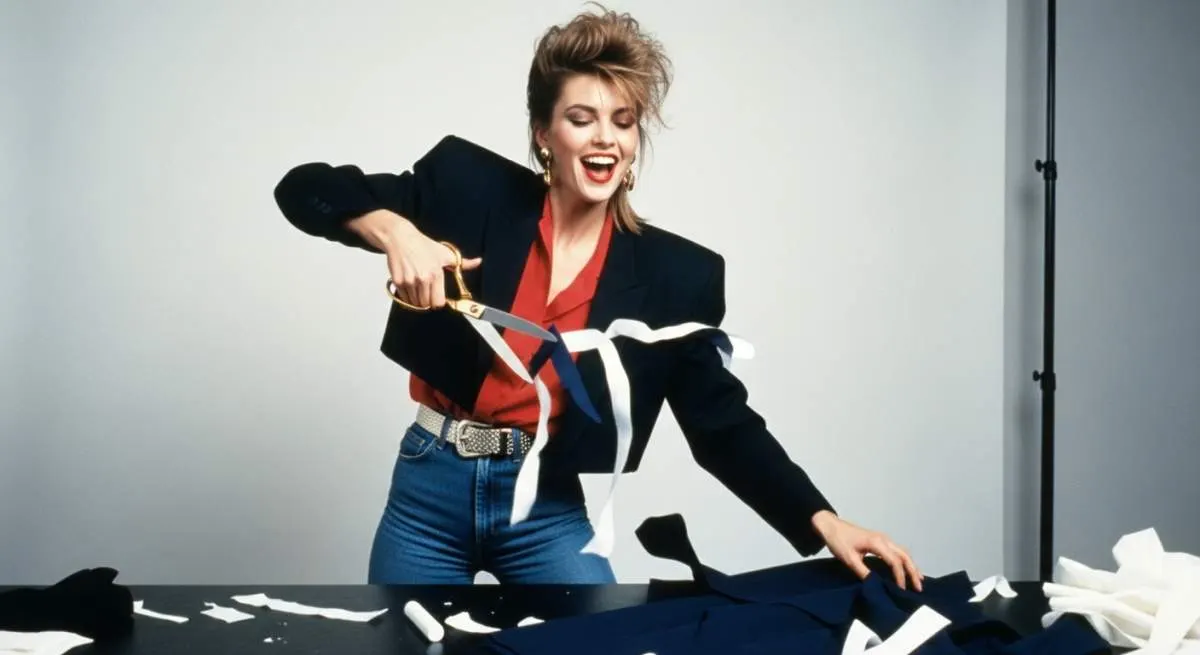
You've spotted it hanging in the thrift store, shoulders wide enough to land a plane, sleeves that could double as sleeping bags, and a price tag that reads five dollars. That oversized 80s blazer looks like a relic from a boardroom drama, but with a pair of sharp scissors and an hour of your time, it can become one of the sharpest pieces in your modern wardrobe.
The power crop blazer takes the aggressive silhouette of the Reagan era and transforms it into a sleek, cropped jacket that works with high-waisted jeans, slip dresses, and everything in between. This isn't just alteration, it's reclamation, and the result is a one-of-a-kind statement piece that no mall can replicate.
Where the 80s Blazer Came From and Why It Matters
The oversized blazer became the uniform of ambition in the early 1980s, shaped by a generation of women entering corporate America in unprecedented numbers. Designers like Giorgio Armani softened the traditional men's suit with unstructured tailoring, while American labels added exaggerated shoulder pads to signal authority in the boardroom.
The fabric was usually wool or a poly blend, structured enough to hold its shape through long days and late meetings. Shoulder pads were sewn in or removable, and the jackets were cut long, often hitting mid-thigh or lower, with wide lapels and a boxy fit that erased the waist. By the early 1990s, the look had softened, and by the late 90s, those blazers were flooding thrift stores.
Why Cropping Works and What It Changes
Cropping an 80s blazer does more than shorten the hemline, it rebalances the entire silhouette. The original jacket was designed to elongate and broaden, creating a rectangular frame that projected authority. When you cut it to waist or rib length, you shift the visual weight upward, emphasizing the shoulders while opening up the waistline and hips. The result is a shape that feels modern, playful, and far more versatile than the original ever was.

The cropped length also solves one of the biggest problems with vintage blazers: proportion. Most 80s jackets were cut for taller frames and worn with high heels, so they can overwhelm shorter wearers or look dowdy with flats. Cropping brings the jacket into balance with contemporary high-waisted jeans, skirts, and trousers, creating a clean line that flatters a wider range of body types.
How to Choose the Right Blazer for Your DIY Project
Not every thrift store blazer is a good candidate for cropping, so it pays to be selective before you start cutting. Look for jackets with strong shoulder lines, clean lapels, and minimal damage to the fabric. The shoulders should sit where your natural shoulder ends, or slightly beyond. Check the lining, seams, and buttonholes, because a jacket with intact construction will be easier to alter and will wear better once you're done. Wool, linen, and cotton blends are ideal, while cheap polyester can look stiff and dated even after alteration.
The Step-by-Step Process for Cropping Your Blazer
Start by putting on the blazer and standing in front of a mirror. Use a piece of chalk or a fabric pen to mark where you want the new hemline to fall, keeping in mind that you'll need to add a seam allowance of about one to two inches below that line. Most cropped blazers hit somewhere between the natural waist and the bottom of the ribcage, but the exact length depends on your proportions and personal preference.
Fold the raw edge of the outer fabric up by half an inch, press it with an iron, then fold it again to enclose the raw edge completely. Pin the hem in place and try the jacket on one more time to make sure the length looks right. If everything checks out, sew the hem by hand using a slip stitch for an invisible finish, or use a sewing machine with a straight stitch if you're comfortable with that. Repeat the process with the lining, tacking it to the outer fabric at the side seams so it doesn't shift when you move.
Shoulder Pad Decisions for a Modern Look
Most 80s blazers come with removable or sewn-in shoulder pads, and whether you keep them is a matter of personal taste. If you want a softer, more contemporary look, remove them by carefully snipping the stitches that hold them in place and pulling them out through the lining. If you like the structured, angular vibe of the original, leave them in, or replace them with thinner modern pads that give shape without the exaggerated bulk. Some people split the difference by removing one layer of padding, which keeps a hint of structure while toning down the 80s intensity.
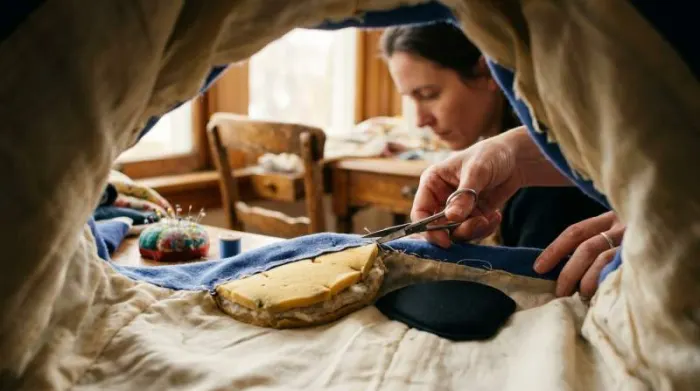
How to Finish the Hem Cleanly
A clean hem is what separates a DIY project from something that looks homemade in the worst way. If you're hand-sewing, use a thread that matches the fabric color and keep your stitches small and even. If you're using a machine, go slowly around curves and corners, and backstitch at the beginning and end to lock the thread in place. Press the finished hem with an iron to set the stitches and give the jacket a polished look. If the fabric is delicate or prone to shine, use a pressing cloth between the iron and the fabric to protect it.
How to Style Your Cropped Blazer for Maximum Impact
The beauty of a cropped blazer is its versatility, and once you've finished your DIY project, you'll find it works in contexts the original jacket never could. Pair it with high-waisted jeans and a tucked-in tee for a casual look that still feels pulled together, or layer it over a slip dress for an outfit that bridges 90s slips and 80s blazers with effortless style. The cropped length also works beautifully with midi skirts, wide-leg trousers, and even shorts, creating a balanced silhouette that flatters without feeling forced.
Don't be afraid to mix eras and styles. A cropped 80s blazer looks just as good with 70s bell bottoms as it does with sleek modern tailoring, and that kind of genre-blending is what makes vintage styling feel fresh rather than nostalgic. Add a vintage belt to cinch the waist over the jacket, or leave it open and let the cropped hem frame your outfit underneath. The structured shoulders mean the jacket holds its shape even when worn casually, so it elevates everything it touches without looking overdressed.
The Broader Context of DIY Fashion and Sustainability
Cropping a thrift store blazer is a small act, but it's part of a larger shift in how people think about clothing, consumption, and waste. The fashion industry is one of the largest polluters on the planet, and the fast fashion model of cheap, disposable garments has created a crisis of overproduction and textile waste. By choosing to alter and wear vintage clothing, you're opting out of that cycle and proving that style doesn't require constant consumption.
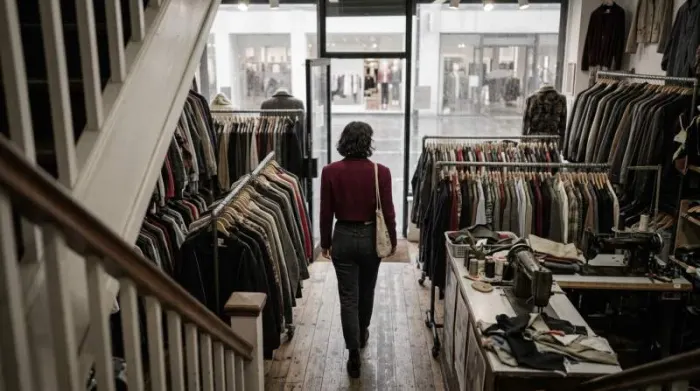
There's also something deeply satisfying about wearing something you've made or transformed with your own hands. It connects you to the garment in a way that buying off the rack never does, and it gives you a sense of ownership and pride that's hard to quantify. When someone compliments your jacket, you get to share the story of how you made it, and that story becomes part of what makes the piece special.
How to crop a blazer without sewing
Before sewing machines were common, 80s power dressers relied on tailor's chalk and hand-stitching. Quick no-sew options include fabric glue or iron-on hem tape, though they lack the durability of stitches. This made DIY alterations a quiet act of rebellion for women customizing their corporate armor.