
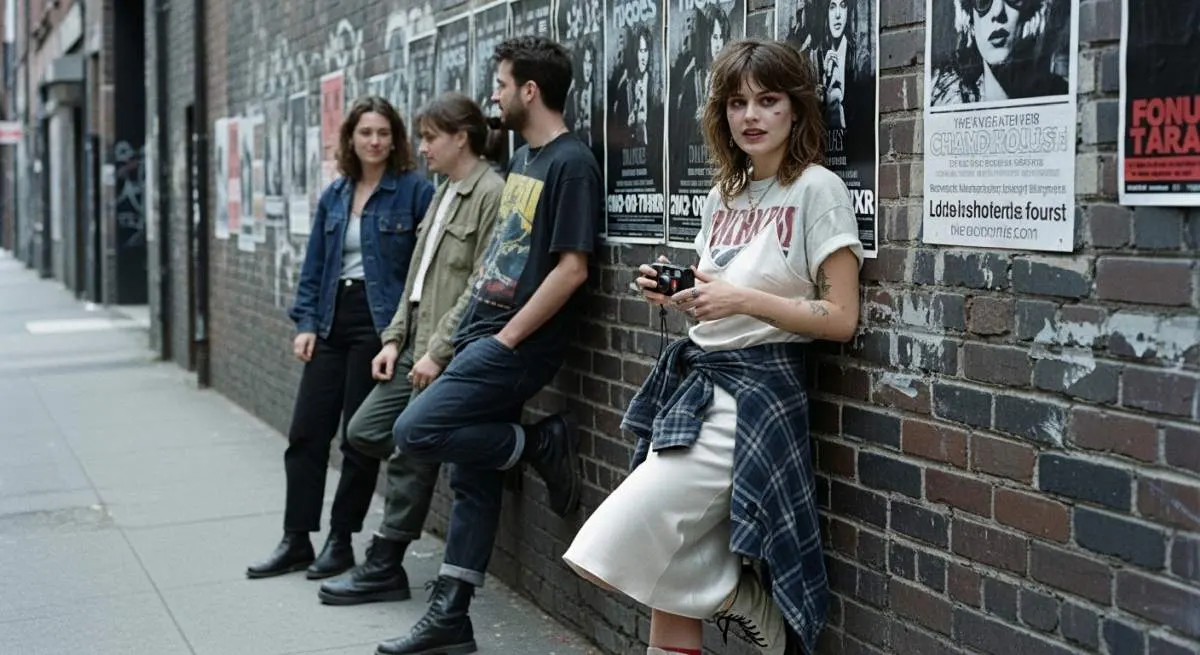
The Slip That Refused to Stay Hidden
Picture this: a delicate, silky slip dress, the kind your grandmother might have worn under her Sunday best, layered defiantly over a worn-in band t-shirt or a simple crew neck sweater. This wasn't a fashion accident. It was a deliberate, subversive statement that emerged from the heart of 1990s grunge culture in Seattle. The look took a piece of intimate apparel, meant to be hidden, and made it the star of the show, creating a beautiful contradiction between the delicate and the casual.

This styling hack was born from a generation's desire to reject the polished excess of the 1980s. It was anti-fashion fashion, a way to signal that you valued comfort and authenticity over rigid rules. By wearing a slip over visible clothing, you declared that femininity and toughness could coexist, and that true style came from mixing high and low without apology. It was a quiet rebellion that spoke volumes.
From Boudoir to Boulevard: The Grunge Transformation
The early 1990s were a specific cultural moment. Grunge was more than just music; it was a wholesale rejection of a carefully constructed image. The power shoulders and neon of the previous decade felt suffocating. In this climate, the slip-over-shirt look became the perfect visual shorthand. It said you didn't care about convention, that you were comfortable in your own skin, even if that skin was covered in silk and cotton.
Icons like Courtney Love and Kate Moss didn't invent the look, but they catapulted it into the mainstream. When they appeared in magazines and music videos wearing slips as outerwear, it gave everyone else permission to raid their own lingerie drawers. This was accessible rebellion. You didn't need money or connections, just a slip and the nerve to wear it in public.
The genius of the look lies in its controlled chaos. The silk, the lace, all those traditionally 'feminine' details, suddenly became a form of armor when paired with something deliberately undone. It was about owning your softness, embracing a certain vulnerability, and then roughing it up a bit. It blurred the lines between public and private, sexy and nonchalant, on your own terms.
Why It Became an Icon
Some trends fade, but this one stuck because it's inherently defiant. Taking something meant for the boudoir and throwing it over a beat-up tee is a powerful act. It's a casual shrug of "I don't care what you think," a subtle middle finger to conventional notions of appropriate dressing. It's comfort masquerading as rebellion, a beautiful contradiction that resonates because it feels real. It strips away pretense, literally and figuratively.
The look thrives on the tension between textures and intentions. The slip's inherent delicacy, its thin straps, fluid drape, and suggestion of intimacy, plays against the solidity and casualness of what lies beneath. That visual friction is what makes it work. It's not about looking like you just rolled out of bed; it's about looking like you carefully considered how to break the rules.
Your Vintage Slip, Reborn
If you have a vintage slip tucked away, whether it's a silk number from the 1960s or a synthetic blend from the 1980s, you're sitting on a style secret. Slips were designed as undergarments to smooth lines and prevent static. But in the hands of a modern stylist, they become versatile outerwear. The beauty of this hack is its flexibility; it works with almost any slip you own.
A cream-colored silk slip looks stunning over a fitted black turtleneck. A champagne-toned slip with lace trim becomes an instant statement piece over a plain white crew neck. Even a simple, unadorned slip in a neutral tone gains presence and purpose when worn this way. Vintage slips from the 1950s through 1980s often have more character, lace trim, satin finishes, interesting necklines, which makes them perfect conversation pieces.
How to Style It Now
The pairing possibilities are endless. A vintage slip works beautifully over almost any casual top: a fitted white t-shirt, an oversized band tee, a simple sweater, or even a button-up shirt worn open. The slip adds visual interest and texture without requiring a new purchase. For a sophisticated touch, layer it over a plain black tee. For a preppy-grunge hybrid, try it over a classic striped shirt.
When it comes to bottoms, keep it simple to let the layered top half shine. High-waisted jeans, black trousers, or a simple skirt work perfectly. The focus should remain on that captivating contrast between the slip's delicate nature and the casualness of the base layer. The slip becomes the statement, and everything else supports it.
A Lasting Legacy of Effortless Cool
The slip dress layering trend didn't disappear when grunge faded from the charts. Instead, it became a permanent part of the fashion vocabulary. In the 2000s and 2010s, it cycled in and out of trend cycles, but never fully left. Designers began creating slip dresses specifically meant to be worn as outerwear, blurring the line between lingerie and ready-to-wear.
Today, the look appears everywhere, in street style photography, on runways, and in everyday outfits. It's become so normalized that many people don't realize they're participating in a trend that began as deliberate subversion. The slip dress has been absorbed into mainstream fashion, yet it retains that whisper of the rebellious spirit that made it iconic.
In our current era of fast fashion and algorithmic style, this look represents something beautifully countercultural. It champions the idea that you can take what you already own and make it new. You don't need to buy the latest trend to feel stylish. The most powerful fashion statements often come from mixing categories in unexpected, personal ways.
The legacy isn't just about a specific silhouette. It's a foundational fashion philosophy. It taught us that true individual style isn't about chasing the new, but about reinterpreting the old with a wink and a healthy dose of audacity. The slip in your drawer isn't a relic. It's a tool, a statement, and a small, glorious act of rebellion waiting to happen. And honestly? That kind of quiet subversion is never going out of style.
What is the history of slip dresses in the 1990s
Before grunge, slips were purely utilitarian undergarments, designed to protect delicate fabrics from body oils and prevent static cling. The 1990s shift was partly inspired by thrift store culture, where shoppers found piles of discarded slips for pennies, making them an affordable canvas for rebellion. This DIY ethos turned a forgotten necessity into a symbol of personal style.