IN THIS ISSUE:
The Hip-Hugger's Reckoning: Gen Z's Low-Rise Revival
A scuffed magazine rack once taught me that The "Muffin Top" Fear – Why Gen Z Brought Back Low-Rise Jeans never looked as innocent as the nostalgia made it seem. A scuffed magazine rack once taught me that low-rise jeans were never as innocent as nostalgia made them seem.
That particular rack, tucked beside a perpetually sticky counter at the old corner deli, smelled of stale coffee and forgotten dreams. It was there, amidst sun-faded glossies of pop stars from a different era, that I first saw the widespread concern over the dreaded "muffin top." The term itself, so cutesy and harmless, hid a quiet dictator of denim body ideals, dictating what bodies were acceptable and what parts needed to vanish.
Fast forward two decades, and suddenly, those very low-slung waistlines are back. This isn't just a cheeky throwback; it's a full-blown Gen Z low-rise denim trend, embraced by a generation that seems to shrug off the body-shaming baggage we once carried. It’s a genuine head-scratcher for anyone who remembers the visceral terror of a waistband digging in, creating that tell-tale spill-over.
It isn't just about reclaiming a Y2K aesthetic, though that's certainly part of the vibe. There's a deeper conversation happening here about body image and ownership. The old rules, the ones that dictated who could wear what, feel strangely irrelevant to them.
They aren't trying to hide; they're showing up. This isn't just about hemlines dropping; it's about confidence rising. Gen Z views low-rise jeans not as a challenge to conformity, but as a canvas for self-expression, a bold statement against the restrictive norms of past decades. The popularity of low-rise jeans with Gen Z stems from their active dismantling of the very fears that shackled previous generations.
I remember the whispers, the frantic diet tips, the outright hostility directed at anything less than perfection. The "muffin top" fear in fashion wasn't just about a bulge; it was about perceived failure. It was insidious. Gen Z, however, seems to have flipped the script. They’ve looked at the "problem" and decided it was never a problem in the first place, but a construct.

A generation raised on social media seems more comfortable with their authentic selves, flaws and all, than we ever were. They haven't just ignored the muffin top; they've effectively declared it irrelevant.
This isn’t just a simple denim cycle; it’s a cultural recalibration. Back in the day, low-rise jeans weren't just a trend; they were a political statement, a rejection of high-waisted conservatism. You see it in the defiant fashion of the late 60s and 70s, a movement tied directly to liberation and a new way of thinking about the body. Consider the groundbreaking looks at Studio 54 – bodies celebrated, not hidden. Perhaps Gen Z, in their own way, is tapping into that same rebellious spirit, stripping away the judgment that later generations piled on. They're not just wearing low-rise; they're wearing freedom.
The Waistline Wars: When Low-Rise Met the Muffin Top Meltdown
It wasn't just denim; it was a cultural collision. When low-rise jeans first stormed the scene in the late 90s and early 2000s, they felt like a breath of fresh, rebellious air. Pop stars flaunted them, runways adored them, and suddenly, everyone wanted that ultra-cool, elongated torso look. It felt daring, a stark contrast to the mom jeans that preceded them, promising freedom and a certain effortless chic.
Historical Insight: If you love this vibe, you'll also find MIXING 50S DRESSES & SNEAKERS: A STYLE GUIDE to be a fascinating read.
Then came the rupture.
It didn’t take long for the narrative to curdle. Suddenly, fashion wasn’t just about what you wore; it was about what didn't spill over your waistband. The term "muffin top" entered our lexicon with a sneer, a cruel little phrase that quickly became a cultural weapon. It described the slight bulge of flesh that could appear above the low-slung denim, and it wasn't just descriptive; it was dismissive. This wasn't a fashion critique; it was a body critique, thinly veiled.
I remember flipping through magazines back then, seeing entire spreads dedicated to "how to avoid the muffin top" or "flattering styles for every body," which actually meant "how to hide your body if it doesn't fit this impossible ideal." It felt like a public shaming, played out on glossy pages and TV screens. Girls, women, everyone really, started to internalize this fear.

It became a new, insidious metric for self-worth. You had to be flat-stomached, perfectly sculpted, or you weren't allowed into the low-rise club. The muffin top fear in fashion was the terror of any natural bodily curve being deemed unsightly, a public failure to achieve an unrealistic standard.
For most of us, those jeans just sat... differently. Our bodies, with their glorious, natural curves and dips, weren't designed to be vacuum-sealed into a low-cut denim mold without some give. But the fashion industry, and the media amplifying its narrow ideals, made it feel like a personal failing. Today, the popularity of low-rise jeans with Gen Z stems from their direct confrontation of the apprehension created by the original era.
This relentless pressure quickly turned the love affair with low-rise into something deeply uncomfortable. Stores began stocking more mid and high-rise options, almost as a silent apology, a collective sigh of relief. High-waisted jeans became a refuge, a protective shield against the scrutiny. The muffin top fear became so pervasive that it essentially killed the trend, pushing it underground for a decade or more. It wasn't just a trend fading; it was a retreat from a battle waged on our bodies.
And for years, that fear lingered. Even when low-rise would occasionally peek back onto runways, there was an audible groan, a collective shudder of "Oh no, not again." The memory of that body shaming was too fresh for many. So, when Gen Z started eyeing those discarded styles, there was a quiet, almost hesitant anticipation. While they are trying to rewrite that painful chapter, the ghost of that early 2000s scandal still looms, a stark reminder of fashion’s capacity to both liberate and oppress.
Reclaiming the Rise: A New Hip for a New Age
The whispers started subtly, then grew into a full-blown roar across social feeds. Low-rise jeans, the very garment that haunted many a millennial's early 2000s memories, are back. Gen Z has pulled them from the depths of fashion purgatory. It’s not just a fleeting trend; it’s a whole new attitude toward the waistline, challenging the rigid notions of "flattering" that dictated fashion for decades.
Historical Insight: If you love this vibe, you'll also find POWER CROP DIY: TURN AN 80S BLAZER INTO A MODERN STAPLE to be a fascinating read.

This generation, fluent in digital self-expression and body neutrality, seems to look at low-rise denim with fresh eyes. For them, it’s less about mimicking the stick-thin aesthetic of the early aughts and more about a playful, almost defiant, approach to personal style.
Where once the thought of a "muffin top" induced panic, Gen Z often sees an opportunity to style, layer, or simply exist in their bodies without the pressure to conform to an impossible ideal. This generation's embrace of low-rise jeans is rooted in their rejection of the Y2K aesthetic's baggage.
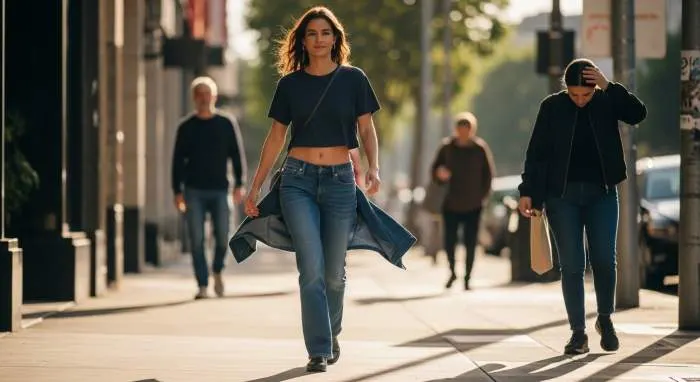
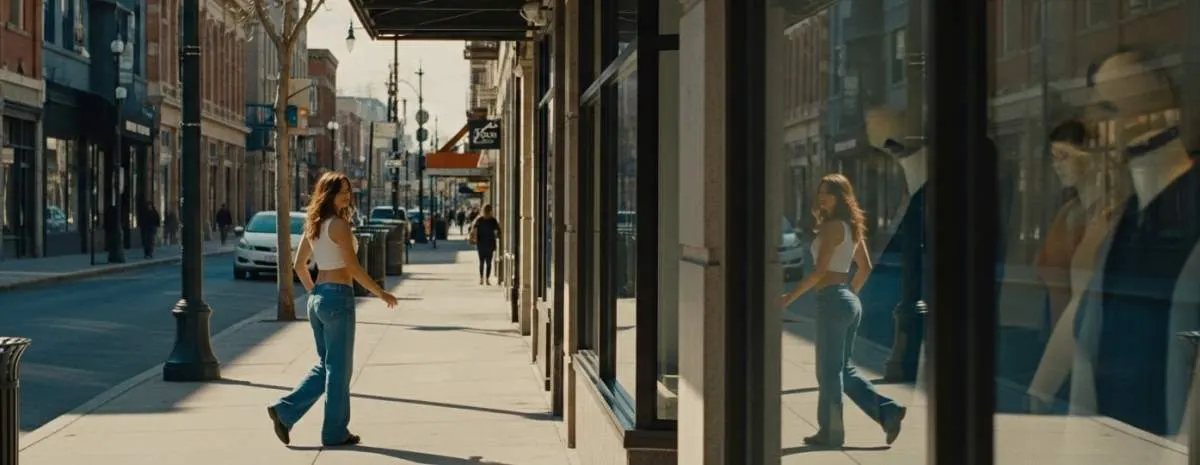
The revival feels different this time. It’s less about a bare midriff and more about proportions. Think oversized hoodies meeting a low-slung waist, or a delicate cropped top that hints rather than exposes. There's a deliberate looseness, a casual cool that wasn't always present in the tight, often restrictive low-rise denim of yesteryear. It's about personal comfort and aesthetic freedom. Gen Z fashion isn't just about recreating; it's about reinterpreting.
I remember watching a young woman on the subway, her low-rise cargo jeans pooling around chunky sneakers, a tiny knit top just skimming her navel. She wasn't trying to be sexy; she was just… comfortable. It was an outfit choice, not a statement about her body, and that felt revolutionary to someone who grew up believing every garment was a judgment. It was striking. The way she carried herself, with an air of nonchalant confidence, made it clear this wasn't about squeezing into a trend, but owning it.
So, how exactly is Gen Z making low-rise denim a fresh look?
- Diverse Body Representation: Influencers showcasing low-rise on various body types, normalizing different shapes.
- Styled with Baggy Silhouettes: Often paired with oversized tees, hoodies, or blazers, creating a relaxed, balanced look.
- Emphasis on Comfort Fabrics: Less rigid, more flexible denim and cargo materials are common.
- Layering: Underneath sheer tops or over swimsuits for a beach-to-street vibe.
- Accessibility: Fast fashion making new iterations widely available, alongside the popularity of thrifting vintage pieces.
This isn't about fitting a mold. It's about breaking it. The early 2000s era for many millennials came hand-in-hand with intense body scrutiny and the ubiquity of terms like "heroin chic." Gen Z, however, approaches these trends with a discerning eye, often filtering them through a lens of inclusivity and self-acceptance. They have redefined the terms of engagement with the muffin top fear, understanding that the fear was imposed, not inherent.

The conversation around how Gen Z views body image and low-rise jeans isn’t about striving for a perfect silhouette; it’s about embracing their form, whatever it may be. They've found a way to take a garment once associated with a singular, often unattainable body ideal and remix it for a generation that values authenticity above all else. It's a powerful reclamation, turning a past fashion faux pas into a new symbol of sartorial liberation. You can almost see them winking at us, the older generation, saying, "We got this."
Historical Insight: Retro Archive: The history of SUSTAINABLE 70S BOHEMIAN UPCYCLING: ZERO-WASTE VINTAGE TIPS offers even more context to this story.
The Original Drop: How Low-Rise Jeans Shaped Our Fears
That particular slice of the late 90s and early 2000s. It wasn't just a style; it was a vibe, a whole generation’s uniform. Suddenly, jeans weren't sitting politely at your waist. They dropped. Way down. It felt like a rebellion at the time, a playful flash of belly button that screamed confidence. But lurking beneath that carefree facade was something far more insidious: the "muffin top" fear. This wasn't just about fabric, it was about bodies, and the intense pressure to conform.
The roots of the low-rise denim craze sprung from the intersection of celebrity culture, aspirational music videos, and a post-grunge desire for something slicker, sexier. Designers like Alexander McQueen and Versace dabbled in lower cuts in the early-to-mid 90s, but it was really in the hands of pop stars and hip-hop icons that the look solidified.
Think Britney Spears in "...Baby One More Time," her midriff exposed, or Destiny's Child owning the red carpet in matching low-slung outfits. It wasn't just popular; it was inescapable. Everywhere you looked, magazine covers, movie screens, MTV, they were there. This was the era of the flat stomach and the visible hip bone as the ultimate accessory.
The Machinery of the Midriff
The machinery behind this trend wasn't subtle. It was a well-oiled media spectacle. Fashion magazines, despite their glossy pages, started subtly — and not so subtly — pushing an aesthetic that celebrated extreme slenderness. The low-rise jean wasn't just a piece of clothing; it was a gatekeeper. If your stomach wasn't perfectly flat, if there was even the slightest bulge above that unforgiving waistband, you were deemed to have a "muffin top." This derogatory term, seemingly innocuous, became a weapon, dictating what bodies were "acceptable" and which weren't.

It created a pervasive anxiety, particularly among young women. Every girl I knew, and honestly, a few guys too, suddenly became hyper-aware of their midsection. You’d see them sucking in, fidgeting with shirts, desperate to avoid that dreaded spill-over. The fashion world, with its impossible beauty standards, capitalized on this insecurity.
Brands churned out these jeans, knowing the demand was fueled not just by desire for style, but by a fear of being left out, of being seen as anything less than perfect. It was a vicious cycle: the jeans dictated the body, and the body dictated the self-worth.
This fear often led to unhealthy dieting habits and body dysmorphia. It wasn't about comfort; it was about achieving a very specific, often unattainable, silhouette. It wasn't just about a trend; it was a cultural phenomenon that dictated body ideals. You couldn't escape the pressure.
I remember watching Mean Girls for the first time, and Cady Heron’s observation about the Plastics’ unwavering adherence to low-rise styles felt like a documentary. It was a uniform, a membership badge for a very exclusive, very thin club. The movie, released in 2004, perfectly captured the era’s obsession with physical conformity and the cruel social hierarchies it created. It showed how devastating these subtle pressures could be, how they shaped our understanding of beauty and belonging.
Historical Insight: Similar trends are explored in our deep dive into THAT OLD SLIP? WEAR IT OUT! THE 90S GRUNGE LAYERING HACK.
Interestingly, the Gen Z fashion low-rise denim trend is explained by many as a reclamation, a defiant return. They don’t seem to share the same visceral dread of the "muffin top" as we did. They’re wearing them with a different energy, a kind of confident nonchalance. It makes you wonder if they've somehow overcome that historical body image fear, or if it's just lying dormant, waiting for the next trend to awaken it. For us, back then, it wasn't just a trend. It was a trial.
The Hip's Enduring Echo
The panic. The collective gasp, the urgent search for shapewear, the way a perfectly good pair of jeans could make you feel like you’d committed a fashion felony. That was the "muffin top" fear, a quiet dictator of waistlines and confidence for a generation. It wasn't just about a roll of skin; it was about the shame attached to it, amplified by media that insisted on one specific silhouette.
When low-rise jeans made their grand return, many of us from earlier eras braced for impact. We remembered the discomfort, the constant tugging, the feeling of being perpetually exposed. However, the popularity of low-rise jeans with Gen Z is a different phenomenon now. This isn't just a simple cyclical trend; it’s a re-evaluation.

For Gen Z, this low-rise denim trend reflects something fundamental about their approach to fashion and identity. They aren't trying to squeeze into an impossible ideal. They’re wearing what feels good, what looks cool, what suits their mood, without the heavy baggage of past body policing.
The early 2000s glorified a singular, often unattainable, body type with low-rise cuts. Every magazine cover screamed "flat abs only," breeding a specific kind of anxiety. For Gen Z, that anxiety manifests differently. They’ve grown up in a world of diverse body representation, albeit imperfectly, on social media. They’re pushing back against the idea that clothes should "fix" or "hide" parts of their body. Instead, the focus is on self-expression.
I saw a kid the other day, barely out of high school, rocking a pair of low-riders like it was just another Tuesday. No fuss, no self-consciousness, just a comfortable swagger. They weren't trying to achieve a specific "look" dictated by an outside force; they were simply wearing their jeans. It was striking, a quiet revolution happening right there on the street. This isn't to say every Gen Z individual has completely overcome the muffin top fear, or any body image insecurity, but their collective approach suggests a significant shift.
How Gen Z views body image and low-rise jeans often circles back to authenticity. They embrace their bodies for what they are, celebrating curves, softness, and individuality. The "muffin top," once a scarlet letter in denim, has lost much of its sting. It’s just… a body. Sometimes it spills a bit, sometimes it doesn’t. Who cares? This isn't passive acceptance; it's active indifference to outdated beauty standards. It’s a quiet reclaiming of comfort and style.
Largely, Gen Z has redefined the muffin top fear itself, stripping it of its power by refusing to let it dictate their choices. The legacy isn't just about a returning silhouette; it's about a generation subtly yet profoundly altering the conversation around body and fashion. The waists will continue to rise and fall with the tides of taste, but the stories we tell ourselves about our bodies? Those are the hardest seams to ever truly unpick.