The Fabric Fiasco: Ditching the Dross, Discovering the Drape

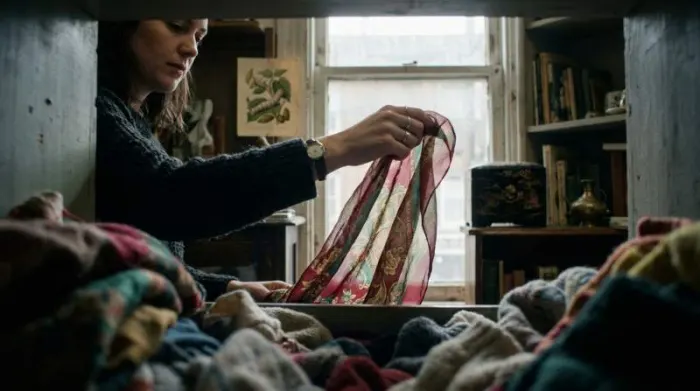
Let's be real. You've been there. Elbow-deep in a dusty bin at the thrift store, surrounded by the ghosts of fashion past, a sickly sweet scent of questionable fabric softener clinging to everything. You're searching for a gem, a whisper of vintage glory, but all you find is… well, stuff. Mountains of synthetic sorrow. Piles of polyester purgatory. It's enough to make even the most seasoned treasure hunter want to give up and buy something new, something safe.

But we don't do safe, do we? Not when there's potential for genuine sartorial triumph. The holy grail, of course, is a real silk scarf. That iconic drape, that buttery feel against your skin, a true touch of luxury amongst the synthetic screech. Maybe you've even heard about the infamous "burn test" – a quick flick of a lighter, a whiff of burning hair, and boom, you know. Except, unless you're planning a full-scale textile arson operation, that's not exactly practical in the middle of your local charity shop, is it? Store management tends to frown on impromptu textile combustion.

Because let's be honest, there's nothing quite like it. Polyester just sits there. It screams 'I'm trying, but failing'. Silk? Silk moves. It catches the light. It whispers stories. It elevates a tired old blazer or a simple sweater from 'meh' to magnificent. It’s the difference between looking like you just rolled out of bed, and looking like you just chose to roll out of bed, perfectly coiffed, ready to conquer.

This isn't just about snagging a bargain; it's about intelligent style. It’s about making a deliberate statement with pieces that have a soul. You want to nail that effortlessly chic vibe, not look like you're drowning in cheap plastics. Real silk, even a pre-loved one, holds its value, its luster, its very essence. It’s the ultimate secret weapon for smart, budget retro styling.

So, how do you navigate the synthetic jungle? How do you spot that silken sliver of heaven without resorting to pyromania or carrying a portable lab? You can't just wish it into existence. You need to know the signs. You need the tricks. And trust me, I've spent enough time elbow-deep in those bins to write a doctoral thesis on polyester despair. But I've also found some absolute treasures. And I'm going to tell you how to do the same. No lighter fluid required.

From Imperial Silkworms to Polyester Pretenders: A Scarf's Epic Saga

You’re digging through that bin, aren't you? Elbow-deep in a tangled mess of what looks like vintage gold, but ninety percent of it is just… plastic. That shimmering, slippery scarf, a riot of colour and forgotten patterns, is usually a dead giveaway for polyester junk. But sometimes, just sometimes, you hit the jackpot. You pull out something with weight, a certain undeniable sheen. That, my friend, is silk. And knowing its journey, from imperial decree to thrift store treasure, makes the hunt all the more satisfying.

The Cocoon of Power: Silk's Imperial Birth

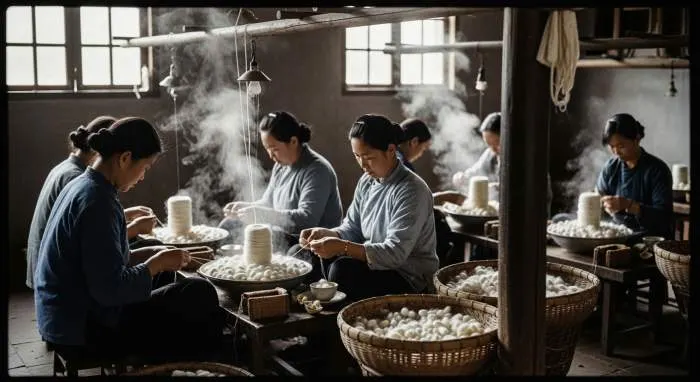
Silk wasn't just a fabric; it was power. It all started in ancient China, some 5,000 years ago, according to legend. Empress Leizu supposedly discovered it when a silkworm cocoon dropped into her tea cup. A convenient story, I'm sure. Whatever the truth, the Chinese fiercely guarded the secret of sericulture – raising silkworms – for centuries.

1900s Traditional Silk Sericulture Workshop

Historical Insight: Retro Archive: The history of THE GROOVY GUIDE: VINTAGE STYLE THAT LOOKS MODERN TODAY offers even more context to this story.

They knew they had a goldmine on their hands, literally. This wasn't some flimsy cotton; it was a material so luxurious, so strong, yet so unbelievably soft, that it became their most valuable export. It spun empires, funded wars, and gave its name to the Silk Road, that network of trade routes connecting East and West. For millennia, if you wore silk, you were someone. It was currency, a diplomatic gift, and a sign of undeniable status.

East Meets West, and the Scarf is Born

Eventually, the secret escaped China. Usually, via a bit of industrial espionage – legend says monks smuggled silkworm eggs in hollowed-out walking sticks to Byzantium. Classic. By the Middle Ages, silk production had spread across Europe, particularly to Italy and later France. These weren't just about plain bolts of fabric anymore. Innovation, like the Jacquard loom in the early 19th century, allowed for incredibly intricate patterns to be woven. This is where the silk scarf truly begins its reign. 

Think of the French courts, the Italian Renaissance. Ladies and gentlemen started draping themselves in these exquisite, painted squares. They weren't just warm; they were canvases. By the 20th century, brands like Hermès had turned the silk scarf into an art form and a status symbol, a flash of elegance that could elevate any outfit, even if you were just pairing it with some sleek vintage sneaker styling. It was the ultimate accessory, a small piece of wearable luxury that whispered wealth and taste.

The Polyester Punch: When 'Miracle' Became Mundane

Then came the 20th century, and with it, the chemists. While Stanley Kubrick's A Clockwork Orange was shocking audiences in 1971, and John Lennon was urging us to "Imagine," the textile industry was undergoing its own quiet revolution. Post-World War II, fueled by cheap oil and a desire for easily mass-produced goods, synthetic fibres exploded onto the scene. 

Nylon came first, then acrylic, and finally, polyester. The marketing called them "miracle fabrics." Wrinkle-resistant! Durable! Cheap! For a world recovering from war and looking for convenience, it sounded like a dream. Polyester could be spun to mimic silk, often with a similar drape and sheen, but at a fraction of the cost. It promised luxury to the masses. The problem? It didn't breathe. It clung. It often looked, well, cheap.

1960s Polyester Miracle Fabric Department Store

This is where our bin of polyester junk comes from. The market was flooded with scarves that looked like silk but felt like plastic. The subtle elegance, the natural give, the way silk drapes and breathes – all lost. The integrity of the original material was replaced by a clever imitation that simply couldn't hold a candle to the real thing. Knowing this history, understanding why silk became so prized, clarifies why we still obsess over finding that one perfect, genuine piece. It’s not just about fabric; it's about a legacy.

Historical Insight: If you love this vibe, you'll also find 2026 FASHION FORECAST: 90S SLIPS & 80S BLAZERS to be a fascinating read.

The Silk Score: Unthreading Culture's New Fabric

Forget just finding a good deal. When you pull a genuine silk scarf from a tangled mess of acrylics and poly-blends, you're not just scoring a chic accessory. You're participating in a quiet little cultural shift. This isn't just about saving a few bucks; it's about something bigger, nastier, and ultimately, far more fabulous.

The Rebellion of Real Material

First off, it’s a middle finger to fast fashion. Seriously, a well-made silk scarf, even one that’s seen a decade or five, holds its own. It drapes, it glows, it whispers luxury. Polyester, bless its synthetic heart, screams "I was born yesterday and will be landfilled tomorrow." By actively seeking out and appreciating real materials, we’re subtly, but powerfully, rejecting the endless cycle of cheap, disposable clothing. 

We're saying, "No, thank you, I prefer things that last." It's a stance that values craftsmanship over fleeting trends, quality over quantity. This isn't just about personal style; it's about environmental conscience dressed in something undeniably elegant.

Democratizing the Draping Dream

Remember when silk felt utterly out of reach? A luxury reserved for the runway or the obscenely wealthy? Not anymore. The hunt for these vintage gems, these forgotten treasures, levels the playing field. It takes something once exclusive and makes it accessible. A discerning eye and a bit of patience can now get you a piece that feels opulent without the eye-watering price tag. This isn't just about budget retro styling; it's about the democratization of luxury. It proves that you don't need a trust fund to have a wardrobe rich in texture and quality. Anyone with the grit to rummage can elevate their look significantly. It gives power back to the individual stylist, making good taste a skill, not just an inherited fortune.

A History You Can Wear

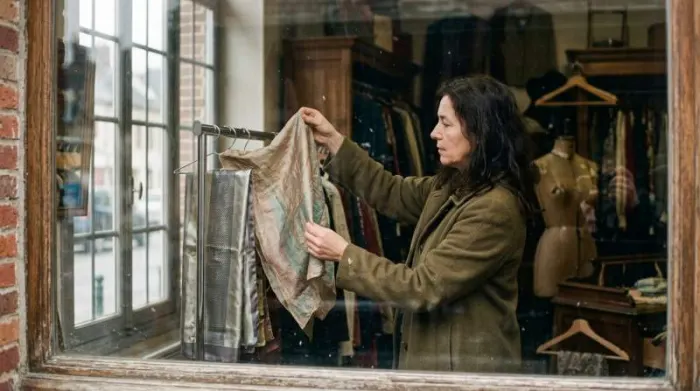
Every true vintage silk scarf, especially those pre-’90s pieces, carries a story. It wasn’t factory-farmed in a rush; it was designed, woven, printed with a certain care. Perhaps it was a gift, a souvenir, a statement piece from another era. When you find one, you're not just buying fabric; you're adopting a piece of history. 

1980s Vintage Silk Scarf Antique Shop

You're connecting to a past aesthetic, a different kind of glamour. It’s an antidote to the homogenous, mass-produced blandness that permeates modern retail. This connection fosters an appreciation for the artisanal, for design that transcends seasons. It encourages us to look at our clothes not just as coverings, but as artifacts with a narrative.

Historical Insight: We highly recommend exploring 1940S PADDED SHOULDERS: FASHION'S WARTIME POWER STATEMENT for a complete picture of the era.

The Thrill of the Savvy

There’s an undeniable satisfaction, a sly smirk of triumph, when you spot that subtle sheen, feel that unique hand, or even perform the tiny, discreet "burn test" (metaphorically, of course – let's not actually involve open flames in the dressing room). It’s not just shopping; it’s a sport. It demands knowledge, patience, and a bit of street smarts. This hunt cultivates a more educated consumer, one who understands fabric composition, recognizes quality, and isn't easily swayed by marketing hype. 

This expertise extends beyond scarves, making you a sharper shopper across the board. It's about empowering people to make informed choices, to truly understand what they’re buying, rather than blindly consuming. It's the ultimate fashion hack, a testament to skill over sheer spending power, turning ordinary shopping into an extraordinary treasure hunt. This entire phenomenon is truly, and wonderfully, turning a whole new leaf in how we approach our wardrobes.

From Bin to Bonjour: Styling Your Silk Score Today

Alright, you clever magpie. You’ve sifted through the polyester wasteland, braved the mothball fumes, and emerged victorious with a bona fide silk treasure. Congratulations, darling. But don't you dare think that vibrant square is destined to be a dusty relic, folded neatly in a drawer next to your forgotten hopes and dreams. No, no, no. That's just lazy. This isn't your grandma's neckerchief anymore; it's a passport to effortless cool, a flash of unexpected luxury in a sea of beige conformity. The trick is to treat it less like an accessory and more like a secret weapon. A small pop, a sly nod, an "I know something you don't" whisper to the world.

So, how do you take this piece of history and drag it, elegantly, into the 21st century without looking like you're heading to a costume party? It’s about subversion, darling. It’s about placement. It's about knowing exactly where to inject that silk punch for maximum impact.

  • The Hair Whisperer: Forget the scrunchie. Fold your silk into a narrow band and tie it around a low ponytail, letting the ends drape. Or weave it through a messy bun for an instant upgrade. For a bolder statement, wear it as a headband, securing it under your hair at the nape of your neck. It’s chic, it’s unexpected, and it keeps that regrettable fringe out of your eyes.
  • The Neck Charmer (Reimagined): Ditch the proper knot. Try a loose, nonchalant tie, maybe off-center. Or fold it into a slim cravat, tucked slightly into an open collar. A small, vibrant square tied bandana-style, but lower, peeking out from an open shirt, adds a dash of devil-may-care attitude without trying too hard. It’s about adding interest, not suffocating your neckline.
  • Bag Bling: This is a classic for a reason, but let's refine it. Don't just tie it to the handle. Weave it through chain straps, or wrap it around a leather top handle for a textural contrast. It transforms an everyday tote into something a bit more curated, a bit more "I just threw this on, honestly."
  • Wrist & Ankle Art: A smaller scarf, folded neatly, can be wrapped around your wrist in place of a bracelet. It's softer, more distinctive, and far less common. For a playful touch, especially with cropped trousers or skirts, tie a small silk square loosely around an ankle, just above a chic loafer or sandal. It’s a subtle flex.
  • Belt It or Top It: For a wider scarf, consider looping it through your belt loops – not perfectly, but with a slight drape. Or, if you’re feeling daring and the scarf is large enough, fold it into a bandeau top (provided it offers enough coverage, we’re going for chic, not indecent exposure). Pair with high-waisted trousers or a skirt for a modern, unexpected look.

The key to all of these? Don't be precious. This silk isn't just for special occasions or to be admired from afar. It’s meant to be lived in, wrinkled, given a personality. It’s the contrast between the vintage elegance of the silk and the contemporary nonchalance of your styling that makes it sing. Think unexpected placements, bold color pairings against neutral backdrops, or a delicate pattern toughening up a distressed denim jacket. 

Your goal is to make people do a double-take, not because it’s a vintage scarf, but because it looks so utterly right now. It's about making something old feel completely new, effortlessly cool, and unapologetically you. Go on, make that bin find work harder than your fast-fashion investments.

The Enduring Drape: Why the Hunt Continues

Okay, so you’ve armed yourself. You know the whispers, the tell-tale signs, the feel of the real thing even before your fingers brush against it. But why all this fuss over a scrap of fabric, you ask? Because it’s never just a scrap. It's a whisper from a different era, a ghost of glamour past, waiting to be brought back to life around your neck.

Historical Insight: Retro Archive: The history of 70S WRAP DRESS: STYLE GUIDE FOR WORK & PARTY offers even more context to this story.

Finding genuine silk isn't about snobbery; it’s about respect. Respect for craftsmanship, for durability, for a material that moves with you, breathes with you, and truly elevates. Polyester, bless its synthetic little heart, just sits there. It’s flat. It sweats. It clings in all the wrong ways. Real silk, though? It floats. It drapes like liquid. It catches the light, whispers secrets, and feels like a luxurious second skin.

This isn’t just about looking good, though you absolutely will. It’s about building a wardrobe with substance, with stories. That silk scarf you pulled from a dusty corner? It's lived a life. It’s seen dinner parties, probably some dramatic exits, maybe a quiet afternoon tea. Now, it’s ready for its next chapter, with you. You're not just wearing a pattern; you’re wearing history, reimagined.

So, keep digging through those bins. Keep feeling, keep scrutinizing. The thrill of the find, the quiet victory of distinguishing treasure from trash – that's the real payoff. These pieces, they don't just accessorize; they become part of your own legacy. They’re the subtle nod to discerning taste, the quiet rebellion against fast fashion’s fleeting trends. Because some things? Some things are just built to last, to charm, to endure. And a good silk scarf? It’s absolutely one of them.