
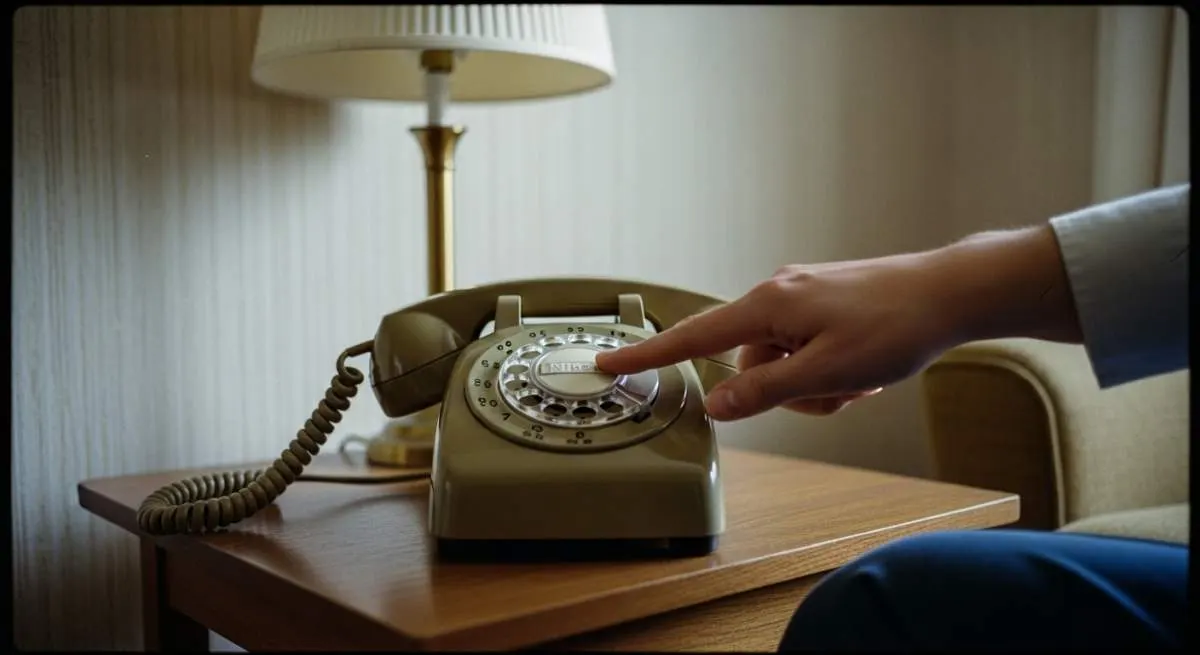
If you ever used a rotary phone, you probably remember the slow, deliberate ritual of dialing. Each digit took about a second to spin back, and a full seven-digit number could easily stretch to 10 seconds or more. That wasn't a design flaw, but a direct result of the phone's pulse dialing system and the mechanical switches that ran the early telephone network.
The reason rotary phones were so slow comes down to how they communicated with the telephone exchange. Every number you dialed sent a specific number of electrical pulses. The dial had a spring-loaded mechanism that had to physically rotate back to its starting position before the next digit could be registered, a process that defined the entire experience of rotary phone dialing.
Higher digits like 9 or 0 required nearly a full rotation, adding precious seconds each time. The whole system was engineered around the pace of early electro-mechanical telephone exchanges, which literally stepped through each pulse one click at a time.
The Party Line Phenomenon: Why Shared Lines Made Rotary Phones
Before private lines became common, many households shared a party line with neighbors. This meant you could hear other people's conversations or wait for the line to be free, and the slow dialing of a rotary phone only added to the frustration.
If someone on your party line was making a call, you had to wait until they finished. And when it was your turn, the 10-second dialing process felt even longer.
Party lines were a practical solution for rural areas where running individual phone lines was expensive. But they also meant no privacy; a neighbor could pick up the phone and listen in, or worse, interrupt your call. The slow pace of rotary dialing made these shared lines feel even more cumbersome.
Rotary Phones in Emergency Situations: Why 911 Calls Felt Like an Eternity
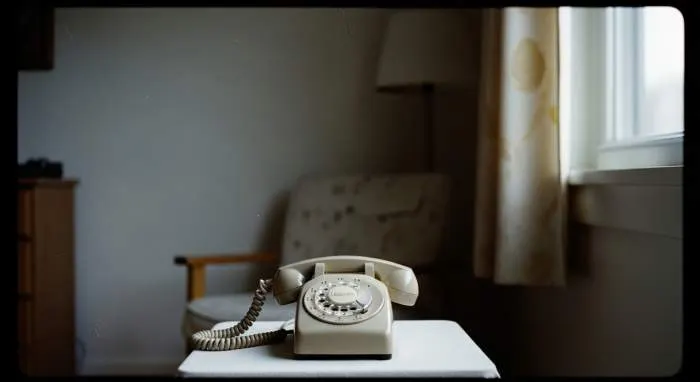 Dialing 911 on a rotary phone was a slow, stressful experience. Each digit required a full rotation of the dial. For the number 9, you had to pull the dial all the way around to the finger stop and let it spin back.
Then you did the same for 1, and again for another 1. In an emergency, those extra seconds felt like an eternity. This is one reason push-button phones, which could dial a number almost instantly, became so popular once they arrived in the 1960s and 1970s.
The introduction of portable devices like the Sony Walkman in 1979 marked a shift towards personal, mobile gadgets. While revolutionary for music, it still required physical interaction with tapes, a far cry from seamless digital streaming, but a leap in user autonomy compared to the fixed-line telephone.
Sensory Experience: How the Sounds of a Bygone Era Defined Rotary Phones
The sounds associated with rotary phones, from the satisfying click of the dial to the nostalgic pulse tones, are deeply etched into the collective memory of generations. These auditory cues were as much a part of the experience as the visual and tactile.
When you turned the dial, you heard a distinct mechanical click as the spring wound up. Then, as the dial spun back, you heard a series of rapid clicks, one for each pulse. The number of clicks told the exchange which digit you had dialed.
For a 0, you heard ten clicks. For a 1, just one. This rhythmic clicking was the sound of a call being placed, a sound that has all but disappeared from modern life.
The Tactile Experience of the Rotary Dial
Your finger fit into a small hole, and you pulled it around to the metal finger stop. The resistance of the spring was noticeable, and you could feel the mechanism engage. This physical interaction made dialing a number feel like a deliberate act, not just a quick tap on a screen.
Durability and Maintenance: Built to Last
Maintaining and repairing these older phones was also a different experience. They were incredibly robust, often weighing several pounds, built with solid components designed to last. The handset was heavy, the cord was thick, and the base was made of hard plastic or metal. A rotary phone could survive a drop that would shatter a modern smartphone.
If a rotary phone broke, it was often fixable with basic tools. The dial mechanism could be cleaned and lubricated, the ringer could be adjusted, and the handset cord could be replaced.
This repairability was a stark contrast to today's sealed devices, where a broken screen often means replacing the entire phone.
The Enduring Legacy: A Marvel of Its Time
Today, rotary phones are largely decorative items or collector's pieces, celebrated for their vintage aesthetic. They serve as a tangible link to a bygone era and a reminder of how far technology has come.
But the rotary phone was more than just a slow way to dial. It was a marvel of mechanical engineering. Every call you made was a tiny ballet of springs, gears, and electrical pulses.
And the 10-second dial time wasn't a bug. It was a feature of a system that worked perfectly for its time.
The story of its invention is just as fascinating. Enter Almon Brown Strowger, an undertaker from Kansas City, Missouri. Legend has it he suspected the local telephone operator, who happened to be his competitor's wife, was quietly redirecting his business calls. So he built his own automatic exchange to cut her out entirely, and in doing so, accidentally changed the course of telecommunications history.
How did rotary phones work without electricity
Rotary phones didn't need household electricity because they ran on the phone company's own low-voltage DC power, sent directly through the copper wires. This meant they worked even during blackouts, a reliability that modern cordless phones can't match. The network itself provided the tiny current needed to power the dial, ringer, and voice transmission.