
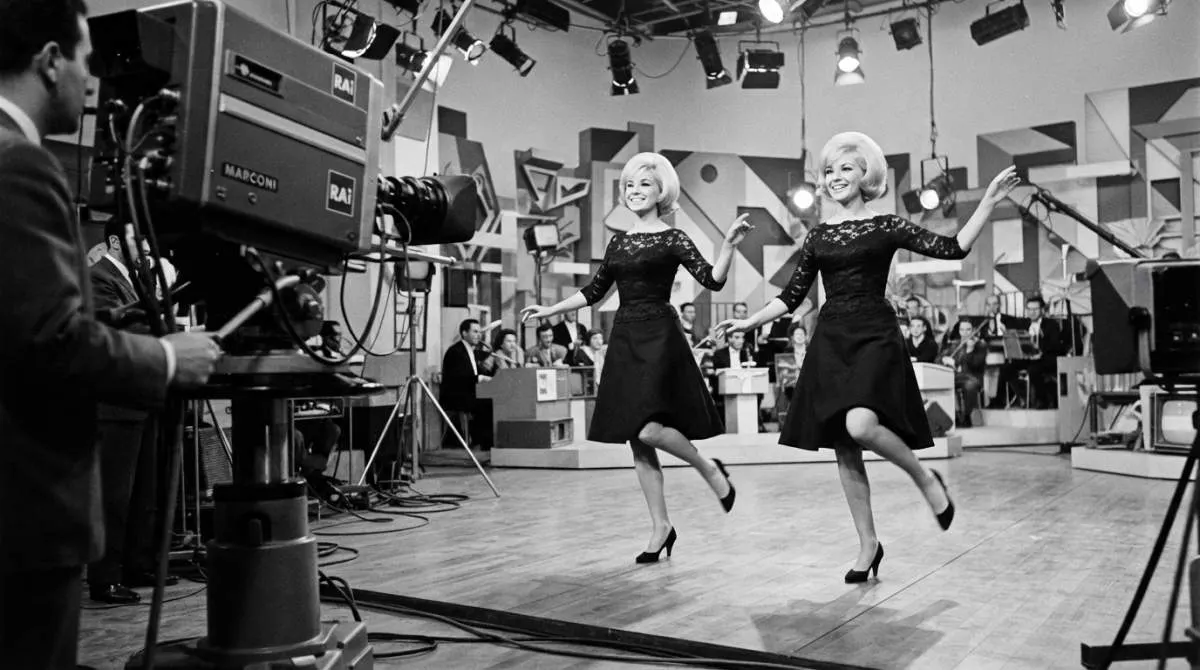
Imagine a country with just one television channel. Now imagine two identical dancers appearing on it, moving with a crisp, modern synchronicity that felt imported from another world. That was the precise cultural shock delivered on January 21, 1961, when Alice and Ellen Kessler made their Italian debut on the RAI program Giardino d'inverno[1].
Orchestrated by the visionary director Antonello Falqui, this single broadcast didn't just introduce a new act. It launched a phenomenon that would define the look of Italian entertainment for the decade to come [1].
Who were these women who captivated a nation overnight?Alice and Ellen Kessler were German twins, born in Saxony in 1936. They were already seasoned performers, having danced with the legendary Bluebell Girls in Paris and even represented West Germany in the 1959 Eurovision Song Contest.
But their true stardom was waiting for them south of the Alps. Brought to Italy by the American-born choreographer Don Lurio, they arrived with a polish and professionalism that Italian television simply hadn't seen before.
The Debut: A Broadcast That Changed the Channel
Their debut was a masterclass in controlled impact. In 1961, RAI was the only television broadcaster in Italy, meaning a single program could reach tens of millions of viewers. There was no switching channels.
When the Kessler Twins performed, the entire country watched. Their act was built on a foundation of flawless,synchronized dancing-a precision that became their defining cliché, but also their revolutionary signature.
This was a conservative, Catholic medium. The press would later dub them 'the legs of the nation', but those legs had to be carefully presented. Censors required them to wear black stockings to cover their limbs during performances.
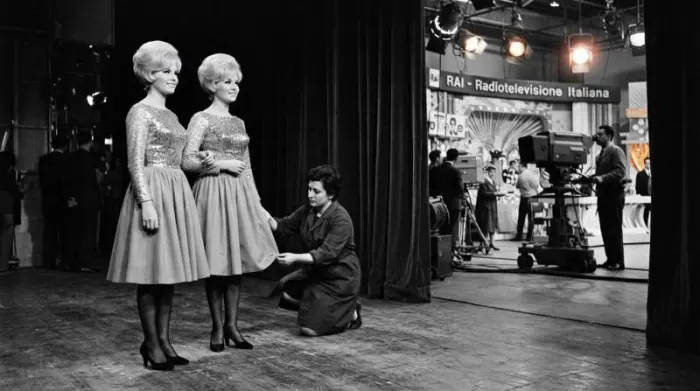
This minor compromise only heightened their allure, framing their movements within a tension between propriety and a palpable, modern energy. They weren't just dancers; they were a carefully managed spectacle of new femininity.
Their German accent was noted, yet it became part of their charm. In a strange way, their foreignness made them perfect vessels for a new kind of Italian glamour. They represented something aspirational and international, a breath of the wider European dolce vita flowing into living rooms across the peninsula. They were the future, beamed in from Paris and beyond, yet they were about to become utterly, unmistakably Italian.
Mood Match
Four Moments, Four Songs
Pick your moment and let the record do the rest.
Hosting friends for an evening of dancing.
Il cielo in una stanza by Mina
That slow, smoky swell is the sound of lamps turned low and someone finally asking you to dance.
Getting ready for a night out on the town.
Heute Abend wollen wir tanzen geh'n by Kessler Twins.
It is pure anticipatory sparkle, the twins practically handing you your lipstick and pushing you out the door.
Sipping coffee while flipping through old magazines.
Al di là by Betty Curtis
Betty sings it like a memory you half-forgot, which is exactly the mood of a dog-eared page and a cooling cup.
Cleaning the house with the radio turned up.
Tintarella di luna by Mina
You cannot dust half-heartedly to that bouncing little tune, and the sofa cushions somehow get a shimmy too.
Play them in order and the evening arranges itself, from sparkle to slow dance.
Songs checked against en.wikipedia.org.
The Fame: Becoming the Nation's Soubrettes
Following that explosive debut, they were swiftly embedded into the heart of RAI's programming. They became part of the cast of the hugely popular show Studio Uno, where they sang the famous, nonsensical opening theme 'Da-da-un-pa'. This catchy tune cemented their place in the national consciousness. Week after week, their presence helped establish a new, more choreographic and visually impactful style of variety show.
They are considered the first modern soubrettes of Italian television. Before them, female performers on TV often fit into more traditional singer or comedian roles. The Kesslers introduced a role built on movement, visual harmony, and a confident, silent eloquence. Their act was a complete package:
- Visual Synchronicity: Their identical appearance and perfectly mirrored movements created a hypnotic, almost uncanny effect that was ideal for the small screen.
- Choreographic Rigor: Under Don Lurio's direction, their routines were sharp, complex, and decidedly modern, elevating the production value of entire shows.
- Glamorous Accessibility: They were elegant and untouchable, yet their smile and sisterly bond made them warmly familiar, the ideal guests for a nation's Sunday evening.
Their success was a testament to a perfect alignment of talent, timing, and medium. They arrived just as Italy was embracing a new postwar optimism and a hunger for stylish, contemporary pop culture. Their performances were a weekly advertisement for that modern sensibility. In many ways, their rise previewed the kind of cultural clash between tradition and modernity that would define the decade, though theirs was a clash that ended in a warm, national embrace.
The Strange Afterlife: Icons in Retrospect
Like many television sensations, their peak fame was tethered to their era. As the 1960s waned and television formats evolved, the specific archetype they perfected-the impeccably synchronized variety show dancer-began to recede. Yet, they never faded from public memory. They remained beloved figures, a living shorthand for a specific moment of Italian joy and stylistic confidence.
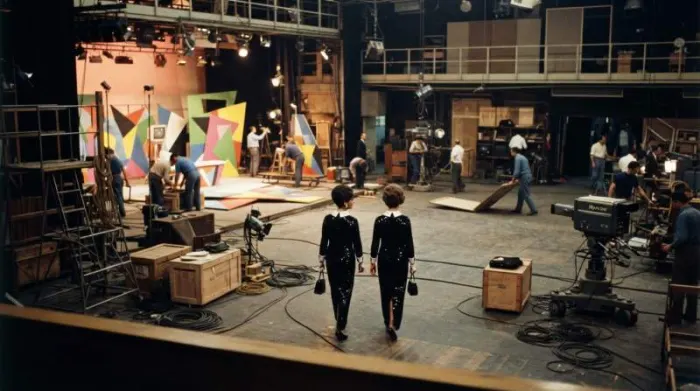
Their legacy persisted in curious ways. The very precision that made them icons later became a nostalgic reference point, sometimes parodied but always with affection. Their image-two smiling women in matching costumes executing perfect kicks-became an instantly recognizable visual code for '1960s Italy'. It was a code used in later films, advertisements, and retrospectives, a guaranteed evocation of a sleek, optimistic past.
Their story also stands as a fascinating case study in cross-cultural adoption. They were German entertainers who became Italian icons.
They navigated the nuances of a new country's media landscape, adapted to its censorship, and ultimately were claimed by it. The press didn't call them 'the German legs'; they were 'the legs of the nation'. This complete assimilation speaks to the power of their performance to transcend origin and embody a national mood.
Why the Debut Still Matters
So why does a television appearance from over six decades ago still resonate? Because it captures the exact moment a visual language was born. Before the Kessler Twins, Italian TV variety was often talkier, more static, rooted in theatrical or musical hall traditions. Their debut introduced a new grammar based on movement, visual pacing, and choreographic spectacle.
You can draw a line from their work to the later explosion of music videos and highly produced televised performances. They understood that television was a visual medium first. Their act was designed for the camera, using symmetry and synchronization to create a compelling picture that required no translation. In an era before globalized pop, they were a masterclass in visual communication.
Their tale is also one of pure professional virtuosity meeting a unique opportunity. They were not accidental stars. They were supremely trained dancers who, through Don Lurio and Antonello Falqui, found the perfect platform for their skills.
In a single-channel media environment, excellence couldn't be missed. It became, inevitably, a national touchstone. Their 1961 debut on Giardino d'inverno was more than a performance. It was the first sentence of a new chapter in how Italy saw itself on screen-a chapter written in perfect unison.
Sources
- [1]Inseparable, sensuous and confident, the Kessler twins were pioneers of variety show culture
- [2]Kessler, Alice ed Ellen, Enciclopedia, Treccani
Bracketed numbers in the text (e.g. [1]) refer to the sources listed here.
What was the secret behind the Kessler Twins' signature synchronized dance moves?
The twins credited a childhood invention by their father, a clockmaker, who built a metronome-like device that pulsed a soft beat through their bedroom floorboards. This rhythmic training, they said, made their mirrored movements feel as natural as breathing [2].