
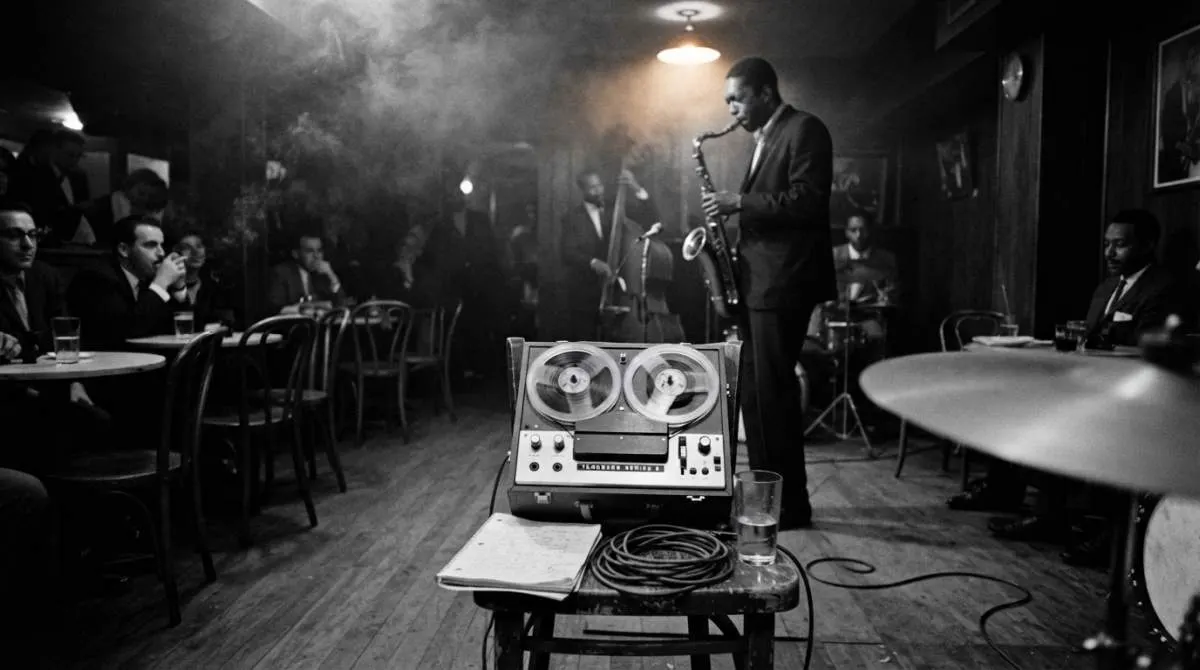
Every subculture has its holy grails. For jazz aficionados, one of the most tantalizing was never a missing studio session or a scrapped album. It was a bootlegger's dream born from pure, unadulterated fandom. The story of the Tiberi Tapes is the story of a fan with a tape recorder, a genius in mid-flight, and the six-decade echo between a club's dark corner and a worldwide release [1].
They are, at their core, a love letter written in magnetic oxide. Saxophonist Frank Tiberi began recording John Coltrane in the summer of 1960. His motive was scholarly, not commercial. He wanted to dissect the harmonic values and technique of a player he considered a master [2].
Tiberi was no casual observer. He was a working musician who had performed with giants like Benny Goodman and Dizzy Gillespie. By the early sixties, he was focusing on the Philadelphia scene. That placed him in the perfect orbit to witness a crucial pivot [3].
Coltrane was establishing his own band and developing a new, expansive approach. The controlled environment of the studio captured one version of this evolution. The clubs captured another, far more volatile one.
The Machine Under the Coat
So how do you bottle lightning without getting caught? Tiberi's method was a masterpiece of lo-fi stealth. His tool was a portable reel-to-reel tape recorder, a Magnavox/Concertone TR-100 Transicorder.
He would sit in the audience with the machine hidden in a cloth bag on his lap. A small condenser microphone snaked under his coat, its head peeking out to catch the sound. This wasn't about fidelity. It was about capture.
He learned to change the tiny three-inch reels by touch in the dark, between songs, to avoid missing a note. The priority was always Coltrane's saxophone, a laser focus that meant audience chatter and the clink of glasses often bled onto the tape.
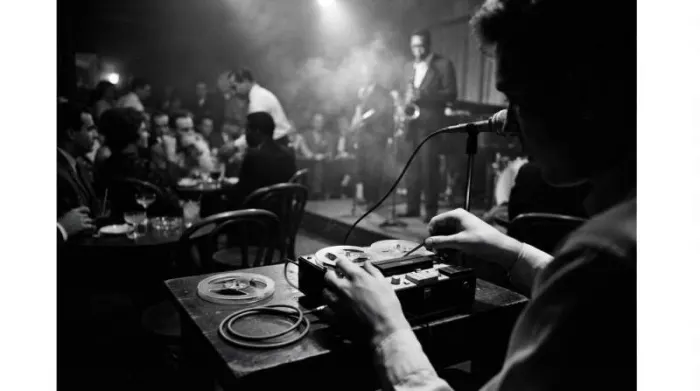
The sound quality varies, sometimes dramatically. But that was the point. These were field recordings for personal study, not a polished product. They were made in the sweat and smoke of venues like Pep's Musical Bar and the Showboat in Philadelphia.
What they preserved was the nightly labor of a genius. This was the workshop, not the showroom.
The Archive as Ghost
For decades, the tapes existed primarily as lore. Tiberi's archive grew to more than eighty reels, containing over sixty hours of music from dozens of performances between 1960 and 1965. They were the jazz world's worst-kept secret.
Mood Match
Four Songs for the Shape of Your Day
You know how a song can settle a room before anyone says a word? Here are four for the moments that need one.
Unwinding after a long shift
Georgia on My Mind by Ray Charles
Ray Charles takes his time with it, and so should you, shoes off, kettle on, letting the day loosen its grip.
Cooking dinner and craving swing
Everybody Loves a Lover by Doris Day
Doris Day makes chopping onions feel like a night out, all bounce and cheek, and the saucepan keeps the beat.
Working late and needing focus
Giant Steps by John Coltrane
Coltrane moves so fast you have to concentrate, which is exactly what you want when the desk lamp is the only light on.
Hosting friends for a card night
Wonderful World by Sam Cooke
Sam Cooke warms the room without asking anything of it, so the cards can talk and nobody minds who wins.
Keep these four close; they know their way around a day.
Songs checked against en.wikipedia.org.
A select few scholars and collectors might have heard whispers, or even caught a fleeting, low-quality dub. But the complete collection remained with Tiberi, a private trove. They circulated as myth, a billion-dollar industry of bootleg speculation built around their very absence.
Their power came from their intimacy. This was Coltrane unguarded, playing for a room, not for posterity. The tapes captured the process, the false starts, the extended explorations that a studio clock would have curtailed.
They were the antithesis of a slick, commercial live album. They were notes from the underground, literally and figuratively. The very fact of their obscurity fed their legend. To have heard them was to be part of an inner sanctum.
Their impending release would trigger a fascinating cultural clash between the purist ethos of the tape's creation and the commercial machinery of the music industry.
The Reels See Daylight
The turning point came with the approach of what would have been Coltrane's one hundredth birthday. The legacy label, Impulse! Records, prepared to celebrate. The Tiberi Tapes, long the domain of whispers, were finally slated for a proper, official release.
The first hint for the public was a preview single LP released for Record Store Day. It featured 'Giant Steps' and 'Satellite,' two fiery performances that served as a proof of concept. The sound was raw, immediate, and thrillingly alive.
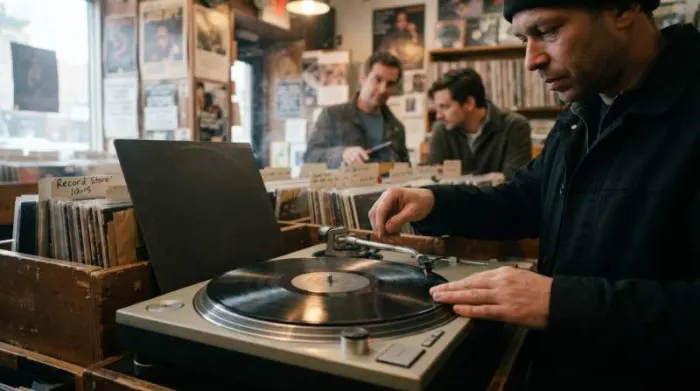
The full commercial release followed that November. It was an eleven-track collection across multiple formats. But that was just the appetizer. A massive, limited 'Complete Recordings' edition was announced for early the next year.
This box would be the definitive article: over eighty performances spanning nearly twenty-six hours of audio. It promised to be the final word on a legend that had lived in the shadows for six decades. The journey from coat pocket to lavish box set was complete.
- The recordings were made purely for study, with no intention of commercial release, which makes their sonic authenticity unique.
- They document Coltrane's pivotal transition into his classic quartet period, capturing nightly evolution unheard on studio records.
- The collection includes numerous, sometimes radically different, live versions of his signature compositions.
- Their release forces a reconsideration of Coltrane's live canon, adding a new, intimate layer to his documented work.
- The tapes stand as a remarkable document of pre-digital fan culture, created with patience and a specific, personal passion.
Why a Tape Hiss Still Matters
In an age of infinite digital archives and pristine remasters, the Tiberi Tapes matter precisely because of their imperfections. They are not a clean, curated narrative of genius. They are a messy, breathing document of it.
You hear the room. You hear the audience. You hear Coltrane working it out, night after night. This is the antithesis of the myth-making, heroic biography.
It's the sound of the grind, the pursuit of an idea in real time. They also represent a dying archetype: the fan as archivist. Tiberi wasn't a journalist or a label rep.
He was a practitioner in the same field, trying to learn from the best. His tools were crude, his method clandestine, but his intent was pure.
In that way, the tapes are a bridge. They connect the obsessive, analog bootleg culture of the twentieth century with today's demand for complete, authorized discographies. They force us to consider where the line is between preservation and piracy, between personal study and public heritage.
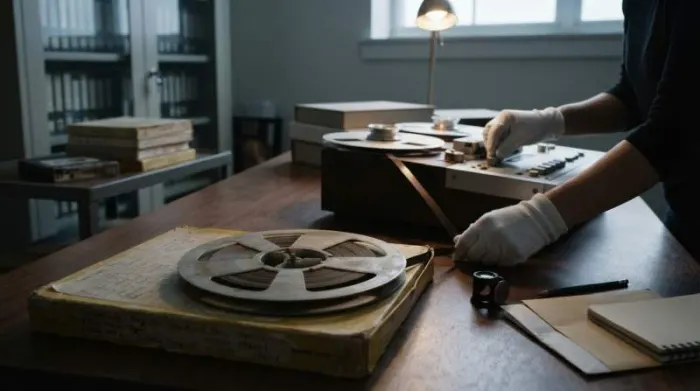
Finally, they give us a new, vital channel into a well-known story. We have Coltrane in the studio, and Coltrane on major live albums.
Now we have Coltrane in the club, a few feet away, caught by a fellow traveler with a machine under his coat. The myth is gone. What's left is the music, closer and more human than ever.
What rare recording device did Frank Tiberi use to capture these lost jazz sessions?
Frank Tiberi relied on a vintage 1950s Ampex 601 portable tape recorder, a rugged machine prized by field recordists for its warm tube sound. Its compact design let him discreetly preserve these performances, giving us a sonic time capsule of a legendary artist's most spontaneous moments.
Sources
- [1] 100 years after John Coltrane’s birth, secret tapes are emerging. What can they tell us about jazz’s great rulebreaker?
- [2] John Coltrane’s Mythologized 'Tiberi Tapes' Coming To Light
- [3] John Coltrane's 100th Birthday: 'The Tiberi Tapes' Box Set Announced, Jeff Parker Cover
Bracketed numbers in the text (e.g. [1]) refer to the sources listed here.