Okay, picture this: it’s the early 1990s. The air is thick with flannel, Doc Martens, and a raw, untamed energy that’s just bursting at the seams. You’re in a crowded, sweaty club, the bass is thumping so hard your chest aches, and on stage, Kathleen Hanna of Bikini Kill is absolutely electrifying.

She’s not just singing; she’s yelling, she’s screaming, she’s demanding you listen. She's practically spitting fire, pouring every ounce of her being into challenging the patriarchy right there, in real-time. And in the audience, something extraordinary is happening.

Girls, women, they’re not just passively listening to the sonic assault. They’re active participants in a revolution, a cultural seismic shift. They’re reclaiming power, tearing down expectations, and smashing taboos. 

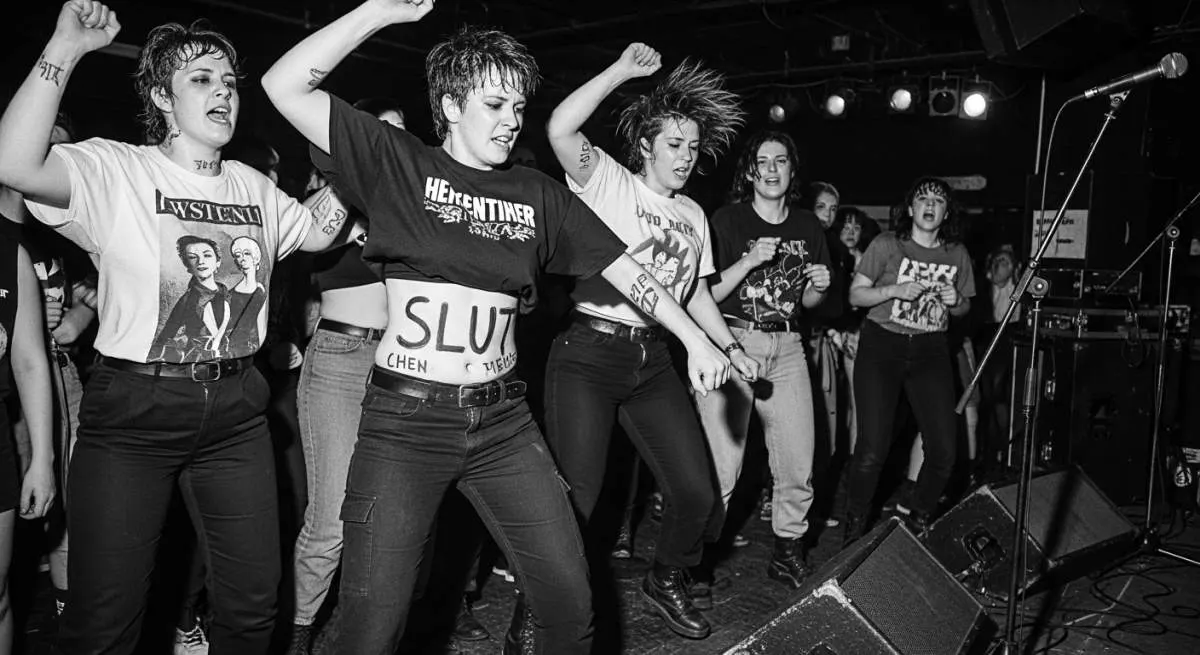
And how are they doing it? By scrawling one of the most loaded, derogatory words imaginable across their own skin: "SLUT." Right there on their stomachs, sometimes their arms, in thick, black marker. This wasn't about meticulously planned aesthetics, or some delicate wrap dress styling meant to flatter or conform. No way. This was about defiance, pure and unadulterated. This was about taking back the narrative with a vengeance.

Think about that for a second. This wasn't some fleeting fashion statement or a subtle nod to rebellion. This was a direct, unapologetic punch to the gut of a society that loved to label women, especially those who dared to be loud, assertive, or just… openly sexual and free.

They were taking a word explicitly designed to shame and control, and they were weaponizing it, turning it into a badge of furious, unapologetic ownership. It was a visceral act, a public declaration of self-possession in the face of judgment.

That raw, visceral act of rebellion, that visible marker of a defiant stance, it was undeniably fueled by the music. It was the perfect soundtrack to their collective rage, their blooming sisterhood, their absolute refusal to be silenced by anyone.

1990s Punk Sisterhood Rage Music Rebellion

Bands like Bikini Kill, L7, Hole, they weren't just playing songs; they were igniting a cultural firestorm. They gave voice to frustrations many women felt deeply but rarely dared to articulate so boldly, so publicly.

This wasn’t just a concert; it was a rallying cry, a communal exorcism of societal bullshit. Every dissonant note, every distorted guitar riff, every yelled lyric was an urgent invitation to join in, to stand up, to literally wear your defiance for the world to see and reckon with. It was messy, it was loud, it was confrontational, and it was absolutely unforgettable.

It forced everyone, whether they liked it or not, to confront what it really meant to be a woman with agency in a world that often tried its damnedest to deny it. That powerful, shocking image – "SLUT" scrawled on bare skin amidst the mosh pit – it perfectly captures the explosive intersection of punk, grunge, and a nascent, fierce feminist movement that refused to be ignored, demanded to be seen, and roared its truth into existence.

Before the Fury: Tracing Riot Grrrl's Roots to the "Slut" Reclamation

Picture this: It's 1991. While Nirvana was busy dropping 'Nevermind' and changing the sound of mainstream radio forever, something else, something quieter but just as seismic, was brewing in places like Olympia, Washington, and Washington D.C.

This wasn't about major labels yet; it was about fanzines, basement shows, and a raw, unapologetic anger. The seeds for what would become known as Riot Grrrl, and the powerful act of writing "Slut" on one's stomach, were being sown.

The Backlash and the Birth of a Movement

The late 80s and early 90s were a strange time. There was this underlying cultural current that often dismissed women's voices, especially in rock music. While the 80s had given us some incredible female artists, the dominant narrative, particularly in punk and alternative scenes, often felt very male-centric.

Historical Insight: We highly recommend exploring MIAMI VICE TO SYNTHWAVE: THE ENDURING 80S AESTHETIC for a complete picture of the era.

Late 1980s Alternative Rock Gender Dynamics Underground

Women in bands were often tokenized or judged by different standards. Plus, there was a growing backlash against feminist gains, a real sense that progress was being threatened. For young women hungry for authentic expression and fed up with the status quo, the existing punk scene, with all its DIY ethos, still had a big, glaring blind spot when it came to gender.

From Zines to Stages: The Spark Ignites

The Riot Grrrl movement didn't just appear out of nowhere. It emerged from discussions, art, and music, particularly in punk communities. Groups like Bikini Kill, formed in Olympia in 1990 by Kathleen Hanna, Tobi Vail, Billy Karren, and Kathi Wilcox, were at the forefront. They were part of a wider network of young women creating their own media – fanzines like Bikini Kill's own self-titled zine, or Jigsaw and Girl Germs. These zines weren't just about music reviews; they were manifestos, sharing stories of sexism, frustration, and solidarity.

They articulated a shared experience that many felt but rarely saw acknowledged in mainstream culture. This was about creating a space where girls could be heard, seen, and empowered, rejecting the idea that their anger was somehow invalid or uncool.

Reclaiming "Slut": A Weapon Against Shame

Now, about that word: "Slut." For most of history, it's been a weapon, used to shame, dismiss, and control women. It's a word hurled at victims of sexual assault, at women who dared to express their sexuality, or simply at those who didn't conform to patriarchal expectations. Bikini Kill and the broader Riot Grrrl movement saw this word for what it was: a tool of oppression. So, what do you do with a weapon designed to hurt you? You disarm it, you reclaim it, you turn it on its head.

When Kathleen Hanna and other Bikini Kill fans started writing "Slut" on their stomachs, it wasn't about endorsing the negative connotation. It was a direct, visceral challenge. It said, "You can call me that, but it doesn't diminish me.

In fact, I'm taking that power back." It was a bold, in-your-face act of defiance against victim-blaming culture and the policing of women's bodies and sexualities. This act, often done with markers before shows, created a visual, collective statement, signaling to other women in the audience, "You are not alone in your anger."

It's easy to look back and see this as a brand new thing, but the spirit of youth rebellion, pushing back against the expected, has always been there. Think of the sharp suits and greased-back hair of the rockabilly scene in the 50s, carving out their own identity with music and style, shaking up conservative norms.

1950s Rockabilly Youth Rebellion Style

Riot Grrrl channeled that same defiant energy, but gave it a sharp, specifically feminist edge, tackling issues that had been glossed over or outright ignored. They weren't just rebelling against their parents; they were rebelling against an entire system. They were demanding space, respect, and a revolution, girl style.

More Than Skin Deep: The Lingering Echoes of a Reclaimed Word

When fans, mostly young women, started writing "Slut" on their stomachs at Bikini Kill shows in the early 1990s, it wasn't just a punk rock stunt. It was an explosion, a raw act of defiance that ripped through the stale air of a scene that was often just as misogynistic as mainstream society. This wasn't about seeking approval; it was about reclaiming power, taking a word hurled as an insult and wearing it like a badge of honor.

The impact was immediate and visceral. For many, seeing those handwritten, often shaky, letters across another woman's belly was a jolt. It created an instant, unspoken solidarity.

You looked at it and you knew: this wasn't about being passive. This was about turning the tables, owning the narrative. It exposed the hypocrisy of a world that shamed women for their sexuality while simultaneously exploiting it. Kathleen Hanna and the rest of Bikini KillTobi Vail, Billy Karren, and Kathi Wilcox — didn't just sing about these issues; they created a space where their fans could physically manifest their rage and resistance.

Historical Insight: Pro Tip: For a deeper look at this period, don't miss our feature on DONNA SUMMER: DISCO QUEEN'S ICONIC STYLE & LASTING MUSIC.

This particular act became a powerful symbol for the wider Riot Grrrl movement. It underscored the DIY ethos that was central to Riot Grrrl: grab a marker, grab your courage, and make your statement. You didn't need fancy production values or corporate backing.

That kind of raw, accessible activism extended beyond just writing on skin. It fueled the creation of zines, independent shows, and grassroots organizing. It was a movement built on authenticity, often expressed through what you had on hand. Think about it: the whole aesthetic of Riot Grrrl was inherently anti-establishment, celebrating individuality through thrift store finds and personalized touches.

It was the original 'budget retro' fashion statement for a generation tired of being told how to look or act, and that spirit continues to influence subcultures today.

The ripple effects of this moment are still felt. It gave countless young women a vocabulary and a framework to understand and articulate their own experiences with sexism and harassment.

1990s Feminist Activism Zine Youth Culture

It normalized conversations about sexual assault and gender inequality in a way that had been largely absent from public discourse, especially within youth culture. It wasn't just about punk anymore; it was about laying groundwork for future feminist movements, influencing everything from protest art to online activism.

Even decades later, the image of "Slut" scrawled on a stomach remains potent. It's a reminder that true rebellion often comes from the most personal, vulnerable places.

It showed that taking back a word isn't just semantics; it's a profound act of self-definition. It’s a bold statement that says, "You don't get to define me. I define myself." And that's an impact that truly goes more than skin deep.

Unfiltered & Unapologetic: Styling 'Slut' Today

Okay, so that whole "Slut" thing from the Bikini Kill days? It wasn't just some random act, or a fleeting shock tactic. It was a raw, visceral shout back at a world that loved to label women, to control their narratives, and to police their bodies. Fans were literally taking a slur, a word meant to shame them, and owning it, throwing it back in everyone's face with a defiant grin.

That energy, that sheer, unadulterated defiance, it's totally still relevant, maybe even more so today in some ways. But how do you wear that vibe, that potent spirit, without, you know, grabbing a Sharpie every morning and getting weird looks on your commute? It's less about the literal word on your skin and much more about the attitude it represents. It's about styling yourself with that same fierce independence, that potent refusal to be put in a neat, little box.

We're talking about taking that raw, rebellious spirit, that Riot Grrrl ethos, and making it work for right now, for your own unique look.

  • Graphic tees are your absolute best friend here. Think bold statements, maybe not always "Slut," but definitely pro-feminist, anti-establishment, or just plain funny and provocative messages.
  • Embrace the DIY aesthetic with gusto. Patches sewn onto denim jackets, strategically ripped tights, safety pins adorning collars – stuff that looks like you made it, because maybe you actually did. It's about making your clothes yours, not just buying them off a rack.
  • Chunky footwear is non-negotiable for this look. We're talking combat boots, platform sneakers, creepers, or anything with a substantial sole. Something sturdy that says you're here to stomp around, not to tiptoe.
  • Mix it up: blend traditionally feminine and masculine pieces. Picture a delicate slip dress layered under a beat-up leather jacket, or a vintage band tee paired with a sequin skirt. It completely breaks down those old, boring fashion rules.
  • Visible lingerie as outerwear can be incredibly powerful. A lace bralette peeking out from under a loose top, or a sheer shirt worn over a statement bra. It's about owning your body and your sexuality on your own terms.
  • Hair can be messy, vibrantly colorful, or sharply cut. Think electric dyes, choppy bobs, or simply letting your natural texture do its unapologetic thing.
  • Layering is absolutely key to achieving that effortlessly cool vibe. Throw on an oversized flannel over a tank top, or a thrift store blazer over a hoodie. It gives that 'I just threw this on but it looks intentionally cool' feel.
  • Bold makeup is definitely in play. Smudged eyeliner for a lived-in look, a deep berry lip, or a completely bare-faced honesty. It's all about intentionality, whether that's full glam or raw authenticity.
  • Statement accessories are your chance to scream personality. Chokers, multiple chain necklaces, an array of rings, a well-chosen studded belt. These are the details that truly amplify your individual voice.

Historical Insight: Pro Tip: For a deeper look at this period, don't miss our feature on DISCO FEVER! STUDIO 54 FASHION & THE ULTIMATE 70S PARTY LOOK.

Now, let's be real. We might not all be sharpie-ing "Slut" across our abdomens every morning before heading out, and that's totally fine. The point isn't literal translation; it's about capturing the essence of that statement – defiance, reclaiming, owning your power, and just generally shaking things up.

That spirit? It's still incredibly potent. This modern styling isn't about being a carbon copy of Kathleen Hanna in the 90s; it's about channeling that raw energy, that audacious confidence, into something that feels uniquely you. Think about how visionary designers like André Perugia pushed boundaries with shoes back in the day, creating pieces that were both avant-garde art and totally functional fashion, daring and innovative.

He wasn't just making footwear; he was making bold statements that challenged the norm. That same spirit of audacious self-expression, of challenging convention and having fun with it, is exactly what makes these modern looks feel so fresh, so relevant, and so empowering right now. It's about carrying yourself with confidence, a little bit of cheeky rebellion, and a whole lot of 'I don't care what you think'.

Early 2000s Bold Fashion Confidence Rebellion

Ultimately, it’s about dressing for yourself, and letting your clothes be a quiet (or wonderfully loud) rebellion against anything that tries to box you in.

The Echoes That Kick Back

That raw, defiant energy? It never really went away. Think about it: the message Bikini Kill screamed back in the 90s – about reclaiming words, about taking up space – it still vibrates. You see it in online discourse, in protest movements, in every young woman who refuses to be silenced. Girls aren't writing 'Slut' on their bellies just because it's edgy; they're doing it because the core idea still hits hard.

It's about owning your narrative, loud and clear, and refusing to let anyone else define you. That kind of visceral reclaiming, sparked by Kathleen Hanna and her crew, proved music could be a weapon, a mirror, and a rallying cry all at once.

The scene wasn't just about the sound; it was a whole look, a whole vibe. Grunge and punk weren't about fancy clothes. It was about practical, almost anti-fashion gear that rejected corporate gloss. That's why you still see kids rocking combat boots, ripped band tees, and yes, even stuff like vintage workwear – sturdy denim jackets, durable overalls, hard-wearing chore coats.

These weren't clothes for posing; they were clothes built to last, meant to get messed up, to embody a no-nonsense attitude. It’s a uniform for doing things, for getting your hands dirty, for fighting back, not for playing dress-up. It’s utility meeting rebellion, a visual declaration that you're here to work, to make a statement, and you're not going anywhere.

What Kathleen Hanna and the rest of Bikini Kill kicked off wasn't just a band or a movement; it was a blueprint for defiance. It showed you could be angry, loud, feminine, and utterly unapologetic, all at once. That spirit didn't just fade out with the 90s.

It bled into new bands, new protests, new ways of challenging the bullshit, inspiring countless artists and activists. The echoes of 'Revolution Girl Style Now!'? They're still rattling windows, reminding everyone that silence isn't an option. The fight's far from over; it just keeps finding new soundtracks and new voices to scream along.