
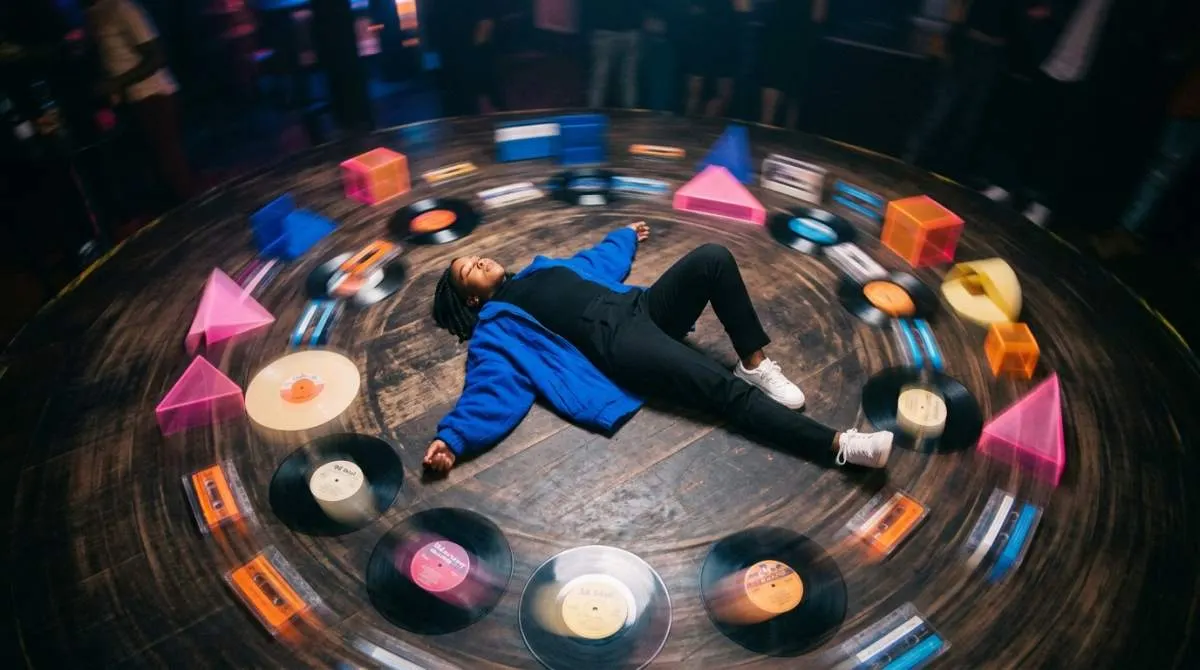
You have probably heard that South Africa's 1980s pop scene was just a distant echo of American disco, a copycat sound that never found its own feet. It's a tidy story, but it's wrong.
The music that actually poured out of Johannesburg and Cape Town during those tense, violent years was something else entirely: a slowed-down, gum-sweet mutation of funk and disco, but with a distinctly local spine of mbaqanga and marabi, and vocals that snapped back and forth in call-and-response patterns. It wasn't a pale imitation. It was a quiet, sonic rebellion.
Plot Twist
- The myth goes that 80s South African bubblegum was just a local copy of American disco, nothing more.
- Truth is, it slowed disco and funk way down, then soaked it in local mbaqanga, marabi, and call-and-response vocals, making a sound that could only have come from the townships.
The Sound of Resistance, Slowed to a Groove
To understand why this revival matters now, you have to feel the weight of what the original sound carried. In 1983, a young woman named Brenda Fassie, born in Langa, Cape Town, released 'Weekend Special'. It wasn't just a hit; it was a seismic event. The song sold over 200,000 copies and did the unthinkable: it crossed over from the townships to white radio stations and clubs, cracking the apartheid state's carefully enforced cultural segregation, even if just for a few minutes at a time.
That was the secret of bubblegum. It sounded light and poppy, all tangy synths and that explosive TR-808 drum machine, but it was built for a country in chains. Sipho 'Hotstix' Mabuse's 1984 anthem 'Burn Out' is the perfect example.
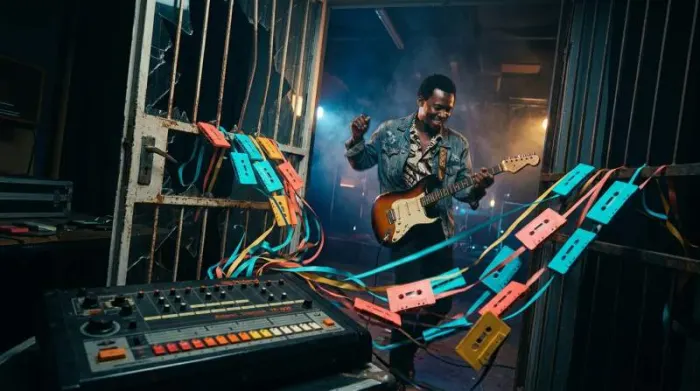
He wrote and recorded it in under 20 minutes, layering a relentless bass line under his smooth vocals. It sold over half a million copies, and the SABC banned it because the political message was disguised so well inside that commercial sheen that listeners heard it anyway.
From 'Asimbonanga' to 'Great Heart': A Family Thread
This is the lineage that Jesse Clegg is reaching back into. He grew up with it, of course, being Johnny Clegg's son.
But his 2026 EP 'Entropy', a collaborative project with Msaki, isn't about nostalgia. It's about pulling those 80s textures into the present tense. The EP's six tracks are drenched in that vintage analog warmth, the kind of sound that feels like tape hiss and worn-out speakers, not digital perfection.
Mood Match
Four Moments, Four Songs
Find the moment you are in and let the song do the rest.
Getting ready to go out on a Saturday night
Weekend Special by Brenda and the Big Dudes
That opening bounce is a mirror and a lipstick in one, telling you the week is over and the night is yours.
Driving home after a long shift
Burn out by Sipho Hotstix Mabuse
The sax takes the wheel when your arms are too tired, carrying you the last few streets without asking anything of you.
Dancing in the kitchen with friends
Umqombothi by Yvonne Chaka Chaka
Nobody can stand still once that chorus lands, and the pots on the stove can wait their turn.
Sitting on the stoep as the sun goes down
Korobela by Kamazu
It drifts exactly the way the light does, slow and golden, until the day lets go of you.
Play them in order and you have a whole Saturday, from morning to dusk.
Songs checked against en.wikipedia.org.
The most potent moment on the record is Jesse's new version of his father's song 'Great Heart', originally from the 1987 album 'Third World Child'. He's not covering it; he's re-owning it. And it sits in a long shadow.
Johnny Clegg's 'Asimbonanga' was written for Nelson Mandela when saying his name in public was a dangerous act. The younger Clegg isn't just playing a classic; he's reminding you that the original was a coded message of hope sent through a megaphone.
Msaki, for her part, brings a modern vocal fragility that was never allowed in the 80s, where the production had to be pristine to be played on the radio. Here, the cracks show, and that's the point. They're not trying to recreate the past; they're trying to find the parts of it that were never fully explored the first time around, the darker corners that the radio-friendly pop of the day had to leave out.
The Beat Goes On: Why 'Gumba Fire' Still Burns
To really get the revival, you have to understand the name of the game. The term 'Gumba Fire' comes from 'gumba gumba', the name for those booming speakers of old spacegram radios that used to broadcast music into the townships. That's the sound they're chasing: not the polished studio, but the crackle of the street, the bass bleeding through a neighbor's wall. It's a sound that was born from a specific kind of resistance, where the music wasn't just entertainment; it was a source of collective memory.
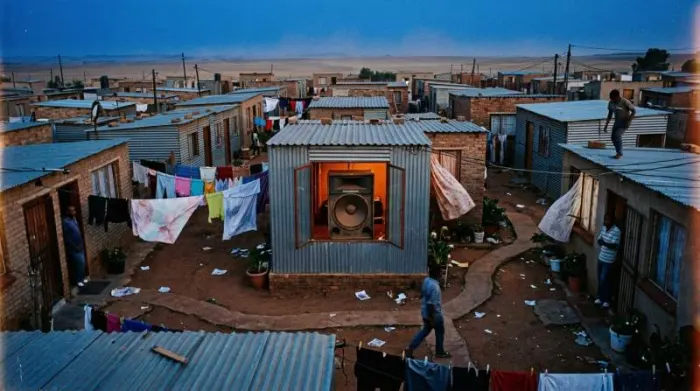
Yvonne Chaka Chaka burst onto the scene in 1985 at age 19 with 'I'm in Love with a DJ', and her energy defined the era. She was bubblegum's pop princess, but her music, too, carried a weight that the funky bassline couldn't hide. The best of that era always did. It's why these songs don't feel dated in a bad way; they feel like time capsules of a specific, hard-won joy.
Here's what made that 80s sound so special, and what makes the new revival so smart:
- The TR-808's boom wasn't just a drum sound; it was the heartbeat of a generation that couldn't dance openly in the streets, so they danced in the living rooms.
- The call-and-response vocals were a direct line to traditional music, a way of keeping the conversation going between the singer and the crowd, even when the state tried to silence the crowd.
- The slowed-down funk tempo wasn't a mistake; it was a deliberate choice that gave the songs a hypnotic, almost trance-like quality, perfect for a long night of resistance.
This is not about recreating some perfect past. It's about recognizing that the tools of the 80s-the analog synths, the drum machines, the raw vocal takes-still have stories to tell. In an era where everyone is worried about AI replicating a singer's voice, Msaki and Jesse Clegg are making a radical counter-offer. They're saying the human voice, with all its imperfections, and the human hand on the filter knob, is still the most powerful technology we have.
They're not using AI because they don't need to. The original spark of creativity that fueled Brenda Fassie and Sipho Mabuse didn't come from a plugin; it came from a desperate need to say something, to feel something, to move something.
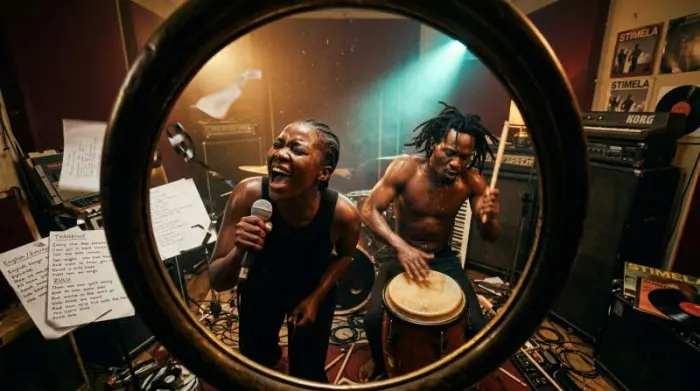
That need hasn't gone away. It's just got a new beat, and it's playing at 33 1/3 RPM, not 78. The past isn't a foreign country anymore; it's a direct line to the future of South African pop.
Understanding South African Bubblegum Pop: Its Roots and Significance
The term 'bubblegum' was actually coined by local radio DJs in the early 80s to describe the sweet, sticky sound of township pop, but the genre's roots go deeper: it borrowed heavily from the mbaqanga guitar style popularized by groups like The Mahotella Queens in the 1960s, and its upbeat tempo was a deliberate counterpoint to the heavy, sorrowful jazz of the apartheid era.