
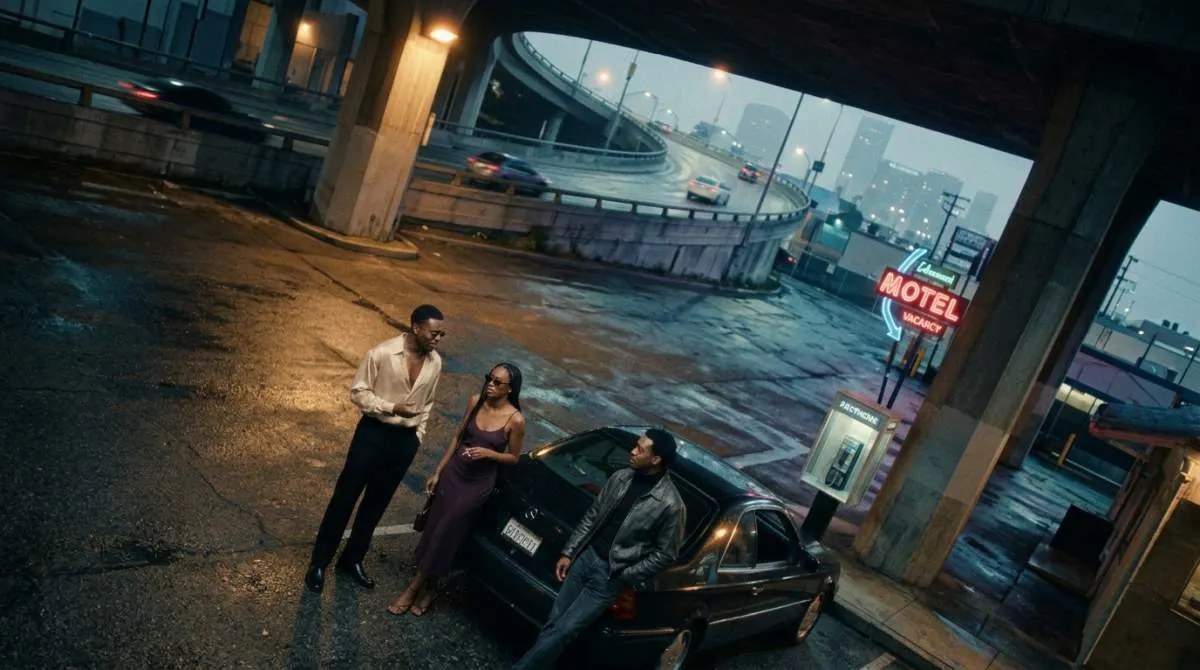
Quick Facts
- The Era:1993, when R&B replaced grunge as cool.
- The Illusion:Effortless cool that required choreographed practice.
- The Reality:Satin shirts and tiny glasses were a social firewall.
- Modern Echo:The look revived in 2010s streetwear and 2024 style.
How a Shimmer and a Squint Rewrote Cool for the 90s
Some trends arrive with fanfare. This one slipped in through a side door, riding on car stereos and basement speakers, on mix tapes made for someone special.
The year was 1993, and the radio had just given way to a new kind of slow burn.
The satin shirt caught the light like a slow beat catches breath. Worn loose and never flashy, it shimmered when one shifted. That shimmer was the whole point.
The fabric was a deliberate choice, a rejection of the flannel grunge that had dominated the early 90s. It said, "I am not here to be comfortable. I am here to be seen."
The tiny sunglasses hid nothing, yet they said everything about not trying too hard. They were a dare, worn indoors and after dark. They bet that being noticed required no asking.
The frames were often wire-rimmed, a direct callback to the jazz-era cool of Miles Davis, but stripped of all pretense. They were a challenge: "Try to read me."
This was the uniform of late-night living rooms. The furniture was secondhand, but the posture was first-class. People leaned on doorframes, spoke low, and let the music fill the gaps where the flirting happened.
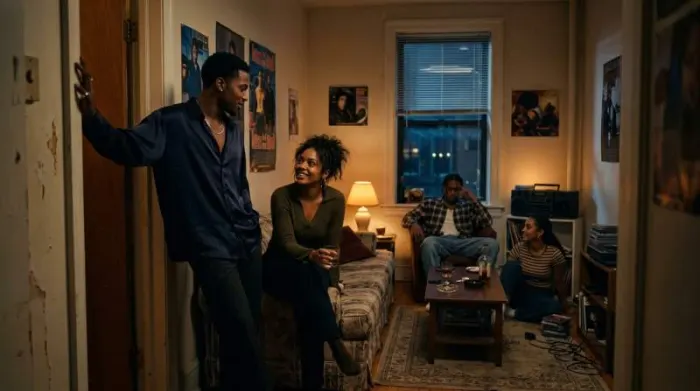
The bassline did the talking, and the satin did the rest. In that light, everyone was a little bit smoother than real life.
The Secret Was a Social Firewall, Not Just a Shirt
Tiny Glasses Blocked the Eyes So the Voice Had to Lead
The tiny sunglasses created a safe distance. They blocked the world from reading the wearer's eyes, forcing conversation to lead with voice instead. That shift changed how every interaction unfolded.
In a crowded club, the glasses were a shield. They made the wearer unreadable, forcing the other person to lean in and listen harder. The voice became the primary instrument of seduction, and the satin shirt was the stage lighting.
The Satin Shirt Worked Like a Stage Light
It caught every glare in the room. It demanded attention, but gave nothing back. The shirt did the heavy lifting, so one just had to stand still and look cool.
The fabric was a gamble, though. One wrinkle, one sweat stain, and the illusion shattered. It was a high-risk move that paid off only if one owned the room.
The Aloofness Cost More Than It Seemed
That aloofness was a performance. It required just as much effort as the shimmer. The real secret was working hard to look effortless.
The posture had to be exact, the lean had to be just right, and the gaze had to be half-lidded, never direct. This was not natural. It was choreographed cool, perfected in front of bedroom mirrors and practiced at house parties until it felt like second nature.
The tiny sunglasses were the final touch, the punctuation on a sentence that read, "I am in control."
What the Uniform Left Behind in Closets and Culture
This look changed how men dressed for nights out. It killed the idea that visibility had to mean invisibility. It gave permission to be flashy, but it also created a rigid box of what "cool" looked like.
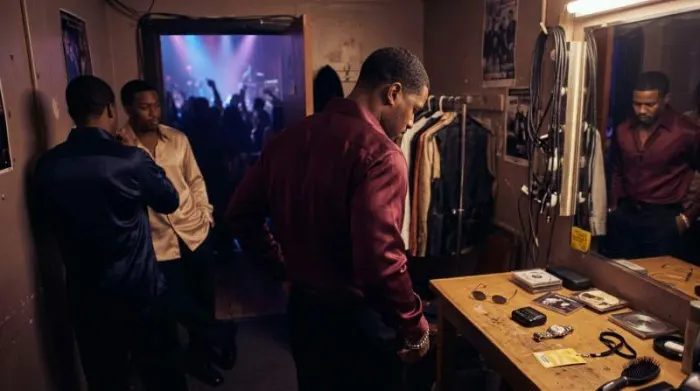
By the late 90s, the satin shirt had become a staple in the wardrobe of every R&B crooner, from R. Kelly to Ginuwine. It was a uniform for the slow jam, a visual promise of the music to come.
The real aftershock hit when hip-hop stepped into designer threads. The satin shirt didn't die. It traded the R&B crooner for the rap mogul.
In 1998, Sean Combs wore a silk shirt to the MTV Video Music Awards, and the look was reborn. The shimmer was no longer just for love songs; it was for power moves.
Then it got strange. The same guys who mocked the look in high school started wearing velvet blazers. The tiny sunglasses resurfaced on art-school kids.
The style became a reference point for a generation that never lived it, a nostalgic shorthand for "smooth."
Artists and Brands That Kept the 90s R&B Style Alive
- Neo-soul artists like Erykah Badu and D'Angelo kept the velvet and gold chains alive in the late 90s.
- Magazine shoots in the early 2000s, particularly in Vibe and The Source, recreated the shirtless and low-rise jeans look.
- Streetwear brands like Supreme and Stüssy started reissuing silk button-ups in the 2010s.
- Countless closets still hold a shirt from this era. It still fits, and its wearer still knows how to wear it.
That's the real legacy. It wasn't just a fashion moment. It was a manual for carrying oneself.
The uniform taught a generation that style was not about the clothes. It was about the attitude worn with them.
Why That Satin Shirt Feels New Again in 2024
The revival isn't about copying outfits from old music videos. It's about borrowing that smooth confidence and wearing it lightly, without apology. Today, one sees it in how people carry themselves: slow, sure, and a little amused by the attention they attract.
The difference is that in 2024, the uniform is more democratic. It's not just for the crooner or the mogul. It's for anyone who wants to step into the light.
Social media calls it "quiet luxury" with a wink. But the energy is the same glide that made Usher look effortless across a stage in 1997. The shirt is just a prop for that attitude.
Modern stylists pair satin with denim or leather to ground the shine. They keep the sunglasses tiny but switch to modern frames, like the Persol 649 or a vintage-inspired wireframe. The result feels current, not like a costume from a themed party.
And the music is back too. Streaming playlists like "90s R&B Slow Jams" have over a million followers. That's the real revival: the attitude, not the fabric, and it works in any decade.
The uniform is a tool, but the confidence is the real prize. And that, unlike the satin, never goes out of style.
Origins of 90s R&B Style
The satin shirt's popularity in 90s R&B traces back to 1970s disco and funk artists like Earth, Wind & Fire, who used the fabric to catch stage lights. Tiny sunglasses were a direct nod to jazz legend Miles Davis, who wore wire-rimmed shades in the 1950s to create an air of mystery on stage.