
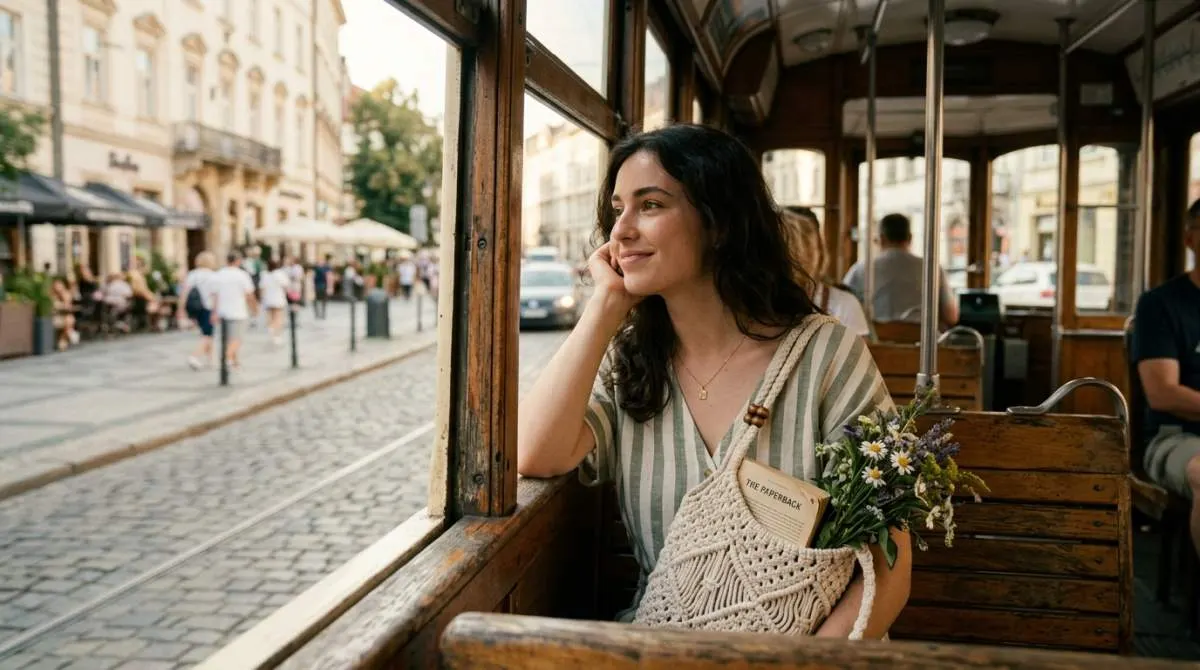
You're at a flea market on a Sunday morning, the air smelling of dust and old paper. A woman ahead of you picks up a bag-cream cotton cord, wooden beads, a fringe that sways like dry grass. She turns it over, checks the knots, and smiles. That's the moment: a 1970s macramé handbag, made by someone's hands decades ago, suddenly feels more relevant than anything in a fast-fashion window.
By 1975, macramé was everywhere. Not just on the beach or in craft fairs, but slung over shoulders at protests, at markets, at dinner parties where the conversation turned to self-sufficiency.
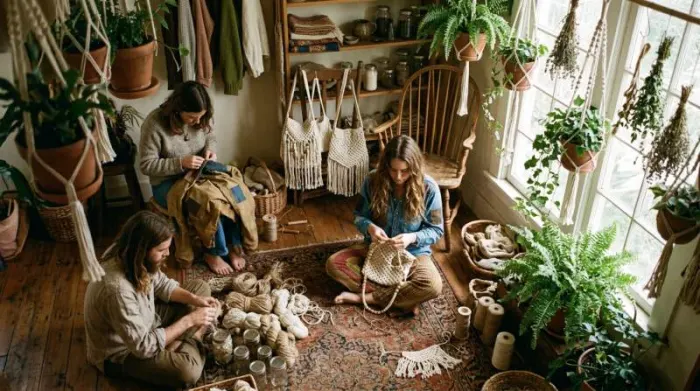
The bags were typically made of jute, hemp, and cotton cords, with wooden beads and rope fringe. But here's the thing that gets me: they weren't manufactured in some far-off factory. They were made in bedrooms, kitchens, and backyard workshops, one knot at a time.
That handmade quality is exactly why they've circled back. In a world of mass-produced everything, a bag that took hours of square knots and spiral stitches feels like a quiet rebellion. And the revival isn't just nostalgia-it's a statement about what we value now.
The Knot That Tied a Decade Together
Macramé itself didn't start in the 1970s-it goes back to 13th-century Arab weavers who used knots for fringe on camels and horses. But the handbag became something else entirely in the 70s. It wasn't just an accessory; it was a symbol of DIY rebellion and sustainability, a way to say no to plastic and yes to something you made with your own two hands.
Think about the era's broader cultural shift: women were cutting their hair into sharp bobs, and the impact of flapper culture on hairstyles had faded into the background. But the spirit of independence lingered. The macramé bag wasn't about following rules; it was about making your own. And it paired perfectly with the women's liberation 1920s fashion hats that had once signaled freedom-now the bag did the talking.
By 1975, you couldn't walk down a street without seeing one. They hung from shoulders at music festivals, at flea markets, at the kind of gatherings where people talked about going back to the land. The bags were practical, yes-but they were also a canvas.
Some had wooden beads threaded through the cords; others added shells or feathers. Every one was a little different, because every pair of hands worked a little differently.
Why They Vanished (and What Took Their Place)
Then, almost overnight, it was over. By 1981, the macramé handbag had disappeared from the cultural radar, replaced by synthetic fabrics and the sleek, shoulder-padded silhouettes of the 80s. The snap bracelet controversy and other 80s urban legends were still to come, but the shift was already clear: the 70s were out, and anything handmade felt passé.
For a while, vintage macramé bags sat in thrift stores, unloved and dusty. But then something shifted in the late 2010s. Millennials, raised on the internet and tired of fast fashion, started digging through their parents' attics. They found those old bags, with their rope fringe and wooden beads, and saw something precious: a piece of the past that didn't require a charger.
The revival wasn't just about nostalgia-it was about values. The anti-privacy trend of the social media age made people crave things that were personal, handmade, offline. A macramé bag wasn't something you could scroll past; it demanded you stop and look. And so, the knots came back.
Plot Twist
- The story you've heard-that macramé handbags were mass-produced in factories during the 1970s-is completely wrong.
- In truth, nearly all of them were handmade by individuals in homes, not manufactured industrially. One article puts it plainly: 'These weren't mass-produced at factories. They were made in bedrooms, kitchens, and backyard workshops.'
That handmade origin is what makes them so special today. When you hold a vintage macramé bag, you're not just holding a fashion item; you're holding a piece of someone's time. The uneven stitches, the slight give in the knots, the way the fringe has softened with age-all of it tells a story. And in a world that's all about speed, that slowness feels radical.
From Vintage to 2026: Styling the Comeback
So, how do you wear a macramé handbag in 2026 without looking like you're in a 70s-themed party? The answer is all about contrast. The modern aesthetic is pared-back and minimalist, using neutral cotton cords in cream, white, pale grey, or soft pastels. You're not going for the chunky jute of the 70s; you're going for something lighter, more refined.
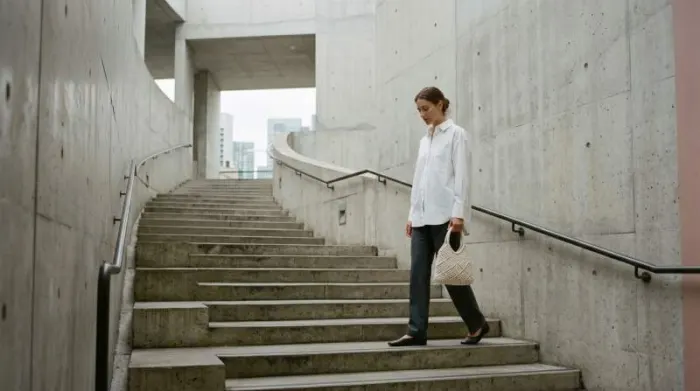
Pair a vintage or modern macramé tote with a simple linen dress, or throw one over your shoulder with jeans and a white blouse. The key is to let the handcrafted texture stand out against streamlined clothing-no competing patterns, just the bag doing its thing. For an edgier vibe, mix it with leather or denim; the softness of the knots against tough textures is a match made in heaven.
- Original 1970s macramé handbags in good condition typically sell for $80-$150 on Etsy, often tagged as 'vintage macramé handbag handmade tote.'
- Very collectible or artist-signed pieces can fetch several hundred dollars, and some rare macramé items on high-end sites like 1stDibs may be priced in the thousands.
- Modern 'styled' repros sometimes cost even more than originals, up to triple the price.
The 1950s Lucite bags and 1940s fashion had their own moments, but macramé offers something different: a connection to the maker. It's not about 1950s glove etiquette or the white glove rule-those were about formality and polish. Macramé is about imperfection, about the human touch. And that's why it's here to stay.
Today, you'll find macramé bags at boutique craft fairs, on Etsy, even in high-street stores that have caught on to the trend. But the real gems are the originals-the ones with the wooden beads and the slightly uneven stitches.
They're not just accessories; they're time machines. And the best part? You don't need a time machine to wear one.
So the next time you see a macramé bag, don't just walk past. Pick it up. Feel the weight of the knots, the smoothness of the wood, the way the fringe moves.
You're holding a piece of the 1970s, but you're also holding something that feels incredibly now. That's the magic of a good comeback.
How did macramé become popular in the 1970s
Macramé's 1970s boom was fueled by a 1969 book called 'Macramé: Creative Design in Knotting' that turned a niche craft into a household hobby. It also got a boost from the back-to-the-land movement, which celebrated self-sufficiency and handmade goods over factory-made ones. By 1972, craft stores couldn't keep cotton cord in stock.