
Quick Facts
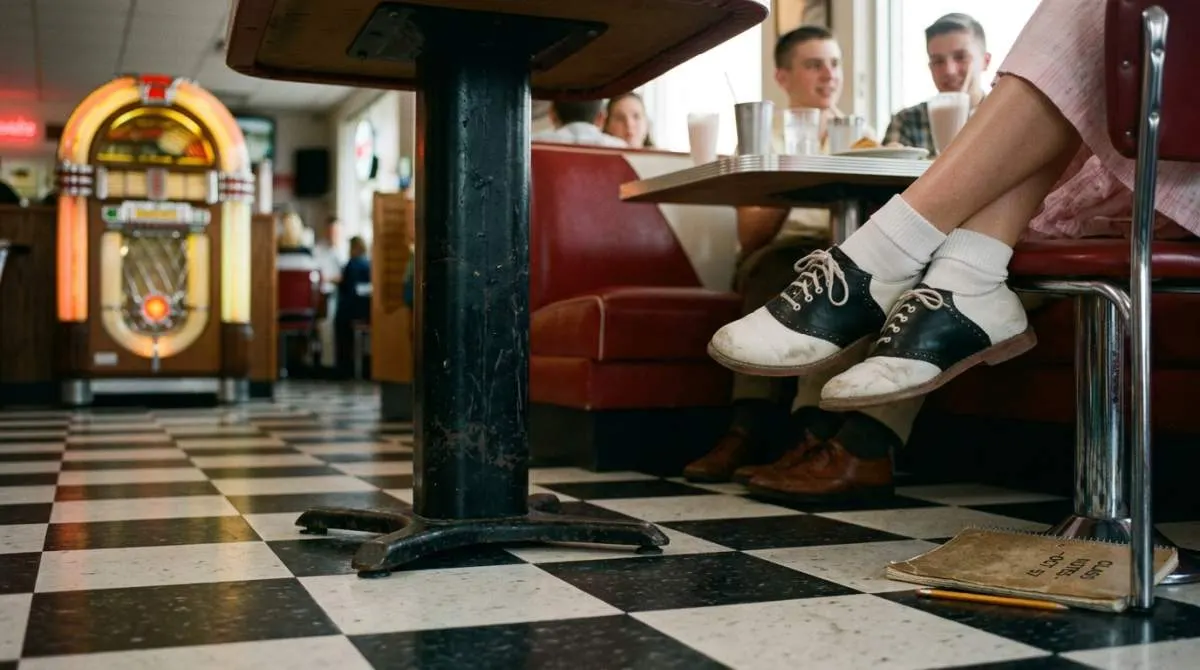
- The Era:1950s teen uniform for soda fountains and sock hops.
- The Illusion:A simple dress shoe hiding a dance shoe's purpose.
- The Reality:The saddle panel locked the heel and provided arch support.
- Modern Echo:1970s punks wore them with ripped fishnets to rebel.
The Vibe That Defined a Generation: Saddle Shoes as the 1950s Teen
Uniform
The sound of a saddle shoe was iconic. A sharp click on linoleum cut through the chatter at the soda fountain and sock hop. It meant belonging to the after-school crowd.
The first pair felt like a rite of passage. The leather was stiff, the white panel bright. Scuffing them on purpose made one look like a veteran.
Adults wore gloves and heels, proper and pressed. The saddle shoe signaled a new energy. It was casual, a little loud, and a clear rejection of formality.
The vibe was specific. It was about belonging without trying too hard. It was about looking effortlessly put-together and ready for anything. The two-tone design was bold but clean. It made the foot look sharp and signaled youthful energy. The white leather required constant cleaning. That effort was a badge of honor. It showed the wearer cared about the scene.
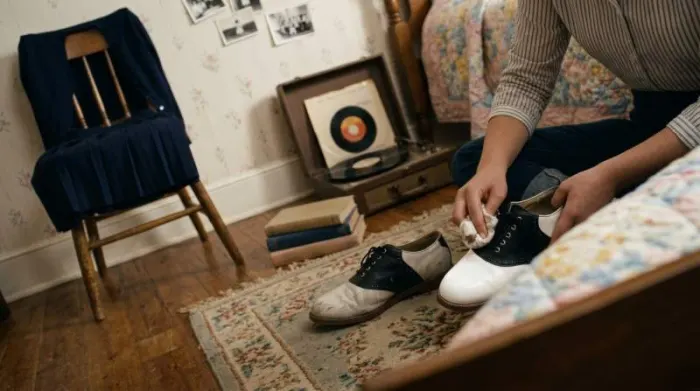
The saddle shoe was built for the dance floor. The jitterbug demanded a shoe that could slide and pivot without slipping. The leather sole, often with a slight heel, gave just enough traction.
At the local sock hop, the floor was waxed, and the competition was fierce. A pair of well-worn saddle shoes was a badge of a seasoned dancer. The white panel caught the light during spins, and the black saddle held the foot steady during the twist.
It was no accident that the shoe became synonymous with the music of the era. It was a partner in the rhythm.
The clean white panel was a sign of a well-kept teen. It said one had time to care for appearance, that one was part of the middle-class ideal. But scuffing them on purpose was rebellion in itself, a way to show one was not a novice.
The Secret Design Trick That Made Saddle Shoes Work
The secret wasn't the two-tone color. It was the saddle itself. That extra panel of leather cinched the instep tight.
It created a bridge across the vamp. This locked the heel in place. It gave arch support for hours of jitterbugging.
The dance floor was a serious place. Shoes had to be anchors. The saddle was a structural brace.
Then there was the material contrast. The upper was white buckskin or canvas. The saddle was smooth black leather. This double layer reinforced the shoe. It also created a natural dirt shield. The saddle stayed sharp with zero effort.
The Pan Am stewardess uniform had similar crisp authority. The saddle shoe was the teen equivalent. It was durable, unmistakable, and brilliantly disguised as a simple shoe.
That's the real secret. It was a dance shoe disguised as a dress shoe. It was a dirty shoe that looked clean.
The saddle shoe actually predates the 1950s by several decades. It was first introduced in the early 1900s as a men's sporting shoe, often in all white or with a subtle saddle. But it wasn't until the 1930s that the two-tone version became a staple of prep school fashion.
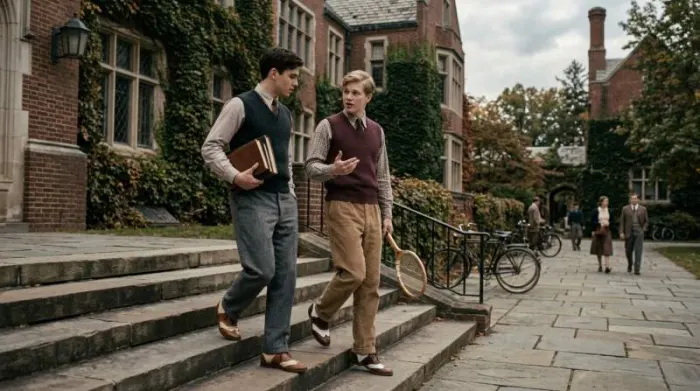
By the 1950s, it had been adopted by youth culture, and the design was refined. The saddle was cut higher to provide more arch support, and the leather was treated to resist scuffs. This evolution was a response to the energetic dance moves of the era.
The white buckskin upper required a special kind of care. White shoe polish or a chalk-based cleaner worked best. The black saddle, made of smooth leather, only needed a quick wipe.
The contrast in maintenance mirrored the contrast in style. The shoe was a daily commitment.
The Quiet Legacy of the Saddle Shoe: From Punk to Pop Culture
Everyone copied the look. But the coolest people reacted against it. The bobby-soxers wore them with poodle skirts and prom dress styling.
The greasers mocked the clean white leather.
Yet both camps respected the shoe's honest function. It was practical for dancing. The saddle shoe was neutral ground.
Then it got stranger. The punk scene of the late 1970s dug them out of thrift bins. They wore saddle shoes with ripped fishnets and leather jackets.
That was a pure act of rebellion. The wholesome teen uniform was made to look dangerous. The punk appropriation was a deliberate act of subversion. By pairing the innocent shoe with ripped fishnets and a leather jacket, punks challenged the wholesome image. It was a visual pun: the uniform of the conformist turned into a symbol of anarchy.
Film and Television's Lasting Hold
Film and television kept the shoe alive without much fanfare. Character actors slipped them on to signal retro innocence. The real keeper was the music video era.
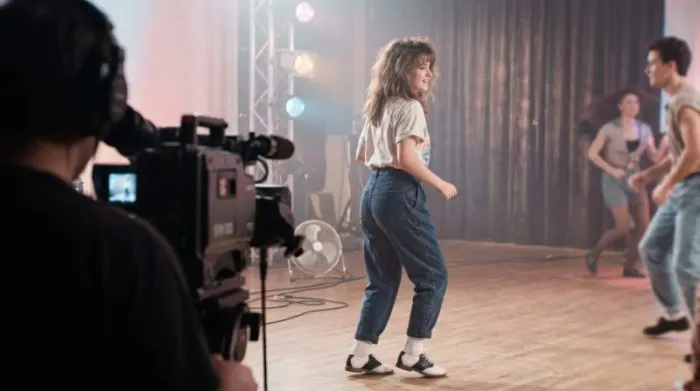
Pop stars needed a visual shorthand for rockabilly cool. The saddle shoe was the fastest shortcut. It said 1950s without needing a single lyric about a diner.
- Dancers on American Bandstand wore them into the 1960s.
- Punk revival bands in the 1980s made them a stage staple.
- Costume designers used them to ground a 1950s flashback instantly.
- Thrift store racks became the real archive for the shoe's survival.
- The 1960s mod scene reinterpreted the saddle shoe with bold colors and patent leather.
- The 1990s swing revival, led by bands like the Brian Setzer Orchestra, brought the shoe back to the dance floor.
- The 2000s indie rockers wore them with skinny jeans, a nod to the thrift store aesthetic.
The street culture never dropped them completely. A shoe this simple cannot go extinct. It just waits in the background until someone remembers how good it looks with a cuffed jean.
Costume designers love the saddle shoe because it instantly telegraphs a specific time and place. In the 2012 film 'The Master', the shoe grounded the 1950s setting. In the TV series 'The Marvelous Mrs. Maisel', the saddle shoe appears as a subtle period detail.
Why the Modern Revival of the Saddle Shoe Feels Fresh
The key is mixing high and low, not wearing a full retro costume. Pair them with slim black jeans or a simple slip dress. The contrast is essential. Let the shoes be the focal point. Keep the rest of the outfit minimal. The leather still feels sturdy and substantial.

It grounds an outfit. It adds a touch of history. It's a wink to the past, not a nod to a costume shop.
The Uniform, Deconstructed
The 1950s uniform was strict. The modern version has no rules. Wear them with socks or without. Ankle socks are a good compromise. A woman in the subway last week wore them with a power suit. It was a bold, unexpected choice.
That is the modern echo. It's not about reviving the past. It's about borrowing its energy. The saddle shoe is a statement piece. It says the wearer knows history but is not stuck in it. That is a very fresh attitude.
In an era of fast fashion, the saddle shoe is a slow-fashion icon. A vintage pair, often found in thrift stores, can last decades. The leather construction and replaceable soles make it a statement against disposable culture.
Recently, the saddle shoe has been spotted on style icons like Alexa Chung and Harry Styles, who pair them with modern tailoring. The contrast is striking: the shoe's vintage silhouette against a contemporary suit. It's a look that says "I know my fashion history, but I'm not playing dress-up."
In a world of chunky sneakers, the saddle shoe remains a sleek alternative.
The History of Saddle Shoes
The saddle shoe's roots go back to the 1920s, when it was a popular golf shoe for men. The two-tone design wasn't just for looks: it helped hide grass stains on the course. By the 1940s, it had crossed over to women's casual wear, thanks in part to college girls who loved its sporty yet feminine vibe.