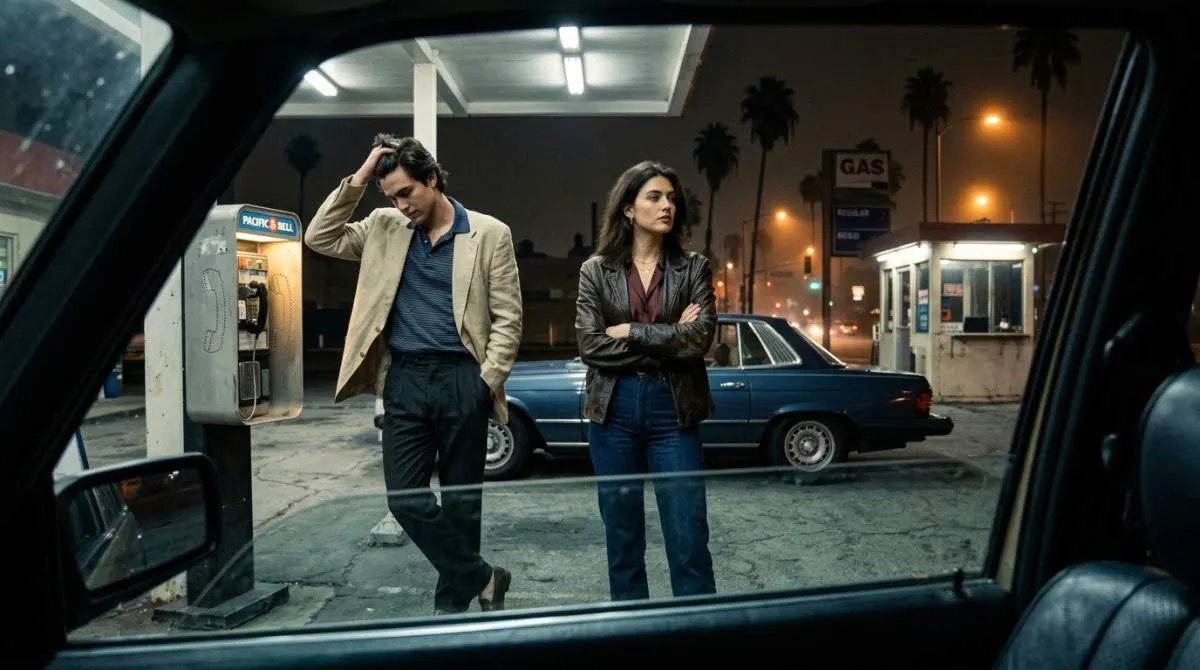
The Shards dropped in 2025 and immediately made one thing clear: Bret Easton Ellis's Los Angeles isn't just a setting-it's a wardrobe. The show follows wealthy high school seniors at a prep school in the fall of 1981, and from the first scene, the camera lingers on what they're wearing. That's not an accident. Ellis's own prose describes outfits the moment a character walks in, and costume designers Lou Eyrich and Joshua Marsh took that as a cue to build a world where every silk blouse and drape suit tells you something about power, money, and taste.
The Last Gasp of the Seventies
If you think of early-80s fashion as the neon explosion of MTV, The Shards will reset your brain. The show's palette is what the designers call "late '70s, transitional, mauve-y, gray-bluish." It's the last breath of the 1970s-soft, earthy, slightly moody. Think faded denim, dusty rose, slate blue, and beige that's almost brown. That's not a coincidence.
The single biggest cinematic reference for the costumes was Paul Schrader's American Gigolo(1980). Giorgio Armani's costumes for that film-those relaxed, neutral-toned suits with soft shoulders-became the blueprint. Eyrich and Marsh say they "bow down to Armani," and you can feel it in every tailored jacket and pleated trouser. The mood boards also pulled from Calvin Klein's Brooke Shields ads, giving the whole thing a clean, aspirational, West Coast gloss.
This transitional aesthetic wasn't just a designer whim; it mirrored a broader cultural shift. The late 1970s had seen the rise of disco's synthetic shine, but by 1980, a reaction was brewing. The recession of the early 1980s pushed fashion toward understated luxury-clothes that signaled wealth through fabric and cut rather than logos or flash.
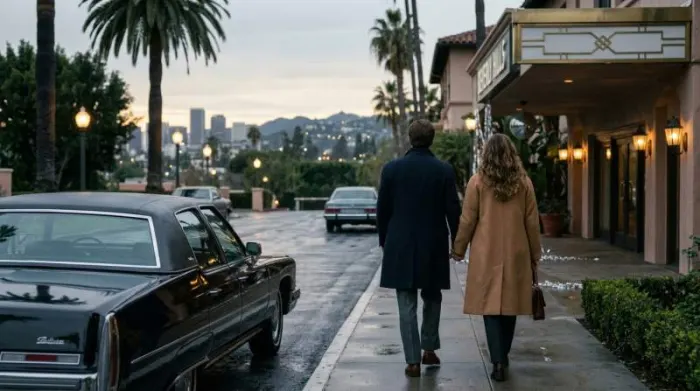
Armani's unstructured jackets, which famously "deconstructed" the traditional men's suit, were a direct response to the stiff, formal looks of the previous decade. In Los Angeles, where the show is set, this relaxed elegance was especially potent, blending with the city's casual, sun-soaked vibe. The result was a moment when fashion felt both aspirational and attainable-a precursor to the "stealth wealth" trend that would dominate runways decades later.
1981: The Year of Quiet Luxury
In 1981, "loud" wasn't the point. The Shards characters wear clothes that whisper.
Bret (Igby Rigney) carries a Gucci folio and wears neutral-toned drape suits with coiffed hair-a look that's now seeing a revival on runways. Susan (Kaia Gerber) leans into romantic blouses and denim inspired by Ralph Lauren and Calvin Klein. In one scene at Hamburger Hamlet, her blouse came from the vintage store Another Man's Treasure in Pasadena-a real piece from 1978-81.
The female characters Susan and Debbie have "big hair, bigger shoulders," but the proportions are still grounded. No linebacker padding yet.
Debbie (Hayes Warner) channels Debbie Harry in satin jumpsuits and leather. The overall effect is what the designers aimed for: "create this elevated, really cool, sophisticated world" faithful to 1981. And they pulled it off by culling specifically from 1978 to 1981-true vintage pieces, not costume approximations.
This focus on authenticity extended to every detail, from the jewelry to the shoes. Eyrich and Marsh scoured flea markets and estate sales, hunting for pieces that had the right patina-slightly worn, slightly lived-in.
They even avoided any fabric that felt too new or shiny, preferring natural fibers like silk, wool, and cotton that would drape elegantly. The result is a world that feels both specific and timeless, a snapshot of a moment when fashion was about personal expression rather than mass trends. It's no wonder that fashion editors have already dubbed this the "Shards look," and stylists are predicting a surge in demand for vintage pieces from that exact era.
When Shoulders Got Bigger
By 1985, the soft drape was dead. Power dressing arrived with a vengeance: exaggerated shoulders, bright colors, metallic fabrics.
The Shards deliberately stops right before that shift. It's set in a moment when a silk pajama set still felt louche, not corporate. You can see the tension in the show's locations-the Sherman Oaks Galleria, a mall that opened in 1980 and was a regular haunt of Ellis himself, feels like the last place where teenagers could still look effortlessly cool before mall fashion went mass.
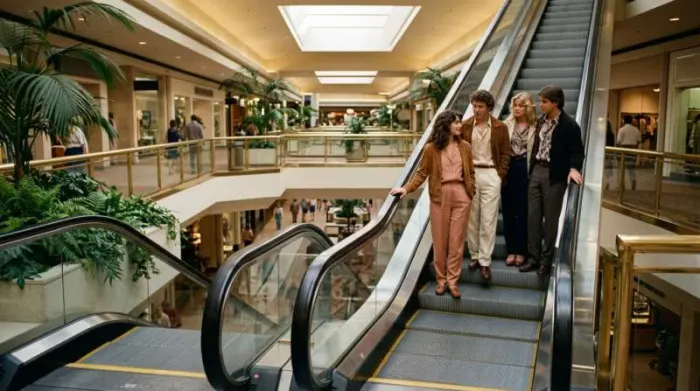
That's why this revival matters. It's not nostalgia for the whole decade-it's nostalgia for a specific window, a six-month season when Armani's relaxed tailoring and Calvin Klein's minimalism hadn't yet been swallowed by the excess of the late 80s. The clothes in The Shards feel like they could walk into a 2026 boutique and not look out of place. That's the power of quiet luxury.
Interestingly, this period also marked a shift in how fashion was consumed. The early 1980s saw the rise of the "designer jeans" phenomenon, with brands like Calvin Klein and Gloria Vanderbilt turning denim into a status symbol. But in The Shards, the denim is understated-faded, high-waisted, and worn with silk blouses rather than logo tees.
It's a subtle rebellion against the excess that was just around the corner, a last stand for understated cool. The show's costume team has said they were inspired by the way Ellis's characters use clothing as a form of armor, a way to project confidence while hiding vulnerability. That duality is what makes the fashion in The Shards so compelling-it's not just about looking good, but about the stories the clothes tell.
2026: The Shards Effect
So how do you steal the look? Start with the palette: mauve, gray-blue, beige, black. Skip the neon entirely.
Plot Twist: The 80s Revival Isn't What You Think
- Everyone assumes the 2026 80s revival is all about Day-Glo windbreakers and shoulder pads the size of dinner plates.
- The truth is, The Shards revival focuses on the transitional period circa 1981-the last gasp of the 1970s, where elegance and neutral tones ruled before the neon takeover.
Look for vintage pieces from 1978 to 1981-satin jumpsuits, silk blouses, unconstructed blazers. The men's drape suits are coming back on runways, and you can find them in vintage stores or from brands doing soft-shouldered tailoring. For women, think romantic blouses with denim, or a leather jacket over a silk camisole. The key is proportion: big hair, yes, but not bigger than your silhouette.
- Neutral-toned drape suit (Armani-inspired, unstructured shoulders)
- Silk blouse in dusty rose or cream (vintage or new, with a soft collar)
- Satin jumpsuit or silk pajama set (for that louche after-hours vibe)
- Gucci folio or a leather briefcase (slim, not bulky)
- Denim jacket or high-waist jeans (faded, not distressed)
The Shards proves that the most influential fashion moments aren't always the loudest. Sometimes they're the ones that slip into your closet and never leave. If you're shopping for 2026 trends, skip the neon and go straight for that transitional 1981 palette. You'll look like you just walked out of a Bret Easton Ellis novel-and that's exactly the point.
Beyond the screen, this revival has sparked a broader cultural conversation about nostalgia and authenticity. In an era of fast fashion and disposable trends, the appeal of The Shards lies in its commitment to quality and timelessness.
It's a reminder that style isn't about following the latest fad, but about curating a wardrobe that reflects your identity. As Eyrich and Marsh have noted, the goal was never to recreate the 1980s, but to capture a feeling-a sense of possibility and rebellion that still resonates today. And that's why, even as the show fades from the headlines, its influence on fashion will endure.
What song defined the early 80s fashion scene in Los Angeles?
Blondie's 'Rapture' was the unofficial anthem, with its funky bassline and Debbie Harry's bold, layered look mirroring the era's mix of thrift store finds and high-wattage glam. The song's music video even featured early hip-hop dancers, which perfectly captured the street-meets-studio energy that inspired the film's wardrobe. So if you want to time-travel, just put on that track and imagine the sun-bleached streets and shoulder pads.