The Dinner Party Destroyer: When Scent Became a Scandal

Okay, let's get real. You think your artisanal, vegan, gluten-free, sustainable moisturizer is cutting edge? Cute. Darling, we've seen actual revolutions. Not in a lab-tested serum, but in a bottle of pure, unadulterated olfactory chaos. Forget clean beauty for a second.

We're talking about a time when a single spritz of perfume could get you blacklisted from the chicest restaurants, spark actual public debates, and make half the population swoon while the other half wanted to call the police.

Yeah, I’m looking at you, Dior’s "Poison". Before you could whisper 'microbiome,' before you knew the difference between a toner and an essence, before celebrity skincare 1950s felt quaint compared to today's multi-step regimens, there was the 1980s.

A decade of excess, shoulder pads, power suits, and fragrances that didn't just walk into a room – they kicked down the damn door and demanded attention. And nothing, I mean nothing, embodied that audacious spirit quite like "Poison."

It wasn't just a scent; it was a weapon. A declaration. A deeply divisive statement bottled in a dark, mysterious orb. When "Poison" hit the market in 1985, it didn't just sell; it exploded. Women adored it for its intoxicating blend of tuberose, berries, and incense – a heady, unapologetic siren call that clung to everything and everyone. It was bold, it was sexy, it was everywhere.

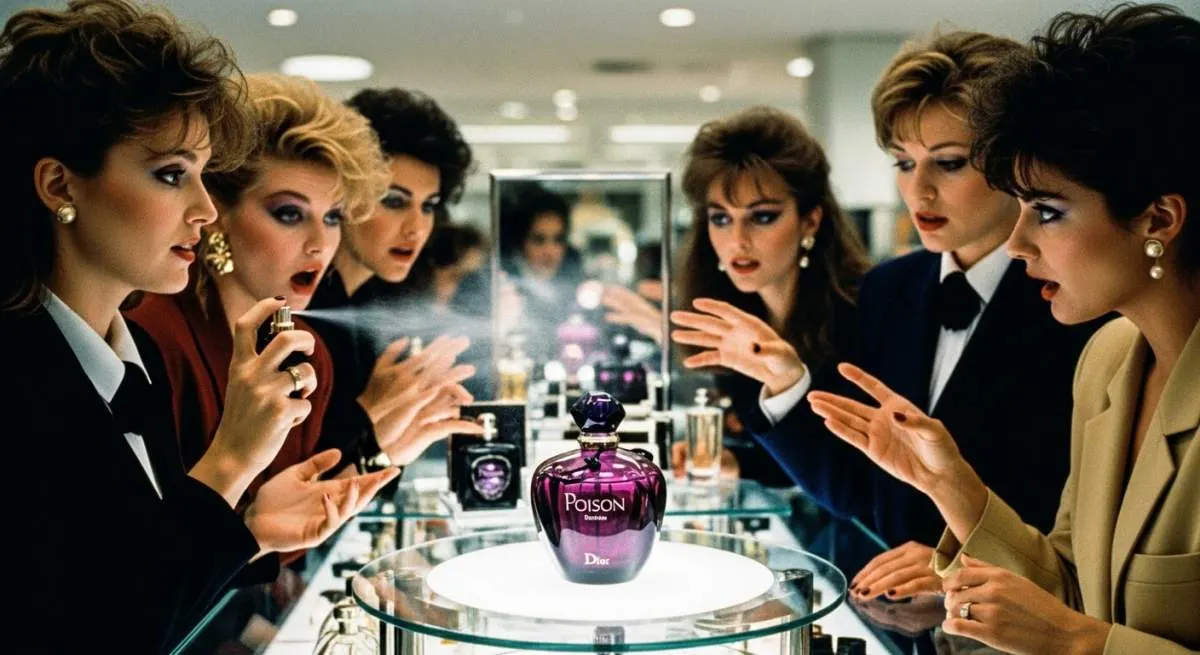
And that was precisely the problem. Suddenly, you couldn't eat a quiet meal at La Grenouille without being assaulted by a cloud of purple haze. Movie theaters became gas chambers. Even polite society started whispering – then outright complaining – about "the woman wearing that Dior stuff."

Restaurants, driven to their wits' end by diners choking on their escargot, actually started putting up signs: "No Smoking, No Poison." Can you imagine? Your chosen perfume, the one meant to make you feel utterly irresistible, making you an unwelcome pariah. It was a scandal, pure and potent, and it changed the conversation around fragrance forever.

We're going to dive into this fragrant fiasco, peeling back the layers of societal norms, marketing genius, and sheer olfactory audacity that made "Poison" the most loved, most hated, and undoubtedly most talked-about scent of its era. Get ready, because history smells... well, it smells like controversy.

The Venomous Bloom: How Dior's Poison Injected Itself into the '80s Psyche

Let's cut to the chase: before "clean girl aesthetic" became a thing, before subtlety was even a whisper in the fragrance world, there was Poison. And it was anything but clean. Or subtle. In 1985, when Christian Dior dropped Poison on an unsuspecting public, it wasn't just a perfume; it was an olfactory hand grenade, detonated right in the middle of a rather polite perfume party. It single-handedly reset the entire conversation around what a woman's scent could – or should – be.

Historical Insight: If you love this vibe, you'll also find VICTORY ROLL HAIRSTYLE: WWII ORIGINS & ENDURING GLAMOUR to be a fascinating read.

Before the Venom: The Pre-Poison Landscape

To understand Poison, you have to remember what perfumes were like before it hit. The early '80s were still clinging to the tail end of softer, more polite fragrances. Think ladylike florals, gentle chypres, a certain understated elegance. There were powerhouses, sure, but they often had a polished veneer. Opium by YSL was bold, yes, but it was exotic, a luxurious whisper of the East. Estée Lauder's Youth Dew was rich, but it had a comforting, classic feel. Then came Poison, and it made those scents look like they were still in charm school.

980s Perfume Counter Pre Poison Elegance

While Bob Geldof was busy orchestrating, uniting the world with music, Dior was busy preparing its own seismic cultural event. The mid-eighties were a time of excess, of big hair, bigger shoulders, and even bigger ambitions. Women were climbing corporate ladders in power suits, demanding to be seen and heard. The air was thick with a new kind of confidence, and frankly, those dainty perfumes weren't cutting it anymore. They didn't scream "I'm here, I'm powerful, and I mean business."

The Genesis of a Scented Scandal

Maurice Roger, then CEO of Parfums Christian Dior, wanted something utterly new, something that defied the rules. He tasked perfumer Edouard Fléchier with creating a fragrance that was "too strong," "too shocking." And boy, did Fléchier deliver. The brief was essentially to create a scent that pushed boundaries, that was memorable to the point of being controversial. They wanted a name that was equally provocative. "Poison" wasn't just edgy; it was brilliant marketing. It was a dare. Wear me if you're brave enough.

Poison wasn't some accidental success. It was a meticulously planned assault on the senses, designed to disrupt. Dior wasn't just launching a fragrance; they were launching a statement. They knew it would turn heads, polarize opinions, and frankly, sell like hotcakes to anyone who wanted to project that undeniable, almost confrontational confidence that defined the era.

The Olfactory Overload: What Made it So Potent?

So, what was in this infamous concoction? Poison was, and still is, a masterclass in maximalism. It’s an intoxicating oriental-floral with an almost gothic edge. The star of the show? Tuberose, but not the shy, retiring kind. This tuberose was amplified, almost radioactive, paired with a hefty dose of spices – think coriander, caraway, cinnamon – and then deepened with honey, amber, and a rich plum note. It was dense, dark, and utterly unapologetic.

It wasn't just a perfume you wore; it announced your presence five minutes before you even entered the room and lingered long after you'd left. This was a scent for the woman who wasn't afraid to take up space, to own the room, to leave an indelible mark. It was the olfactory equivalent of an '80s power ballad: loud, dramatic, and impossible to ignore. For a certain kind of woman, it was liberating; for others, it was just plain rude. And that, my dears, is precisely why it became such a phenomenon. It wasn't about blending in; it was about standing out, fiercely.

The Olfactory Onslaught: How Poison Conquered (and Cleared Out) the 80s

Alright, let's talk about Dior's Poison. Not just a fragrance, darling. It was a cultural phenomenon, a purple-bottled declaration of war on subtlety. Released in 1985, right smack in the middle of the '80s maximalism, it wasn't just a perfume you wore; it was a force field. And like any truly groundbreaking, boundary-smashing work, it created armies of devotees and equally passionate detractors.

1980s Dior Poison Maximalist Perfume Icon

Historical Insight: We highly recommend exploring THE DARKEST LIPS: HOW FLAPPERS SHOCKED THE 1920S for a complete picture of the era.

Poison didn't just walk into a room; it announced its arrival with the subtlety of a marching band. This wasn't a whisper of jasmine; it was a full-throttle assault of tuberose, plum, and spices that clung to you, to the air, to the furniture, to anyone who dared to stand within a ten-foot radius.

It was loud, it was proud, and it absolutely reeked of ambition – which, let's be honest, was the unofficial motto of the decade. Women wearing Poison weren't trying to be polite. They were making a statement: "I'm here, I'm powerful, and you're going to notice me." This was the era of power suits, shoulder pads so wide you could land a small plane on them, and fragrances that mirrored that unapologetic bigness.

The stories aren't urban legends; they're historical fact. Restaurants, theatres, even some offices reportedly put up "No Poison" signs. Can you imagine a scent so potent, so pervasive, that establishments felt compelled to ban it? It's almost comical, but it speaks volumes about its undeniable impact.

It wasn't just strong; it was polarizing. For some, it was intoxicating, a bold signature of defiant femininity. For others, it was an allergy attack waiting to happen, a cloying nightmare that ruined their evening meal. You either adored it or you wanted to flee the country. There was no middle ground with Poison.

It transcended mere fragrance to become a cultural touchstone. Poison represented the decadent excess, the bold confidence, and yes, the occasional vulgarity of the 1980s. It was the olfactory equivalent of Dynasty or shoulder pads on steroids. Its opulent, almost gothic bottle design, a deep amethyst orb, only amplified its mystique.

It didn't just sit on a vanity; it loomed there, a potent potion promising transformation. It was a scent that didn't just accessorize an outfit; it was the outfit, an invisible but undeniable layer of personality.

Poison also inadvertently paved the way for a whole new conversation around personal space and fragrance etiquette. Before Poison, perfume was often a more intimate affair. After it, the idea of "sillage" – the trail a scent leaves – became a public debate. It forced people to consider the impact of their chosen scent on those around them, perhaps even inspiring the more minimalist, "skin scent" trends that followed.

Poison was a wake-up call, a purple tidal wave that redefined what a popular fragrance could be. It was loved, it was hated, but one thing it certainly wasn't was ignored. And honestly, for a fashion editor, that's the greatest compliment you can give. It caused a ruckus. It made people feel things. That's true cultural impact.

Historical Insight: Pro Tip: For a deeper look at this period, don't miss our feature on ROTARY PHONE DIALING: UNRAVELING THE 10-SECOND MYSTERY.

Taming the Serpent: Poison, Reimagined for the Modern Age

Okay, so we've established Poison was... a lot. A magnificent, room-clearing, unapologetic lot. Back in the day, it was the olfactory equivalent of shoulder pads the size of small planets and a power suit that screamed "I own this boardroom, and possibly your soul." But times change, darling. The world isn't quite ready for a full frontal assault of plum and tuberose at Sunday brunch anymore, bless its cotton socks.

Now, does that mean we banish this iconic, audacious scent to the dusty annals of history? Absolutely not. That's like saying a vintage Chanel jacket is "too much" for today. It's about approach. It's about knowing how to wield a weapon of mass seduction without accidentally gassing the entire restaurant. We’re not aiming for a repeat of the 80s here. We're aiming for a reinterpretation. Less "Dynasty" villainess, more "understated chic with a secret weapon."

1990s Dior Poison Modern Understated Chic

The key is balance. Modern styling isn't about matching the fragrance's intensity with your outfit. It’s about creating contrast, about letting one element sing without everything else trying to hit the same high note. Think of it as counterpointing – a quiet backdrop allowing the main act to truly shine. We want intrigue, not an ambush.

How to Wear a Legend Today

  • The "One Spray, Far Away" Method: Seriously. One spritz. Maybe two, if you're feeling particularly bold and heading into an open-air venue. Apply it discreetly – behind the knees, on your back, or even sprayed into the air and walked through. This diffuses the intensity and creates a subtle, intriguing aura rather than a suffocating cloud.
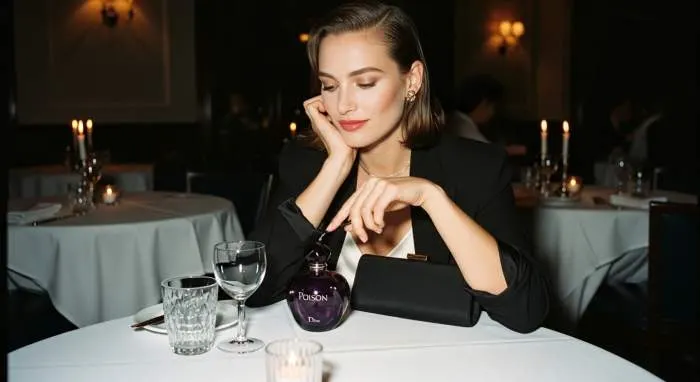
  • Evening & Occasion Wear: This is where Poison truly excels. Think black tie, a gallery opening, a dimly lit cocktail bar. Pair it with structured, minimalist evening wear – a sleek column dress, a sharp tuxedo blazer over a silk camisole, or tailored wide-leg trousers. The clothing provides a sophisticated canvas, allowing the fragrance to be the statement accessory.
  • Layering (Carefully!): For the truly adventurous, try layering with a clean, simple musk or a light, unsweetened vanilla. The goal isn't to add more "oomph" but to soften the edges, to give Poison a contemporary filter. Just make sure the base is utterly neutral. Don't add another complex scent; you'll get a war, not a dialogue.
  • Context is King: Save it for scenarios where it won't overwhelm. A quiet dinner for two? Maybe. A packed commuter train? No. An outdoor event in cooler weather? Yes. An office meeting? Probably not, unless you’re trying to subtly assert dominance, and even then, discretion is your best friend.
  • Accessorize, Don't Compete: If you're wearing Poison, let it be the most decadent thing about your look. Keep jewelry minimal and architectural. Hair sleek. Makeup polished but not overdone. The fragrance is your opulent statement piece; everything else should be refined support.

The magic of Poison isn't gone; it's simply evolved. It's no longer about dominating a room with sheer volume, but about leaving a sophisticated, memorable trail. It's about embracing its theatricality but dialing down the melodrama. Think of it as a whispered secret rather than a shouted declaration. When you style Poison today, you’re not just wearing a perfume; you’re making a knowing nod to history, proving that true style isn't about following trends, but about mastering them, even the most formidable ones. It’s about respect for the scent, and a wicked sense of self-awareness.

The Enduring Venom

You know, most perfumes fade. They get reformulated, forgotten, relegated to some dusty discount shelf. Not Dior's Poison. That absolute powerhouse? It's still here, stirring up trouble, still getting people to clutch their pearls or, conversely, their wallets. It wasn't just a scent; it was an era, bottled and ready to punch you in the face. Loud, unapologetic, utterly unforgettable.

It changed everything. Before Poison, you had your pretty florals, your polite chypres. After it? Perfumery got a backbone, a swagger. Suddenly, everyone wanted a scent that announced itself before you even walked into the room. It gave birth to a whole lineage of bold, often divisive fragrances that dared to take up space. Think about it: how many times have you heard someone say, "Oh, that reminds me of Poison," even if it’s a modern release? That's the kind of staying power you can't buy, honey. It’s earned through pure, audacious impact.

And honestly, that ban in restaurants? The complaints? That was its ultimate marketing coup. It solidified its reputation as the scent for women who just didn’t give a damn about blending in. Who wanted to be noticed, to challenge, to own their presence. Dior's Poison isn't just a fragrance legend; it's a defiant middle finger to subtlety, a sticky, sweet, almost toxic embrace of individuality. And for that, darling, it’s still relevant, still revolutionary, and frankly, still a bloody masterpiece.