
A Radical Scent for a Radical Era
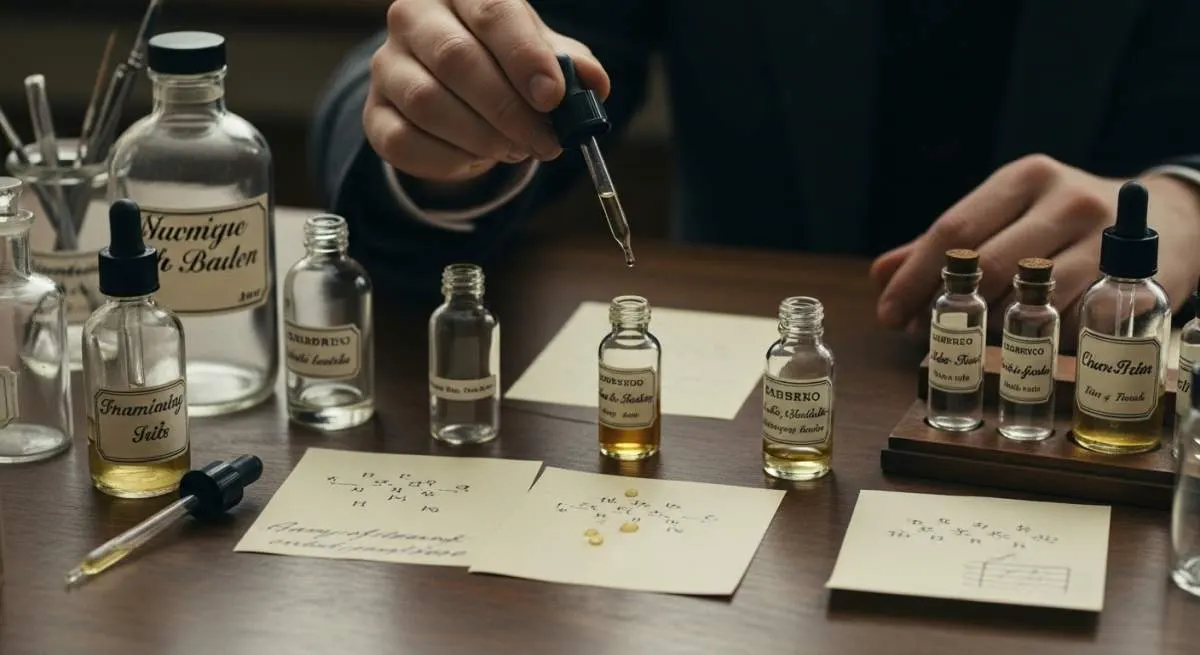
In 1921, Coco Chanel walked into a Parisian perfumery with a simple but audacious demand: she wanted a fragrance that smelled like a woman, not a flower. What she received was a small vial that would become the best-selling perfume of the twentieth century. Chanel No. 5 arrived not as a delicate floral whisper, but as a bold, almost aggressive composition built on an unusually high concentration of aldehydes, synthetic aromatic compounds that gave the scent an electric, soapy, slightly metallic sparkle. The story of how this fragrance came to be reveals as much about the 1920s as it does about perfume itself [1].
Who was Ernest Beaux and why did Coco trust him?
Ernest Beaux was a Russian-born perfumer working in Grasse, the fragrance capital of southern France, when Coco Chanel sought him out. Beaux had already made a name for himself creating scents for the Russian imperial court before the revolution scattered the aristocracy across Europe. By the early 1920s, he was one of the most respected noses in the business, known for his willingness to experiment with new synthetic ingredients rather than rely solely on natural florals and essences. Chanel, who had already revolutionized women's fashion by introducing comfortable, practical clothing, saw in Beaux a kindred spirit: someone willing to break tradition [2].
Ernest Beaux's Laboratory Creation for Chanel
Beaux prepared a series of fragrance samples for Chanel, numbered one through five. The fifth sample was radically different from the others. Rather than building the scent around a single dominant flower, Beaux had layered multiple floral notes, jasmine, rose, ylang-ylang, and then done something unconventional: he had added an unusually high concentration of aldehydes, synthetic compounds that had only recently become available to perfumers [3].
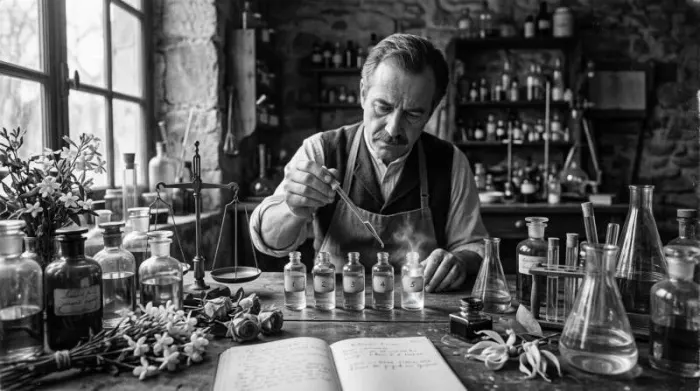
Aldehydes are not meant to be noticed as a distinct smell; instead, they amplify and brighten other scents, giving them a shimmering, almost effervescent quality. In smaller doses, they act as a supporting player. In the concentration Beaux used, they became a character in their own right.
Why Aldehydes Were the Perfect Accident for Chanel No. 5
When Chanel smelled Beaux's fifth sample, she recognized something revolutionary. The aldehydes gave the fragrance an unusual quality: it smelled clean and soapy, almost industrial, yet also undeniably luxurious. It was feminine without being cloying, modern without being harsh. The high aldehyde concentration created what perfumers call a 'sillage' a lingering trail that announced the wearer's presence with confidence. This was not a fragrance designed to be subtle or apologetic. It was a fragrance for a woman who knew what she wanted. The story that Beaux had 'accidentally overdosed' on aldehydes became part of the fragrance's mythology, but it was likely not an accident at all.
Beaux was an experienced perfumer who understood his materials. The high aldehyde concentration was almost certainly deliberate, an experimental choice made by a craftsman who understood that the 1920s demanded something different. Chanel's genius was in recognizing that this bold, unconventional composition was exactly what the moment required.
Mood Match
Put a Record On and See How You Feel
Pick the moment you are in, and let the right old tune do the rest of the work.
Getting ready for a night out
Kitten on the Keys by Zez Confrey
That tinkling piano is pure mischief, all powder and promise, exactly the racket you want while you are pinning your hair and deciding on the earrings.
Sipping coffee before a big meeting
Ain't We Got Fun by Van and Schenck
It is cheerful without being pushy about it, which is what you need at half past eight when the day has not yet decided what it is going to be.
Dancing in the living room alone
Sheik of Araby by The California Ramblers
Nobody is watching, so you can do the silly arms and the little shuffle, and this one has always been built for exactly that.
Feeling bold and a little reckless
Margie by Eddie Cantor
There is a wink in it, and a bit of cheek, and it suits the version of you that is about to do something she may have to explain later.
Play them in order if you like, or skip straight to the one that matches your nerve.
Songs checked against en.wikipedia.org.
The Launch and Marketing Masterstroke of Chanel No. 5
Chanel No. 5 was introduced in 1922, and its success was not immediate. The fragrance was expensive, unusual, and polarizing. Some women found it too strong, too strange, too modern. But Chanel understood marketing as well as she understood fashion. She gave bottles of the fragrance to her friends, to society women, to anyone with influence and visibility. She wore it herself constantly. Within a few years, No. 5 had become the signature scent of the Parisian elite, and from there it spread across Europe and eventually to America.
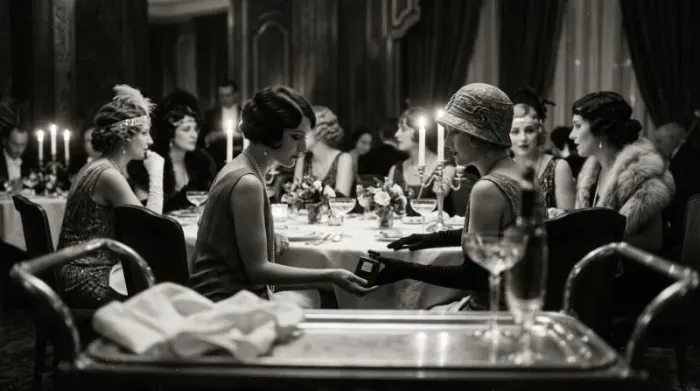
The aldehyde-forward composition became Chanel's trademark. Other perfumers began experimenting with aldehydes in their own fragrances, but none achieved the perfect balance that Beaux had created. No. 5 remained distinctive, recognizable, and impossible to copy exactly. The high aldehyde concentration, which might have seemed like a flaw or an accident, became the fragrance's defining feature and its greatest strength.
Why the Scent Endured Across Decades
What made Chanel No. 5 truly revolutionary was not just its composition, but its timing. It arrived at the exact moment when women were redefining themselves, and it offered a scent that matched that transformation. Unlike fashion, which changes seasonally, fragrance is intimate and personal. A woman who fell in love with No. 5 in 1925 could wear it for the rest of her life, and it would still feel modern, still feel like her. The aldehydes ensured that the fragrance had remarkable longevity and projection, it lasted on the skin for hours and announced itself without being cloying.
A Calculated Sparkle
- Everyone loves to tell the story that Chanel No. 5's iconic aldehydes were the result of a clumsy lab assistant's happy little accident.
- The 'overdose' was almost certainly a deliberate, artistic choice by master perfumer Ernest Beaux, who had been expertly experimenting with aldehydes for years.
Source: chm.bris.ac.uk
By the 1950s, Chanel No. 5 had become not just a fragrance, but a cultural icon. Marilyn Monroe famously said she wore nothing to bed but Chanel No. 5, a quote that cemented the fragrance's status as a luxury essential. The scent transcended its original moment and became timeless, worn by women across generations and social classes. It remained the world's best-selling fragrance for decades, a position it held well into the twenty-first century.
What Aldehydes Actually Do in a Fragrance
Aldehydes are organic compounds that occur naturally in some plants and flowers, but the ones used in perfumery are almost always synthetic, created in laboratories. They were first synthesized in the late nineteenth century, and by the 1920s, they had become an essential tool for modern perfumers. Aldehydes do not have a single, easily describable smell. Instead, they act as amplifiers and modifiers, brightening other scents and giving them a shimmering, almost sparkling quality.
In very small concentrations, they are nearly invisible. In the concentration Beaux used in No. 5, they create a distinctive soapy, slightly metallic top note that immediately signals that this is not a traditional floral perfume. The high aldehyde concentration in No. 5 was unusual for its time, and it remains unusual today. Most modern fragrances use aldehydes more sparingly, as a supporting note rather than a dominant character.
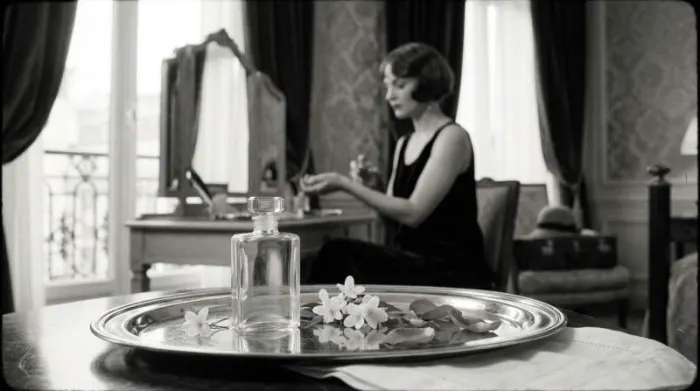
Beaux's willingness to use them so boldly was either a stroke of genius or a calculated risk. Either way, it worked. The aldehydes became inseparable from the fragrance's identity, so much so that any attempt to reformulate No. 5 without them would be immediately recognizable as a betrayal of the original.
Legacy and the Myth of the Mistake
The story of the aldehyde overdose has become part of fragrance folklore, repeated in countless articles, books, and marketing materials. It is a satisfying narrative: a happy accident that changed the course of perfume history. But the truth is more nuanced. Ernest Beaux was not a careless perfumer who happened to spill too much aldehyde into a batch. He was a skilled craftsman who understood his materials and made deliberate choices. The high aldehyde concentration was likely experimental, a bold choice made by someone who understood that the 1920s demanded something new.
What makes the story of Chanel No. 5 truly remarkable is not the accident, but the recognition. Coco Chanel could have rejected the fifth sample as too strange, too modern, too risky. Instead, she saw in it exactly what her era needed: a fragrance that matched the spirit of a new woman. She trusted her instinct, and that trust changed fragrance history. Today, more than a century later, Chanel No. 5 remains instantly recognizable, a scent that carries within it the boldness and optimism of the 1920s. The aldehydes that once seemed so daring and unconventional are now simply part of what makes the fragrance itself.
The real lesson of Chanel No. 5 is not about accidents or mistakes. It is about the power of recognizing the right idea at the right moment, and having the courage to embrace it fully, even when it breaks all the rules.
What does chanel no 5 smell like
Chanel No. 5 is famously complex, but its signature is a sparkling, soapy-clean aldehyde top note that hits first, then softens into a lush floral heart of jasmine and rose. What many don't know is that the original formula used a rare, costly jasmine from Grasse, France, harvested by hand before dawn to preserve its delicate scent. This labor-intensive ingredient, combined with the aldehydes, gave No. 5 its unmistakable, almost luminous quality.