
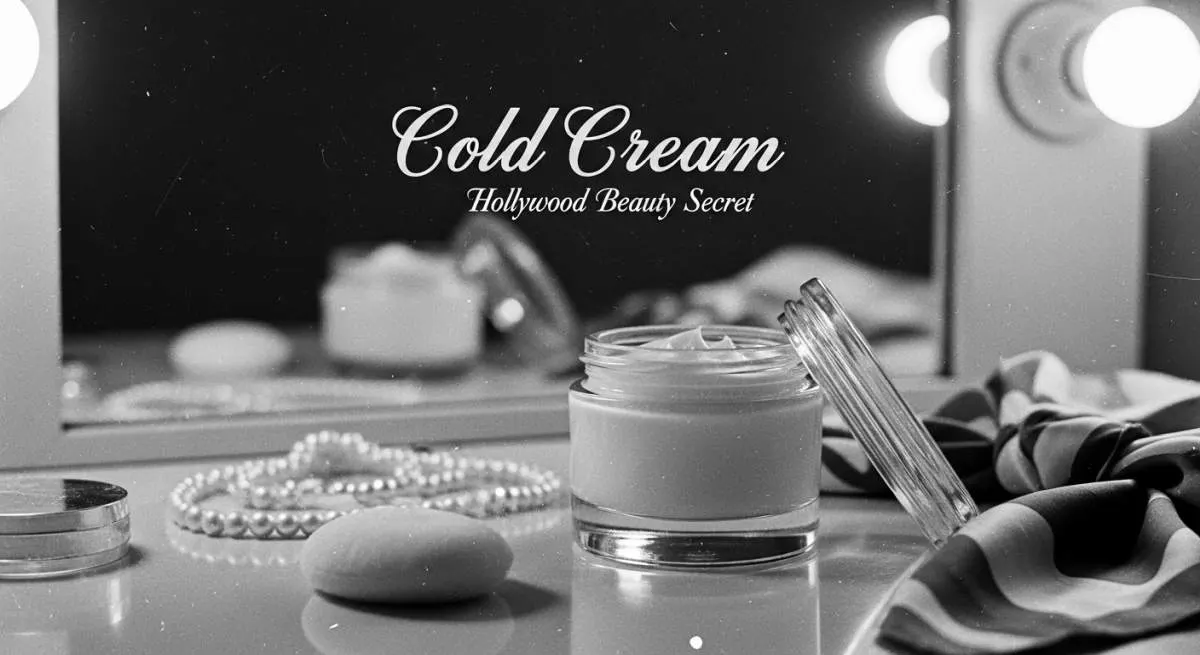
From Ancient Apothecary to Hollywood Vanity: A Brief History
The story of cold cream begins not in Hollywood, but in ancient Greece. Around 150 AD, the physician Galen is credited with creating an early version, a simple yet clever blend of olive oil, beeswax, and water. This basic emulsion, oil suspended in water, was a far cry from the thick, perfumed creams of the 20th century, but the principle was the same. Over centuries, this formula evolved, and by the time the 1950s arrived, cold cream was a familiar, trusted staple in American medicine cabinets. It had already been a practical solution for generations before the movie studios turned it into a symbol of Hollywood glamour [1].
"In a world of fleeting fads, cold cream was a constant-a comforting hum in the symphony of beauty."
How Cold Cream Became a Hollywood Backstage Secret
Its journey to stardom began in the silent film era. Actors were caked in heavy, oil-based greasepaint under hot studio lights, and removing it was a nightly ordeal. Soap and water were often too harsh, leaving skin dry and irritated. Cold cream, with its gentle oil-and-water emulsion, proved perfect. It dissolved the thick makeup effortlessly without stripping the skin, becoming a whispered backstage secret among actors and makeup artists long before it was a mass-market sensation [2].
By the 1930s, savvy brands like Pond's began to capitalize on this insider knowledge. They ran elegant advertisements in popular movie magazines, featuring genuine stars like Joan Crawford and Bette Davis. These ads didn't just sell a product; they sold a dream. They showed these icons of beauty using cold cream as a sacred part of their evening ritual, directly linking the simple cream to the flawless complexions seen on screen. The message was powerful and clear: if you wanted skin like a star, this was the non-negotiable first step [3].
The Science Behind the Cream
The magic of cold cream lies in its simple, effective chemistry. It's an emulsion, meaning tiny droplets of water are suspended in oil. When you smooth it onto your skin, the water evaporates, creating that signature refreshing, cooling sensation. The oil left behind then gets to work, bonding with and dissolving any oil-based makeup, dirt, and impurities.
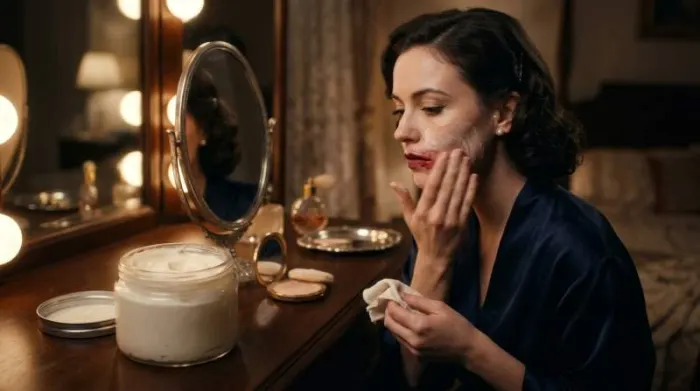
This process cleanses deeply without the need for harsh scrubbing or stripping the skin's natural moisture. The result is skin that feels clean, soft, and supple, never tight or dry. It was, in many ways, one of the earliest and most effective skin barrier creams.
Perfect for the Polished 1950s Beauty Ideal
The 1950s beauty ideal was one of polished, impeccable perfection. A woman's daily makeup routine was a serious affair: a base of heavy pan-stick foundation, setting powder, precisely drawn lipstick, and defined eye makeup. Removing this full face effectively at the end of the day required a product that was both powerful and gentle. Cold cream was the perfect answer, able to melt away every trace of makeup without irritating delicate skin.
Ancient Origins
- Everyone thinks cold cream was invented in Hollywood's golden age, but that's like saying disco invented music.
- Cold cream actually dates back to ancient Rome, where physician Galen whipped up a primitive version around 150 AD, long before Joan Crawford ever saw a movie camera.
Source: cosmeticsandskin.com
Its accessibility was key to its dominance. A jar of Pond's cold cream cost well under a dollar, making a starlet's skincare secret available to housewives, secretaries, and students alike. You didn't need a Hollywood salary to aspire to that Hollywood glow. Furthermore, it was a marvel of efficiency. It served as a makeup remover, a cleanser, and a light moisturizer all in one, simplifying the beauty routine for the busy modern woman of the era. This all-in-one quality contributed significantly to its enduring place in 1950s culture.
- Deep Cleansing: Melted away heavy makeup and daily grime with ease.
- Moisturizing Power: Left skin feeling hydrated, never stripped.
- Affordability: A touch of luxury that nearly everyone could afford.
- Simplicity: One product handled multiple skincare needs.
- Iconic Status: Endorsed by stars, making it a symbol of glamour.
How Cold Cream Revolutionized Everyday Skincare
Cold cream genuinely revolutionized everyday skincare. Before its popularization, many women relied solely on soap and water, which could be drying and disrupt the skin's pH. Cold cream introduced the concept that cleansing could be a nurturing, rather than a stripping, experience. It taught a generation that taking care of your skin could improve its texture and health over time, laying the foundation for the multi-step routines we know today.
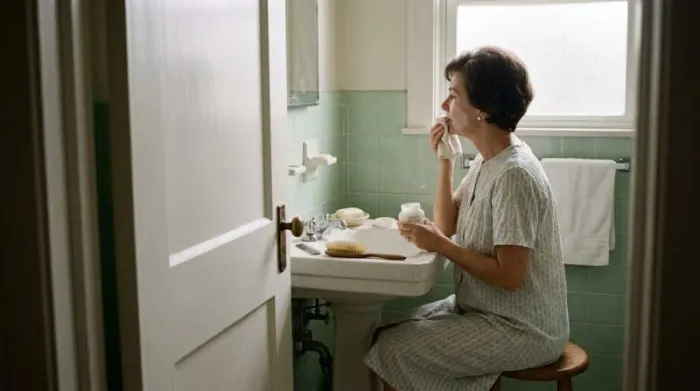
This vintage staple is the direct ancestor of many modern skincare heroes. Every luxurious cleansing balm, milky oil cleanser, or rich makeup remover you use today owes a debt to that humble glass jar. The fundamental science, using oils to dissolve oils, remains unchanged. Cold cream proved the concept, and contemporary brands have simply refined the ingredients and textures.
Hollywood's Loyal Users: From Marilyn to Cary Grant
The association with Hollywood royalty is legendary. Marilyn Monroe was a devoted user of Pond's cold cream, incorporating it into her nightly ritual to maintain her famously luminous complexion. Elizabeth Taylor, Audrey Hepburn, and Grace Kelly were also famously linked to the product through advertisements and personal endorsements. These women embodied the 1950s ideal: flawless, dewy skin as the perfect canvas for bold red lips and an aura of sophisticated glamour.
It wasn't just for the leading ladies. Male stars like Cary Grant and Clark Gable also relied on cold cream backstage to remove the heavy foundation required for film and photography. On every studio lot, from MGM to Paramount, it was a unisex, essential tool of the trade, as commonplace as a script or a cup of coffee.
A Legacy That Never Faded
Despite shifting beauty trends, cold cream never truly disappeared. While the 1960s favored matte finishes and lighter coverage, it remained a trusted staple in countless medicine cabinets. Today, you can still find the classic Pond's formula on drugstore shelves, and it enjoys a dedicated following among vintage beauty enthusiasts, dermatology patients with sensitive skin, and professional makeup artists who value its effective, no-fuss simplicity.
Its legacy has also sparked a mini-revival. A wave of niche skincare brands now create updated versions of the classic cold cream, often using more refined plant oils and omitting potential irritants. The core appeal, however, remains timeless: a product that works without complication. It's proof that in beauty, some classics are classics for a reason.
Is 1950s Cold Cream Still Relevant Today?
So, what does 'cold cream 1950s' really mean? It encapsulates the classic mid-century beauty ritual: a rich, creamy cleanser used to gently dissolve a full face of makeup, leaving skin soft and conditioned. It represents an era before foaming gels and micellar water, where skincare felt more like a pampering treat than a clinical step. The basic formula is still remarkably effective for removing makeup and providing light hydration.
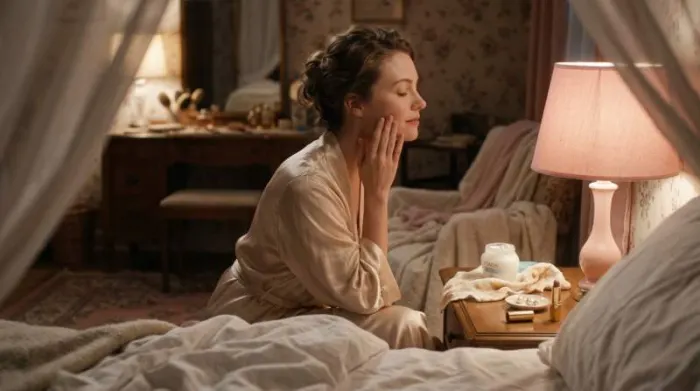
Modern iterations might include additions like glycerin for extra moisture or almond oil for a richer feel. While those with very oily or acne-prone skin might find it too emollient, for normal to dry skin types, it remains a gentle and reliable workhorse. Many people today still swear by it as the perfect first step in a double-cleansing routine, proving its practical groovy glamour endures.
Ultimately, cold cream is more than just a vintage beauty product. It's a tangible piece of cultural history, a direct link to the shimmering glamour of Hollywood's Golden Age. The next time you spot that simple glass jar on a shelf, remember you're looking at the same cream that helped maintain the legendary complexions of Marilyn Monroe and Grace Kelly, that soothed skin under hot studio lights, and that promised every woman a touch of that starry-eyed magic. That's a legacy of simple, effective beauty worth celebrating, and perhaps, worth trying for yourself.
Mood Match
Put a Record On and See How You Feel
Pick the moment you are in and let the right song do the rest.
Winding down after a long shoot day
Only You by The Platters
That slow, close harmony settles over a tired room like a blanket you did not know you needed.
Getting ready for a night on the town
Ain't That a Shame by Fats Domino
It bounces along at exactly the pace of lipstick, earrings and one last look in the mirror.
Dancing around the bedroom in a slip
Rock Around the Clock by Bill Haley & His Comets
Nobody has ever managed to stand still through that opening, and you are not about to be the first.
Sitting at the vanity removing makeup
Mr Sandman by The Chordettes
All that sweet humming and hand-clapping is the gentlest possible signal that the day is over.
Some nights need a plan. Most nights just need the right record.
Songs checked against en.wikipedia.org.
Why 'cold' cream, though?
The name comes from the cooling feel of rose water evaporating off the skin.
The original recipe used it to mask the olive oil smell, and the chill stuck as the product's name.