
The Jet-Set Glamour and Hidden Panic
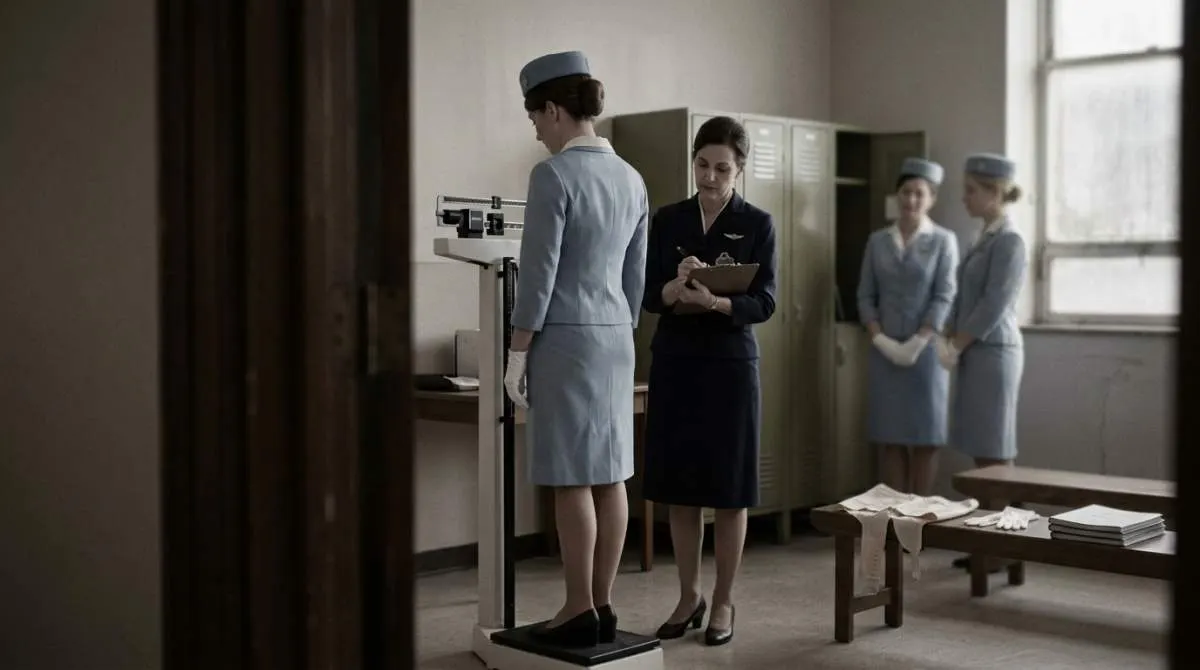
The Pan Am grooming guide carries a strange chill. The terminal at JFK looked like a concrete bird ready to launch, smelling of jet fuel and expensive perfume. Yet the mood inside was less 'glamorous getaway' and more 'military inspection with lipstick.'
The whole aesthetic was a seductive lie. A stewardess was the ultimate symbol of freedom, yet she had zero freedom herself. She was a diplomat, a nurse, a waitress, and a mannequin all at once.
She had to smile even if her feet were bleeding. The public saw a silk scarf and a perfect wave. The reality was a checklist that controlled her weight, her hair, and her private life.
Pan Am called itself 'the world's most experienced airline.' But the experience for the women in blue was brutally scripted. They sold a fantasy of the jet age while living under a microscope.
Every eyelash was judged, and every pound was a problem. It was a strange paradox of empowerment and control.
The Cocktail of Hope and Fear
You have to understand the era's double vision. Women were breaking into the professional world, and the stewardess job was a coveted career. It meant travel, money, and independence.
On the other hand, the system was designed to keep them decorative and disposable. They were the pretty face of progress, but the contract was medieval.
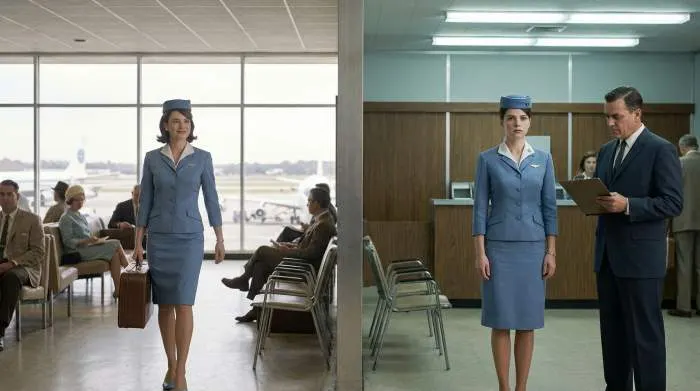
The atmosphere was a strange cocktail of hope and absolute terror. These women were pioneers, yet they were treated like ornaments. They flew to Paris and Rome but could not gain a single pound.
The glamour was a costume, and the grooming guide was the rulebook for wearing it perfectly. It was a dream job with a nightmare dress code.
The Unspoken Contract of Pain and Polish
The real secret was never in the makeup kit. It was in the silence that surrounded the daily weigh-ins, the whispered warnings about gaining a pound, and the unspoken rule that your career could vanish with a single number on the scale. One former stewardess recalled being grounded for three weeks over a five-pound fluctuation, with no pay and no explanation. Every Pan Am girl signed an unwritten agreement before she touched a plane. The airline owned her face, her hair, and her waistline. She could keep her soul, but only if it didn't show. The grooming guide and its strict dress code were just the visible tip of a darker iceberg. The truly exhausting part was how everyone pretended it was glamorous.
Why Did Grooming Rules Demand Such Rigid Conformity?
The whole operation was built on control. The airline sold safety, and safety looked like uniformity. A stray curl or a chipped nail signaled chaos to a nervous passenger.
So they engineered the chaos out of you. Your hair was a helmet. Your smile was a shield, and your body was a product they rented by the hour.
The secret wasn't just about looking perfect. It was about the work the public never saw. The two-inch heels were mandatory, but learning to walk in them during turbulence was a separate, unspoken skill.
The image of a 1960s Pan Am stewardess promised chrome, cocktails, and effortless escape. But the reality was a meticulously controlled illusion. These women were weighed constantly, and gaining even a little weight could get them grounded. The airline didn't just own their time; it owned their faces, their hairstyles, and even their waistlines.
The girdle was standard, but the ability to serve a hot meal while your ribs screamed was a point of pride. They weren't hiring women. They were hiring mannequins with pulse rates.
The Hidden Mechanism: Hollywood Beauty Secrets of the Air
The airline borrowed heavily from the studio system, flying in makeup artists from New York to teach the same tricks used on starlets. The grooming standards were basically a Hollywood contract with a boarding pass. You had to know how to fix a run in your stocking with clear nail polish and how to re-pin your chignon in a closet-sized bathroom at 30,000 feet. These weren't tips. They were survival skills.
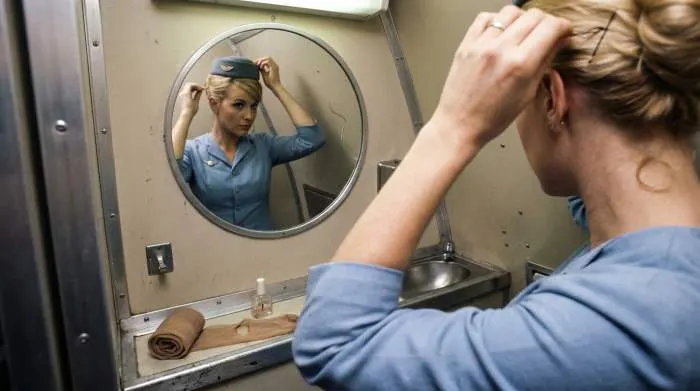
The real trick of the Pan Am look demanded you disappear into the role completely. Your personal life, bad days, and love handles all had to fit inside that trim blue uniform. The secret was that it was exhausting, and you were supposed to love every minute of it. If you didn't, there were a thousand other girls waiting at the gate.
How Pan Am's Beauty Cage Spawned a Thousand Copycats
The grooming guide didn't just vanish with the airline's golden age. It became a cultural ghost. Designers, directors, and drag queens plundered its exacting rules.
But they rarely copied the pain. They stole the polish and left the panic behind.
Prada's 2011 Homage: The High-Fashion Raid
The real aftershock happened on the street and in the club. Queer culture grabbed the uniform's strict lines and twisted them into camp. Drag performers wore the Pan Am cap with a wink.
They knew the original rules were designed to control women. So they reclaimed the hat, gloves, and pinned-up hair as a symbol of disciplined rebellion. It was a sharp middle finger to the old gatekeepers.
The guide left a double legacy. One branch is pure, glossy nostalgia. The other is a sharp critique wrapped in a pencil skirt.
You can buy the lipstick today. But you don't have to buy the fear. That's the only real progress.
Why Are Flight Attendants Still Wearing Full Makeup?
The answer is brutally simple. Airlines still use appearance as a brand asset. A 2023 study showed that most major carriers still include grooming clauses in employee contracts.
You cannot have visible tattoos or unnatural hair colors. You must wear foundation, lipstick, and defined brows. It is the Pan Am guide, printed on a different typewriter.
The language is softer now, but the demand is the same. You are the service, and you must look like it.
The Digital Pan Am: How Social Media Polices the Professional Face
The logic of the Pan Am guide survives in our pockets. We curate our appearances with the same obsessive precision. We are judged on our lipstick, skin texture, and hair's obedience. It's a modern version of the pound rule, where the law of the feed demands constant, polished performance.
It is a post-pandemic grooming ethos, repackaged for the feed. The uniform is gone, but the uniformed mind persists.
What was the Pan Am stewardess uniform policy?
The uniform policy was famously strict, but few know that Pan Am's grooming standards were partly inspired by the military. The airline's founder, Juan Trippe, believed that a disciplined, uniformed crew would inspire passenger confidence, so he borrowed the idea of standardized appearance from the armed forces. This military influence extended to the 'weigh-in' rituals, which were conducted with the same seriousness as a drill inspection.