The Mind-Bending Threads of the 60s
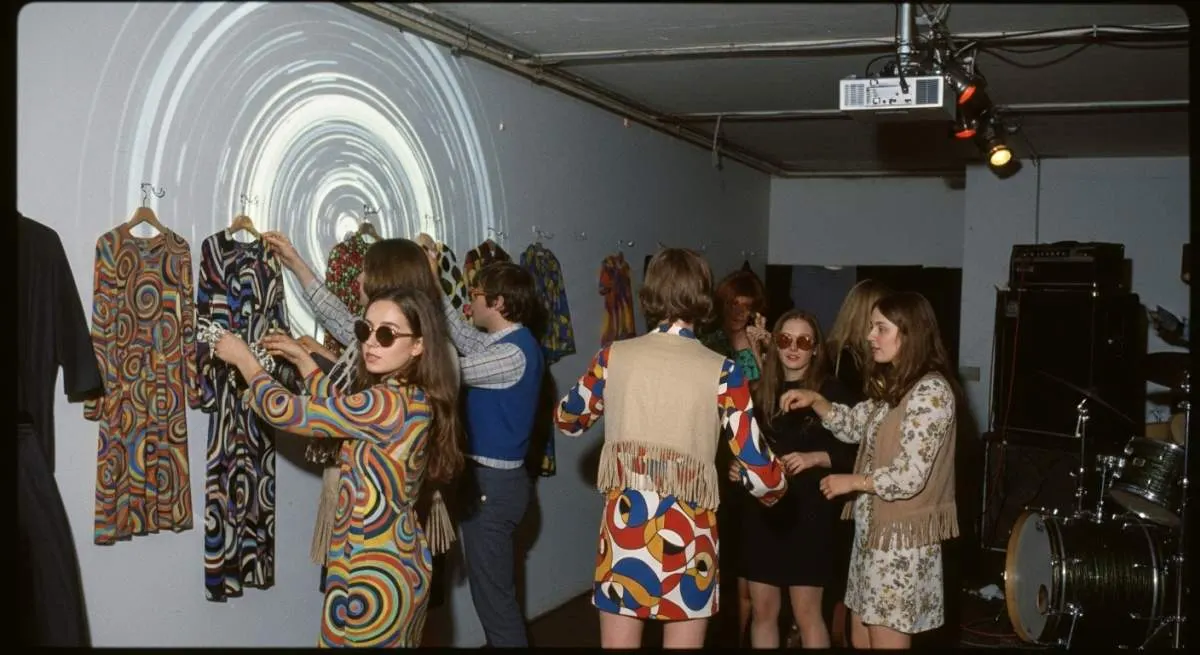
Imagine walking down a street in 1967, where the very fabric of reality seemed to be unraveling. It wasn't just the music or the politics; it was the clothes. The 1960s psychedelic fashion movement was a direct, vibrant translation of a cultural earthquake. It emerged from a potent cocktail of artistic rebellion, technological optimism, and, undeniably, the widespread experimentation with LSD. This wasn't about following a trend; it was about wearing the very sensation of an altered state, turning the visual chaos of a hallucination into a wearable manifesto for a new generation.
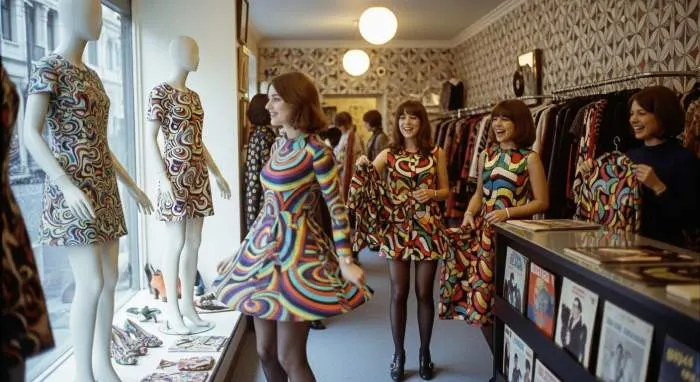
The connection was far from accidental. By the mid-1960s, psychedelic culture had seeped from underground circles into the mainstream youth scenes of London and San Francisco. Designers and boutique owners, many of whom were participants in this new consciousness, began to ask a radical question: what does an expanded mind look like on a dress? The answer was a riot of kaleidoscope swirls, clashing neons, and patterns so fluid they seemed to melt right off the body. This fashion wasn't trying to literally depict a trip; it aimed to capture the sensory experience itself, the heightened colors, the dissolved boundaries, the feeling of movement in stillness.
From Mod Control to Psychedelic Chaos
To understand the psychedelic explosion, you have to look at what came before. The early 1960s were dominated by the sharp, controlled rebellion of Mod style. Mod's geometric prints and crisp silhouettes were about precision, a futuristic, almost artificial perfection that defined youth cool. It was a rebellion of clean lines and bold primary colors.
But as the decade wore on and psychedelic experiences became more common, fashion began to reject that very control. The clean, mathematical lines of Mod started to dissolve into organic, flowing forms. Straight hemlines gave way to undulating curves, and those primary colors exploded into impossible, electric rainbows. The shift was gradual, a fascinating overlap where two aesthetics coexisted. By 1966, the same Carnaby Street boutiques that sold sharp mini-dresses were stocking swirling, mind-bending prints, creating the hybrid visual cocktail we now call the Swinging Sixties.
This new visual language borrowed heavily from the Op Art movement. Artists like Bridget Riley were creating paintings that pulsed and vibrated on the canvas, using geometric abstraction to trick the eye. Fashion designers saw the potential immediately. They took that principle of optical illusion and wrapped it around the human form. A psychedelic shirt wasn't just a garment; it was a portable, walking art installation designed to mesmerize and disorient.
The Epicenters of the Experiment
This revolution wasn't born in Parisian couture houses. It sprang from scrappy, experimental boutiques run by young visionaries who saw fashion as an extension of consciousness itself. London's Carnaby Street was the undisputed epicenter. Shops like Granny Takes a Trip and I Was Lord Kitchener's Valet became legendary.
Granny Takes a Trip, which opened in 1966, was more than a store; it was an environment. With its hand-painted, ever-changing window displays and interior drenched in chaotic color, stepping inside was meant to alter your perception. Founders like Nigel Waymouth and designer John Pearse created the iconic prints of the era: melting florals, geometric forms that seemed to liquefy, and color combinations that vibrated right off the silk or velvet. Customers didn't just buy clothes; they bought into an experience.
Across the Atlantic, the aesthetic was propelled by graphic artists turned cultural icons. Designers like Peter Max and Milton Glaser defined the look of the counterculture with their psychedelic posters and album covers. Their work, saturated with swirling colors and cosmic imagery, directly influenced American fashion, trickling down from concert posters to the dresses and shirts worn at those very concerts. The style spread like wildfire through college campuses and underground papers, building a shared visual vocabulary for a generation.
Decoding the Psychedelic Print
So, what exactly made a print "psychedelic"? The hallmarks were unmistakable and never subtle. Dizzying optical art, kaleidoscopic repetitions, and patterns that appeared to be in constant, liquid motion were the goal. They were designed to delight, disorient, and absolutely demand your attention.
The color palettes were intentionally jarring, a sensory overload translated to cloth. Acid-bright magenta slammed into electric lime green. Deep purples swirled with hot oranges and pastel pinks. In any other decade, these combinations might have been dismissed as garish. Here, they felt authentic, a true representation of a heightened sensory reality. The patterns often took inspiration from nature, but twisted it into something dreamlike. A flower might have petals that multiplied as you stared; a vine might spiral into a geometric maze before softening back into a curve.
The choice of fabric amplified the effect. The sheen of silk made prints shimmer and move with the body. The plush depth of velvet gave colors a rich, immersive quality. Crucially, the advent of cheaper synthetic fabrics like polyester democratized the look. A psychedelic polyester shift dress was affordable for a teenager, allowing the core of the counterculture to literally wear its colors. This accessibility was key to the movement's spread.
More Than Clothes: A Statement of Belonging
The link between LSD and this fashion was symbiotic and deeply ideological. Wearing these wild prints was a powerful form of visual communication. It announced your participation in a new consciousness and your outright rejection of postwar conformity and blandness. It was a badge of membership in a community that valued experimentation, artistic freedom, and the expansion of the mind.
Authority figures understood this immediately, which is why the clothes provoked such strong reactions. They weren't merely pretty or strange; they were ideological. To wear them was to align yourself with the anti-war movement, the counterculture, and a wholesale rejection of establishment values. The fashion reinforced the drug culture's visual language, and in turn, the clothes became a gateway. Someone who had never taken acid could don a psychedelic tunic and participate in the aesthetic and the attitude it represented, signaling an openness to new ways of seeing the world.
The Legacy That Never Faded
The peak of the acid trip may have passed, but the fashion it inspired left a permanent mark. This was a seismic shift in visual culture, a genuine experiment that forever changed how designers and wearers thought about color, pattern, and the very purpose of clothing. It granted a lasting permission to be loud, visually arresting, and to challenge conventional beauty with audacious creativity.
Psychedelic prints have cycled back into fashion repeatedly, in the flamboyant 80s, the retro-obsessed 90s, and again in recent years. Each revival draws on that original, anarchic 1960s vocabulary but adapts it for a new time. Contemporary designers reference these patterns not to recreate a drug experience, but because the aesthetic carries immense cultural weight. It represents a moment when fashion dared to be a vehicle for consciousness and rebellion. It serves as a constant reminder that what we wear can alter perception, provoke thought, and declare that the times, indeed, are changing, from the mind, right out to the swirling hemline.