IN THIS ISSUE:
Gin, Grime & Garters: Unpacking the Real Twenties
I still remember seeing 1920s: The Roaring 20s Weren't Just Flappers: The Dark and Wild Reality of the Jazz Age treated like a joke in a dusty secondhand shop, and it felt unfair even then. The romanticized image of the Roaring Twenties often reduces a tumultuous, utterly bonkers decade to a costume party cliché. We’ve all seen the Gatsby glam: pearls, bobs, bathtub gin myths. This fun fantasy, a neat package of hedonism and freedom wrapped in fringe, thinly veils a far more complex, unsettling, and often more thrillingly dangerous reality.
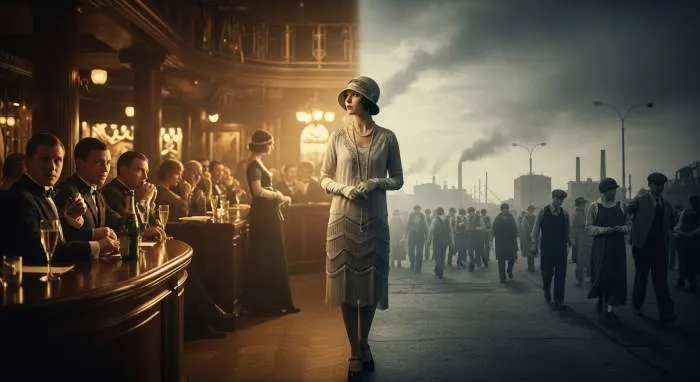
The Jazz Age wasn't solely champagne and Charleston. Beneath shimmering art deco and rebellious youth thrummed a chaotic pulse of social upheaval, stark inequality, and outright illegality. This era was a pressure cooker. While some danced, others battled systemic poverty or navigated a world where Prohibition fueled organized crime (Source). Prosperity was not universal; for every millionaire, countless families struggled against restrictive norms and urban change.
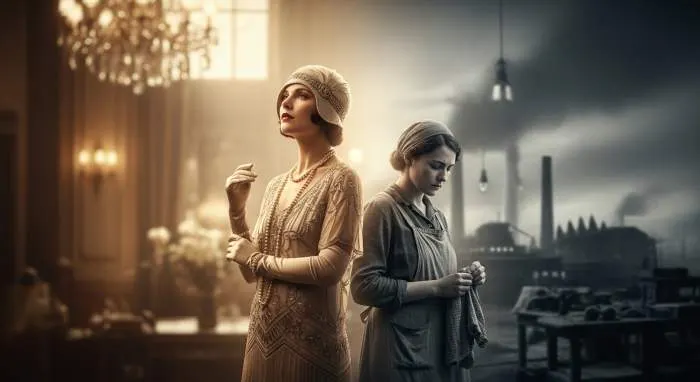
The popular narrative often centers on the flapper lifestyle, yet exploring 1920s societal problems reveals a far more rugged and raw landscape. The flapper, an icon of rebellion, stood in stark contrast to ordinary 1920s women, often burdened by tradition or limited opportunities.
Speakeasies weren't just quirky underground bars; they were clandestine hubs, often run by dangerous characters, where alcohol flowed in open defiance of the law. More than places to let loose, they symbolized a nation's collective defiant sneer at authority.
This was not a decade of simple pleasures, but one of seismic shifts, moral decay, and artistic explosion, profound hope and crushing disillusionment. The truth of Jazz Age culture lies not solely in joyous dance halls, but also in smoky backrooms, shadowed alleys, and the quiet desperation of those left behind.
It’s a story bursting with grit, glamour, and profound social tension—a time when America found its footing, often tripping spectacularly, always roaring. And it’s a story worth telling with all its glorious, grimy edges intact.
Whispers and Roars: The Jazz Age's Troubled Soul
The Jazz Age, often depicted through beaded dresses and frantic Charleston kicks, is easily dismissed as a frivolous, glittering, hedonistic blur. Yet, its cultural impact transcended mere fun; it was a profound social aftershock, a decade-long hangover from the Great War, drenched in cheap gin and an aggressive, almost desperate pursuit of pleasure. It rewrote the rules, leaving everyone, from sophisticated socialites to struggling factory workers, to keep up.

The symbolism of the era is often whitewashed. While the short skirts and bobbed hair of 1920s flappers were a bold statement rejecting Victorian prudery, they also symbolized a deeper unease—a conscious push against traditional roles in a society still expecting women to be demure homemakers. For every woman who embraced this radical freedom, countless others watched, judged, or simply couldn't participate. Economic prosperity was far from universal; while some danced on tables, others toiled in grinding poverty, untouched by new consumer culture. The carefree flapper often overshadows the ordinary 1920s women who worked tirelessly, perhaps only dreaming of such liberation.
Prohibition, a grand social experiment cooked up by moral crusaders, became the decade's greatest paradox. It didn't stop drinking; it simply made it illegal, dangerous, and incredibly cool. Speakeasies became the ultimate symbol of defiance—clandestine havens where alcohol flowed, jazz pulsed, and societal norms dissolved in cigarette smoke. These establishments often operated as fronts, guarded by toughs and run by mobsters who exploited the business opportunity.
More than just places to drink, they incubated new social interactions where classes mingled, albeit under the watchful eye of organized crime. This forced proximity and shared illicit thrill undeniably blurred social lines, but also fueled rampant corruption and violence.
The era's impact reverberated through every facet of society. Young people across the globe, sensing a shift, began mimicking the fashion, music, and devil-may-care attitude. Jazz, once considered "devil's music," became a global sensation, its syncopated rhythms a metaphor for life's new, unpredictable pace.
However, traditionalists, often rural and deeply religious, viewed it as moral decay, a sign the country was hurtling towards damnation. They abhorred the brazenness, open sexuality, and challenge to established authority, seeing it as an assault on everything sacred.
Historical Insight: If you love this vibe, you'll also find WHO INVENTED THE STILETTO? THE KILLER HEEL'S SECRET HISTORY to be a fascinating read.
Surprisingly, the true complexity was often lost even on those living through it. Beyond flappers, exploring 1920s societal problems reveals stark class divisions, racial segregation, and a deep undercurrent of xenophobia. The idealism that followed WWI quickly soured, replaced by a cynical materialism.

The vibrant cultural explosion of the Harlem Renaissance, for instance, occurred against a backdrop of systemic racism and economic hardship for most African Americans. It was a time of immense creativity intertwined with oppression.
The women who bought those first dropped-waist dresses and dared to cut their hair weren't just following a trend; they were stepping into an abyss of uncertainty, demanding a voice in a world not ready to give it. This bravery is rarely acknowledged. While it's easy to focus on the sparkle, the sharp edges cut deep. And those cuts—those societal tensions and aspirations—still echo in our culture today.
This era’s legacy extends beyond parties; it encompasses profound societal upheaval, the dangerous allure of breaking rules, and the lingering question of what happens when a generation, scarred by war and yearning for something new, decides to create its own reality. The decade was a wild experiment, a thrilling, messy, and ultimately tragic dress rehearsal for the modern age.
When the Glitter Began to Crack
The Jazz Age—flappers, speakeasies, gin—was a breathless sprint away from Victorian corsets and sensibilities. It evokes images of clinking ice, feather boas, and rebellious bobs, a sense of dizzying freedom where women cut loose, literally and figuratively. They smoked, drank, and voted; it was the zenith of modernism for a hot minute.
But beneath that shimmering surface, something sinister was always brewing. Dizzying speed wasn't just exhilarating; it was unsustainable. The very things that made the Roaring Twenties "roar" – Prohibition, new freedoms, reckless abandon – brewed a spectacular cultural collision. The grim reality: not everyone was dancing. Many watched with white-knuckled horror, clutching their pearls and Bibles.
The flapper, an icon of liberation, became a flashpoint. While symbolizing independence for some, she represented pure moral decay for others. Her short skirts, painted knees, and blatant disregard for decorum constituted a gauntlet thrown at tradition, not just fashion. This created a seismic rift, splitting society between the "new woman" and those desperate to pull her back.

Comparing the flapper lifestyle with ordinary 1920s women reveals a chasm; most outside urban centers weren't jazzing it up, but working, raising families, and often struggling. For many, intense societal problems defined the decade, cloaked only in glamorous escapism, rather than universal prosperity.
Vintage photographs often capture the era's palpable tension: a women's temperance league picket line, faces set and severe, contrasted with two young, stylishly clad women adjusting their cloche hats, a mischievous glint in their eyes. This wasn't merely a generational gap; it was a clash of entire worldviews, playing out on every street corner.
Speakeasy glamour, initially thrilling, soon revealed its dark side. These operations were fueled by bribery, violence, and unchecked organized crime. Al Capone, far from a romantic hero, was a brutal gangster. This criminal underbelly, exploiting Prohibition's legal loopholes, constituted its true cost. Illegal booze, backdoor deals, and public corruption corroded cities.
Historical Insight: We highly recommend exploring 1950S RIVIERA STYLE: WHY OLD MONEY AESTHETIC IS BACK for a complete picture of the era.
The initial thrill of law-breaking curdled into palpable unease. Wild freedom came with a hefty price, paid in blood or moral compromise. The dark reality of the Jazz Age was a tangled mess: progress tangled with peril, far from what anyone promised.
The scandal wasn't a single event, but a slow, creeping realization: the party was out of hand, foundations unstable. Moral guardians, conservative press, religious leaders ratcheted up critiques, pointing to rising crime, moral looseness, economic inequalities lurking beneath. The public mood shifted. Vibrant, rebellious energy soured into widespread anxiety. The glitter, once so bright, showed its cracks.
Retrograde Rebellion: The Jazz Age's Unsettling Echo
The 1920s still resonate deeply. While fringe and feathers are less literal, the restless, shimmering tension between hedonism and impending doom feels eerily current. The Jazz Age wasn't just a historical curiosity; it was a blueprint for how societies unravel and re-stitch themselves, often with the same frayed threads that we unknowingly wear today.
Consider the prevailing mood: a collective exhale after intense global disruption, echoing today's desperate need to break free and dance on the edge of a precipice. The flapper, with her bobbed hair and dropped waist, was more than a fashion statement; she was a walking rebellion against stifling Victorian morality and the grim reality of war's aftermath.
Today, that same spirit manifests in blurred lines of gendered fashion, the rejection of traditional beauty standards, and unapologetic self-expression. It's less about the specific silhouette and more about the *attitude*—a conscious defiance, a subtle challenge to the status quo.

Speakeasy culture, though rebranded, is alive and well. While literal prohibition is absent, the allure of the exclusive, hidden, and slightly illicit remains potent. From unmarked bars serving craft cocktails to members-only social clubs, we still crave belonging to something secret, something a little bit dangerous. This is a modern twist on how speakeasies operated, offering a curated escape from the mundane or the relentless glare of the digital age—finding your tribe in the shadows, sharing whispered secrets and potent libations.
Economic disparity, too, echoes the Roaring Twenties, which were not a time of universal prosperity. While some popped champagne, many struggled. This same glaring contrast paints our landscape today: the ultra-rich flaunt wealth on social media, while many grapple with stagnant wages and rising costs. The surface-level glamour of influencer culture mirrors the carefully curated flapper image—a façade of carefree abandon often belying deeper anxieties and societal problems. It highlights the question of who truly 'roars' and who merely tries to keep their head above water.
The modern revival isn't just aesthetic; it's psychological. We're rediscovering the chaotic energy of a decade that redefined societal norms, for better or worse.
- The enduring appeal of "secret" or "hidden" bars, recreating that speakeasy thrill.
- The contemporary "it girl" or influencer, a direct descendant of the flapper's defiant magnetism.
- The blending of masculine and feminine styles, challenging traditional sartorial boundaries.
- The search for communal escape in music and nightlife, a rejection of isolation.
Observing contemporary scenes, one might see a young woman in a sequined slip dress with a faux fur stole, exuding pure Jazz Age spirit. Her confidence, deliberate nonchalance, and ability to float above the fray evoke the distilled essence of that era for a new generation. She embodies an entire attitude—a carefully constructed illusion of effortless rebellion against something.
This is where the comparison truly stings. Both eras are marked by fierce independence coupled with profound insecurity. The dark reality of the Jazz Age wasn't just prohibition or crime; it was the psychological toll of rapid change, moral relativism, and existential dread simmering beneath the surface of jazz and glamour.
Today, amidst digital noise and ever-present anxieties, we seek similar outlets. We crave connection but fiercely guard individuality; we yearn for escape, yet the world is relentlessly present. The 1920s show that even in the brightest glare of apparent freedom, shadows lengthen. The lesson lies not in repeating history, but in recognizing its repeating patterns. We're not just reviving the style; we're reliving the tension.
Historical Insight: If you love this vibe, you'll also find FERRAGAMO'S WWII SECRET: HOW CORK INVENTED THE WEDGE HEEL to be a fascinating read.
The Echoes in the Empty Glass
The Roaring Twenties evoke a gorgeous, cinematic image of feathers, fringe, and free-spirited girls. Yet, scratch the surface, and that sparkle tarnishes quickly. What truly endured, long after the last speakeasy raid and burst of illicit jazz, was more than a fashion statement. It was a seismic shift, built on shaky ground and paid for by more than champagne corks.
The grim reality was that the flapper was often a privileged creature, symbolizing an economically advantaged demographic. For every defiant Zelda Fitzgerald, countless women grappled with crushing poverty, un-evaporated societal expectations, and the relentless grind of daily life.

Prosperity was certainly not for the millions in rural America, immigrant communities, or Black Americans facing systemic oppression and economic exclusion. The "roar" was a selective frequency, buzzing loudest in the gilded cages of the newly rich.
Speakeasies, those supposedly charming hidden dens, were often run by ruthless mobsters. They didn't just supply alcohol; they fueled organized crime that bled into every facet of society. An entire nation breaking the law just to have a drink bred a cynicism and fundamental distrust of authority that still echoes. That wildness had a real, violent cost.
Candid street photographs from the era, un-staged from parties, often reveal the strained faces, worn clothes next to expensive ones, and sheer *anxiety* in some eyes. They offer a glimpse into the real story behind the headlines, prompting one to wonder if the desperate pursuit of pleasure was less about liberation and more about a frantic attempt to outrun an impending storm. A storm that eventually hit, hard.
The crash came, abruptly ending the party. The Jazz Age didn't just fade; it slammed into a wall. The exuberance, illicit thrill, and belief that anything was possible all evaporated, leaving profound disillusionment and a changed social landscape.
Beyond killer silhouettes and daring hemlines, it left a blueprint for modern rebellion and a stark reminder of how fragile perceived prosperity can be, and how quickly a nation can tumble from hedonism to hardship. The Great Depression was more than an economic event; it was the hangover after a ten-year bender, illustrating the deeply unequal foundations of the "good times."
So next time you romanticize the Roaring Twenties, remember the grit under the glamour, the shadows under the streetlight. Because that's where the real story lives. Not in the flapper's dance, but in the uneasy silence when the music stopped.