
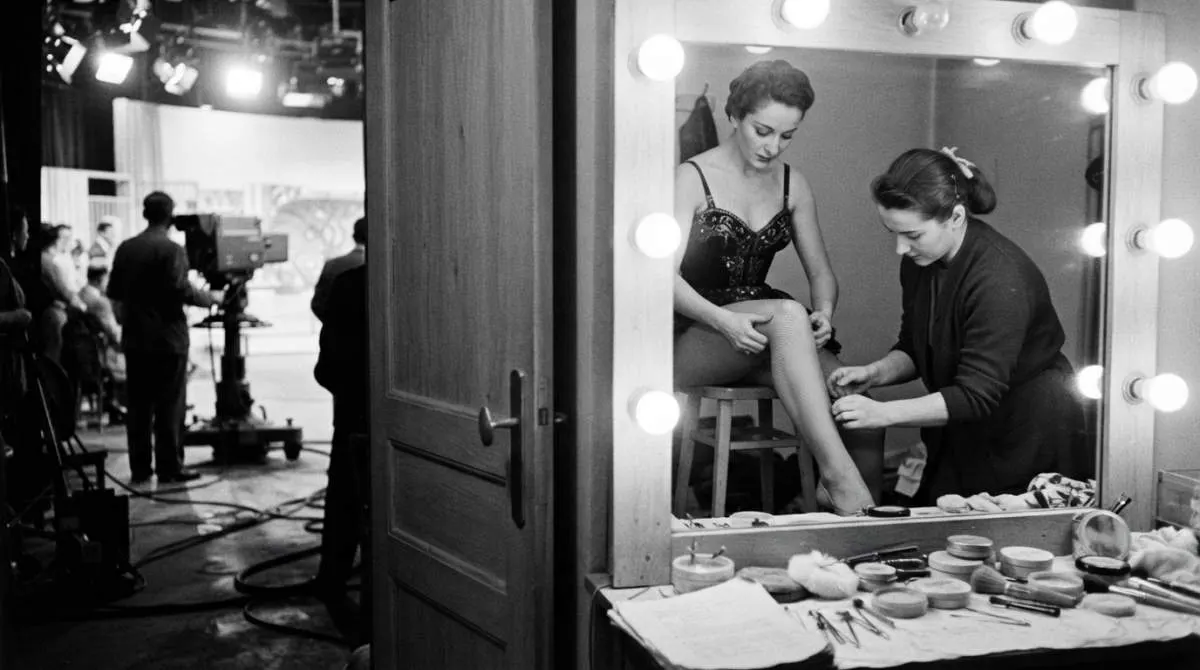
Every revolution needs its infrastructure. For the seismic shift in Italian television and style that arrived with Raffaella Carrà in 1970, that infrastructure was sheer, stretchy, and invisible. It was a pair of pantyhose.
Not just any pair, but a secret, custom-engineered garment named the 'Modello Carrà', designed by a small, innovative hosiery company called Ibici. This is the object biography of an undergarment that helped change what a woman could show, and do, on national television.
The Brief: A Garment for Invisible Freedom
Ibici was founded in 1959 by Gustavo Sarfati and Saverio Mayer, pioneers in using elastomeric yarn like Lycra in support hosiery. By the late 1960s, they were expanding from medical garments into full fashion ranges. Then came a request, an autographed letter from a rising star.
Raffaella Carrà was preparing for the 1970 season of the wildly popular Saturday night show 'Canzonissima'. Her vision involved dynamic, leg-baring dance routines that existing hosiery couldn't support.
The challenge was technical and sartorial. The pantyhose needed to stay up securely without a visible panty line or a high waist that would encroach on the midriff. It had to withstand the rigors of choreography while being virtually undetectable under sequined mini-dresses.
The solution was the 'Modello Carrà', technically dubbed 'Modello Speciale 70'. It was low-waisted, made from a 70 denier elastomeric fiber for durability and sheer appearance, and designed to stay put through a full performance.
This was a pivotal moment in the history of pantyhose, where technical innovation met a very specific cultural demand.
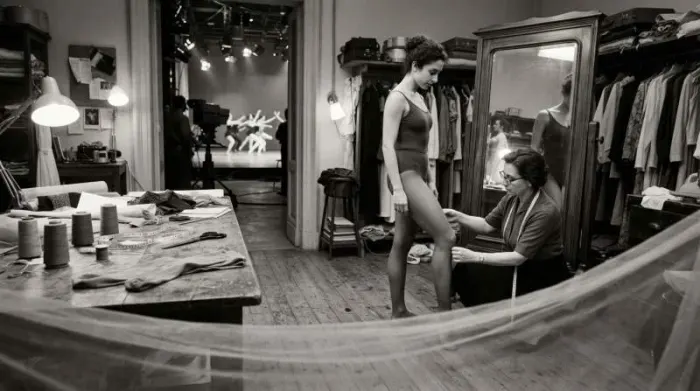
The garment wasn't just about coverage; it was about enabling movement and a specific visual silhouette on camera. Ibici's expertise in elastomerics, originally for medical support, found its ultimate fashion application in a television studio.
This period also marked the peak of Italian television's cultural power, with shows like Canzonissima reaching over 20 million viewers, making it a potent platform for introducing new social and fashion norms. The shift from traditional seamed stockings to seamless pantyhose had begun commercially in the late 1950s, but Carrà’s specific needs drove a bespoke evolution focused on performance.
On Air: The Scandal That Stitched Fashion to Liberation
The 'Modello Carrà' debuted with a bang, or rather, a gasp. During the 1970 Canzonissima opening theme, 'Ma che musica maestro!', Carrà turned to the camera and revealed her bare midriff. The nation erupted.
Mood Match
Four Ways to Say It Out Loud
Pick the moment you are in, and let Raffaella do the talking.
Practicing a dance move in the mirror.
Ma che musica maestro by Raffaella Carra.
That bouncy little tune turns your hallway into a stage and makes even two left feet feel like they might manage it.
Daring a partner to touch your shoulder.
Tuca tuca by Raffaella Carra.
It is a game of nerve dressed up as a dance, and the shoulder tap is the whole point of it.
Telling a lover exactly what you want.
A far l'amore comincia tu by Raffaella Carra.
She spells it out without a blush, which is precisely the mood you need when you are done hinting.
Toasting a friend who just got brave.
Tanti auguri by Raffaella Carra.
It is a celebration with a wink, the right song for raising a glass to someone who finally took the plunge.
Put one on, turn it up, and let the evening take its course.
Songs checked against en.wikipedia.org.
Here was a woman’s navel, live on state television, an act of audacity that became a national controversy. Her style-that iconic platinum bob and fearless, playful sexuality-was suddenly the talk of Italy. RAI, the state broadcaster, was at the time still governed by a conservative ethos, with programming often scrutinized by parliamentary commission. Carrà’s performance was a direct challenge to this establishment, leveraging her platform on a program that was ostensibly a song competition to broadcast a new, liberated femininity.
The real test came the following year. On November 13, 1971, Carrà performed 'Tuca Tuca' with dancer Enzo Paolo Turchi. Wearing a sequined mini-dress, she executed sinuous, sexually suggestive moves that focused attention on her hips and bare stomach.
The TV fashion scandals of the 1970s often centered on moments like this, where broadcast norms collided with shifting social mores. RAI censored the dance for its "overly sexy" movements. The controversy was amplified by the press, with some Catholic publications decrying the performance, while progressive outlets championed it as a symbol of modern Italy. This period, known as the anni di piombo (Years of Lead), was marked by social and political tension, making Carrà's joyful, physical rebellion a significant cultural counterpoint.
Yet the dance was possible precisely because of the unseen engineering beneath. The 'Modello Carrà' was now in production for her entire dance troupe, a uniform of invisible support. Carrà’s 1970s style was defined by this liberating audacity, a fashion rebellion played out on the most public of stages. It was a performance that challenged conservative gender norms, and it relied on a hosiery company’s ability to solve a very concrete problem: how to dance freely under the hot lights without a wardrobe malfunction.
- The 'Modello Carrà' was low-waisted to avoid appearing on camera during midriff-baring routines.
- It used 70 denier elastomeric fiber for durability to withstand rigorous dance rehearsals and performances.
- The design eliminated the need for a reinforced panty section, ensuring it was invisible under tight, sequined costumes.
- It was initially a one-off custom order for Carrà before being produced for her entire Canzonissima dance troupe.
- The success of this specialized garment illustrated Ibici's shift from medical support to high-performance fashion.
- The low-waisted design predated and influenced the commercial "control-top" and "high-cut" styles that would become popular in mainstream hosiery a few years later.
The Boom: From Studio Secret to Industry Leader
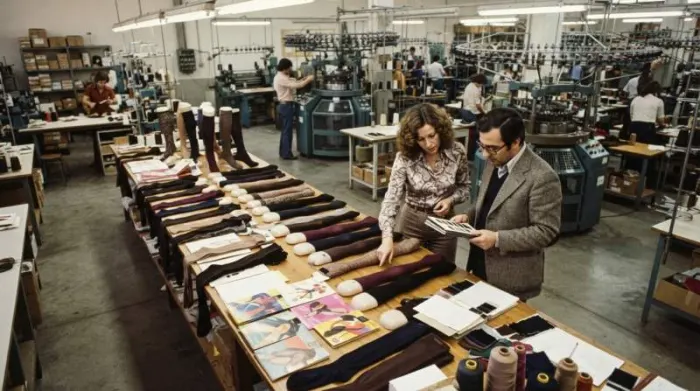
The success of the 'Modello Carrà' was more than a good PR story for Ibici; it was a catalyst. Solving such a high-profile, technical problem validated the company's direction and expertise. Throughout the 1970s, Ibici expanded aggressively into a complete range of fashion pantyhose, stockings, and knee highs, leveraging its reputation for quality and innovation.
Saverio Mayer, the co-founder, kept Carrà's autographed request letter as a prized memento of this turning point. The association with a national icon who embodied youthful freedom and modernity was priceless. By the 1980s, this trajectory led to a spectacular boom.
Ibici employed nearly 400 people and achieved a turnover of 56 billion lire (approximately €28 million at the time), becoming one of Italy's leading hosiery manufacturers. The company's growth mirrored Italy's "Economic Miracle" in microcosm, where family-owned firms in the textile-rich regions of Lombardy and Emilia-Romagna combined craftsmanship with technological innovation to achieve global success.
The company’s story mirrors a broader narrative in vintage Italian hosiery, where technical textile advancement fueled fashion possibility. The focus was on customized, high-quality production that addressed real-world needs, whether for medical support or for dancing under television lights. The 'Modello Carrà' episode was a niche moment, but it highlighted how clothing technology directly enabled cultural expression. Other Italian hosiery giants like Calzedonia and Golden Lady emerged from similar artisanal roots, but Ibici’s link to a televised cultural moment gave it a unique marketing legacy.
Why a Pair of Pantyhose Still Matters
Today, the 'Modello Carrà' exists in company archives and anecdotes, a footnote in the grand saga of 20th century fashion history. Yet its significance is outsized. It represents a moment where fashion history is not just about the visible icon-the sequined dress, the platinum haircut-but about the hidden, technical garment that made the icon's performance possible.
This object biography reminds us that revolutions in style and attitude are often built on unglamorous foundations. Before a dance could shock a nation, an engineer had to figure out the tensile strength of 70 denier elastomer. Before a woman could symbolize liberation on screen, her wardrobe required a solution that granted both security and invisibility. The 'Modello Carrà' was that solution, a secret stitch in the fabric of cultural change.
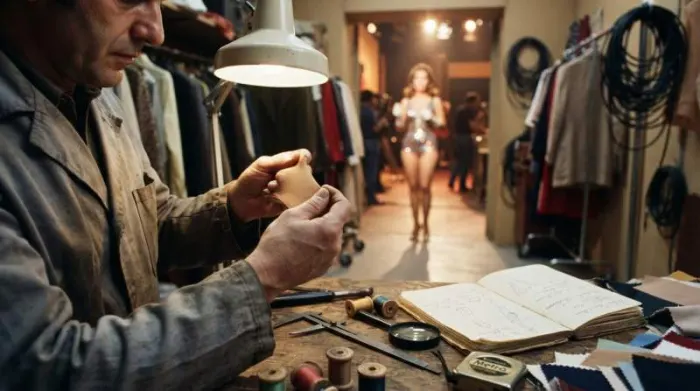
It matters because it connects the dots between industrial innovation and social evolution. The next time you see a vintage silhouette from that era, defined by freedom of movement and a hint of scandal, remember that its reality was often held together by threads of Lycra and sheer ingenuity, engineered in places like the Ibici factory.
The garment designed for Raffaella Carrà did more than just stay up; it helped hold up a new idea of what women could be on television, and by extension, in the public imagination.
Carrà’s legacy as a gay icon and a symbol of joy further amplifies the cultural weight of this object; her costumes and performances, enabled by such garments, offered a template for self-expression that resonated far beyond Italy. The history of the 'Modello Carrà' is thus a case study in material culture, demonstrating how a simple undergarment can be a crucial actor in the theater of social change.
Sources
The sources we read for this article.
Who invented the first seamless pantyhose?
The seamless pantyhose we know today owes a big thank-you to Allen Gant Sr., who in the 1950s combined panties and stockings into one practical piece after his pregnant wife struggled with bulky garter belts. His prototype was a humble, hand-stitched creation, but it sparked a revolution in everyday comfort.