
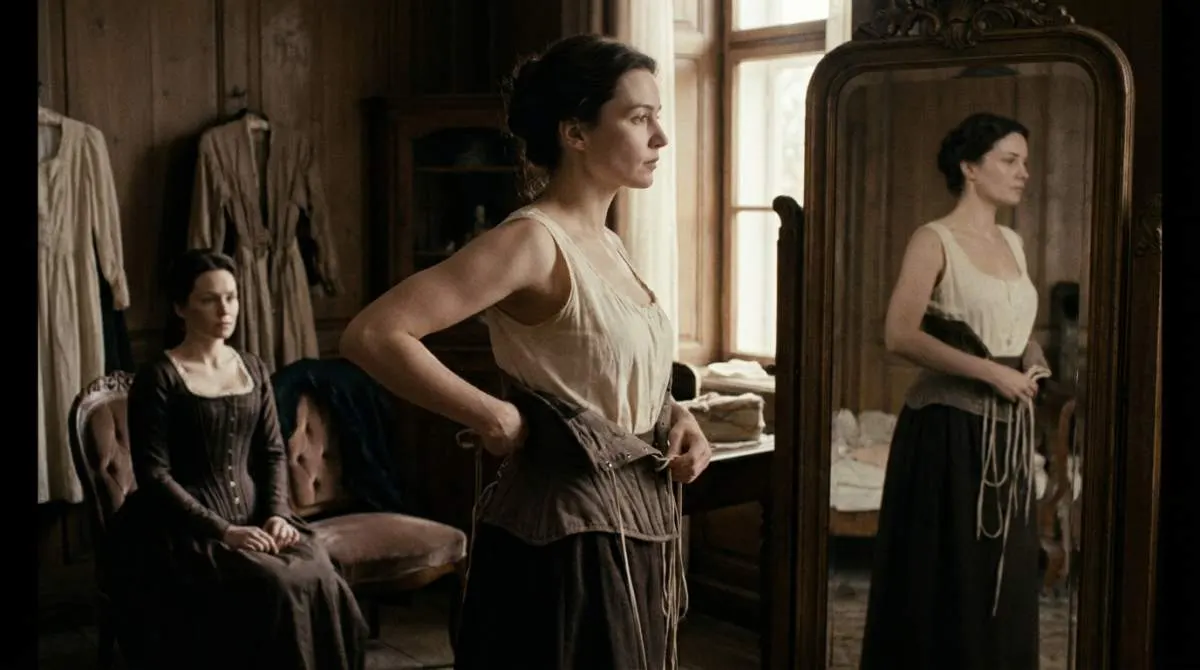
Some stories carry a weird little chill. This one starts with a whisper of fabric. Picture a drawing room in 1910, where heavy velvet drapes block the sun and a woman can barely breathe. Her corset is whalebone and discipline, a cage of steel and silk that keeps her upright, rigid, and silent. Then she yawns. That small, involuntary act of exhaustion was the beginning of the end for an entire system of control.
The rules of that era were invisible but absolute. A lady's body was a public project, shaped by society's expectations and held in place by her undergarments. Then the flapper arrived in the 1920s, bringing scissors to that old script. Hemlines rose, waistlines dropped, and the corset became a punchline. A girl could finally breathe, and that small, fundamental freedom terrified the establishment. Why? Because controlling ribs controls a voice.
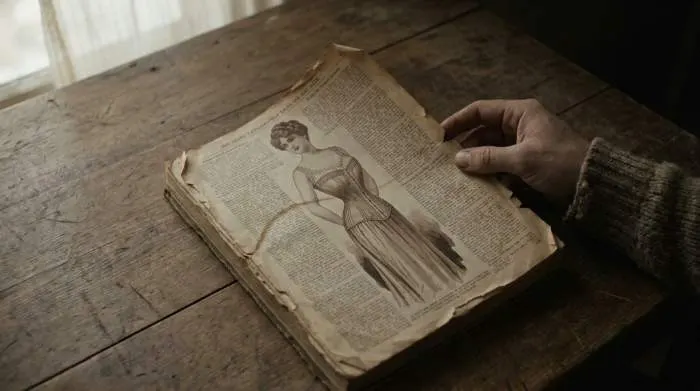
I once found a 1919 Sears catalog in a thrift store near Detroit. The pages were brittle and smelled of dust and regret. One ad promised a 'health corset' that would keep a woman's spine straight and her morals intact. I laughed at first, but then I saw the fine print. It called the garment a 'vital safeguard of feminine propriety.' That's not a sales pitch. That's a threat.
The Elastic Band That Terrified the Establishment
The real secret weapon of this silent rebellion wasn't a radical slogan or a march. It was a tiny, hidden detail in women's undergarments: the elastic band. Before the 1910s, most undergarments relied on laces, hooks, and stiff boning to hold the body in a fixed, approved position. Elastic, with its ability to stretch and move with the body, changed everything.
This small innovation made the rigid corset optional for the first time. It allowed a garment to accommodate the body's natural movements rather than forcing the body into a predetermined shape. To the old guard, this wasn't about comfort; it was a direct challenge to their authority. The original uncorseting was a battle over control: who got to decide what a woman's body looked like, and how it was allowed to move through the world.
How the Flapper's Undergarments Worked
Flapper undergarments worked by a radical principle: subtraction. They removed the boning and complex lacing of the corset. In their place, a short, straight chemise sat lightly on the body. Some versions featured a simple, low-stretch elastic band at the hip, not to shape but merely to hold the garment in place.
The dress then hung straight from the shoulders, completely ignoring the natural waist. For the first time in generations, women could breathe deeply, twist, and dance wildly without restriction. To the moralists of the day, this unshackled movement didn't look like freedom, it looked like pure, unadulterated chaos. The silhouette itself was a declaration of independence.
The Hidden Detail That Sparked a Panic
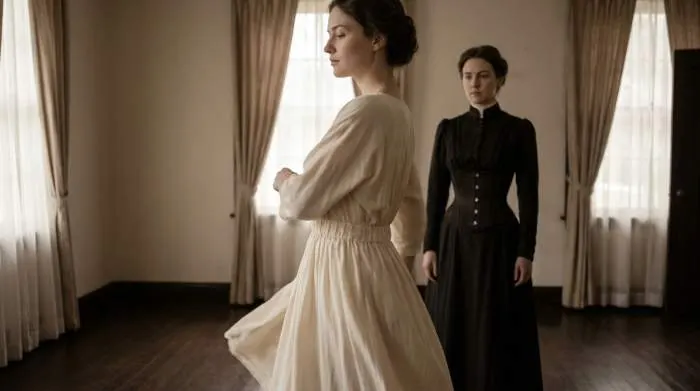
That simple elastic band released the female torso from constant, rigid control. Without boning, the body could bend, slouch, and relax. Natural hips and a soft belly became visible under the era's lighter, drapier fabrics. This shocked a public accustomed to the armored, manufactured silhouette of the Gibson Girl.
The panic wasn't really about bare skin; it was about the profound loss of social control. The elastic band was seen as a political threat stitched into a seam. This fear became so potent it reached the highest levels of government. In 1921, a U.S. congressman famously proposed a bill to ban 'elasticized undergarments' for women, arguing they encouraged 'loose morals and loose dancing.' The bill failed, but the very fact it was proposed shows how seriously the establishment took this sartorial insurrection.
From Moral Panic to Pop Culture Echoes
The shift away from the corset didn't happen overnight, but its fate was sealed. By 1925, it was largely dead for daily wear. Women were voting, working in offices, and dancing the Charleston without it. The Great Depression of the 1930s cemented the change; money was tight, and the practicality of cheap, elasticized garments won over outdated notions of propriety.
The Elastic Conspiracy
- The flapper's rebellion was all about that scandalous elastic band, a tiny innovation that single-handedly toppled the corset in the 1920s.
- While elastic was a handy new material, the death of the daily corset was a much slower, messier process driven by decades of health arguments, wartime practicality, and evolving fashion ideals, with the industry itself adapting to survive.
Source: muse.jhu.edu
The legacy of this rebellion is the physical freedom we take for granted today. Every pair of stretch jeans, every comfy pair of leggings, carries the ghost of that 1910s step-in chemise. Yet, pop culture has never let the corset go quietly. Fashion magazines kept the silhouette alive as a symbol of glamour and restraint. In 1968, designer Rudi Gernreich's 'no-bra' look sparked a nationwide freakout that echoed the elastic panic of the 1920s.
In 2013, Baz Luhrmann's The Great Gatsby rebooted the lingerie debate for a new generation, though fast-fashion versions of the flapper dress came without any of the original's minimal structure. The direct political threat had softened, but the visual and symbolic punch of the uncorseted body remained sharp. The corset's weight never truly died; it just migrated into the realm of pop culture, where each generation could wear it, or reject it, on their own terms.
The Quiet Rebellion of Not Performing
Today, corsets are back, but they wear a completely different mask. Young people layer them over T-shirts and hoodies as bold fashion statements, not as foundational garments meant to reshape the body. Modern versions often include elastic panels and zippers, a nod to the very technology that helped dismantle their power. The secret of the elastic band still works; it allows the corset to be an accessory, not armor.
The recent pandemic made the 'no bra' look a common survival instinct, a small way to preserve sanity during lockdowns. The same underlying logic that made the 1920s flapper a threat makes a woman in a t-shirt without a bra a subject of scrutiny today. It's rarely about the garment itself. It's about the audacity of not performing, of choosing comfort and personal autonomy over external expectation. We see this same tension in the 1930s battles over women wearing pants another frontier in the war for sartorial freedom.
The Real Fear: What Happens When You Stop Trying
The uncorseting legacy lives on, not in museum glass cases, but in our daily choices. It's in the decision to wear sweatpants on a video call, to forego makeup, or to simply exist in a body without constantly correcting its posture or shape. We are still fighting a version of the same fight as the 1920s flapper: Who owns the right to be seen as themselves, in all their unperformed, authentic humanity?
When you stop performing the role assigned to you, whether it's the rigid lady of 1910 or the perpetually 'on' professional of today, you don't just change your silhouette. You reclaim a piece of your self. That is the real, enduring threat. It’s why the panic over a woman's relaxed posture or comfortable clothing never truly ended; it just evolved, finding new life in digital spaces and the unspoken rules of modern life. The rebellion that started with a yawn and an elastic band is a quiet, ongoing revolution.
What did flappers wear under their dresses
Flappers often wore a simple, straight-cut chemise or a bandeau top that flattened the bust, paired with loose, knee-length tap pants. This radical shift from the corset was partly inspired by the practical, free-moving uniforms of women working in factories during World War I. The look was so scandalous that some department stores refused to display the new undergarments in their windows.