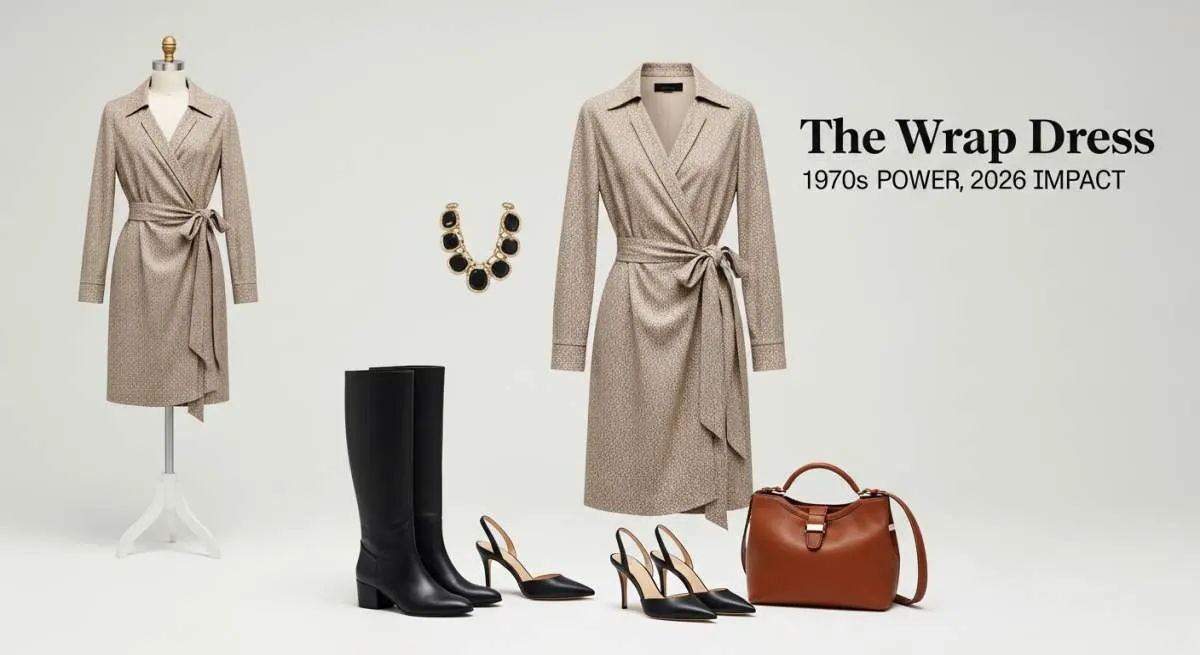
Everything the 70s Stood For, in One Dress
The wrap dress arrived in the mid-1970s as a quiet revolution. Diane von Furstenberg created it with a simple mission: to make a garment that moved with a woman's body instead of constraining it. She famously said she wanted to design a dress that was "all woman, no strings attached," and the market responded with fervor, over a million were sold by 1976. The design was radical in its simplicity: a V-neckline, a fitted bodice that tied at the waist, and a skirt that wrapped and overlapped rather than zipped or buttoned.
Why Jersey and Silk Dominated the Original Design
The wrap dress's success depended entirely on its fabric. Diane von Furstenberg primarily used silk jersey, a lightweight, fluid material that draped beautifully without clinging or wrinkling. Silk jersey has a natural sheen and moves with the body, which is exactly what the wrap dress needed to function. The fabric was expensive enough to feel luxurious but practical enough for everyday wear, with a slight stretch that made it forgiving across different sizes.
Prints, Patterns, and the Visual Language of the Era
The wrap dress became famous not just for its cut but for its prints. Bold, colorful geometric patterns, florals, and abstract designs dominated the original DVF collections. These weren't subtle prints, they were statement-making, eye-catching patterns that reflected the visual optimism of the 1970s. A woman in a wrap dress with a vibrant print wasn't trying to blend in; she was announcing her presence.
Solid-colored wrap dresses in jewel tones, emerald, sapphire, burgundy, were equally popular and offered a more understated elegance. The beauty of the wrap dress was that it worked in almost any fabric and pattern because the silhouette itself was so strong and flattering.
Why the Wrap Dress Is Back in 2026
The wrap dress never really left, but it has cycled in and out of mainstream fashion consciousness several times since the 1970s. In the 1990s and early 2000s, it was rediscovered by a new generation looking for vintage pieces that felt both retro and timeless. Today, as fast fashion has made people more conscious of quality and longevity, the wrap dress has returned with renewed purpose. It's a piece that works across decades, body types, and occasions, exactly what modern dressing demands.
The wrap dress also represents something deeper: a rejection of trend-chasing in favor of pieces that actually work. In a world of overconsumption, owning a wrap dress, whether vintage or new, feels like a small act of resistance. It's a garment that proves you don't need a closet full of clothes if you have pieces that truly serve you.
How to Style a 1970s Wrap Dress for Different Occasions
The wrap dress's greatest strength is its versatility. The same dress can look completely different depending on how you style it, which is why it remains relevant across decades and occasions.
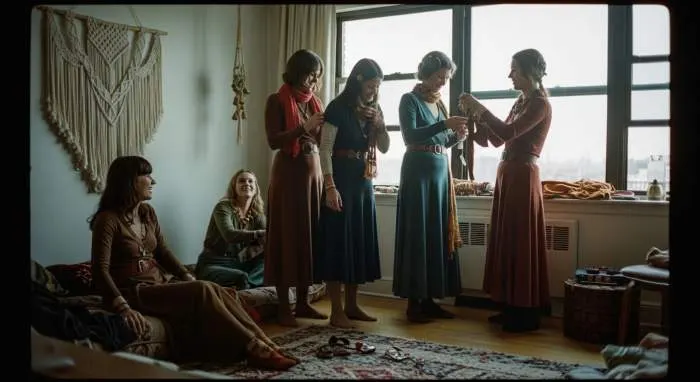
If you're chasing that true 70s bohemian vibe, it's all about layering and natural textures. Think delicate necklaces stacked together, fine chains with tiny pendants or bits of natural stone. Fringe is your best friend here: a suede bag with fringe slung across your body, or a silk scarf with a playful fringed hem, can instantly pull the whole look together. Go for materials like wood, macramé, and plenty of suede. And don't forget a wide-brimmed floppy hat, it's not just an accessory, it's the centerpiece. Espadrilles or stacked wooden heels are the perfect finishing touch, grounding everything in that earthy, effortless charm.
From Boho to Bold: Switching Up the Vibe
But that's the beauty of the wrap dress, it can totally change its personality. If you want to take things in a sleeker, more modern direction, the accessories do all the work. Swap the layered necklaces for one simple, elegant chain in gold or silver, or maybe a pair of geometric earrings. Trade the slouchy boho bag for a structured clutch, it instantly elevates the whole outfit. Pointed-toe heels, whether a cute kitten heel or a sky-high stiletto, are the ultimate way to finish things off, lengthening your leg.
Belts are another game-changer when it comes to the wrap dress. A slim leather belt cinched at the waist can completely redefine your silhouette, giving you a more polished, professional look that works from the office straight into dinner plans. Feeling bolder? Try a wider, obi-style belt. That single swap adds a touch of avant-garde flair and creates a striking focal point, especially when you pair it with a solid-colored wrap dress. And the shoes? They can change everything. Canvas sneakers for a relaxed daytime errand run, satin pumps for a night out, the wrap dress adapts to whatever you need it to be, which is exactly why it's still the ultimate 70s work-to-party piece.
Why Vintage (and Thrifting) Makes It Even Better
Choosing a pre-loved wrap dress isn't just about the outfit, it's about owning a little slice of fashion history. This is a piece that's already lived a life, been part of countless moments, and still looks effortlessly good. It's a smarter, more thoughtful way to dress, and it proves that real style isn't about chasing the newest thing, it's about loving what lasts.
Vintage wrap dresses from the 1970s and 1980s often feature superior fabric quality compared to many modern reproductions. An original silk jersey wrap dress from the DVF era or a well-made vintage alternative will drape and move in ways that cheaper contemporary versions simply cannot match. The seams are often more carefully finished, and the construction reflects an era when garment manufacturing prioritized durability over speed.
When thrifting for a wrap dress, look for signs of quality: smooth seams, even stitching, and fabric that feels substantial rather than thin. Check the fiber content on the label, silk, linen, and quality cotton blends are your best bets. A vintage wrap dress in good condition is an investment piece that will outlast most of what you buy new, and it carries the authenticity that no reproduction can quite capture.
Why the Wrap Dress Flatters a Wide Range of Body Types
Part of why the wrap dress became so iconic is that it genuinely flatters a wide range of body types. The V-neckline elongates the neck and draws the eye upward. The fitted waist creates definition without requiring a specific body shape. The overlapping skirt skims over the hips and thighs, providing coverage without bulk. For women who had spent decades in either restrictive girdles or shapeless shifts, the wrap dress offered a third option: a garment that celebrated the female form without demanding conformity to a single ideal.
This is why the wrap dress has remained relevant even as body ideals have shifted. It works because it's designed around how bodies actually move and change, not around a fantasy silhouette. Whether you're wearing it to a 1970s disco or to a modern office, the wrap dress's fundamental promise remains the same: you'll look and feel good in it.
What is the history of the wrap dress
Before Diane von Furstenberg made it famous, the wrap dress concept had roots in 1930s and 1940s designs by Claire McCardell, who championed American sportswear with simple, unconstructed shapes. McCardell's 'Popover' dress, a wraparound style, was a wartime innovation meant to be easy to wear and care for. Von Furstenberg's genius was in updating that idea with sexy, modern prints and a focus on the working woman's wardrobe.