Setting the Scene: Two Visions of Gatsby
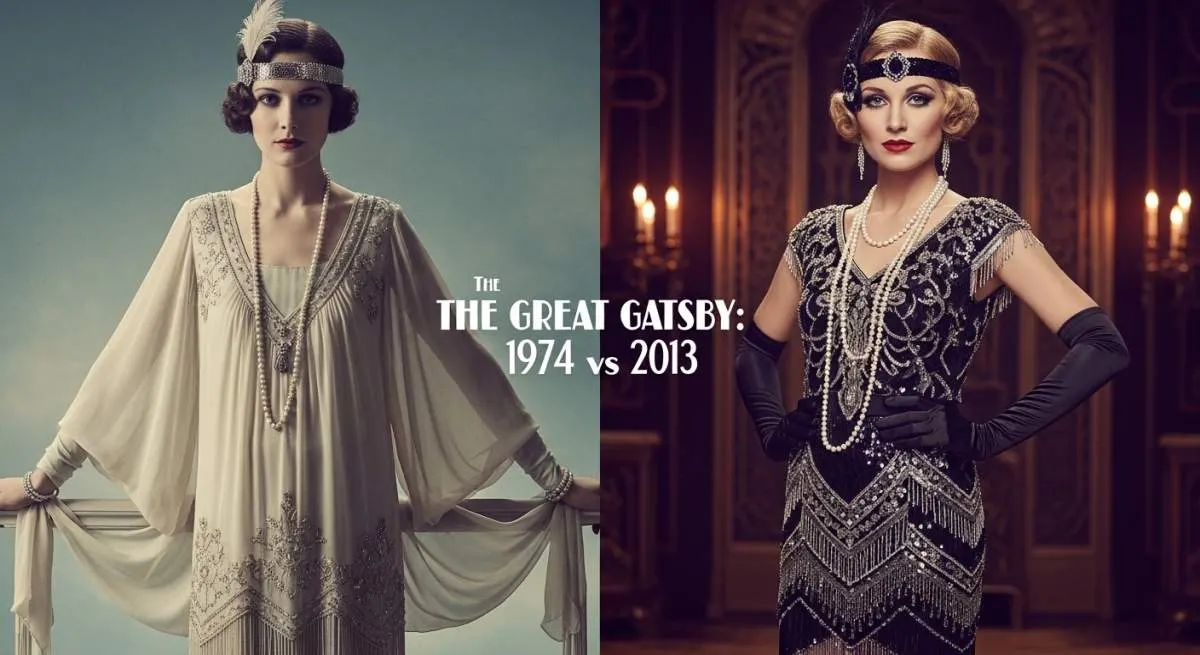
For decades, the 1974 adaptation of The Great Gatsby was the go-to reference for seeing the Roaring Twenties on screen. It offered a romantic, seemingly definitive portrait of flapper dresses and jazz-age decadence. Then, in 2013, Baz Luhrmann arrived with a stylistic explosion, reimagining Fitzgerald's world in neon-bright hues and crystal-covered gowns. It sparked a fashion debate that still sizzles: which film truly captured the spirit of the era, and which one simply captured our modern imaginations?
Both movies became cultural touchstones, but they approached the 1920s from completely different angles. One is a masterclass in period research, the other a masterstroke of modern spectacle. The battle between the two isn't just about beads and bias cuts; it's about how we remember history itself. Whether you're planning a Gatsby-inspired wedding or just love the drama of dropped waists, this clash of cinematic styles tells a fascinating story.
Theoni V. Aldredge's Historical Blueprint
Costume designer Theoni V. Aldredge didn't just make clothes; she built a time capsule. Her obsessive research involved digging through fashion archives, studying authentic plates from the 1920s, and sourcing fabrics that matched the exact weight and drape of the era. This dedication earned her the Academy Award for Best Costume Design, a testament to her commitment to getting it right.
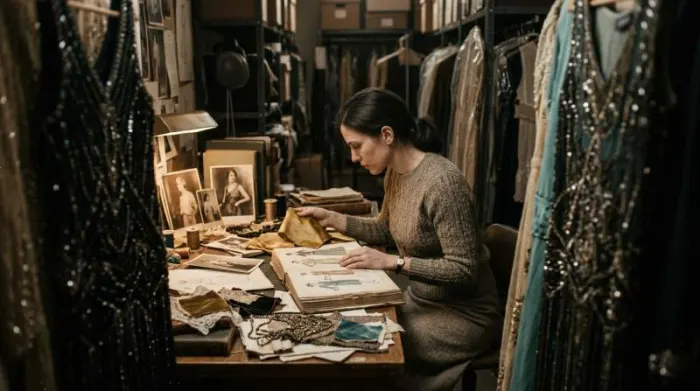
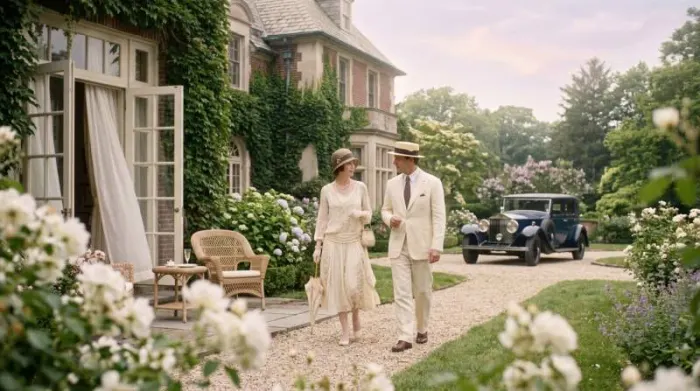
Aldredge's palette was a world away from neon. She favored muted, sophisticated colors like champagne, dove gray, dusty rose, and navy. These weren't costumes shouting for attention; they were whispers of old money and quiet luxury. The fabrics were the real deal: sumptuous silk charmeuse, plush velvet, and fine wool crepe, materials you would have actually found in a wealthy Long Island closet.
Silhouette and Subtlety
The hallmark of 1920s fashion, the dropped waist, was rendered with a soft, natural drape in the 1974 film. Nothing felt stiff or costumey. The beading was another point of genius, delicate and often hand-applied in subtle patterns that caught the light without blinding it. This attention to nuance made every piece feel lived-in and authentic, not like a museum piece on a hanger.
Perhaps the most historically accurate touch was the clear distinction between daywear and evening glamour. Day suits featured proper collars, sensible hemlines, and practical hats, reflecting the reality of a woman's wardrobe. Then, for the parties, gowns like Mia Farrow's iconic gold-fringed number would emerge, all sparkle and movement, but always with an underlying elegance. This balance is why the 1974 film remains the gold standard for purists.
The Prada Partnership
Baz Luhrmann's vision was never going to be a history lesson. For the 2013 extravaganza, his wife and production designer Catherine Martin teamed up with Miuccia Prada. Together, they co-designed the costumes, creating 40 custom Prada dresses just for the party scenes. This collaboration fused sharp, modern tailoring with art deco motifs, resulting in a fantasy 1920s that was breathtakingly cinematic.
The goal was visceral impact, not textbook accuracy. Luhrmann wanted the decadence of the era to feel immediate and urgent to a 2013 audience, more like a pulsating music video than a dusty period piece. The costumes were a key tool in achieving that, designed to dazzle from the first frame. They were less about what someone actually wore and more about how the era felt in retrospect, larger than life.
Beads, Crystals, and Cultural Shockwaves
If the 1974 film used subtle beading, the 2013 version declared war on subtlety. Swarovski crystals, sequins, and metallic fabrics created a shimmering, almost liquid effect on screen. The iconic look was Daisy Buchanan's sheer, crystal-encrusted gown, paired with a long pearl necklace and a jeweled headband. It became an instant style icon, defining a new generation's idea of flapper fashion.
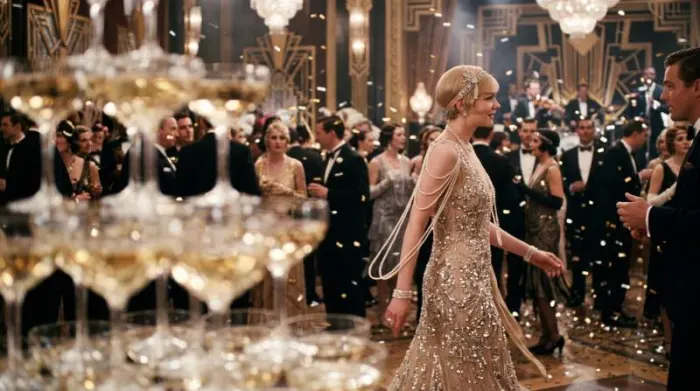
The ripple effect was immediate and massive. Following the film's release, 1920s-inspired fashion exploded onto the scene. High-street stores were suddenly full of flapper dresses, feather headbands, and art deco jewelry. The "Gatsby look" dominated Halloween, themed weddings, and New Year's Eve parties for years. It even filtered up to the runways, influencing collections from designers like Ralph Lauren and Marc Jacobs who channeled its particular brand of high-octane glamour.
Capturing the Spirit of the Age
So, which film truly captures the Jazz Age? The answer depends on what part of that complex era you're looking at. The 1974 film feels like a beautifully preserved museum piece, showcasing the quiet, established luxury of old money. Its pacing and aesthetic are elegant and restrained, much like the society it often critiques.
In stark contrast, the 2013 film feels like the wild, endless party itself, a loud, dazzling nightclub you can't ignore. It captures the reckless, frenetic energy of the nouveau riche and the chaotic thrill of the era's excess. One shows the rules; the other shows what happened when people broke them. Both are valid interpretations of Fitzgerald's world.
The lasting influence of these two films on fashion tells its own story. The 1974 version inspired a subtle, sophisticated wave of 1920s influence in the late 70s, particularly in evening wear and accessory design. Its impact was deep but niche, cherished by vintage enthusiasts and historians.
The 2013 version, however, sparked a global tsunami. Its impact was broader, louder, and commercially inescapable, revitalizing 1920s style for the fast-fashion era. While the 1974 film's influence has proven more enduring among purists, the 2013 film's cultural moment was undeniably massive, introducing the glamour of the Jazz Age to an entirely new audience.
The Final Verdict: A Matter of Mood
In the end, comparing these two cinematic interpretations is less about declaring a winner and more about appreciating their distinct purposes. Theoni V. Aldredge's 1974 costumes are a masterclass in historical authenticity, offering a soft-focus, romanticized vision that has stood the test of time. They are about character and context, woven into the film's fabric with impeccable detail.
Catherine Martin and Miuccia Prada's 2013 creations are a masterclass in mood and modern spectacle. They sacrificed strict accuracy for overwhelming visual and emotional impact, creating a fantasy that redefined the era for the 21st century. Both approaches remind us that fashion in film is never just about clothes. It's a powerful tool for storytelling, for defining character, and for making a statement that echoes far beyond the credits. Whether your heart belongs to the classic elegance of '74 or the modern flash of '13, Gatsby's threads continue to spin, inspiring our parties, our weddings, and our daydreams of endless champagne and jazz. And honestly, that's the most fun part of all.
What did flappers wear in the 1920s
Flappers didn't just wear dresses; they rebelled through fashion. They chopped off their hair into bobs, flattened their chests with bandeau bras, and hiked hemlines to the knee, a scandalous move that exposed their silk stockings. This look was a deliberate break from Victorian corsetry, signaling freedom and a new, modern womanhood.