
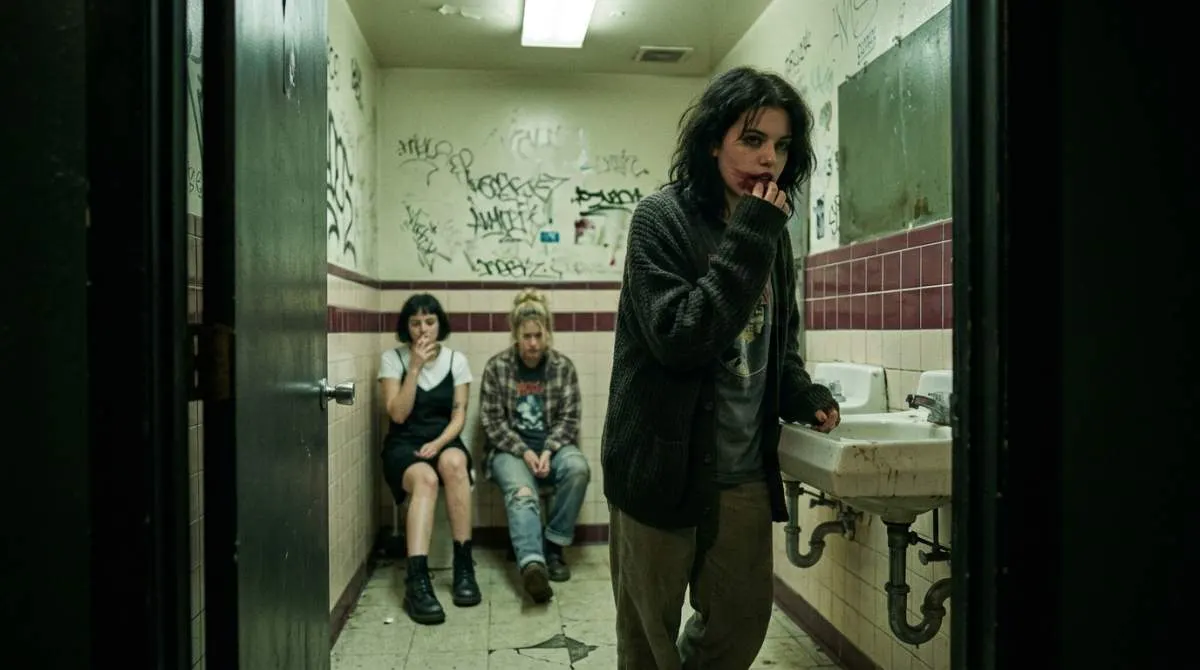
It's the summer of 2013, and a blocky VHS rip of an 18-minute short film called Dirty Girls hits YouTube. The audio is a little crunchy, the image has that grainy, sun-bleached look of something shot on a camcorder in the mid-90s. You see a cluster of teenage girls, maybe 13, sitting on a lawn, their hair wild and uncombed. One of them, Harper, talks calmly into the camera: the label "dirty" was a taunt that classmates used to single them out, but they simply flipped it into a statement of defiance, a refusal to care about the "in" style, an early expression of aesthetic fatigue.
That short film, directed by then-high-school-senior Michael Lucid in 1996, has now racked up over 5.7 million views. It's become an accidental time capsule of a moment, evoking unlived time, when a small group of eighth graders decided that rejecting the pristine aesthetic of Kate Moss or Carolyn Bessette Kennedy was more punk than any leather jacket. What started as a school project meant to document the weird kids has become an extended middle finger to late-90s beauty standards, and its echoes are still ringing down runways and through teenage bedrooms today.
The Sour Grrrls and Their Definitions of Resistance
The film's core was sisters Amber and Harper, along with friends Carly and Lauren, four 13-year-old eighth graders in Los Angeles. They weren't just ignoring the high standards of grooming around them; they had a whole DIY ethos behind their stance. They published a zine called Sour Grrrls, a photocopied manifesto that opposed sexism, racism, and homophobia. For them, being a "dirty girl" was not about literal dirt, it was a political refusal to comply.
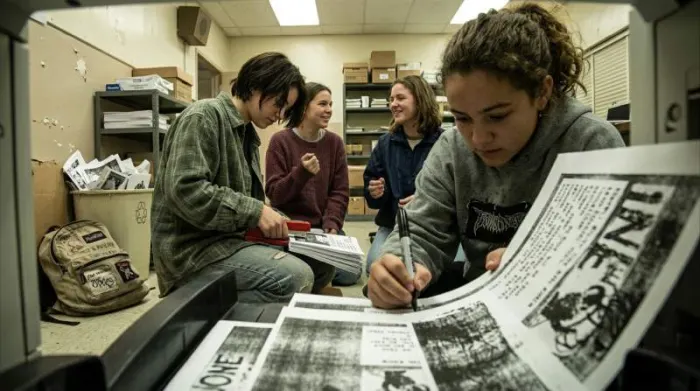
In one authoritative definition from the zine, which appears in the doc, a real dirty girl is someone who "doesn't care about the 'in' style and goes about what they really feel." That declaration anchors an entire rebellious identity that would baffle most adults at the time. The girls speak calmly about something that feels like a full-on counter-norm movement: they reject the newly emerging Photoshop culture and a surge in plastic surgery, basically, the whole 90s package of enforced palatability.
Gossip Check
- You might have heard that the Dirty Girls were legitimately unwashed, that the nickname reflected a lack of actual hygiene.
- Actually, the whole "dirt" thing was a mean nickname used by classmates to ostracize them; they reclaimed it as a banner for a style rebellion, not a statement about not showering. The documentary itself shows one girl is joked to be "the girl of evil repute who didn't take a shower since Kurt Cobain died", a jab, not fact.
Sound of Rebellion: Liz Phair and the Echoes on the Runway
Part of the movie's pull is its raw soundtrack, a track that sounds like a greaser anthem for the girls:Batmobile by Liz Phair. The music fits the DIY energy, the cheap camcorder feel, the unretouched faces of kids who would rather be in a parking lot than a mall. There's no gloss here, just a live core of defiance that's timeless.
So it's a bit shocking, but also completely appropriate, that this aesthetic fatigue is now being borrowed on some of fashion's biggest platforms. In 2023, Balenciaga's spring/summer show was literally staged in a peat bog, models tromped through mud, their clothes muddied, the whole show smelling like earth.
Dilara Findikoglu's SS26 presentation had mud-smeared faces looking like a wild Saturday. And Miu Miu's SS24 show was noted for a particular greasy hair texture. French designers who are not the girls themselves are seizing on the truth: the decision to be unclean, or at least to look it, has a unique power.
- A specific attitude: The Dirty Girls themselves said it's about caring more about what you think than what everyone else thinks.
- Main ingredient: The rejection of the plastic surgery and the saturated Photoshopped perfection of the mid-90s.
- Modern echoes: Charli XCX's "Brat" era embrace of messy makeup, Kim Petras's unkempt visual, and Miu Miu's and Balenciaga's overt "dirt" aesthetic.
- DIY roots: The original girls printed a zine, and this still inspires a wave of chaotic, unmade zines and band projects online.
Why We Keep Looking Back at the Unwashed
What strikes you watching Dirty Girls now is how recognizable the fighting feels. They were rejecting a standard that is still haunting people: the zero flaws, the increasingly unattainable body shape, and the doors of Photoshop that make everyone look like a product. In 2026, we're into a new wave of "anti-grooming", full sleeves of tattoos, unplucked eyebrows, the whole "I don't give a damn" thing. But the Dirty Girls were the philosophical template for it, an early model of sustainable upcycling.
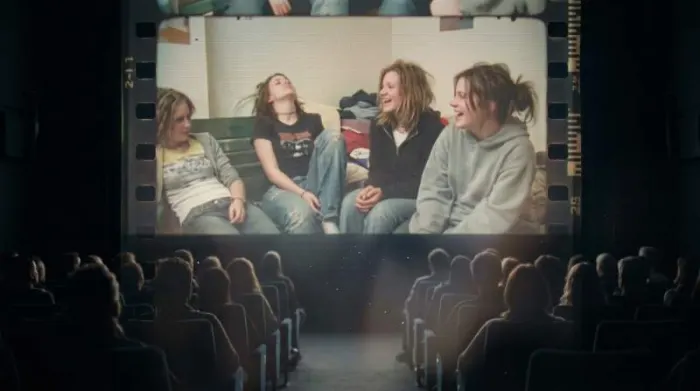
It was recently in the official program of the 2026 Berlin International Film Festival, that's 20 years after it was shot. An 18-minute look into a sliver of suburban teen life that refuses to quiet. The documentary hasn't just become a time capsule; it's become a perennially relevant trouting across a glossy facade. In a world turning more towards a groomed version of resistance, these kids remain the real thing, an unlikely canon of anti-perfectionism that didn't ask permission.
What does dirty girl mean in the documentary
In the 1996 short film, the term 'dirty girl' was a schoolyard insult that the girls reclaimed as a badge of honor. Their zine 'Sour Grrrls' defined it as someone who rejects mainstream style and follows her own feelings. The phrase later inspired a 2017 book by author Sarah Miller that explored the cultural impact of the documentary.