
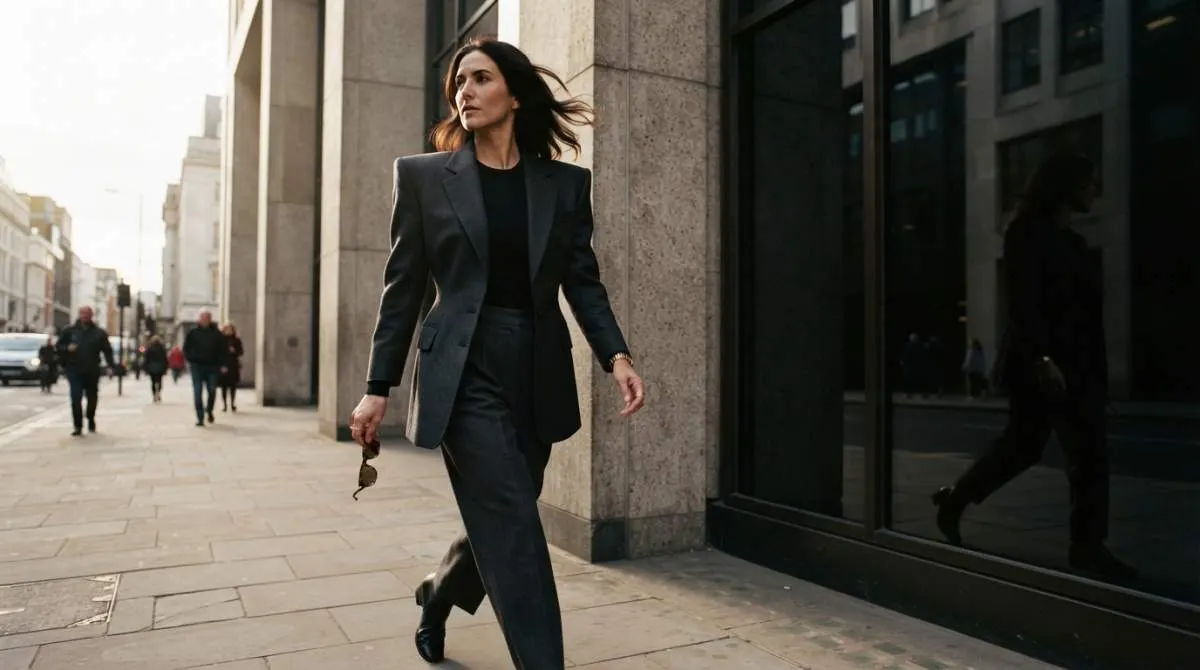
Look at any street style gallery or runway recap from the past season, and the silhouette is unmistakable. A sharp, assertive line drawn directly from the shoulder. It’s the power shoulder, back from its 1980s heyday, but this time it’s not just boardroom armor. It’s a sleek, sculptural, and undeniably modern statement.
The question isn’t really whether 80s power shoulders are back. They are, definitively. The trend stormed the runways, appearing for major houses like Saint Laurent, Balenciaga, and Bottega Veneta.
But the revival is nuanced. The exaggerated shoulder has found its way back into the fashion conversation, yet it’s shed its purely political skin for something more experimental and refined [1].
The Architectural Blueprint: 1930s Origins
While we associate the look with power suits and corporate climbers, its architectural blueprint was drafted much earlier. The original iteration of the power shoulder was pioneered not in the 80s, but in the 1930s by two formidable women: Coco Chanel and Elsa Schiaparelli.
Schiaparelli, in particular, is credited with inaugurating the style for her fall-winter 1931 collection. Her approach was less about mimicking male tailoring and more about creating a new, commanding silhouette for women. It was a deliberate architectural choice, building structure and drama from the ground up-or rather, from the shoulder out.
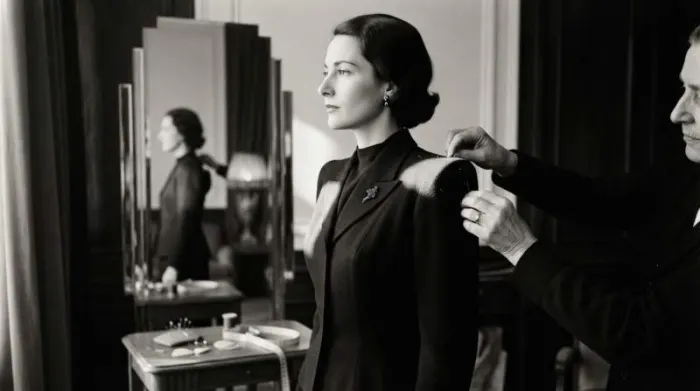
This early experimentation with shoulder emphasis was a quiet rebellion. It was a move away from the soft, draped silhouettes of the previous decade, proposing instead a frame that was bold and graphic. It laid the foundation, but the cultural moment to fully embrace that frame was still decades away.
Peak Power: The 1980s Boardroom
That moment arrived with the 1980s. The structured shoulder became the critical, non-negotiable component of the power dressing movement for women entering corporate America in force. This wasn’t just fashion; it was a uniform and a strategy [2].
Behind the Scene · Fictional Simulation
Pins, Foam and a Purple Blazer
Margaret is a fitting-room seamstress at a New York department store in the mid nineteen eighties.
The fitting room smelled of steam and new wool, and the overhead light buzzed like it had opinions. I knelt on the little stool with my mouth full of pins and my tape measure round my neck, and I turned that purple double-breasted blazer inside out while the junior executive stood there with her arms stiff as a scarecrow. She wanted the shoulders broader before tomorrow. I could feel her patience thinning with every pin I pushed into the seam, and the mirror showed both of us going grey under that light.
I went down to notions and came back with a roll of quilted mattress padding, the kind we used for display busts, and cut two small half moons. I slid them under the shoulder seams, smoothed the wool flat with my thumb, and pinned them quiet. She looked at herself and stopped fidgeting. The padding held her shape without a sound, and the fluorescent light caught the purple at the lapel like it had just been waiting for a reason.
A fictional scene written for this article — not a real account.
The trend was heavily influenced by John T. Molloy’s ‘Dress for Success’ manuals, which codified the visual language of authority. The goal was to project power and command respect in rooms historically dominated by men. The shoulder pad was your sartorial armor, and no one built it bigger than designers like Claude Montana, who was dubbed the ‘King of the Shoulder Pad’.
The look was unapologetically broad, sharp, and often paired with strong, nipped-in waists. It was a silhouette of extremes, meant to be seen and to signify. You saw it on everyone from television executives to pop stars, creating a cultural shorthand for ambition and success that defined the decade’s aesthetic. For more on this era's style, see our article on why 80s power dressing feels modern again and the phenomenon of linebacker chic.
Why Power Shoulders Fell Out of Fashion in the 1990s
As the 1990s dawned, the pendulum of fashion swung hard in the opposite direction. The grunge movement embraced slouchy, deconstructed silhouettes. Minimalism favored sleek, body-skimming lines. The power shoulder, with its explicit, almost cartoonish assertion of authority, suddenly looked dated, aggressive, and out of touch.
Shoulder pads were ripped out of blazers with a sense of liberation. The look was relegated to costume, a symbol of a bygone, excessive era. For years, it served as a punchline, a shorthand for ‘bad 80s fashion’.

The very item that had once projected confidence was now seen as a clumsy, over-engineered relic. The art of vintage styling often involved carefully deconstructing these very elements to make a jacket wearable for a modern eye.
A Sculpted Revival: The Modern Era
Fashion, however, is a cycle of recontextualization. The power shoulder began its quiet return a few seasons ago, but it re-emerged as a defining, dominant trend. The key difference? A radical refinement in execution [3].
Modern shoulder pads are more engineered and subtle than their 1980s predecessors. Designers aren’t simply reviving the old blazer; they’re creating sharp,sculpted power suits with a more focused and designed silhouette. The goal is a strong, incisive line that flows from a broad shoulder to a narrow waist, but it avoids the ‘American footballer’ bulk.
For Spring 2026, designer Amanda Wakeley identified broad shoulders as a major trend, cutting them soft rather than severe. Her take proved the pad no longer needed a boardroom to justify itself.
This revival is also far more versatile. The look extends beyond suiting into evening wear, knitwear, and even casual pieces. The trend encompasses sharp, square lines as well as rounded, draped shapes, signaling a shift from pure power dressing to a more expressive, architectural style.
- The Monochromatic Suit: An easy, powerful entry point. A sharp blazer with engineered shoulders paired with matching trousers or a skirt creates a long, clean line.
- The Oversized Knit or Dress: The power shoulder has softened, appearing in slouchy sweaters or minimalist dresses where the volume is chic, not confrontational.
- The Statement Jacket: Let one strong-shouldered blazer be the hero. Pair it with simple, narrow trousers, a sleek skirt, or even classic blue jeans.
- Evening Wear: From gowns to cocktail dresses, the architectural shoulder adds drama and a modern edge to after-dark dressing.
How to Style Modern Power Shoulders Today
So, how do you wear shoulder pads today? The key is proportion and a sense of restraint. Stylists often advise two main approaches: either lean completely into an oversized, voluminous look, or let the big-shouldered jacket be the sole statement, balancing it with long, lean lines elsewhere [4].
Keep the look streamlined. A tonal outfit is your safest and most modern bet. Crucially, avoid layering multiple 80s signifiers at once-pair your powerful blazer with contemporary accessories and clean, simple pieces underneath. This is about power blazer styling for a new era.
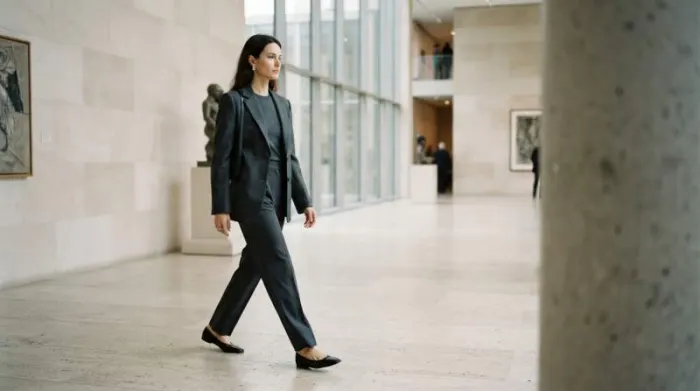
You can also experiment subtly. Removable silicone shoulder pads can be added under existing sweaters or dresses to gently exaggerate your silhouette without a full sartorial commitment. The modern take is less about direct retro revival and more about creating presence through sharp tailoring and confident proportions.
The legacy of the power shoulder today is one of transformation. It has evolved from a rigid symbol of corporate assimilation into a flexible tool for modern expression. It can still project authority, but it can also project creativity, architectural interest, and a very contemporary kind of confidence. The shoulder is once again a focal point, but now we build it on our own terms.
Who invented the power shoulder?
While often credited to the 1980s, the power shoulder's true inventor was Elsa Schiaparelli, who debuted it in her 1931 collection. However, the style's popularity exploded in the 1940s thanks to Hollywood costume designer Adrian, who exaggerated shoulders in films like 'Letty Lynton' to create a glamorous, commanding look for stars like Joan Crawford.
Sources
- [1] The history of power dressing | British Vogue
- [2] A Shoulder Style Way to Do Power Shoulders | Vogue
- [3] How to style big shoulders now the Eighties are back | The Independent
- [4] Return of the power dresser | Financial Times
Bracketed numbers in the text (e.g. [1]) refer to the sources listed here.