The World Before the Bubble
To understand the revolution the Sony Walkman sparked, you have to picture the late 1970s. Music on the go was a noisy, communal affair. Your options were essentially two: the tinny transistor radio, broadcasting whatever the local AM station decided, or the glorious, imposing boombox. These behemoths required a small army of D-cell batteries and announced your musical taste to everyone within a three-block radius. There was no such thing as a private sonic world. Headphones existed, but they were heavy, tethered things, chaining you to the living room stereo. The idea of carrying your own curated soundtrack in your pocket was pure science fiction [1].
This was the shared silence of the pre-Walkman era. If you wanted to listen to your music, you had to share it with the world, or stay rooted to one spot. The concept of a personal auditory bubble simply did not exist in the public sphere. That all changed on a summer day in 1979, thanks to a simple request from a frequent flyer with a love for opera [2].
1979: The Prototype That Changed Minds
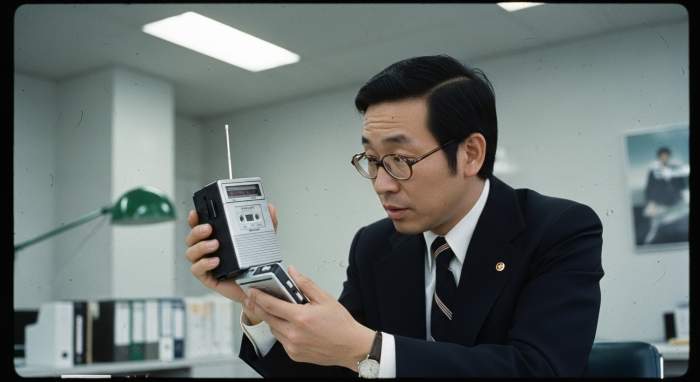
The origin story of the Walkman feels almost like a legend now. It begins with Sony co-founder Masaru Ibuka, who was tired of hauling heavy tape recorders on his long international flights just to listen to music. He took an existing Sony portable tape recorder, the Pressman, and performed some radical surgery. He stripped out the recording function and speakers, replacing them with a pair of lightweight stereo headphones. In doing so, he created a rough prototype for a personal stereo [3].
Mood Match
Find Your Soundtrack
Pick the moment that matches your day, and we'll tell you which song should be playing right now.
Running alone before sunrise
Born to Run by Bruce Springsteen
That feeling of pure forward momentum, of your legs carrying you somewhere better, needs Springsteen's unstoppable energy behind it.
Walking through the city, tuning out noise
Another One Bites the Dust by Queen
Queen's bassline becomes your heartbeat, and suddenly the chaos around you is just rhythm you're moving through, not drowning in.
Trying to impress someone special
Wonderful Tonight by Eric Clapton
Clapton understood that the best impression you make is simply being present and genuine, and this song says it all without trying too hard.
Escaping from everything for a while
Comfortably Numb by Pink Floyd
Sometimes you need to disappear into something bigger than yourself, and Pink Floyd built entire worlds for exactly that purpose.
Trust your instinct. The right song always knows what you needed to hear.
Songs checked against en.wikipedia.org.
When he presented it to Sony's charismatic chairman, Akio Morita, the reaction was skeptical. Why would anyone want a tape player that couldn't record? It seemed like a product with a missing feature. But Morita, a visionary, tried the device himself. The experience was transformative. He realized the magic wasn't in recording; it was in the immersive, private listening experience. This was about personal freedom, not functionality. That realization was the spark.
The TPS-L2: A Blue and Silver Enigma
Sony rushed the first model, the TPS-L2, to market. It was a chunky, beautiful box in blue and silver. The public's initial reaction was confusion. Where was the speaker? Why were there two headphone jacks? The dual jacks were a quirky feature, perfect for sharing a clandestine listen with a friend or a crush on the walk home from school. The marketing teams in the US and UK tried names like "Soundabout" and "Stowaway," but it was the name Japanese kids had already given it that stuck: Walkman. It was active, simple, and perfectly descriptive. Morita reportedly hated the clumsy English, but the people had spoken.
The Cultural Earthquake: Your World, Your Soundtrack
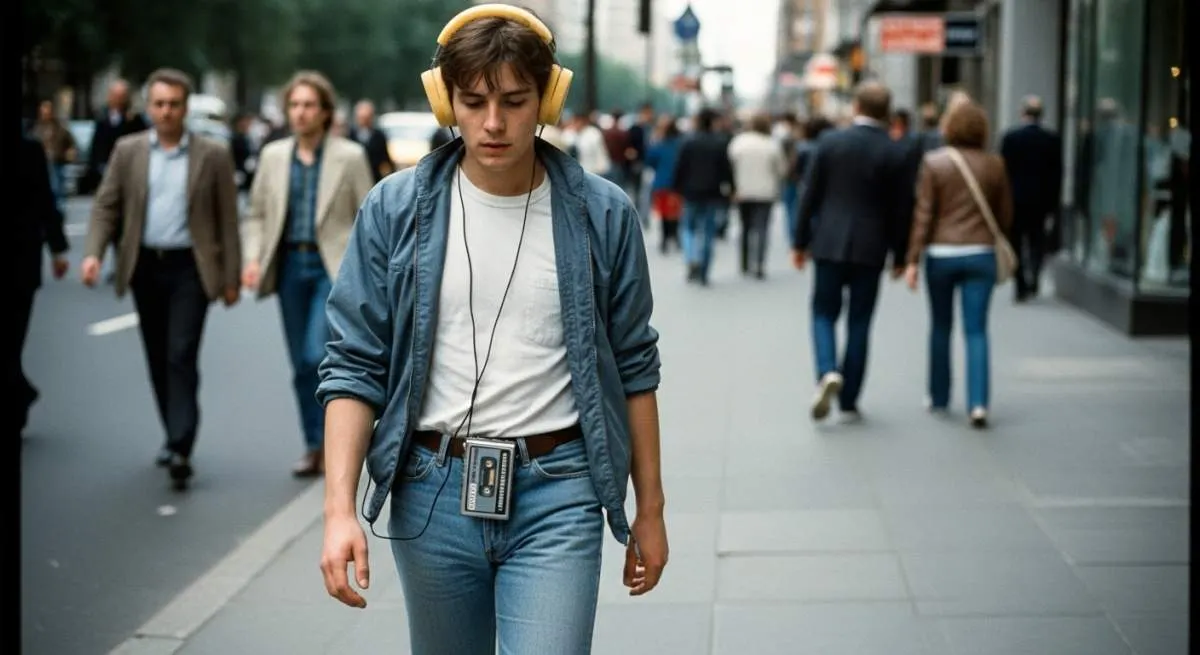
The Walkman didn't just sell units; it rewired social behavior. By 1986, "Walkman" was in the Oxford English Dictionary, a rare honor for a brand name. It had become a verb, a lifestyle. For the first time, you could be physically in a crowd but mentally in your own movie, with a personally chosen score. This was the birth of the modern personal bubble.
The implications were profound and immediate. Joggers found new motivation, fueled by Van Halen or synth-pop on repeat. The daily commute transformed from dull transit into private concert time. For shy teens and introverts, the Walkman and its headphones became a social shield, a polite but firm "do not disturb" sign. It gave people permission to be comfortably alone together. The device handed absolute control over one's immediate sensory environment to the individual. It was, in retrospect, a radical act of sonic self-determination.
Foam Pads and Fashion Statements
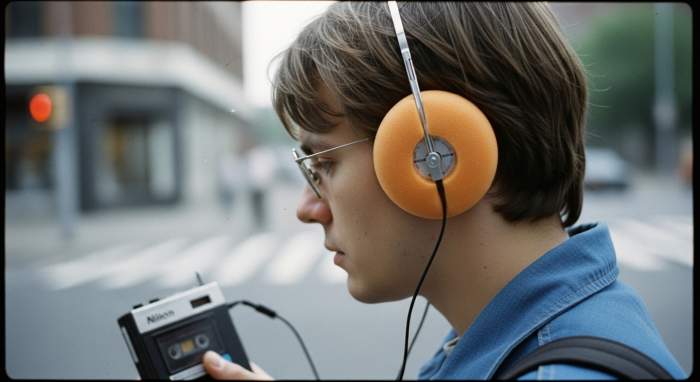
The iconic orange foam headphones were terrible by today's standards, but they were light, portable, and crucially, they signaled you were part of the new wave. Worn over big 80s hair, they became an instant visual shorthand for youth, energy, and being plugged into the zeitgeist. They weren't designed to block the world out entirely, but to create a portable zone of focus. Their flimsy, bright presence was as much a fashion accessory as a piece of tech.
A Shared Vision
- Everyone at Sony immediately knew the Walkman would be a solo-listening device, designed from the start to create a private sonic bubble.
- Actually, Sony's designers were so skeptical that people would want to listen alone that the original TPS-L2 model famously included two headphone jacks so you could share the experience, proving they initially saw it as a social gadget.
Source: designmuseum.org
The Soul of the Machine: The Imperfect Cassette
The Walkman was the vehicle, but the cassette tape was the soul. And what a wonderfully imperfect, tactile soul it was. Digital music is pristine and predictable. Cassettes were full of character: the satisfying click of the door closing, the gentle, constant hiss of the tape (which we tried to fight with Dolby), the dreaded crunch of a tape being eaten. You had to flip the tape, manage your precious AA batteries, and perform delicate surgery with a pencil when things went wrong. Every listen required effort, and that effort made the music matter more.
The Mixtape: A Tangible Love Letter
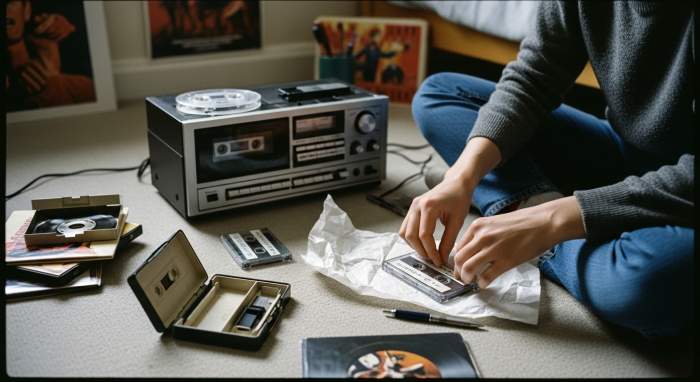
The cassette's greatest cultural gift was the mixtape. This was no drag-and-drop playlist. It was a labor-intensive artifact of devotion. You had to plan a theme, gather source LPs or hover by the radio, master the timing on a dual-deck recorder, and hand-decorate the J-card. Giving someone a mixtape meant, "I spent hours thinking about what you should hear." The Walkman was the perfect delivery system for this intimate ritual. You could give someone your heart on a tape, and they could experience it privately, anywhere. Modern Spotify playlists are convenient, but they lack the gnarly, tangible romance of a handed-over cassette.
Evolution: From Tape to Disc to MiniDisc
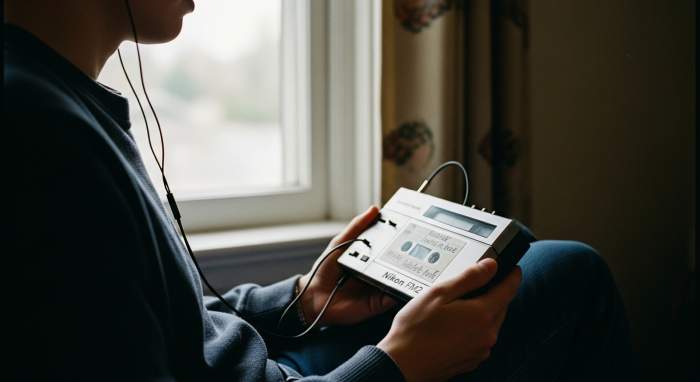
The Walkman idea proved bigger than any single format. When CDs arrived, Sony launched the Discman in 1984. It was bulkier and famously skipped if you jostled it, but it brought pristine digital sound on the go. It was proof that the core concept, personal, portable sound, was here to stay.
The MiniDisc Walkman arrived in 1992, a sleek, futuristic, and slightly doomed format. Housed in a protective cartridge, it was digital and recordable. It developed a cult following but ultimately couldn't compete with the rising tide of CD burners and, later, MP3 files. Through each iteration, Sony kept refining the promise: your music, your rules, in your pocket.
The Walkman as Pop-Culture Icon
The device quickly became a character in 80s films, symbolizing youthful independence. In *Flashdance* (1983), Jennifer Beals uses headphones to create a zone of focus, a perfect visual metaphor. *The Breakfast Club* (1985) is steeped in the era's portable, personal ennui. Even modern nostalgia like *Stranger Things* uses a red Walkman as a powerful symbol of emotional refuge. The later bright yellow "Sports" models cemented the link between music and action, proving tunes weren't just for sitting still.
A Legacy of Deliberate Listening
Today, we have infinite music in our pockets and noise-canceling earbuds that silence the world. Technologically, we've won. But something was lost in the move from analog effort to digital ease. The Walkman era forced commitment. With only 60 or 90 minutes on a tape, every song choice carried weight. You interacted with your music physically, touching, flipping, fixing it. Skipping a track was a deliberate act of holding down fast-forward and guessing.
Because it was a hassle, you often let songs play. In that forced patience lay discovery. You might grow to love a track you initially hated. The gentle tape hiss wasn't just noise; it was the sound of a ritual, of scarcity, of beautiful friction. We don't just miss the device; we miss the deliberate relationship it fostered with sound. So next time you effortlessly skip a track on your phone, tip your hat to that chunky blue-and-silver ancestor. The Walkman didn't just give us portable music; it gave us the right to our own private, totally personal soundtrack. And that is a legacy that never gets old.