Beyond the Airwaves: Cranking Up the 60s Spirit
Rock and roll? Pop music? Forget about it for most of the day on British radio in the early 1960s. It was like trying to squeeze a vibrant mini dress into a stiff Victorian corset. Just didn't work.
Then Radio Caroline came along in 1964. All of a sudden, the airwaves were buzzing with The Kinks, The Beatles, The Rolling Stones, The Who-nonstop, full of energy, and totally aimed at the young crowd. This wasn't some quiet background music for your parents' dinner party. This was the soundtrack to your life, to sneaking out, to dancing, to figuring yourself out.
The station gave a real voice to a generation that felt left out by the BBC's stuffy programming, and that alone was huge. But its impact went way beyond just playing songs.
How Pirate Radio Found Its Audience at Sea
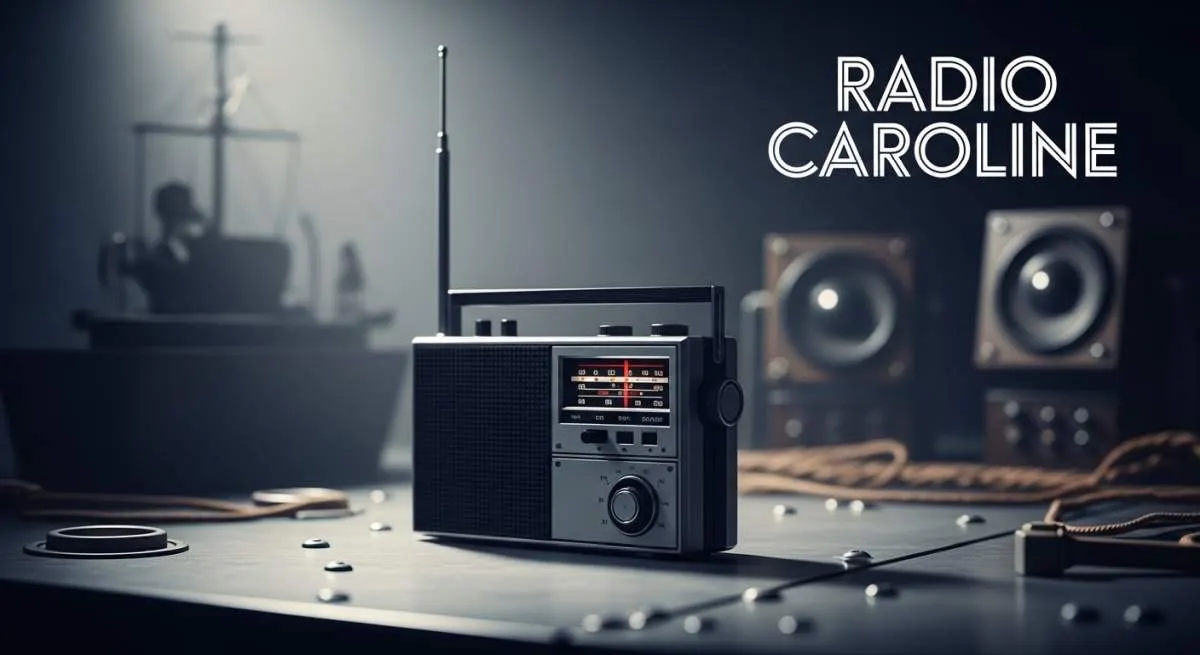
Radio Caroline wasn't born from a radio studio in London. It launched from the MV Caroline, a ship anchored in international waters off the Essex coast, beyond the reach of British broadcasting law. The station's founder, Ronan O'Rahilly, an Irish entrepreneur frustrated by the BBC's monopoly on radio, saw an opening: if you broadcast from outside British territorial waters, you could legally bypass the government's strict licensing rules and play whatever music you wanted.
The ship itself became legendary. Listeners tuned in knowing they were hearing something forbidden, something their parents' generation couldn't control. That thrill of the illegal broadcast-the crackle, the occasional signal fade, the sense of danger-made every song feel more alive. Other pirate stations soon followed, with ships like the MV Daphne and MV Avalon anchoring offshore, but Radio Caroline remained the most famous and most listened to, especially among young mods in London and across the south coast.
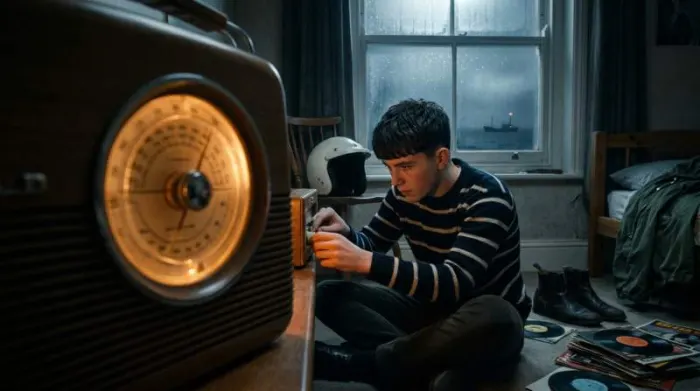
The BBC, meanwhile, had been the only legal radio broadcaster in Britain since 1922. Its Light Programme offered some pop music, but it was rationed, scheduled, and filtered through a lens of respectability. Pirate radio changed that equation overnight. Suddenly, there was an alternative-one that played what young people actually wanted to hear, all day long, without apology.
Music as the Voice of Youth
Radio Caroline's playlist was a direct line to the energy of the mid-1960s. The station played American soul and R&B alongside British beat groups, creating a sound that felt urgent and modern. Motown records, which the BBC rarely touched, found their audience through pirate radio. So did the harder, more rebellious edges of rock that the establishment considered too raw or too American.
For mods-young working-class and lower-middle-class Londoners obsessed with modernism, sharp tailoring, and Italian scooters-Radio Caroline was essential. The music wasn't background noise; it was identity. A mod's taste in records, his or her knowledge of the latest soul releases and underground bands, marked them as part of an in-group. Radio Caroline made that knowledge accessible and shared. When you tuned in, you were part of something bigger than yourself.
Youth Identity and Rebellion
Radio Caroline helped shape a clear youth identity separate from their parents' world. It wasn't only about listening to pop music-it was the shared experience, the thrill of tuning into something illegal and exciting. It built a sense of community among young people tired of their parents' rules and their parents' music. That feeling of freedom and self-expression showed up perfectly in mod fashion, with its sharp cuts, bold colors, and proud modernism. The geometric mod dress, the tailored parka, the carefully chosen scooter-these weren't just purchases. They were statements, just like a Radio Caroline playlist.
The Fashion and Culture Connection
Mod style and pirate radio were inseparable. Both represented a rejection of post-war austerity and a embrace of youth culture as something worthy of serious attention. The mod mini vibe wasn't just about hemlines-it was about speed, efficiency, and forward motion. Mods wanted to look modern, dress modern, and listen to modern music. Radio Caroline delivered that last piece.
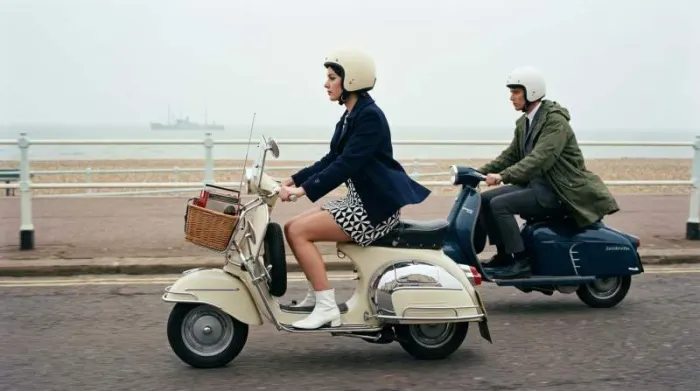
Advertising on pirate radio reinforced this connection. For the first time, advertisers had a direct, powerful connection to the growing youth market. This wasn't just about records-it was about clothes, makeup, scooters, everything that defined the 1960s teen experience. Radio Caroline created a platform for marketing aimed right at young people, proving they had buying power and their own tastes. A mod could hear a soul record at breakfast and see an ad for a new parka by lunch, all on the same station.
The Music Industry Shake Up
Britain's commercial music industry was never the same after Radio Caroline. Pirate radio forced the BBC to pay attention and, eventually, to change. Suddenly, artists who couldn't get airplay on mainstream stations found a huge audience. Unknown bands could become stars in weeks if Radio Caroline picked up their records. It opened up the charts and turned countless bands into household names.
The pressure became impossible to ignore. By 1967, the British government passed the Marine Broadcasting Offences Act, which made it illegal to supply or work for offshore radio stations. Radio Caroline was shut down, along with most other pirate stations. But the damage-or rather, the victory-was already done. The BBC launched BBC Radio 1 in September 1967, a pop-focused station that essentially admitted pirate radio had been right all along. Pop music moved from the sidelines straight into the heart of popular culture, and it stayed there.
Broadcasting from the Margins
The act of broadcasting from international waters was defiance itself. It challenged authority, pushed legal limits, and fed into the larger countercultural movement of the 1960s. It showed that if you believed in something, you could find a way to make it happen-even if that meant doing it your own way, out at sea. That willingness to question the status quo struck a chord with a generation questioning everything from politics to social norms.
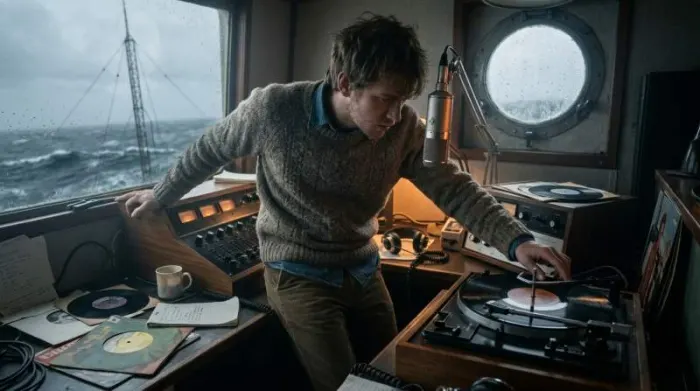
Radio Caroline's offshore location was more than a legal loophole. It was a symbol. The ship was literally beyond the reach of the establishment, a floating island of freedom. That image mattered as much as the music itself. Listeners knew they were tuning into something their government didn't want them to hear, and that made it feel dangerous and real.
A Blueprint for Modern Radio
Those songs, broadcast from ships offshore, became woven into people's lives, turning into almost sacred memories for those who grew up with them. The legacy of Radio Caroline isn't just a footnote in broadcasting history, it's the blueprint for modern pop radio and a powerful reminder of how a few determined people can literally change the cultural air we breathe.
Radio Caroline proved that there was an audience hungry for something different, and that audience had power. It showed that youth culture wasn't a phase to be managed but a force to be reckoned with. The station lasted only a few years in its original form, but its impact rippled forward through decades. Every independent radio station, every format built around a specific audience, every time a broadcaster decided to play what listeners actually wanted instead of what gatekeepers approved, that's Radio Caroline's legacy.
The mod movement itself faded by the late 1960s, replaced by hippie culture and other scenes. But the idea that young people deserved their own music, their own style, and their own voice never went away. Radio Caroline made sure of that.
The voices behind the static
Tony Blackburn launched his career on Radio Caroline South in 1964, hosting breakfast shows from the ship.
Johnnie Walker joined the crew soon after.