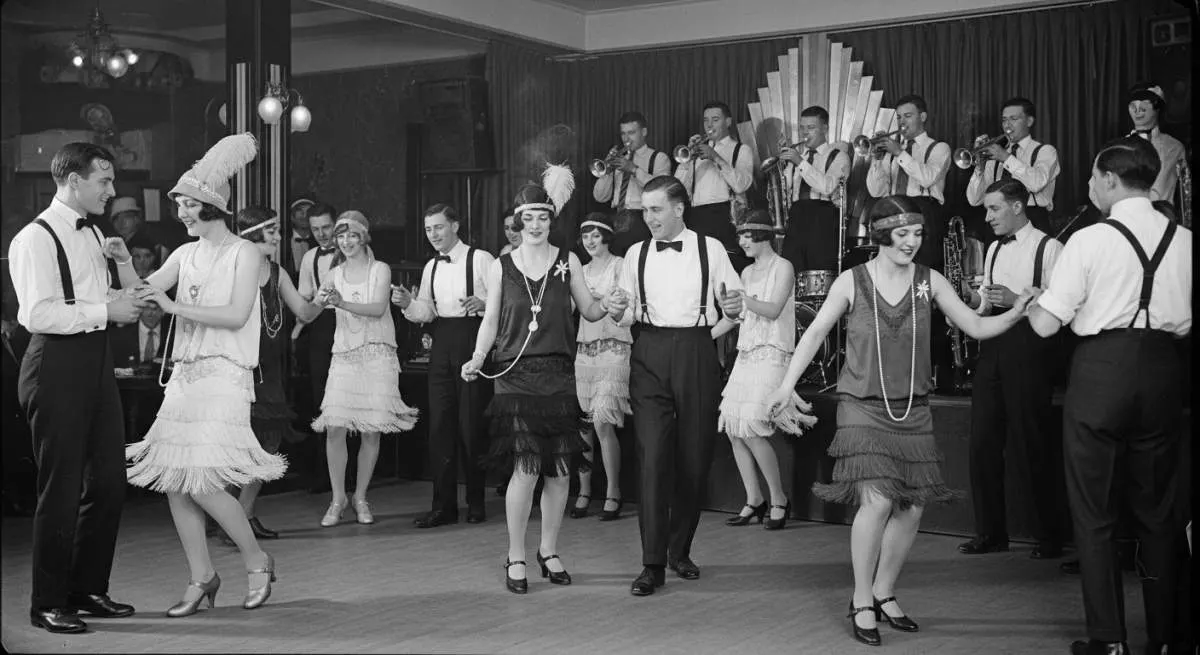
I usually spend my weekends hunting for 1970s vinyl or admiring the sharp lines of a 1950s Cadillac, but if we're talking about the true birthplace of modern cool, we have to rewind the clock even further. We have to go back to the Roaring Twenties, to the smoke-filled speakeasies and the defiant clatter of tap shoes on a dance floor.
Forget dusty history books. The 1920s were a cultural supernova. It was the decade the world collectively shrugged off its Victorian corset and decided to live. It invented the teenager, the cocktail party, and most importantly, the original icon of radical freedom: the Flapper. She wasn't just a girl in a fringed dress; she was a revolution in silk stockings, and she was absolutely the bee's knees.
The Birth of a Buzzword: What Does 'The Bee's Knees' Even Mean?
The phrase "the bee's knees" is pure 1920s slang, a perfect example of the era's playful, nonsensical jargon. It simply meant something excellent, the height of cool. While its exact origin is fuzzy, it fits right in with other flapper favorites like "the cat's pajamas" or "the elephant's instep." It was a way of talking that was fresh, irreverent, and entirely their own.
Interestingly, the term got a second life decades later as the name of a classic Prohibition-era cocktail. The Bee's Knees cocktail was a simple mix of gin, lemon juice, and honey, designed to mask the harsh taste of bathtub gin. So, the next time you hear someone say something is "the bee's knees," you're hearing a direct echo of Jazz Age excitement.
From Braids to Rebellion: The Evolution of the Flapper
The word 'flapper' itself has a curious journey. In 1910s Britain, it was a slightly cheeky term for a young girl, her long braid still "flapping" against her back. But by the early 1920s, it had crossed the Atlantic and transformed. In America, it came to mean a bold, modern woman who actively flouted social conventions. She was defined by her actions, not her age.
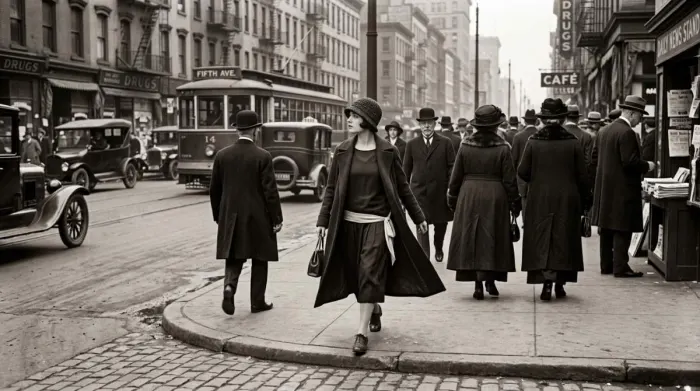
This new woman emerged from the ashes of World War I. After the global horror, a generation was ready to live with a desperate, joyful intensity. The 1920s were a cocktail of economic boom, new technology like the radio, and seismic social change. The ratification of the Nineteenth Amendment in August 1920, granting American women the vote, sent an electric charge through the culture. Doors to offices, universities, and public life were suddenly, irrevocably, kicked open.
The Anatomy of a Revolution: The Flapper's Toolkit
The flapper's look wasn't just fashion; it was a manifesto written in fringe and silk. For centuries, women were strapped into restrictive corsets. The flapper rejected it all. Her dress was a straight, loose tube that skimmed the body, hanging from the shoulders with a dropped waistline that often sat at the hips.
This was liberation in fabric. Hemlines, which had scandalously shown an ankle just years before, crept up to mid-calf, then daringly to just below the knee. By 1926, they hit the knee itself. This wasn't just about showing skin; it was about mobility. It allowed women to run, to move, and most importantly, to dance the wildly energetic Charleston without tripping.
The Bob: A Cut Above the Rest
Perhaps the most radical statement was on top of her head. For centuries, long hair was a woman's "crowning glory." To cut it off was an act of defiance. The blunt bob, ending at the jawline, became the flapper's signature. It was practical, modern, and shockingly bold. Barbers often did the cutting because many salons refused. Some went even shorter with the severe, almost masculine Eton crop.
Painting a New Face
Before the 1920s, obvious makeup was for actresses and women of questionable morals. Flappers changed that overnight. They wore dark kohl eyeliner, a trend fueled by the 1922 discovery of King Tutankhamun's tomb and the ensuing Egyptomania. Eyebrows were plucked into thin, dramatic arches, and lips were painted into a small, exaggerated cupid's bow.
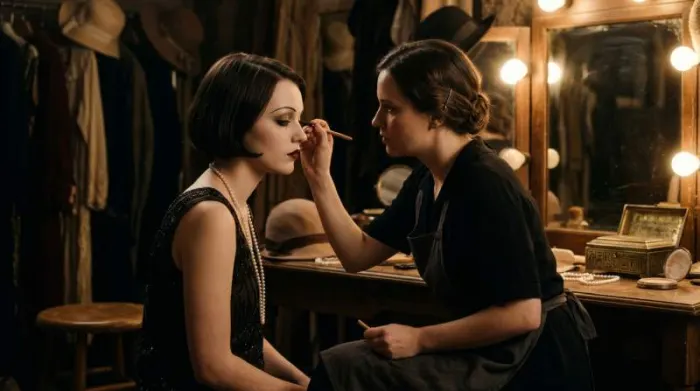
Companies like Max Factor, originally serving Hollywood, began marketing directly to everyday women. For the first time, compacts and lipstick tubes became essential accessories, carried in purses and applied in public without shame. It was a reclaiming of one's own image.
The Soundtrack and the Scene: Jazz and Speakeasies
You cannot separate the flapper from jazz. The music was fast, syncopated, and improvisational, a perfect soundtrack for a rule-breaking generation. Originating in African American communities, it spread through speakeasies and radio waves. Dances like the Charleston and the Black Bottom weren't polite; they were athletic, wild, and required the freedom of movement those short skirts provided.
Prohibition, banning alcohol from 1920 to 1933, ironically made the party more thrilling. Speakeasies, hidden illegal bars, became the decade's social hubs. Needing a password to enter only added to the allure. Inside, you could drink bootleg gin, dance until dawn, and mingle outside the strict boundaries of "polite society." It was a secret world where the new rules were being written.
The Limits of Liberation
It's crucial to remember that not every woman could live the flapper lifestyle. It required money, leisure time, and access to urban centers. The iconic flapper was largely a white, middle- to upper-class phenomenon in cities like New York and Chicago.
African American women were central to the cultural shift, especially during the Harlem Renaissance, but they faced dual barriers: racism from mainstream society and respectability politics within their own communities. Their stories were often excluded from the popular narrative. Yet, the influence permeated everywhere. Even if a woman couldn't afford a beaded dress, she could bob her hair, wear lipstick, and claim a piece of that new independence for herself.
The Party Ends, The Legacy Lives On
The stock market crash of 1929 and the ensuing Great Depression killed the flapper lifestyle almost overnight. Frivolity felt irresponsible. Hemlines dropped, waistlines returned, and Hollywood's new Production Code in 1934 enforced more modest portrayals of women. The flapper became a relic, a symbol of a reckless past the country was eager to forget.
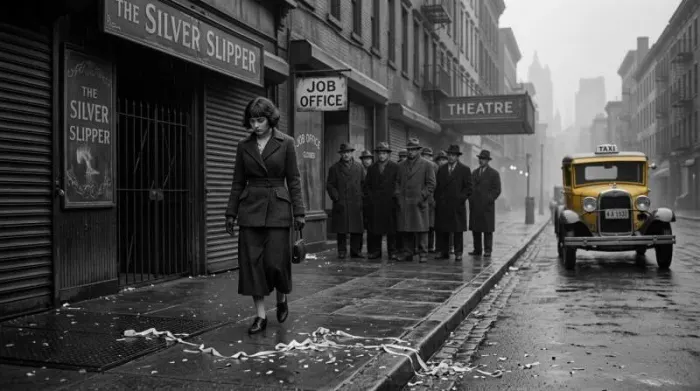
But the changes she wrought did not vanish. Women did not return to corsets. They kept their jobs, their shortened hair, and their hard-won autonomy. Every time a woman wears what she wants, cuts her hair on her own terms, or refuses to apologize for taking up space, she's channeling that flapper energy. The 1920s flapper invented the very idea that a woman could be modern, independent, and unapologetically herself. She wasn't perfect, and her world was far from equal, but she was the first to say it out loud, in public, with a cigarette in one hand and a cocktail in the other: a woman's life is her own. And that will always be the bee's knees.