
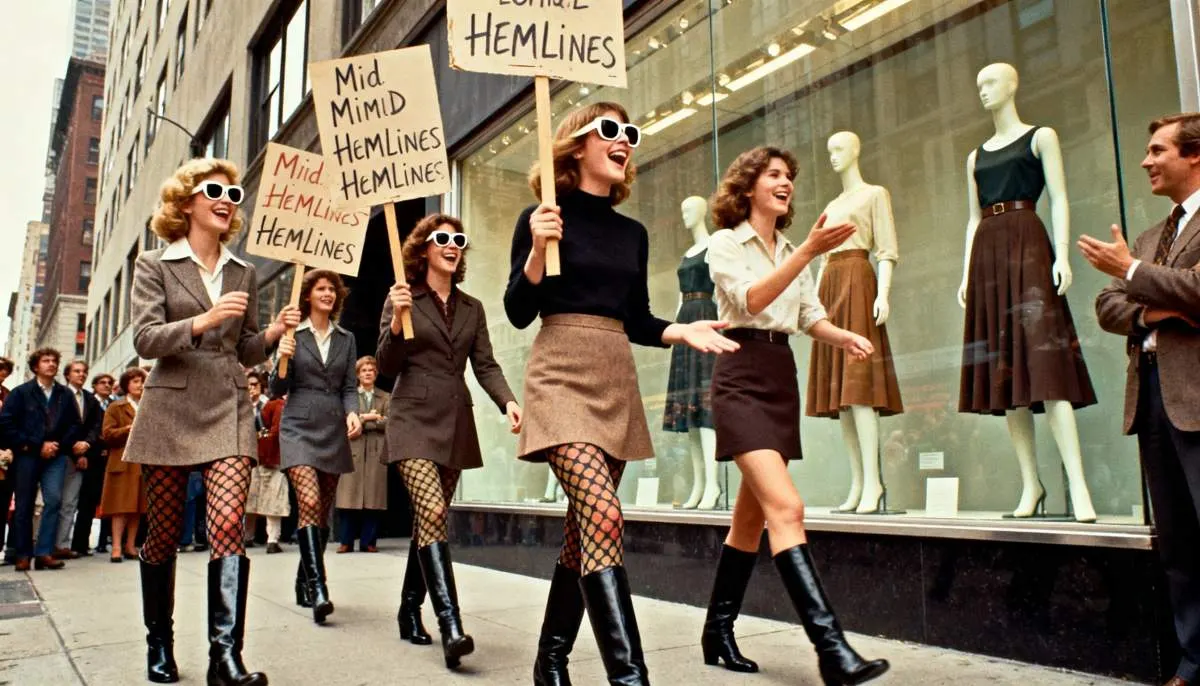
The Hemline Rebellion Begins
Picture the fashion landscape of 1970. The swinging sixties had just ended, leaving behind a legacy of liberation embodied by the miniskirt. Women had tasted freedom, freedom of movement, freedom from restrictive clothing, and freedom of expression. Then, seemingly out of nowhere, designers and fashion editors declared the mini dead. The new decree was the midi skirt, a garment that fell awkwardly between the knee and ankle.
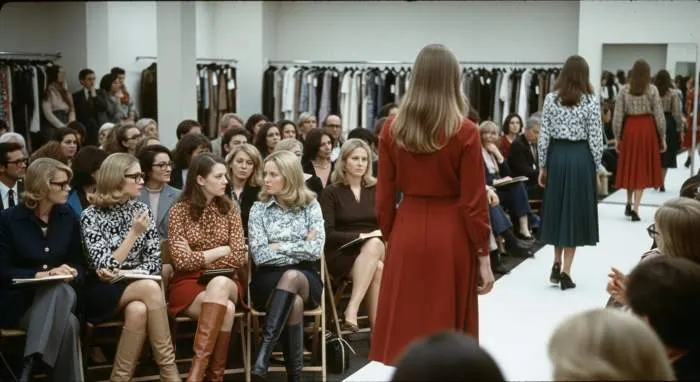
This wasn't presented as a suggestion, but as a mandate. Runways were flooded with these longer lengths, and glossy magazines proclaimed them the only acceptable look for the sophisticated woman. The industry expected women to obediently lower their hemlines and embrace this new, more "mature" silhouette. What they got instead was a full-blown consumer uprising that would become known as the Great Midi Skirt Revolt.
A Forced Fashion Rule
Women felt more than just disappointed by the new trend; they felt infantilized and oppressed. After years of wearing the playful, body-confident mini, the midi was perceived as a shapeless, dowdy step backward. It was widely seen as an attempt to cover women up again, to reel in the sexual and social freedoms they had just won. The reasons for the midi's instant unpopularity were visceral and practical.
Many found the length unflattering, cutting the leg at its widest point. It was also impractical for the active lifestyles women were leading. More than anything, it represented a loss of choice. This was a genuine moment of women's style defiance, where comfort and personal expression clashed directly with an industry-driven diktat. The battle lines were drawn not just in boutiques, but in the very philosophy of who gets to decide what we wear.
The Mini vs. Midi Fashion Battle
The revolt played out in the most tangible of places: the cash register. Women simply refused to buy the midi skirts that stores had stocked in anticipation of the new trend. Sales were disastrous. Newspapers of the era reported on "consumer resistance" and "the hemline war," documenting how women continued to wear their minis with pride, defiantly ignoring the fashion press.
This direct midi vs. mini battle wasn't merely about inches of fabric; it was a fight for autonomy. It proved that consumers, especially women, were not passive mannequins waiting for the next instruction. They had agency, opinions, and most importantly, wallets. When those aligned against a trend, even the most powerful names in Paris and New York couldn't force it into acceptance. The street, as they say, had voted.
The Power of the Purse
The industry was forced to listen. Unsold inventory piled up, and designers had to quietly reintroduce shorter hemlines into their collections. The Great Midi Skirt Revolt of the early 1970s was a seismic shift in the power dynamics of fashion. Before this, the cycle was simple: designers dictated, and consumers largely followed. This event tipped the scales.
It taught the fashion world a hard, expensive lesson: you can't shove a trend down people's throats once they've had a taste of freedom. The showdown was over, and the mini, or rather, the fundamental right to choose, had won. Designers learned, perhaps for the first time on such a scale, that fashion at its best comes from the person wearing it, not just the people creating it.
Reimagining the Midi on Our Own Terms
The fascinating twist in this story is that the midi skirt didn't disappear forever. It eventually came back, but it returned on our terms. The legacy of the revolt ensured it would never again be a rule, only an option. Today, the midi is a canvas for individual style, stripped of its oppressive 1970s connotations. We've taken the history of that protest and flipped it on its head.
Now, wearing a midi is a confident fashion choice, a way to play with proportion and sophistication. The key is in how we style it, transforming it from a symbol of forced conformity into a statement of effortless chic. It's about owning the length with modern attitude and making it work uniquely for you.
Mastering the Modern Midi
Forget the frumpy blouses that doomed the original midi. The modern approach is all about defining the waist. Think cropped knits, sleek bodysuits, or a sharp, tucked-in button-down shirt. This simple act creates shape and avoids the overwhelming silhouette that women rejected decades ago.
Footwear is another crucial foundation. Pointed-toe boots, from ankle to knee-high, instantly elevate and elongate the leg. Chunky sneakers add an unexpected, cool-girl edge that completely recontextualizes the skirt. Heels work too, but modern block heels or sharp stilettos are the way to go, avoiding anything that feels dated or fussy.
The fabric and details make all the difference. A slinky silk slip midi has a completely different vibe than a structured denim A-line or a cozy knit version. Modern designs often incorporate strategic slits that add movement and a peek of leg, making the style feel less restrictive. Pleated midis in metallic or jewel tones add incredible visual interest. The goal is to create an intentional outfit that feels powerful and utterly personal.
The Enduring Legacy of Style Autonomy
The real legacy of the 1970s midi skirt revolt isn't stored in a vintage closet. It's a lesson in consumer power that echoes every time we get dressed. The rebellion taught us to question mandates, to trust our own sense of style, and to wear what makes us feel good and powerful. The market listens, eventually.
That historic moment reminds us that true fashion rebellion isn't always about the newest, most outrageous trend. Sometimes, it's about reclaiming something old and making it defiantly new on your own terms. It's about claiming your own style story, hemline by chosen hemline. The women who said "no" to the midi weren't just rejecting a skirt; they were securing every woman's right to choose, a right we exercise with every outfit we put together today.
What caused the midi skirt revolt in the 1970s
The revolt was fueled by a deeper cultural shift: women had just won the right to wear pants in public spaces, and the midi felt like a regressive attempt to reimpose control. Interestingly, the backlash was so fierce that some department stores reported a 40% drop in skirt sales, forcing designers like Yves Saint Laurent to quietly backtrack on their midi-heavy collections.