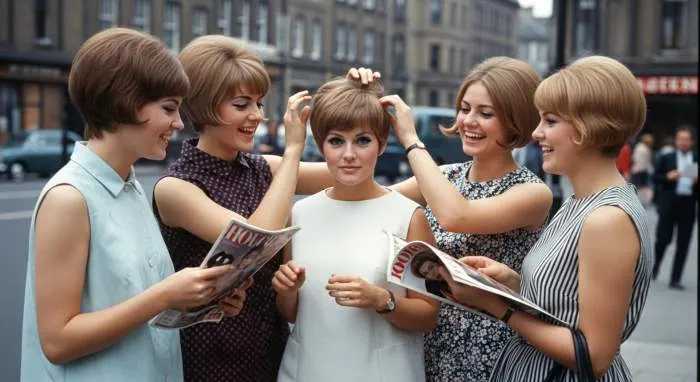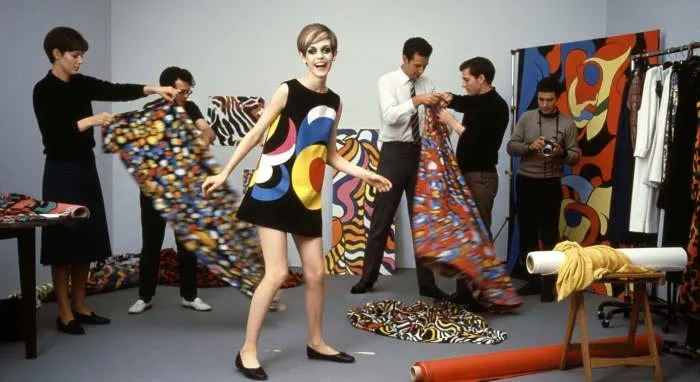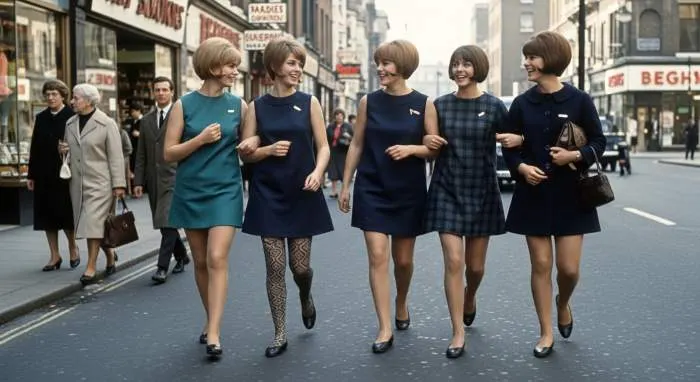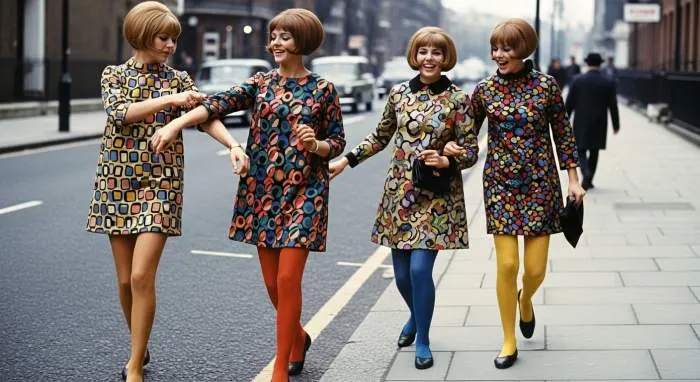
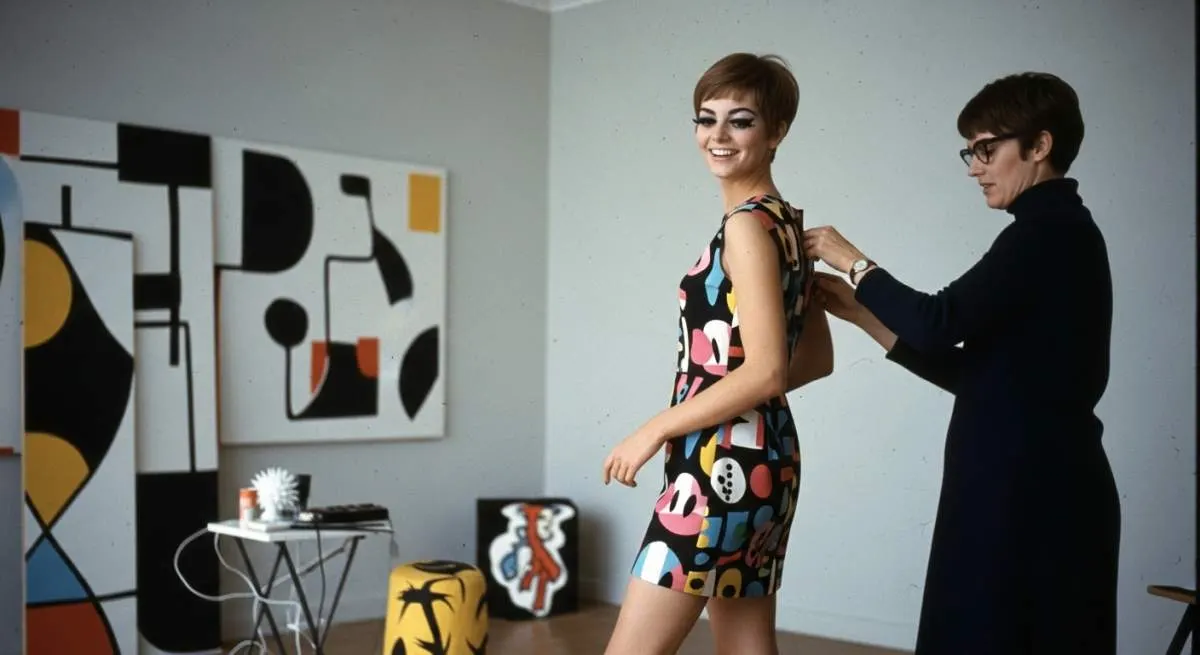
Hey there, fellow time travelers and fashion fanatics! Buckle up, buttercups, because today we’re setting our style-o-meter to the swinging 1960s, an era that didn’t just push boundaries – it absolutely obliterated them! Forget prim and proper, darling. This was the decade where youth roared, music vibrated, and fashion became an electrifying statement of liberation. We're talking about a sartorial earthquake that forever redefined what it meant to be chic, cool, and utterly captivating. And at the epicenter of this seismic shift?
A revolutionary garment and the slender, wide-eyed icon who wore it like no one else: the mini skirt and the one and only Twiggy!
Before the 1960s hit, fashion had a certain… rigidity. Think tailored suits, elegant dresses, and a general air of subdued sophistication. It was a world perhaps more akin to `Quiet Luxury` – understated elegance, often quite formal. But then came the explosion of pop culture, the raw energy of The Beatles and The Rolling Stones, and a burgeoning sense of youthful rebellion. This wasn't about subtle status; it was about audacious self-expression.
Clothes became playful, daring, and frankly, a whole lot of fun! The street became the runway, and hemlines began a daring ascent that would send shockwaves through society.
Enter Lesley Hornby, a sixteen-year-old schoolgirl from London, who would soon be rechristened Twiggy by her then-boyfriend and manager, Justin de Villeneuve.
With her waifish figure, huge doe eyes framed by painted-on lower lashes, and iconic pixie cut, Twiggy wasn't just a model; she was a phenomenon. She was an embodiment of the new, modern woman – youthful, unburdened, and utterly free.
She wasn't an inaccessible star; she felt like one of us, only magnified. In many ways, she became a living, breathing `Action Figure` for a generation, her image plastered everywhere, inspiring countless young women to chop their hair, paint their lashes, and most importantly, embrace the rising hemline.
The mini skirt itself wasn't solely Twiggy’s creation – brilliant designers like Mary Quant and André Courrèges were already championing its rise. But it was Twiggy’s ubiquitous presence in magazines like Vogue and Harper's Bazaar, on television, and in popular culture that truly cemented the mini skirt’s place in history.
Her long, lean legs were perfectly suited to showcasing this daring garment, transforming it from a mere piece of clothing into a symbol of progress and defiance.
Imagine a world where women's legs were rarely shown above the knee in public. The mini skirt was a direct challenge to that conservatism, a joyful rejection of previous generations' more demure styles, which might have included elements of `vintage workwear` adapted for everyday use.
Twiggy didn't just model the mini skirt; she *owned* it, giving it a playful sophistication that made it irresistible. She turned an item of clothing into an entire attitude.
Her influence was so profound that it felt like she was playing a grand, strategic game of fashion, much like the ancient Egyptian board game `Senet`, where every move had a lasting impact. She didn't just move pieces on a board; she reshaped the entire game.
If Baz Luhrmann were to direct a film about the 1960s Mod scene, Twiggy would undoubtedly be the sparkling, energetic centerpiece, her story a vibrant testament to the era's boundless creativity and daring spirit.
So, prepare to dive deep into the world of op art, pop culture, and revolutionary style, all through the lens of Twiggy – the girl who, with a simple skirt and an unforgettable gaze, forever changed the face of fashion and left an indelible mark on our hearts and our wardrobes. This is more than just history; it’s a high-octane trip down memory lane where hemlines rose, and spirits soared!
The History
Alright, kittens and cats, let’s set our time machine for the swinging sixties, a decade so utterly revolutionary it practically invented youth culture as we know it! The post-war gloom was lifting, and a vibrant energy, fueled by rock and roll, economic prosperity, and a burgeoning sense of independence, was bubbling up, especially in a little place called London.
This wasn't just about hemlines getting shorter; it was a seismic shift in society, tearing down the stuffy conventions of previous generations and ushering in an era of unprecedented self-expression.
The Mini Skirt's Radical Debut
Before Twiggy graced the covers and runways, the mini skirt was already making waves, a daring declaration of sartorial freedom. The credit for its popularization, if not its sole invention, largely goes to two visionary designers: Mary Quant and André Courrèges.
Mary Quant, the ingenious proprietress of the iconic Bazaar boutique on King's Road in Chelsea, London, began experimenting with shorter hemlines as early as 1960.
Her philosophy was simple: fashion should be fun, accessible, and above all, reflect the youthful exuberance she saw all around her. By 1964, her "miniskirt" (a term she is often credited with coining, reportedly after her favorite car, the Mini Cooper) was firmly established as a symbol of rebellion and modernity. It wasn't about prim and proper ladies; it was about girls who wanted to run, dance, and live life unencumbered.
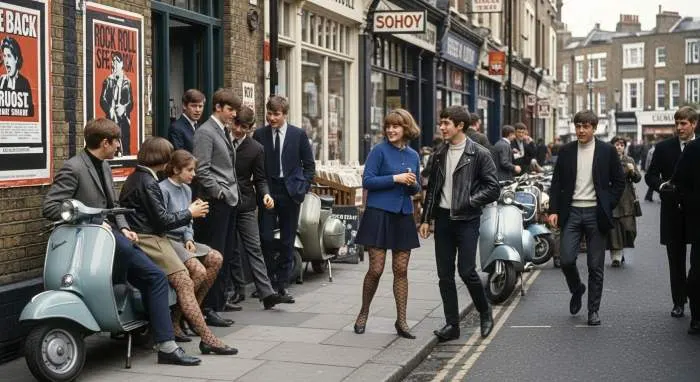
This was a direct contrast to the formal, often restrictive garments that preceded it, a joyful rejection of styles that sometimes felt like glorified vintage workwear from an earlier, more austere time.
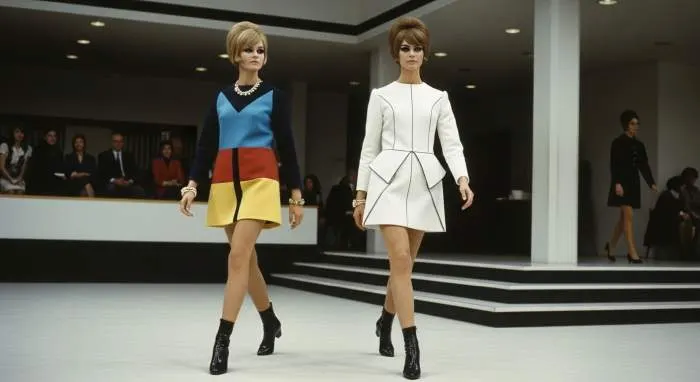
Across the English Channel, French couturier André Courrèges was simultaneously exploring geometric, futuristic designs. His "Space Age" collection, launched in 1964, featured stark white, angular designs and, yes, incredibly short skirts that were as much about architectural form as they were about fashion.
While Quant’s minis were democratic and playful, Courrèges’ were avant-garde and high-fashion, but both contributed to the widespread acceptance, and eventual ubiquity, of the knee-skimming silhouette. The mini skirt, in its essence, was the antithesis of the Quiet Luxury aesthetic that had defined haute couture for decades, replacing understated elegance with bold, undeniable visibility.
Enter Twiggy: The Face of a Revolution
While Quant and Courrèges laid the groundwork, it was a certain waif-like teenager from Neasden, London, who would become the living embodiment of the mini skirt and the entire Mod movement: Lesley Hornby, better known to the world as Twiggy. Her story is the stuff of legends, a meteoric rise that began in 1966.
Discovered by accident by journalist Deirdre McSharry and photographer Barry Lategan, Twiggy's distinctive look was unlike anything seen before. Her impossibly slender frame, enormous, heavily made-up eyes framed by spidery lashes (often hand-drawn), and her iconic pixie haircut immediately captivated the public. She was the anti-bombshell, a fresh, childlike innocence combined with an undeniable chic that screamed "future."
Twiggy didn't invent the mini skirt, but she rocketed it into the global stratosphere. She became the ultimate fashion muse, gracing countless magazine covers, from Vogue to Seventeen, and starring in ad campaigns that cemented her image as the Mod icon.
Her slender figure made the mini skirt look even more daring, emphasizing the leggy, youthful silhouette that became synonymous with the era. Her widespread fame meant that suddenly, every girl, from London to New York to Tokyo, wanted to emulate her style. She was more than a model; she was a cultural phenomenon, almost like a living fashion Action Figures, a customizable icon for a new generation.
The 1960s was a vibrant, almost theatrical energy, especially around places like Carnaby Street.
The fashion scene was a living, breathing spectacle, a sartorial symphony that, in retrospect, feels like it could have been directed by Baz Luhrmann himself, bursting with color, music, and an undeniable zest for life. In this electrifying environment, Twiggy’s impact was profound. She didn’t just wear the clothes; she defined the look, making the mini skirt not just fashionable but aspirational, a symbol of liberation and the youthful defiance that characterized the "Youthquake."
The fashion world, much like a strategic game of ancient Senet, saw Twiggy's arrival as a pivotal move, shifting the pieces on the board in an unprecedented way and forever changing the game of style.
Why It Matters
Oh, Darlings, buckle up because we're about to dive headfirst into the swirling, psychedelic heart of the 1960s, a decade where fashion wasn't just clothing – it was a revolution, a statement, a full-blown cultural explosion! And at the epicenter of this seismic shift stood one singular, unforgettable figure: Lesley Hornby, better known to the world as Twiggy!
Her iconic look didn't just grace magazine covers; it fundamentally reshaped beauty ideals, redefined what it meant to be stylish, and forever etched the mini skirt into the annals of fashion history. We're not just talking about a trend here; we're talking about a paradigm shift that sent ripples through every facet of society, proving that sometimes, one person's unique vision can absolutely change the world! It was a time of unprecedented change, a vibrant, daring spectacle that feels as grand and impactful as any scene conjured by a visionary like Baz Luhrmann.
Twiggy: The Face of a Revolution
Imagine this: The world, still shaking off the remnants of the more demure 1950s, was ripe for something utterly fresh, utterly new. Enter Twiggy in 1966, an unknown 16-year-old from Neasden, London, with eyes that could launch a thousand ships, lashes for days, a ridiculously chic pixie cut, and a silhouette unlike anything seen before. Her waif-like figure, often described as "androgynous" or "boyish," stood in stark contrast to the voluptuous pin-up queens of yesteryear, like Marilyn Monroe.
Suddenly, the ideal shifted from womanly curves to a slender, youthful elegance that epitomized the Mod movement.
And the mini skirt? Oh, the mini skirt! While brilliant designers like Mary Quant had pioneered its existence, it was Twiggy who truly *personified* it, turning it from a daring piece of fashion into a global phenomenon. She wore it with an unparalleled swagger, making it the emblem of youth, freedom, and a glorious rebellion against the stuffy traditions of the past. Her entire aesthetic was a complete departure from any notion of traditional elegance or what some might now call "Quiet Luxury."
There was nothing understated about Twiggy's look; it was bold, direct, playful, and accessible, a sartorial shout-out to a new generation demanding to be seen and heard. She was proof that fashion could be fun, defiant, and entirely her own, rather than dictated by established norms.
Beyond the Mini: A Cultural Earthquake
Twiggy's rise wasn't just about hemlines; it was a full-blown "youthquake" that reverberated far beyond the fashion houses of Carnaby Street. Her image represented a powerful cultural shift, a transfer of influence from older, more conservative generations to the burgeoning, rebellious youth. The mini skirt, championed by Twiggy, became a symbol of liberation for women, an empowering garment that allowed for freedom of movement and expressed a desire to break free from restrictive social and fashion norms. It signaled an era where women were asserting their independence, both in style and in life.
Her "unconventional" beauty also played a crucial role in democratizing fashion. She showed that beauty wasn't monolithic; it could be diverse, unique, and personal. This accessibility helped usher in a new era where fashion was less about exclusive haute couture and more about individual expression. Unlike the practical, utilitarian aesthetics of vintage workwear, which focused on durability and function, Twiggy's mod style was about playful prints, geometric shapes, and a futuristic outlook that felt incredibly fresh and forward-thinking.
Her influence highlighted that clothing could be a potent tool for self-definition and social commentary, making her a pivotal figure in modern cultural history. She didn't just wear the clothes; she embodied the spirit of a generation eager to rewrite the rules.
The Icon's Legacy: From Runway to Pop Culture
Twiggy's impact was immediate and global. She graced the covers of every major fashion magazine, from Vogue to Tatler, becoming the most famous model in the world within months. Her tours across Japan and the United States cemented her status as a global icon. But her influence wasn't confined to high fashion runways. Her image was so pervasive, so immediately recognizable, that she quickly became a brand unto herself.
We saw Twiggy dolls, makeup lines, and even board games inspired by her unique appeal. She wasn't just a model; she was a phenomenon, an archetype, almost like a living, breathing Action Figure for the Mod era, inspiring countless young people to emulate her style and attitude.
Even after she "retired" from modeling in 1970 (declaring "You can't be a clothes hanger for ever!"), her legacy continued to thrive. She embarked on a successful career in singing and acting, earning two Golden Globe Awards for her role in The Boy Friend in 1971. Her arrival on the scene wasn't just a fleeting trend; it was a strategic move that fundamentally altered the board, much like a crucial play in an ancient game like Senet, redirecting the flow of fashion history itself.
Her influence, surprisingly enduring, has outlasted many fleeting trends, much like the timeless appeal of a game played for millennia. To this day, any reference to the 1960s fashion invariably conjures images of Twiggy, solidifying her status as a true, indelible icon whose influence continues to inspire new generations to break boundaries and express themselves with fearless style!
Modern Revival
Alright, my fabulous retro-loving friends, it’s 2025, and guess what? The 1960s Mod and psychedelic revolution isn't just a blast from the past; it’s a vibrant, living, breathing style statement demanding its place in your wardrobe! We're talking about an era of bold rebellion, youthful exuberance, and iconic looks championed by goddesses like Twiggy.
Her transformative impact, especially on the mini skirt, wasn't just a trend; it was a cultural reset button, liberating fashion and making it playful, graphic, and utterly unforgettable. So, how do we channel that unstoppable energy and those killer aesthetics today, without looking like we’re heading to a costume party? Let me tell you, it's all about intelligent integration and fearless experimentation!
The beauty of Mod and psychedelic fashion lies in its distinct silhouettes, eye-popping patterns, and optimistic color palettes.
Think clean A-line cuts, sharp shift dresses, and those leg-lengthening mini skirts that became a symbol of female empowerment. In 2025, these elements are not just relevant; they're ripe for reinvention. While the original movement was about a departure from tradition, today we can strategically blend its boldness with contemporary sensibilities. Fashion, like the ancient game of Senet, is about strategic moves and understanding how each piece plays its part. How you layer, accessorize, and combine textures is your play, and a well-executed Mod look in 2025 is definitely a winning strategy.
The sharp, clean lines of a Mod shift dress, paired with chunky platforms, can give a sculptural presence, almost like a sartorial Action Figures come to life – ready for impact and undeniable presence.
Now, for those who appreciate the understated elegance of Quiet Luxury, fear not! You can still embrace the spirit of Mod. Imagine a classic A-line silhouette in a luxurious wool or silk, perhaps in a muted jewel tone rather than a blazing primary.
The key is in the cut and the confidence. The beauty of 2025 styling is the ability to juxtapose. You can pair a crisp Mod shift dress in a vibrant geometric print with minimalist accessories that whisper Quiet Luxury, creating a dynamic tension that is utterly chic. Alternatively, consider taking a vibrant Mod mini skirt and pairing it with a tailored blazer in a neutral shade or even a slightly distressed denim jacket, giving a nod to vintage workwear but with an undeniable 1960s twist. This fusion creates an outfit that is both unexpected and incredibly current.
Styling Tips for 2025: Your Guide to Groovy Greatness!
The Mighty Mini: The mini skirt and mini dress are your canvases! For 2025, pair them with opaque tights (black, white, or a coordinating color) or knee-high boots – Go-Go boots are always a yes, but modern block-heel boots work beautifully too. Layer a fine-gauge turtleneck underneath a shift dress for colder days, adding warmth and a touch of modern sophistication.
A-Line Allure: The A-line skirt or dress is universally flattering. Look for versions in wool, tweed, or even a structured knit. For a contemporary edge, team it with a graphic tee or a fitted mock-neck top.
Go Bold with Graphics: Don't shy away from geometric prints, Op Art, or even softened psychedelic swirls. Incorporate them via a single statement piece – a bold blouse, a patterned skirt, or an amazing jacket – and balance with solids elsewhere.
Accessorize Like a Pro: Chunky rings, oversized sunglasses, stackable bangles, and statement earrings are your friends. Headbands and scarves (think a sleek silk scarf tied à la 1960s) can also add that perfect retro touch.
Modernized Hair & Makeup: While you don't need to commit to a full Twiggy pixie cut, a sleek bob or a neat half-updo can channel the era. For makeup, a clean complexion with a strong eye (maybe a winged liner or a touch of lower lash definition) is a fantastic nod without being theatrical.
Footwear Fun: Aside from Go-Go boots, try modern ankle boots, chunky loafers, or even sleek Mary Janes with a block heel. White boots, in particular, remain a timeless Mod staple.
Mix & Match Eras: Don't be afraid to pair a Mod top with your favorite high-waisted denim, or a mini skirt with a more contemporary tailored blazer. This juxtaposition is what makes your 2025 look fresh and uniquely yours. Consider how elements of vintage workwear, like a structured denim chore jacket, can ground a playful Mod print.
Ultimately, embracing the 1960s Mod and psychedelic revival in 2025 is about confidence and a theatrical flair. Embrace your inner Baz Luhrmann! This isn't about being shy. It's about making a statement, just like his visually opulent films. Go bold with your patterns, mix unexpected textures, and let your outfit tell a story. So, crank up some 1960s tunes, channel your inner Twiggy, and step out in style that's undeniably retro, yet perfectly 2025!